Benjamin Netanyahu, widely known by his nickname “Bibi,” is an Israeli politician and diplomat who has played one of the most influential and controversial roles in Israel’s modern political history. Born on October 21, 1949, in Tel Aviv, Netanyahu has served multiple terms as prime minister and has become Israel’s longest-serving prime minister. His political career has been marked by electoral victories, economic reforms, close relationships with major world leaders, intense domestic political battles, and Israel’s prolonged conflicts with Hamas, Hezbollah, Iran, and other regional actors.
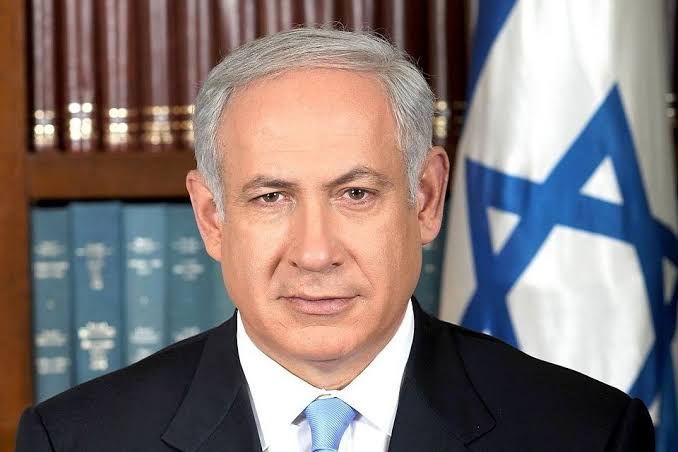
Netanyahu spent part of his childhood in West Jerusalem and the United States before returning to Israel in 1967. He joined the Israel Defense Forces and served in Sayeret Matkal, an elite special forces unit. His military experience later became an important part of his public image, particularly in shaping his reputation as a leader strongly focused on national security and counterterrorism.
After leaving military service, Netanyahu returned to the United States, where he pursued higher education at the Massachusetts Institute of Technology. He later worked for the Boston Consulting Group, gaining experience in business and management before eventually returning to Israel. In 1978, he established the Jonathan Institute, an organization dedicated to discussions and research concerning international terrorism.
Netanyahu gradually emerged as a prominent figure in Israeli diplomacy. From 1984 to 1988, he served as Israel’s ambassador to the United Nations, where he became known for his forceful advocacy of Israel’s position on the international stage. His diplomatic experience helped establish him as one of the country’s most recognizable political voices.
His rise to national political leadership accelerated in the early 1990s. In 1993, Netanyahu was elected chairman of Likud and became leader of the opposition. Three years later, he achieved a historic electoral victory, becoming prime minister following the 1996 election. At the time, he became the first Israeli prime minister chosen through a direct popular vote under the electoral system then in place.
His first tenure as prime minister lasted until 1999, when he lost the election and temporarily stepped away from the center of Israeli political power. He subsequently entered the private sector but eventually returned to government, serving in senior positions, including foreign minister and finance minister. As finance minister, Netanyahu pursued economic reforms intended to reduce government spending, encourage private enterprise, and strengthen Israel’s economy. He later resigned from the government over the Gaza disengagement plan.
Netanyahu returned to the leadership of Likud in 2005 and subsequently served as leader of the opposition. His political comeback culminated in the 2009 legislative election, after which he formed a governing coalition and returned to the prime minister’s office.
During his long second period in power, Netanyahu established himself as a central figure in both Israeli politics and international diplomacy. His close relationship with former U.S. President Donald Trump became a major feature of his political strategy. During Trump’s first presidency, the United States recognized Jerusalem as Israel’s capital, recognized Israeli sovereignty over the Golan Heights, and supported the Abraham Accords, which established diplomatic relations between Israel and several Arab states.
Netanyahu also faced substantial international and domestic criticism, particularly over Israeli settlement activity in the West Bank. The legal status of Israeli settlements remains highly disputed internationally, with the United Nations and many governments considering the settlements inconsistent with international law, while Israel disputes that characterization.
His political career has also been overshadowed by legal proceedings. In 2019, Netanyahu was indicted on charges including bribery, fraud, and breach of trust. He has denied wrongdoing and has continued to contest the allegations while remaining a dominant force in Israeli politics.
- Lorna Kapunan | Education, Professional Career & Issue

- Benjamin Netanyahu | Prime Minister, Education, Biography, Political Career & Issues
- Xi Jinping | President, Biography, Education & Issues
- Loren Legarda | Biography, Political Career, Business & Issues
- Heart Evangelista | Net worth, Education, Husband, Professional career & Properties

- John Arnold Manke | NASA, Pilot, Education, Biography, & Career
- Arnold Schwarzenegger | Hollywood, Bodybuilder, Actor, Education, & Biography

- Dharmendra Pradhan |Minister, Education, Lawyer, Biography, & Career
Israel subsequently entered a prolonged period of political instability, with repeated elections and difficulties in forming durable governing coalitions. An agreement between Netanyahu and Benny Gantz produced a rotation government, but the arrangement eventually collapsed. In June 2021, Netanyahu was removed from the prime minister’s office after a coalition led by his political opponents succeeded in forming a government.
His absence from power, however, proved temporary. Following the 2022 election, Netanyahu returned as prime minister at the head of another coalition, marking another major comeback in his political career.
Netanyahu’s later government became embroiled in a fierce domestic dispute over proposed judicial reforms. Supporters argued that the reforms were necessary to rebalance power between elected officials and the judiciary, while opponents warned that they threatened democratic checks and balances and could weaken the independence of the courts. The controversy triggered some of the largest protests in Israel’s history and intensified the country’s political divisions.
The October 7, 2023, Hamas-led attacks on Israel dramatically transformed Netanyahu’s political and security challenges. The attacks, which resulted in the deaths and abductions of Israeli civilians and security personnel, triggered the Gaza war and produced a profound crisis for the Israeli government. Netanyahu faced intense criticism over the security failures preceding the attacks and over the government’s handling of the hostage crisis.
The subsequent war in Gaza generated enormous international attention and controversy. Israel maintained that its military campaign was aimed at destroying Hamas and preventing further attacks, while Palestinian officials and international organizations documented extensive civilian casualties and destruction in Gaza. Netanyahu’s government has faced allegations that Israeli actions amounted to genocide and other serious violations of international law. Israel has rejected the genocide accusation and defended its military operations as lawful measures taken in self-defense.
The conflict also expanded beyond Gaza. In 2024, Israel and Iran exchanged direct attacks, marking a significant escalation in their long-running confrontation. Netanyahu also survived a drone attack targeting his residence and ordered military operations in Lebanon against Hezbollah, citing the need to eliminate threats to Israeli communities and military capabilities.
The regional conflict subsequently widened further. Following the collapse of Bashar al-Assad’s government in Syria in December 2024, Israel expanded its military activity in Syrian territory, citing security concerns and the need to protect its borders.
Netanyahu later presided over Israel’s confrontation with Iran, including major Israeli strikes that contributed to the Twelve-Day War in 2025. The conflict underscored the increasingly direct nature of the rivalry between Israel and Iran and demonstrated the growing possibility that regional conflicts could develop into broader military confrontations.
In 2026, tensions escalated further as Israel and the United States launched a major air campaign against Iran, with regime change among the stated objectives. The conflict became another major chapter in Netanyahu’s long political career and further intensified debate over Israel’s military strategy, regional security, and relations with Washington. Subsequent clashes involving Hezbollah contributed to another major escalation in Lebanon.
Throughout his career, Netanyahu has remained a deeply polarizing political figure. Supporters portray him as a determined defender of Israel’s security, a skilled diplomat, and a leader who strengthened Israel’s international partnerships and economic position. His critics, meanwhile, accuse him of weakening democratic institutions, pursuing policies that deepen the Israeli-Palestinian conflict, and prioritizing political survival.
His tenure has also become closely associated with the international legal controversy surrounding the Gaza war. South Africa brought a genocide case against Israel before the International Court of Justice in December 2023, while the International Criminal Court later issued an arrest warrant for Netanyahu in November 2024 over alleged war crimes and crimes against humanity. Netanyahu and the Israeli government have rejected the allegations and criticized the proceedings.
Regardless of political affiliation or opinion, Netanyahu’s influence on Israel is difficult to overlook. Few Israeli politicians have remained at the center of national politics for as long or shaped the country’s foreign and security policies as extensively as he has.
From his early military service and diplomatic career to his repeated electoral victories, economic reforms, confrontations with Iran and Hezbollah, and leadership during the Gaza war, Netanyahu has become one of the defining political figures of the contemporary Middle East. His legacy remains fiercely contested, and the historical assessment of his leadership will depend not only on his political longevity but also on the consequences of the decisions made during his years in power.
Benjamin Netanyahu: Early Life, Family Background, Education, and Military Service
Benjamin Netanyahu was born in 1949 in Tel Aviv and grew up in a family deeply rooted in Jewish history, scholarship, and Zionist thought. His mother, Tzila Segal, was born in Petah Tikva, then part of the Mutasarrifate of Jerusalem. Her family had immigrated from Minneapolis after leaving Lithuania in the 1870s. She later studied law at Gray’s Inn in London.
Netanyahu’s father, Benzion Netanyahu, was born in Warsaw and became a respected historian whose scholarship focused heavily on the Jewish Golden Age of Spain. His paternal grandfather, Nathan Mileikowsky, was a rabbi and Zionist writer. After immigrating to Mandatory Palestine, Benzion adopted the Hebrew surname “Netanyahu,” meaning “God has given.” Although the Netanyahu family is predominantly of Ashkenazi Jewish heritage, Benjamin Netanyahu has said that a DNA test indicated that he also has some Sephardic ancestry. He has additionally claimed descent from the renowned Jewish scholar known as the Vilna Gaon.
Netanyahu was the second of three children. He spent his early childhood in Jerusalem, where he attended Henrietta Szold Elementary School. Accounts from his school years described him as courteous, disciplined, responsible, punctual, and helpful. He was also characterized as friendly, cheerful, active, brave, and obedient, suggesting that his strong sense of discipline and leadership was evident from an early age.
His childhood and adolescence were divided between Israel and the United States. From 1956 to 1958 and again from 1963 to 1967, his family lived in Cheltenham Township, Pennsylvania, where his father taught at Dropsie College. Netanyahu attended Cheltenham High School, where he participated in extracurricular activities, including the debate club, chess club, and soccer.
His years in the United States also exposed him to a social and cultural environment that differed significantly from what he had experienced in Israel. Netanyahu and his brother, Yonatan, reportedly became increasingly uncomfortable with what they perceived as the superficial aspects of American suburban life. They were also critical of the counterculture movement and the liberal religious environment surrounding the Reform Jewish congregation their family attended in Philadelphia.
In 1967, after completing high school, Netanyahu returned to Israel and joined the Israel Defense Forces. He underwent combat training and eventually became a member of Sayeret Matkal, one of the IDF’s elite special forces units. He served for approximately five years and participated in a number of military operations during a period marked by intense conflict between Israel and neighboring Arab states and Palestinian militant organizations.
Among the operations in which he participated was the March 1968 Battle of Karameh during the War of Attrition. Israeli forces launched an operation in Jordan aimed, in part, at striking Palestinian militant forces and pursuing senior figures associated with the Palestine Liberation Organization. The operation encountered fierce resistance and resulted in significant casualties.
Netanyahu rose to become a team leader within Sayeret Matkal and was wounded in combat on several occasions. His military career also included participation in an Israeli raid in Lebanon in 1968 and the May 1972 rescue operation involving Sabena Flight 571, a Belgian passenger aircraft hijacked by Palestinian militants. During that operation, Netanyahu was shot in the shoulder.
He completed his active military service in 1972 but continued to serve in the Sayeret Matkal reserve forces. Following his discharge, he left Israel to pursue further studies in the United States. However, his time away from military service was interrupted by another major conflict.
When the Yom Kippur War erupted in October 1973, Netanyahu returned to Israel and rejoined the military effort. His decision to return to active service during the war became another significant chapter in a life increasingly shaped by military experience, national security concerns, and Israel’s continuing conflicts in the Middle East.
Netanyahu’s formative years therefore combined a strong intellectual and ideological family background with experiences in both Israel and the United States, followed by rigorous military service in one of Israel’s most elite units. These experiences would later become central elements of his public identity and political career, particularly his emphasis on national security, military preparedness, and Israel’s defense against perceived external threats.
Benjamin Netanyahu’s Academic Journey: From MIT Architecture to Political Science
Benjamin Netanyahu’s academic career in the United States became an important chapter in the development of the man who would later emerge as one of Israel’s most prominent political figures. His education combined architecture, management, and political science, reflecting an ambitious pursuit of knowledge that was interrupted by military service and personal tragedy.
Netanyahu returned to the United States in late 1972 and enrolled at the Massachusetts Institute of Technology (MIT), where he initially pursued studies in architecture. His education, however, was temporarily interrupted when he returned to Israel to serve during the Yom Kippur War.
After the war, Netanyahu returned to the United States to continue his studies. During part of his time in America, he used the name Benjamin “Ben” Nitay. He completed his bachelor’s degree in architecture at MIT in February 1975. The demanding academic program was completed in approximately two and a half years, despite the interruption caused by his military service.
Netanyahu subsequently continued his education at the MIT Sloan School of Management, where he earned a master’s degree in 1976. At the same time, he pursued doctoral studies in political science, demonstrating an expanding academic interest that extended beyond architecture and business.
His academic ambitions were ultimately disrupted by a devastating family tragedy. In 1976, his older brother, Yonatan “Yoni” Netanyahu, was killed while commanding the Israeli forces during the Entebbe raid in Uganda. Yoni led the daring operation to rescue passengers held hostage following the hijacking of an Air France flight. His death profoundly affected Benjamin Netanyahu and marked a major turning point in his life.
During his years at MIT, Netanyahu was known for his intense work ethic and intellectual ability. He carried a demanding academic load and also attended courses at Harvard University. Professor Leon B. Groisser of MIT later remembered him as exceptionally capable, organized, determined, and focused on achieving his goals.
Netanyahu’s decision to temporarily use the name Ben Nitay also became a subject of political discussion years later. The name was reportedly connected to Mount Nitai and Nittai of Arbela, a Jewish sage. “Nitai” had also been used as a pen name by his father, historian Benzion Netanyahu.
Netanyahu later explained that he adopted the name partly because he believed it would be easier for Americans to pronounce. Although the decision was largely practical, his political opponents eventually used it to question his sense of Israeli identity and national loyalty.
Despite the interruptions caused by war, military service, and the death of his brother, Netanyahu completed significant portions of his higher education in the United States. His academic experience at MIT, together with his exposure to management and political science, would later become part of the intellectual foundation of his career in diplomacy, public service, and Israeli politics.
His educational journey, therefore, cannot be viewed simply as a conventional academic path. It was shaped by ambition, discipline, war, and personal loss—experiences that would continue to influence Netanyahu as he moved from the world of academia into international affairs and eventually reached the highest levels of Israeli political life.
- Zyan Cabrera
- Xi Jinping | President, Biography, Education & Issues
- Who is Clarita Carlos?

- Victor Glover | Life, Education & NASA Career

- Titus Low

- Sheikh Mohammed bin Zayed Al Nahyan | Education, Politics, Professional Carrer
- Sara Duterte | Lawyer, Biography, Political Career & Issues

- Sanae Takaichi
Benjamin Netanyahu’s Rise from Business Consultant to Israel’s Diplomatic Voice
Before becoming one of Israel’s most prominent political figures, Benjamin Netanyahu built a diverse professional career that took him from business and economic consulting to international diplomacy and public advocacy.
From 1976 to 1978, Netanyahu worked as an economic consultant at the Boston Consulting Group (BCG) in Boston, Massachusetts. During his time at the firm, he worked alongside Mitt Romney, who would later become a prominent American politician. The two developed a lasting friendship. Romney recalled Netanyahu as a highly confident individual with strong opinions and a distinctive personality. Netanyahu later described the demanding intellectual environment at BCG as an experience that helped establish a productive and effective professional relationship between them.
Netanyahu also began developing his skills as a public communicator during this period. In 1978, he appeared on local Boston television under the name “Ben Nitay,” discussing the Israeli-Palestinian conflict and presenting his views on the dispute over Palestinian self-determination. His television appearances demonstrated an early ability to articulate Israel’s position before an American audience, a skill that would become a defining feature of his later diplomatic and political career.
Later that year, Netanyahu returned to Israel, where he became increasingly involved in issues concerning national security and terrorism. From 1978 to 1980, he headed the Jonathan Netanyahu Anti-Terror Institute, a non-governmental organization established to promote research and discussion on terrorism. The institute was named in honor of his brother, Jonathan Netanyahu, who had been killed during the 1976 Entebbe hostage-rescue operation.
Netanyahu subsequently entered the business sector. From 1980 to 1982, he served as director of marketing for Rim Industries in Jerusalem. His experience in business, combined with his growing public profile and knowledge of international affairs, helped prepare him for his transition into diplomacy.
A major turning point came in 1982, when Moshe Arens, then Israel’s ambassador to the United States, appointed Netanyahu as deputy chief of mission at the Israeli Embassy in Washington, D.C. He held the diplomatic post until 1984.
During the 1982 Lebanon War, Netanyahu was called back for reserve duty with Sayeret Matkal, an elite Israeli military unit. However, he sought release from his military assignment so that he could remain in the United States and represent Israel publicly amid intense international criticism of the war.
Netanyahu subsequently became an important spokesperson for Israel. He worked extensively with the American and international media, presenting Israel’s position during a period of intense scrutiny. His efforts contributed to the development of a more organized public-relations operation at the Israeli Embassy in Washington and helped establish his reputation as an effective and forceful communicator on Israeli foreign-policy issues.
His diplomatic career advanced further in 1984 when he was appointed Israel’s ambassador to the United Nations, a position he held until 1988. At the United Nations, Netanyahu gained significant international exposure and became known for his strong advocacy of Israel’s interests. His experience in New York further strengthened his ability to operate within the international diplomatic arena and communicate Israel’s positions to governments and media organizations around the world.
The 1980s were also an important period in Netanyahu’s personal and ideological development. During that decade, he developed a relationship with Rabbi Menachem M. Schneerson, the influential leader of the Chabad-Lubavitch movement. Netanyahu later spoke highly of Schneerson and regarded him as an exceptionally influential figure of his time. Their relationship became one of the notable influences on Netanyahu’s political and personal outlook.
During the same decade, Netanyahu also became acquainted with Fred Trump, the father of future U.S. President Donald Trump. This connection would later become notable because of Netanyahu’s longstanding relationship with Donald Trump, particularly as both men went on to become major figures in international politics.
By the end of the 1980s, Netanyahu had accumulated experience in business, counterterrorism advocacy, public relations, diplomacy, and international affairs. These experiences provided a foundation for the political career that would eventually make him one of the most consequential and controversial leaders in modern Israeli history.
Benjamin Netanyahu’s Rise to Power: From Opposition Leader to Israel’s Youngest Prime Minister
Benjamin Netanyahu’s ascent to the highest levels of Israeli politics was shaped by political ambition, sharp communication skills, and a growing reputation as one of the Likud party’s most prominent voices on national security and foreign affairs. His return to Israel’s political arena in the late 1980s marked the beginning of a career that would eventually lead him to the premiership and make him one of the country’s most consequential political figures.
Before the 1988 Israeli legislative election, Netanyahu returned to Israel and joined the Likud party. He secured fifth place on the party’s internal list and was subsequently elected to the Knesset as a member of the 12th Knesset. He was appointed deputy foreign minister, initially serving under Moshe Arens and later under David Levy. Relations between Netanyahu and Levy were strained, and their political rivalry became increasingly pronounced as Netanyahu’s influence within Likud expanded.
Netanyahu’s public profile grew significantly during the Gulf War in 1991. Fluent in English and comfortable in front of international media, he emerged as one of Israel’s most visible spokespeople, frequently appearing on CNN and other major news networks to explain Israel’s position during the conflict. His ability to communicate Israel’s security concerns to an international audience helped establish him as a nationally recognized political figure.
He further strengthened his diplomatic credentials as a member of the Israeli delegation to the Madrid Conference in 1991, where Israel participated in negotiations aimed at addressing the Arab-Israeli conflict. The delegation was led by Prime Minister Yitzhak Shamir. Following the conference, Netanyahu was appointed deputy minister in the Israeli Prime Minister’s Office, giving him additional experience at the center of Israel’s government.
A major political turning point came after Likud suffered defeat in the 1992 legislative elections. With Shamir subsequently retiring from political life, the party held a leadership contest in 1993. Netanyahu emerged victorious after defeating Benny Begin, the son of former Prime Minister Menachem Begin, as well as veteran politician David Levy. Ariel Sharon had also initially sought the leadership but withdrew after it became clear that he lacked sufficient support.
Netanyahu’s victory transformed him into the central figure in Likud’s opposition to the Labor-led government. As leader of the opposition, he became an increasingly vocal critic of the peace policies associated with the Oslo Accords and the government of Prime Minister Yitzhak Rabin. His political message emphasized security, the fight against terrorism, and skepticism toward concessions that he believed could endanger Israel.
The political landscape changed dramatically in November 1995 when Rabin was assassinated at the conclusion of a rally supporting the Oslo peace process. Shimon Peres assumed the position of prime minister and, seeking a stronger electoral mandate to continue the peace process, called an early election.
Netanyahu became Likud’s candidate for prime minister in the 1996 election, a historic contest because it was the first Israeli election in which voters directly elected the prime minister. His campaign was managed with the assistance of American political strategist Arthur Finkelstein, whose approach helped Netanyahu present himself as a strong alternative to Peres during a period of heightened security concerns.
The election, held on May 29, 1996, produced a stunning political upset. Netanyahu defeated Peres, who had been widely regarded as the favorite, and became Israel’s youngest prime minister at the time. He also became the first Israeli prime minister born in the State of Israel, which had been established in 1948. Rabin, by contrast, had been born in Jerusalem during the period of the British Mandate for Palestine.
Netanyahu’s victory came amid a deeply unsettled security environment. A series of Palestinian suicide bombings in early 1996 killed dozens of Israelis and profoundly influenced public opinion during the final weeks of the campaign. Two major attacks on March 3 and March 4 killed 32 Israelis, intensifying fears over terrorism and placing enormous political pressure on Peres’s government.
Netanyahu made security a central theme of his campaign. He argued that further progress in the peace process should depend on the Palestinian National Authority meeting its commitments, particularly its responsibility to combat terrorism. His campaign slogan, “Netanyahu—making a safe peace,” captured the message he sought to deliver to voters: negotiations could continue, but only alongside firm security guarantees.
Although Netanyahu won the direct election for prime minister, the parliamentary results presented him with a difficult political challenge. The Labor Party actually won more seats in the Knesset than Likud, meaning Netanyahu could not govern alone. To establish a governing majority, he was forced to negotiate with several smaller parties, including the ultra-Orthodox Shas and United Torah Judaism.
His successful formation of a coalition marked the beginning of Netanyahu’s first tenure as prime minister and represented a major transformation in Israeli politics. From a relatively new figure within the national political establishment, he had risen through the ranks of Likud, established himself as a prominent opposition leader, and ultimately defeated one of Israel’s most experienced political figures.
Netanyahu’s rise was therefore not simply the result of one election campaign. It reflected years of political positioning, an ability to communicate effectively with both Israeli and international audiences, and a strong emphasis on security at a time when terrorism and the future of the peace process dominated public debate. His 1996 victory would become the foundation of a political career that would continue to shape Israel’s domestic and foreign policy for decades.
- Top 1 Most Wanted sa Region 8, Arestado sa Palompon, Leyte
- CTBA Apologizes as Format Change Threatens Strong Group’s Three-Peat

- Crypto, AI and Betting Firms Emerge as New U.S. Political Kingmakers
- Davao City’s ₱10-Billion Waste-to-Energy Project Moves Closer to Reality

- CLE RESULTS August 2026: Criminology Licensure Examination

- Alfred Tecsond Nagkuwento ng Umano’y Karanasan sa PNP General Bilang Kliyente

- ABS-CBN Holds Quiet Stockholders’ Meeting as P6-Billion Recapitalization Looms

- US Sanctions ICC President Tomoko Akane and Senior Lawyer in Latest Move Against Court