John Arnold Manke Sr., an accomplished American aerospace engineer and pioneering test pilot, left an enduring legacy in aviation and space research through his groundbreaking achievements in experimental flight. Throughout his distinguished career, Manke helped advance aerospace technology by accomplishing historic milestones that reshaped the future of flight testing and contributed significantly to NASA’s research programs.
Born on November 13, 1931, Manke developed a passion for aviation and engineering that would eventually lead him to become one of the most respected test pilots of his generation. His expertise in flying experimental aircraft placed him at the forefront of some of the most challenging and innovative aerospace projects during the height of America’s aviation and space exploration efforts.
Among his most celebrated accomplishments was becoming the first pilot in history to achieve supersonic flight in a lifting body aircraft. Unlike conventional airplanes, lifting body vehicles generate lift primarily through the shape of their fuselage rather than relying on traditional wings. These experimental aircraft played a crucial role in expanding scientific understanding of atmospheric reentry and influenced the development of future spacecraft and reusable space vehicles.
Manke also achieved another historic aviation milestone by becoming the first person to successfully land a lifting body aircraft on a conventional runway. This breakthrough demonstrated that such vehicles could safely return to Earth using runway landings instead of parachutes or water recoveries, providing valuable data that helped shape future aerospace engineering and spacecraft design.
His remarkable achievements earned him widespread recognition within the aerospace community, where he became known for his precision, technical expertise, and ability to safely operate some of the world’s most advanced experimental aircraft under demanding conditions. His work significantly contributed to the testing of innovative flight technologies that expanded the boundaries of aviation research.
READ MORE OTHER ARTICLES:
- Heart Evangelista | Net worth, Education, Husband, Professional career & Properties

- John Arnold Manke | NASA, Pilot, Education, Biography, & Career
- Arnold Schwarzenegger | Hollywood, Bodybuilder, Actor, Education, & Biography
- Dharmendra Pradhan |Minister, Education, Lawyer, Biography, & Career
- Sara Duterte | Lawyer, Biography, Political Career & Issues
- Anthony Edwards | Basketball, Atlanta, NBA, Education, & Wife

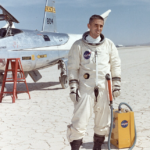



Beyond the cockpit, Manke also served in key leadership positions at the National Aeronautics and Space Administration (NASA). From 1981 to 1984, he was appointed director of NASA’s Dryden Flight Research Center, now known as the Armstrong Flight Research Center. During his tenure, he oversaw numerous flight research programs involving advanced aircraft and aerospace technologies, helping strengthen NASA’s role as a global leader in aeronautical innovation.
As director, Manke guided teams of engineers, researchers, and test pilots responsible for evaluating cutting-edge aviation concepts designed to improve aircraft performance, safety, and future spaceflight capabilities. His leadership played an important role in maintaining NASA’s reputation as a center for world-class aerospace research and technological advancement.
Throughout his career, John Arnold Manke Sr. earned the respect of colleagues for his dedication to scientific progress, exceptional flying skills, and commitment to pushing the limits of aerospace exploration while maintaining the highest standards of safety.
Manke passed away on January 31, 2019, at the age of 87. Although he is no longer with us, his pioneering work continues to influence modern aviation and space research. His historic achievements in lifting body flight remain important milestones in aerospace history, while his contributions to NASA continue to inspire engineers, pilots, and researchers striving to shape the future of flight.
Today, John Arnold Manke Sr. is remembered as one of America’s pioneering aerospace innovators a trailblazing test pilot whose courage, technical expertise, and visionary leadership helped transform experimental aviation into technologies that continue to benefit aerospace exploration around the world.
Early Life
Before building a distinguished career in engineering and aerospace, Manke laid a strong educational and military foundation that shaped his future contributions to science and technology.
Born on November 13, 1931, in Selby, South Dakota, Manke spent his early years in the American Midwest, where he developed an interest in learning and technical subjects. After completing his primary education, he enrolled at the University of South Dakota, taking his first steps toward a career in engineering and public service.
His academic journey was temporarily interrupted in 1951 when he entered military service with the United States Navy. Serving his country during a pivotal period of the Cold War, Manke gained valuable discipline, leadership skills, and technical experience that would later prove essential in his professional life.
Following his military service, Manke resumed his education by enrolling at Marquette University in Milwaukee, Wisconsin. There, he pursued a degree in electrical engineering, a field that was rapidly evolving alongside advances in aerospace, electronics, and communications.
While attending Marquette University, Manke also participated in the Naval Reserve Officers Training Corps (NROTC) program, balancing the demands of military training with rigorous engineering studies. The program further strengthened his leadership abilities while providing practical experience that complemented his academic education.
In 1956, Manke successfully graduated from Marquette University with a degree in electrical engineering. His education, combined with his military background, equipped him with the technical expertise and discipline that would serve as the cornerstone of a distinguished career in engineering, aerospace, and public service. These formative years laid the groundwork for the accomplishments that would later define his legacy in the engineering profession.
The NASA Test Pilot Who Helped Shape the Future of Spaceflight
John Manke was one of NASA’s most accomplished test pilots, playing a pivotal role in the development of advanced aircraft and technologies that laid the foundation for the United States’ Space Shuttle program. Throughout his distinguished career, Manke combined military discipline, engineering expertise, and exceptional flying skills to push the boundaries of aerospace innovation.
After graduating from Marquette University, Manke joined the United States Marine Corps, where he served as a fighter pilot. He completed his military career in 1960 with the rank of Major in the Marine Corps Reserve. Following his service, he worked as a test engineer at Honeywell Aerospace before joining NASA’s Flight Research Center at Edwards Air Force Base on May 25, 1962.
At NASA, Manke initially worked as a flight research engineer before becoming a research pilot. Over the years, he flew and evaluated some of the world’s most advanced experimental aircraft, including the Lockheed F-104 Starfighter, Douglas F5D Skylancer, General Dynamics F-16 Fighting Falcon, General Dynamics F-111 Aardvark, and Douglas C-47 Skytrain.
One of his earliest assignments involved NASA’s legendary X-15 hypersonic research program, where he served as a flight planner. Alongside fellow pilot Michael J. Adams, Manke completed X-15 ground school and participated in testing the powerful Reaction Motors XLR99 rocket engine. However, he left the X-15 program in 1967 following the tragic death of Adams during the aircraft’s third flight.
Manke’s most groundbreaking achievements came through NASA’s revolutionary lifting body program, which explored aircraft capable of returning from space and landing without traditional wings. Beginning in 1968, he flew several rocket-powered lifting body aircraft and made aviation history on May 9, 1969, when he became the first pilot to exceed the speed of sound in a lifting body, flying the Northrop HL-10.
He also became one of the most experienced lifting body pilots, flying the Northrop M2-F3 and Martin Marietta X-24 a record 42 times. His exceptional flying skills were demonstrated on August 5, 1975, when he executed a highly precise unpowered landing of the X-24B at Edwards Air Force Base. The successful landing proved that lifting body spacecraft could safely land on conventional runways without powered jet engines. This achievement significantly influenced NASA engineers, ultimately helping shape the final landing design of the Space Shuttle, which relied on unpowered gliding landings.
In addition to lifting body research, Manke contributed to the development of the Space Shuttle’s flight control systems by conducting experimental flights aboard the Vought F-8 Crusader, a pioneering fly-by-wire aircraft. His research helped engineers improve computerized flight control technologies that later became essential for modern aerospace vehicles.
Beyond the cockpit, Manke assumed leadership roles within NASA. He became Facility Manager and Chief of Flight Operations at the Dryden Flight Research Center and later held the same responsibilities after Dryden and the Ames Research Center integrated. From October 1, 1981, until his retirement on April 27, 1984, he served as Director of Flight Operations, overseeing numerous flight research missions.
Throughout his remarkable career, Manke contributed to several landmark aerospace programs, including the Boeing 747 Shuttle Carrier Aircraft, X-15, Northrop B-2 Spirit, and Grumman X-29. Altogether, he accumulated approximately 4,500 flight hours across 56 different aircraft, demonstrating extraordinary versatility as a research pilot.
Among his many accomplishments, Manke earned the prestigious Mach 3+ pin after flying the Lockheed YF-12 Blackbird, one of the fastest aircraft ever built.
John Manke’s career represents a remarkable chapter in aviation and space exploration history. His pioneering flight tests, engineering contributions, and dedication to aerospace research helped transform experimental concepts into technologies that would eventually carry astronauts into space and safely return them to Earth. His legacy continues to inspire generations of pilots, engineers, and space enthusiasts around the world.
John Manke: NASA’s Fearless Test Pilot Whose Legacy Continues to Inspire
John Manke’s remarkable journey through aviation and space research was recognized with some of the highest honors in the aerospace community, reflecting decades of extraordinary service, groundbreaking achievements, and unwavering dedication to advancing flight technology.
Throughout his distinguished career at NASA, Manke earned the NASA Outstanding Leadership Medal in 1978 for his exceptional contributions to the agency’s flight research programs. He was also awarded the prestigious NASA Exceptional Service Medal, recognizing his invaluable role in pioneering experimental aircraft that helped shape the future of human spaceflight. In 1984, the United States government honored him with the Presidential Rank Award of Meritorious Executive, one of the nation’s highest recognitions for senior federal executives, celebrating his outstanding leadership and commitment to public service.
His influence on aviation extended far beyond NASA. In 1997, Manke was inducted into the Aerospace Walk of Honor, a tribute reserved for legendary test pilots whose courage and innovation transformed aerospace history. The recognition placed him among an elite group of pioneers whose daring flights expanded humanity’s understanding of aviation and paved the way for future space exploration.
Behind the achievements and historic milestones was a devoted family man whose life was grounded in faith and community. In 1954, John married Marilyn Manke, beginning a lifelong partnership that lasted an extraordinary 65 years. Together, they built a loving family in Lancaster, California, where they raised five children and shared a life centered on love, service, and perseverance.
A committed Catholic, Manke faithfully served as a Eucharistic minister at Sacred Heart Parish in Lancaster, dedicating his time to his church and local community with the same humility that defined his professional career. Even outside NASA, his passion for flight never faded. He designed and built his own lightweight aircraft and gliders, continuing to explore the skies not as a duty, but as a lifelong passion. His expertise also earned him membership in the Society of Experimental Test Pilots, an organization composed of the world’s most accomplished and respected flight-test professionals.
John Manke passed away in Lancaster, California, in 2019 at the age of 87, leaving behind an extraordinary legacy that continues to resonate throughout the aerospace world. While history remembers him as one of NASA’s pioneering test pilots, those who knew him also remember a devoted husband, loving father, faithful servant of his community, and a man whose curiosity and courage never diminished.
His countless hours in the cockpit, his contributions to revolutionary aircraft programs, and his leadership helped shape technologies that made modern spaceflight possible. Yet perhaps his greatest legacy lies in the inspiration he leaves for future generations—proving that courage, innovation, humility, and dedication can change not only the course of aviation history but also the lives of those who dare to dream beyond the horizon.