The role of former Office of the Vice President security officer Col. Raymund Lachica has come under renewed scrutiny in the impeachment proceedings after testimony linked him to the release and handling of ₱125 million in confidential funds allegedly upon the instruction of then Vice President Sara Duterte, raising fresh questions over who had legal authority and accountability for the funds.
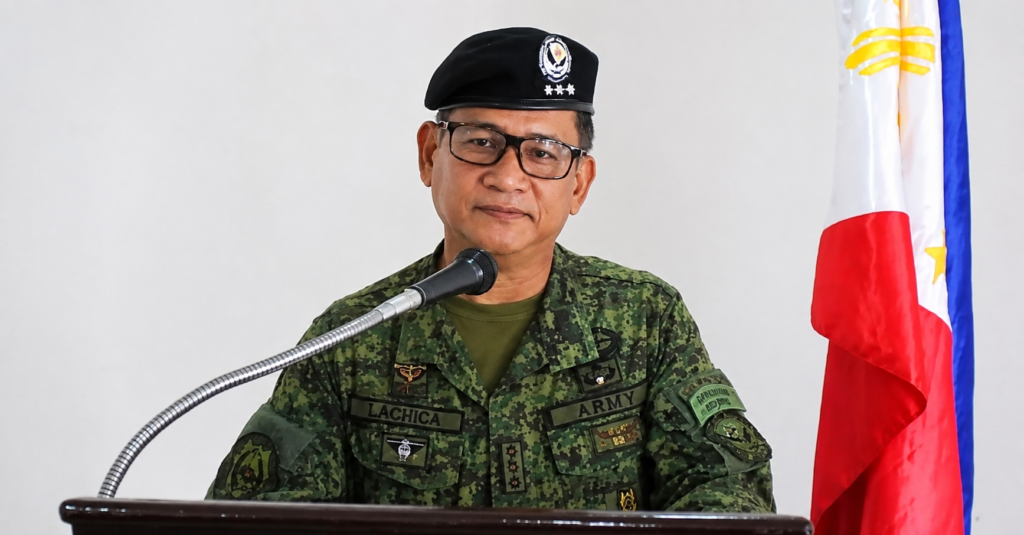
The impeachment trial entered a crucial phase on its 16th day as the prosecution appeared to sharpen its focus on Lachica, the former Office of the Vice President (OVP) security officer who allegedly became a key recipient and dispenser of questioned confidential funds under former Vice President Sara Duterte.
The shift in focus became increasingly apparent after the prosecution spent roughly three hours examining Gina Acosta, a former special disbursing officer of the OVP and a witness whose testimony proved significant in tracing how a portion of the confidential funds moved within the office.
Although the questioning initially appeared circuitous, the prosecution eventually made its central line of inquiry clearer: it was seeking to establish how Lachica became involved in the handling of funds that, under existing government rules, were supposed to pass through an authorized disbursing officer.
At the center of the discussion was the P125 million that formed part of the P500 million in confidential funds released to the OVP between 2022 and 2023. The prosecution sought to establish whether the movement of the P125 million created what it described as a possible break in the chain of accountability for government funds.
That concept had previously been discussed by Commission on Audit state auditor Xylene del Campo, who explained the importance of maintaining a clear chain of accountability in the handling and disbursement of public money.
The testimony of Acosta brought that issue into sharper focus.
During the proceedings, Acosta acknowledged that she released the P125 million to Lachica, allegedly upon the instruction of Duterte. The admission had already surfaced during a House committee hearing in November 2024 and subsequently became significant in the Commission on Audit’s examination of the transaction.
The matter is particularly important because, according to del Campo’s earlier testimony, the 2015 joint circular governing confidential and intelligence funds identifies the authorized disbursing officer as the person responsible for the proper release and accountability of such funds.
In the OVP’s case, Acosta was identified as the authorized disbursing officer.
That raised a fundamental question for the prosecution. If Acosta was the officer authorized to disburse the money, under what authority was the responsibility transferred to Lachica?
The issue is not merely about who physically received the money. It goes to the larger question of accountability who was legally responsible for the funds at every stage, who had authority to handle them, and whether the required documentation was sufficient to establish that the money was properly used for its intended purpose.
READ OTHER ARTICLES:
- Alfred Tecsond Nagkuwento ng Umano’y Karanasan sa PNP General Bilang Kliyente
- Jonvic Remulla Urges Congress to Tighten Firearms Law, Revisit ‘Robin Padilla Law’ After School Shooting
- Col. Raymund Dante Lachica Challenges Ramil Madriaga’s Claims in Sara Duterte Impeachment Hearing
- Colonel Raymund Dante Lachica Faces Scrutiny Over ₱125M Confidential Funds
- Roblox, Terrorist Influence and Rising Youth Violence Alarm the Philippines

- ACDD Tasking Platform Goes Offline After Users Report Unpaid Funds and ‘Tax’ Demands

The prosecution’s questioning therefore appeared designed to reconstruct the movement of the P125 million and determine how responsibility shifted from an authorized disbursing officer to another OVP official.
The controversy surrounding the transaction was compounded by the Commission on Audit’s findings. COA eventually issued a Notice of Disallowance involving the P125 million after raising concerns over the transaction and the documentary requirements supporting the confidential funds.
A Notice of Disallowance is a significant audit finding because it indicates that government auditors have determined that a particular expenditure cannot be accepted as a valid charge against public funds unless the deficiencies identified by auditors are properly addressed.
The dispute over the P125 million consequently became part of a much broader controversy involving the OVP’s use of confidential funds and whether the office complied with the rules governing their release, utilization, and liquidation.
The 2015 joint circular cited during the proceedings was crafted by several government agencies, including the Commission on Audit and the Department of Budget and Management, to establish guidelines for the use and accountability of confidential and intelligence funds.
The rules are intended to ensure that these funds—although subject to confidentiality because of their nature remain subject to government accountability mechanisms.
The proceedings have therefore placed considerable attention on the distinction between confidentiality and exemption from accountability.
Confidential funds may involve sensitive operations, but their confidential nature does not automatically eliminate the requirement for proper authorization, documentation, accounting, and audit.
That distinction is at the heart of the prosecution’s questions.
Why was Lachica entrusted with the P125 million?
Why was he the person who received the funds instead of Acosta, who had been identified as the authorized disbursing officer?
Was there a valid legal basis for transferring the responsibility?
And, ultimately, could the government establish a continuous and legally sufficient chain of accountability from the release of the funds to their eventual utilization?
These questions became increasingly central as the prosecution examined Acosta.
Both prosecution lawyer Amando Virgil Ligutan and Acosta repeatedly referred to Lachica as a “security officer” during the hearing. However, the characterization does not necessarily capture the full significance of his role in the transactions being examined.
Lachica was not simply a rank-and-file security employee whose involvement was limited to physical protection or office security. His alleged role in receiving and dispensing a substantial amount of confidential funds placed him at the center of questions concerning the movement and accountability of public money.
That is precisely why the prosecution appeared interested in establishing the extent of Duterte’s trust in Lachica and the authority that accompanied that trust.
The issue is not necessarily whether Duterte had the personal authority to trust a particular employee. Rather, the legal question is whether such trust could translate into authority to perform a function assigned by government regulations to a specific accountable officer.
Public accountability rules exist precisely because government transactions cannot depend solely on personal instructions or relationships between officials and their subordinates.
Even when an official gives an instruction in good faith, the person implementing that instruction may still be required to comply with established procedures.
The prosecution’s line of questioning appeared to test whether that principle was followed in the release of the P125 million.
The testimony also placed Acosta in a complicated position. As the authorized disbursing officer, she was expected to perform responsibilities associated with the release and accountability of government funds. Yet she testified that the P125 million was released to Lachica following Duterte’s instruction.
That creates a critical point of inquiry for the impeachment proceedings: whether the act of following an instruction from a superior official was sufficient to satisfy the legal and accounting requirements governing the disbursement of confidential funds.
The answer depends not only on what happened inside the OVP but also on the rules governing the authority of accountable officers and the documentation required for confidential expenditures.
COA’s subsequent disallowance added weight to the issue because auditors were not satisfied that the transaction had met the necessary requirements.
The prosecution now appears to be using the testimony of Acosta to connect several pieces of the controversy: the identity of the authorized disbursing officer, the involvement of Lachica, Duterte’s alleged instruction, the release of P125 million, and the documentary deficiencies identified by government auditors.
Taken together, those elements form the foundation of the prosecution’s argument that there may have been a disruption in the chain of accountability.
The defense, however, will have the opportunity to challenge the prosecution’s interpretation of the evidence, including the circumstances surrounding the release of the funds, Lachica’s authority, Duterte’s instructions, and the significance of COA’s findings.
The impeachment trial is not simply examining whether money was released. It is examining the circumstances under which the funds were handled and whether the officials involved complied with the legal and administrative requirements attached to public money.
As the proceedings continue, Lachica’s role is therefore likely to remain under close scrutiny.
The P125 million transaction has emerged as a particularly important piece of the larger confidential-funds controversy because it provides a concrete example of how responsibility for public funds allegedly moved from an authorized disbursing officer to another official.
The prosecution’s challenge is to demonstrate, through documentary evidence and witness testimony, whether that transfer was authorized and whether the accountability required by government rules remained intact.
For the defense, the task will be to explain the circumstances surrounding the transaction and establish why the actions of the officials involved should not be interpreted as violations of the rules governing confidential funds.
What began as a lengthy examination of a former OVP disbursing officer has therefore developed into a deeper examination of authority, accountability and the handling of public funds.
At the center of that examination now stands Lachica a figure whose role in the P125 million transaction has brought new questions to the forefront of the impeachment proceedings.
The critical issue is no longer simply where the money went. It is whether the government can trace, document and legally account for every step of its movement, and whether the officials who handled it acted within the authority granted to them by law and government regulations.
As the Senate impeachment court continues its proceedings, the testimony surrounding Lachica could become an important part of the prosecution’s effort to establish whether the questioned confidential-fund transactions reflected legitimate government procedures or a failure in the chain of accountability required for the use of public money.
Lachica’s Role in Duterte Security Under Scrutiny
The role of former military officer Lieutenant Colonel Edward Lachica in Vice President Sara Duterte’s security operations has come under renewed scrutiny as the impeachment trial examines how confidential funds were handled and who had authority over activities connected to the Office of the Vice President (OVP).
Lachica was not a regular employee of the OVP. Instead, he was appointed by the top leadership of the Armed Forces of the Philippines (AFP) to head Duterte’s security group. In that capacity, he led a composite military and police command tasked with protecting the vice president.
His responsibilities went beyond providing physical security. Until he was relieved of his position in October 2025 amid the controversy surrounding the OVP’s confidential funds, Lachica was involved in receiving, assessing, and acting on intelligence information concerning possible threats to Duterte and members of her immediate family.
His extensive military background made him a key figure in the security structure surrounding the vice president. Lachica has served in the military for more than 33 years after graduating from the Philippine Military Academy in March 1993. Throughout his career, he held various positions involving intelligence, research, field operations, and command.
He previously served as director for research and special studies of the Philippine Army. He also became a field station commander of an intelligence unit operating in Davao del Norte, Compostela Valley, and Davao Oriental, areas where intelligence operations were considered particularly important because of the security challenges in Mindanao.
In 2010, Lachica served as assistant chief of staff for intelligence of the Army’s 10th Infantry Division, further strengthening his credentials in intelligence and security operations.
Earlier in his career, he was an Army company commander in Mindanao from 1996 to 1999. That period may have been significant in establishing his familiarity with Duterte, who was then deeply involved in local political affairs in Davao. Their professional and regional connections have since become relevant to questions surrounding Lachica’s later role in Duterte’s security apparatus.
Despite his extensive military credentials, however, questions have been raised over whether Lachica should have played any role in activities involving the OVP’s confidential funds.
The issue largely centers on the rules governing the use and administration of confidential and intelligence funds. According to the Commission on Audit’s interpretation of the applicable joint circular, personnel assigned to security functions may not automatically be authorized to receive, administer, or directly handle confidential funds simply because they are involved in intelligence or security operations.
This distinction has become an important point in the impeachment proceedings. For the prosecution, Lachica represents a potentially significant link in establishing how confidential funds were managed within the OVP and determining whether the individuals who handled or benefited from those funds were properly authorized to do so.
However, it took several hearings before the prosecution focused closely on Lachica and his possible role in the controversy. His appearance was expected to shed light on the security and intelligence side of the OVP’s operations, particularly because earlier testimony had already established that other officials were directly involved in the disbursement and liquidation of the funds.
The hearing itself encountered several procedural and communication difficulties.
One of the early issues involved prosecution witness Atty. Zuleika Acosta, whose difficulty in expressing herself in Tagalog became noticeable during questioning. Senator-judge Erwin Tulfo called attention to the issue, pointing out that Acosta had previously managed to speak in the vernacular during the House of Representatives proceedings.
Both Acosta and Tulfo are from Davao and speak Cebuano, adding another dimension to the exchange inside the impeachment court.
The hearing also revisited several questions that had already surfaced repeatedly during the trial, particularly those surrounding the withdrawal of ₱125 million in confidential funds.
Lawmakers and prosecutors once again examined how the money was withdrawn, who provided instructions or advice, where the funds were kept, and how they were transported. The proceedings also featured the use of artificial intelligence-generated visuals to illustrate the enormous amount of money involved, an approach that generated additional discussion during the hearing.
Before Acosta took the witness stand, the prosecution presented Marivic Pareja of the House of Representatives’ Legislative Information Resources Management Department.
Pareja was presented in connection with documents involving the liquidation of funds and records obtained from previous House proceedings. However, after the prosecution and defense agreed on the authenticity and admissibility of documents in her possession, Pareja was excused from further testimony.
Her brief appearance came as a surprise to some observers because expectations had been raised that she might provide additional details concerning the documentary trail surrounding the disputed funds.
Acosta, meanwhile, confirmed a role that had already been established through previous proceedings: she was the OVP’s special disbursing officer.
Her position placed her directly within the financial process involving the funds. But Acosta also testified about another aspect of her work in the OVP, saying that she helped prepare and develop projects associated with the office’s so-called good governance initiatives.
Among these activities were programs such as tree planting and free bus rides, which were presented as part of the OVP’s public-service efforts.
When it came to security and intelligence-related matters, however, Acosta said she relied on Lachica. She explained that she trusted him because of his expertise in confidential operations and his extensive experience in military intelligence.
That testimony could prove significant to the impeachment proceedings because it raises a central question: if Lachica was considered the expert responsible for security and intelligence matters, did that expertise also give him legal authority to participate in the handling or administration of confidential funds?
The distinction between expertise and authority is at the heart of the controversy. Lachica’s military background is not in question. His decades of service, intelligence assignments, command positions, and experience in Mindanao establish him as a highly experienced security officer.
But the controversy is not necessarily about whether he was qualified to assess threats or protect the vice president. Rather, it concerns whether his appointment to Duterte’s security group gave him the authority to perform financial functions connected to confidential funds.
That question is particularly important because confidential funds are subject to specific rules designed to ensure that public money is used only for authorized intelligence and security purposes and is administered by personnel who are legally permitted to do so.
The impeachment proceedings therefore appear to be moving beyond the question of who physically handled the money and toward a broader examination of the chain of authority behind its use.
The testimony also places Acosta and Lachica in distinct but interconnected roles.
Acosta was the special disbursing officer responsible for the financial side of the transactions. Lachica, on the other hand, was the security and intelligence specialist whom she said she trusted to handle matters falling within his expertise.
The prosecution’s challenge is to establish whether those roles were carried out within the boundaries of the rules governing confidential funds.
For the defense, Lachica’s military position and security responsibilities could provide an explanation for why he was involved in intelligence-related activities. His long record of service could also support the argument that his participation was connected to legitimate security concerns rather than ordinary financial administration.
For the prosecution, however, the issue is whether the rules governing confidential funds permit such involvement and whether the documentation and liquidation of the funds adequately demonstrate that the money was used for legitimate and authorized purposes.
As the trial continues, Lachica’s testimony and the records surrounding his appointment could become increasingly important in determining how the OVP’s security structure operated and how confidential funds moved through that system.
The controversy ultimately turns on a question that extends beyond any single witness: who had legal authority over the confidential funds, who actually exercised control over them, and whether the procedures required by government regulations were followed.
Lachica’s long military career may explain why he was trusted with the vice president’s security and intelligence concerns. But the impeachment proceedings are examining whether that trust also extended into an area governed by strict financial rules.
As the Senate impeachment court continues to hear evidence, the answers to those questions could help determine whether the OVP’s handling of confidential funds was merely an administrative controversy or part of a broader issue involving accountability, authority, and the proper use of public money.
The Missing ₱125 Million
The question surrounding Vice President Sara Duterte’s confidential funds has taken another turn as testimony before the impeachment proceedings placed Army Col. Raymund Lachica at the center of efforts to determine how ₱125 million in confidential funds released under the Office of the Vice President were handled and accounted for.
During the proceedings, Gina Acosta said she relied on Lachica to help justify the disbursement of the funds whenever the Office of the Vice President was required to comply with liquidation and reporting requirements. Her testimony suggested that Lachica played an important role in providing inputs that helped the office explain how the funds were used.
The testimony gained greater significance because the confidential funds were released under the authority and name of Vice President Sara Duterte. This raised a fundamental question: to what extent could Duterte delegate the handling or distribution of confidential funds to a trusted subordinate, and where does responsibility ultimately rest when such funds are released under the name of the agency head?
At the hearing, Sen. Rodolfo “Bong” Ligutan pressed Acosta on why Lachica was trusted to handle the funds. Acosta indicated that her confidence in him was connected to his position and, ultimately, to the authority of Duterte, whom she identified as the head of the agency under whose name the confidential funds were released.
The issue is not simply whether Lachica physically handled or distributed money. At its core is the question of accountability: who had actual control over the funds, who authorized their use, who knew where they went, and who was responsible for ensuring that every peso complied with the rules governing confidential expenditures?
These questions have become central to the controversy because the Commission on Audit previously questioned the use and liquidation of the Office of the Vice President’s confidential funds and issued a notice of disallowance involving ₱125 million.
For the COA auditors, authority over confidential funds does not eliminate the responsibility to account for them. The rules governing public funds impose obligations on officials involved in their release, utilization, documentation and liquidation.
Yet the proceedings have also exposed a critical distinction that remains unresolved: while auditors questioned the manner in which the funds were accounted for, they have not publicly established tangible evidence showing that Duterte personally received or benefited from the ₱125 million.
The controversy therefore rests on two separate but connected questions.
The first concerns whether the funds were properly released, used and liquidated under existing government rules. The second concerns whether Duterte herself can be directly linked to the actual recipients and beneficiaries of the money.
The prosecution appears to be pursuing the second question by examining the people who were allegedly involved in the handling and documentation of the confidential funds.
That is where Lachica has become particularly important. Investigators and prosecutors appear to view his testimony and possible knowledge of the transactions as a potential bridge between the official documents and the individuals who may have actually received or benefited from the funds.
For months, the controversy has been dominated by questions surrounding names and identities that appeared in documents connected to the confidential fund liquidation. Some of those names, including the widely discussed “Mary Grace Piattos,” “Bacons,” and “Mangos,” have become symbols of the larger mystery over who ultimately received the money.
The prosecution’s challenge is to establish whether these names correspond to real individuals, whether they were legitimate recipients, and whether the amounts attributed to them were actually disbursed for legitimate intelligence-related activities.
Lachica’s alleged role could therefore be significant if he possesses information capable of identifying the people behind those names or explaining how the money moved from the Office of the Vice President to its ultimate recipients.
But testimony alone does not automatically establish guilt.
Any allegation involving public funds must still be supported by documentary evidence, credible testimony and a clear chain connecting the questioned transactions to the individuals being accused.
The hearings have consequently become a test not only of Duterte’s accountability but also of the government’s ability to demonstrate precisely what happened to the ₱125 million.
The political dimension of the controversy has also continued to grow.
During the Senate proceedings, Rep. Benny Abante, who entered the hearings later than some of the other lawmakers involved, used the flooding that affected parts of the country as an analogy for the controversy surrounding the confidential funds.
He argued that, much like floodwaters whose source and destination may be difficult to determine, the public still wants to know where the ₱125 million originated in the chain of disbursement and where it ultimately went.
Abante specifically questioned whether Lachica was a recipient of the money, pointing to Acosta’s testimony that appeared to distinguish Lachica’s involvement from direct receipt of the funds.
His remarks captured the frustration at the heart of the controversy: if Lachica was not the ultimate recipient, then who was?
And if he was merely acting on instructions or providing assistance in the administration and liquidation of the funds, who authorized the transactions and who had knowledge of the final beneficiaries?
Those questions remain difficult because confidential funds operate under a different framework from ordinary government expenditures. Their purpose involves sensitive operations, including intelligence and security activities, which means that some information may legitimately be protected from public disclosure.
However, confidentiality does not mean the absence of accountability. Public funds remain public funds even when their intended use involves sensitive government operations.
The central issue, therefore, is not simply whether the names of confidential sources or intelligence operatives should be publicly disclosed. It is whether the government can demonstrate through lawful auditing and accounting procedures that the money was genuinely used for the purposes for which it was appropriated.
That distinction could become increasingly important as the impeachment proceedings move forward.
For Duterte’s critics, the unresolved trail of the ₱125 million represents a serious accountability problem. They argue that the official under whose authority the funds were released cannot simply distance herself from transactions conducted by people within her office.
For Duterte’s defenders, however, the absence of direct evidence showing that she personally received or benefited from the money is equally significant. They contend that responsibility should not automatically be transformed into personal culpability without proof that she participated in, authorized or benefited from irregular transactions.
Between those two positions lies the evidentiary question that the proceedings must ultimately answer.
Did the confidential funds reach legitimate recipients?
Were the liquidation documents truthful and properly supported?
Who instructed the people who handled the funds?
Who knew the identities behind the questioned names?
And most importantly, what evidence can establish a direct connection between the transactions and the officials being held accountable?
The prosecution appears to believe that Lachica could help answer some of these questions.
Whether he can actually provide the missing links remains to be seen.
For now, the controversy continues to revolve around a simple but consequential question: where did the ₱125 million go?
Until that question is answered with credible and verifiable evidence, the confidential funds controversy is likely to remain one of the most contentious issues surrounding Duterte’s political and legal battles.
The hearings may produce more names, more documents and more testimony. But ultimately, the public is waiting for something more definitive than political arguments.
They want the money trail.They want to know who controlled it, who received it, how it was used and who bears responsibility for it.
And until those questions are conclusively answered, the ₱125 million will remain at the center of a controversy that reaches far beyond accounting rules into the broader issue of accountability at the highest levels of government.
- Top 1 Most Wanted sa Region 8, Arestado sa Palompon, Leyte
- Alfred Tecsond Nagkuwento ng Umano’y Karanasan sa PNP General Bilang Kliyente
- Jonvic Remulla Urges Congress to Tighten Firearms Law, Revisit ‘Robin Padilla Law’ After School Shooting
- Col. Raymund Dante Lachica Challenges Ramil Madriaga’s Claims in Sara Duterte Impeachment Hearing
- Colonel Raymund Dante Lachica Faces Scrutiny Over ₱125M Confidential Funds
- Roblox, Terrorist Influence and Rising Youth Violence Alarm the Philippines
- Apat sugatan sa pagsabog sa burger store sa Calbayog; ₱600K pinsala
- Guanzon, Badoy Pinabulaanan: Walang Katotohanan ang Umano’y Lihim na Pagpupulong nina VP Sara Duterte at PBBM
- ACDD Tasking Platform Goes Offline After Users Report Unpaid Funds and ‘Tax’ Demands
- Rey Grabato II Named to FBI Most Wanted List Over $650 Million Fraud Case