Cryptocurrency, artificial intelligence and online betting companies are emerging as powerful new forces in the 2026 U.S. midterm elections, channeling unprecedented amounts of money into political campaigns as corporate spending on congressional races climbed to $517 million in the first quarter alone, exceeding the total corporate spending recorded throughout the 2024 election cycle.
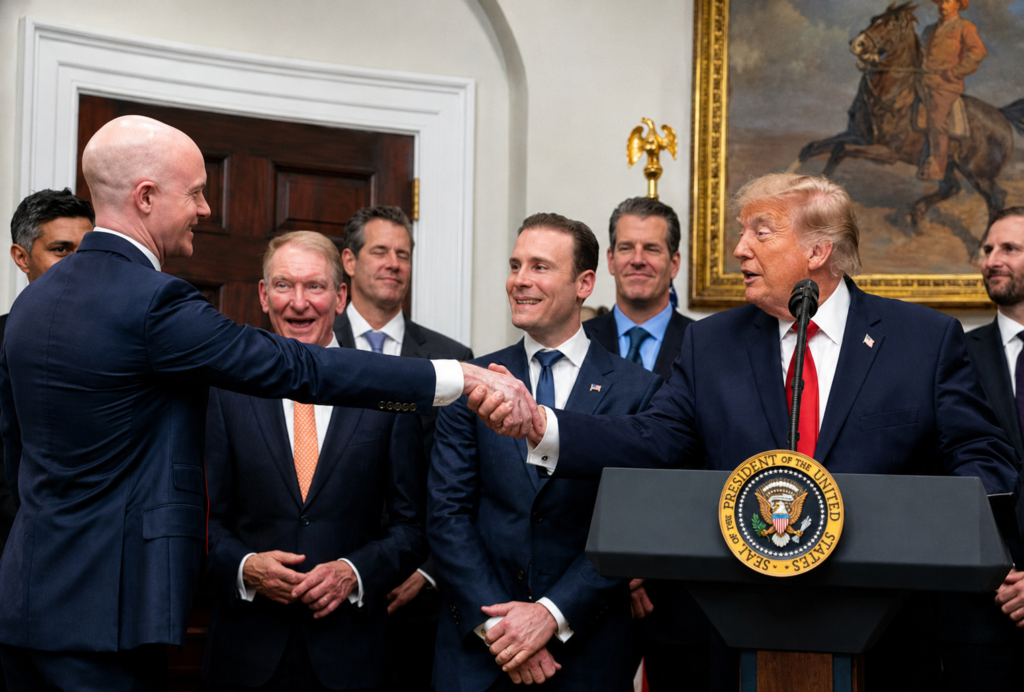
A new generation of corporate power brokers is transforming the financial landscape of American politics, with cryptocurrency, artificial intelligence and online betting companies pouring unprecedented amounts of money into the 2026 U.S. midterm elections.
Industries that once had limited political influence compared with traditional powerhouses such as Wall Street, oil, pharmaceuticals and media are rapidly emerging as major forces in congressional and state races. Their growing spending reflects a broader effort to influence lawmakers as Washington and state governments consider regulations that could determine the future of their businesses.
Corporate spending on U.S. House and Senate races reached approximately $517 million during the 15 months through the first quarter of 2026, according to data compiled by Public Citizen. The amount has already surpassed the $461 million spent by corporations throughout the entire 2024 election cycle.
And the spending is expected to grow substantially as the November 3 elections draw closer.
Political advertising during the 2026 midterms is projected to reach a record $11.6 billion, according to AdImpact. That would exceed the previous record of $11.2 billion during the 2023–2024 election cycle.
The surge demonstrates how emerging industries are adopting a political strategy long associated with established corporate interests: spend heavily, support candidates whose policies align with their business objectives and challenge politicians viewed as threats to their industries.
The cryptocurrency sector was among the first to demonstrate the power of this strategy on a national scale.
READ OTHER ARTICLES:
- Crypto, AI and Betting Firms Emerge as New U.S. Political Kingmakers
- US Warns Iran of Unprecedented Economic Pressure as Hormuz Shipping Nears Standstill

- WASHINGTON: 15-Year-Old Suspect Arrested After Deadly Shootout at Seattle Food Festival Leaves Three Dead, Four Injured

- Donald Trump Says US ‘Locked and Loaded’ as Washington Pursues Talks With Iran
![Nablus in the Israeli-occupied West Bank, on Friday [Jaafar Ashtiyeh/AFP]](https://www.aptikons.com/view/Screenshot-2026-07-25-133516-150x150.png)
- Anthony Edwards Secret Wedding Surprises Fans Following Major Legal Victory And Family

- California Mother Angelica Brophy Still Missing as Family Pleads for Help in Second Week of Search

Crypto companies such as Coinbase and Ripple, along with venture capital firm Andreessen Horowitz, invested heavily through the Fairshake super PAC. Rather than concentrating exclusively on one political party, the organization targeted candidates based largely on their positions toward cryptocurrency regulation.
Fairshake entered 2026 with roughly $193 million and had about $130 million remaining for the election cycle, according to campaign filings cited by Reuters. Much of its funding came from Coinbase, Ripple and Andreessen Horowitz.
The strategy marks a significant change in the way corporate political influence is being exercised.
Instead of simply supporting a particular party, emerging industries are increasingly targeting individual candidates whose positions advance their interests. Super PACs and affiliated political organizations can also raise and spend enormous sums, although federal law prohibits them from directly coordinating their activities with candidates.
The growing influence of corporate money has drawn criticism from campaign-finance watchdogs, who warn that enormous financial contributions could allow relatively narrow commercial interests to exert disproportionate influence over public policy.
Supporters counter that emerging industries have a legitimate interest in participating in the political process, particularly when lawmakers are considering regulations that could determine whether those industries expand, contract or face significant restrictions.
Artificial intelligence has become one of the most striking examples of this new political contest.
AI was not a major force in political spending during the 2024 elections. By 2026, however, companies and executives associated with the sector have begun spending millions of dollars to influence candidates and shape the regulatory environment surrounding the technology.
Political groups backed by OpenAI and Anthropic, which have taken different approaches to AI regulation, spent more than $23 million in June alone on competing Democratic candidates in a New York City congressional district, according to campaign-finance records cited by Reuters.
An AI-focused super PAC known as Leading the Future has raised approximately $140 million for the midterm elections. A nonprofit associated with Anthropic has also received at least $40 million from the company during the election cycle, according to the Reuters report.
The political competition reflects a deeper disagreement within the technology industry over how aggressively governments should regulate artificial intelligence.
Lawmakers are confronting questions involving AI safety, copyright, data centers, energy consumption, employment, national security and the development of increasingly powerful systems.
For technology companies, political influence is therefore about more than protecting profits. Election outcomes could help determine the rules under which the AI industry operates for decades.
The online betting industry is following a similar trajectory.
DraftKings, FanDuel, Fanatics and Britain’s bet365 have collectively contributed more than $72 million to the 2026 midterms, making online sports betting one of the largest corporate sources of election funding, according to Public Citizen estimates cited by Reuters.
Much of that money is flowing into state-level contests, where gambling companies frequently face regulatory battles over licensing, taxation and the expansion of betting markets.
The industry’s political expansion comes as election-related prediction markets are also gaining momentum. Reuters reported that wagers on the 2026 U.S. midterm elections had reached $133 million by August, surpassing the $92.4 million wagered during the 2024 congressional election cycle.
The growth of prediction markets has created new debates over whether political event contracts should primarily be treated as financial products or gambling. Questions about market integrity and potential insider trading have added another layer to the controversy.
At the same time, some of America’s wealthiest technology executives are committing enormous personal fortunes to politics.
SpaceX founder Elon Musk has directed more than $90 million toward the 2026 federal elections, with plans to spend more before November. Google co-founder Sergey Brin has spent more than $106 million in California on political issues, including opposition to a proposed wealth tax, according to federal and state filings cited by Reuters.
Meta has also contributed $65 million to four super PACs supporting candidates in several state races, according to the report.
The concentration of political spending has intensified concerns about the role of wealthy individuals and corporations in American democracy. Campaign-finance advocates argue that when companies and billionaires can spend tens or hundreds of millions of dollars on advertising, voter mobilization and political organizations, ordinary voters may struggle to compete for public attention.
The concern becomes particularly significant when corporate money pushes specialized regulatory issues to the center of political debate while many voters remain focused on everyday pressures such as food prices, fuel costs, healthcare and household expenses.
Yet the rise of these industries also reflects a fundamental transformation in the American economy. Cryptocurrency, artificial intelligence and online betting were once peripheral sectors. Today, they represent powerful industries with billions of dollars at stake in government decisions.
Their emergence as major political donors signals that the traditional map of American political influence is being redrawn.
For candidates, the money can provide powerful advertising campaigns, voter outreach and political infrastructure. For companies, it creates opportunities to support lawmakers who could shape the regulatory environment in which their businesses operate.
For voters, however, the expanding flow of corporate money raises a more fundamental question. Who is setting America’s political agenda the electorate or the industries with the deepest pockets?
As the 2026 midterm elections approach, that question is likely to become increasingly difficult to ignore. The new kingmakers are no longer limited to the traditional giants of American business. They are increasingly the companies building the digital economy and they are spending heavily to make sure Washington is listening.
- WASHINGTON: 15-Year-Old Suspect Arrested After Deadly Shootout at Seattle Food Festival Leaves Three Dead, Four Injured
- USA: Senate Battle Lines Drawn – GOP’s Big Bet, Voter Anger, and the Shadow of War
- US-Iran Tensions Escalate as Military Threats, Diplomatic Disputes, and Regional Mediation Efforts Intensify

- US Warns Iran of Unprecedented Economic Pressure as Hormuz Shipping Nears Standstill
- US Commander Claims Sea Blockade Halts 90% of Iran’s Economy Amidst Peace Talks

- U.S. Demands Iran Guarantee Strait of Hormuz Shipping Safety Amid Ceasefire
- Trump Cancels Envoys’ Pakistan Trip for Iran Peace Mission as Israel Escalates Lebanon Strikes Amid Stalled Talks

- Thomas Redrick Williams Wanted After Wedding Reception Shooting Leaves Two Injured in Wisconsin

- Take It Down Act – A Major Step Forward in Protecting Digital Privacy and Dignity