Sara Zimmerman Duterte-Carpio, widely known as Inday Sara, was born on May 31, 1978. A lawyer by profession and a seasoned public servant, she currently serves as the 15th Vice President of the Philippines. She holds several historic distinctions, including being the youngest individual ever elected to the vice presidency, the third woman to occupy the country’s second-highest office, and the third vice president from Mindanao.
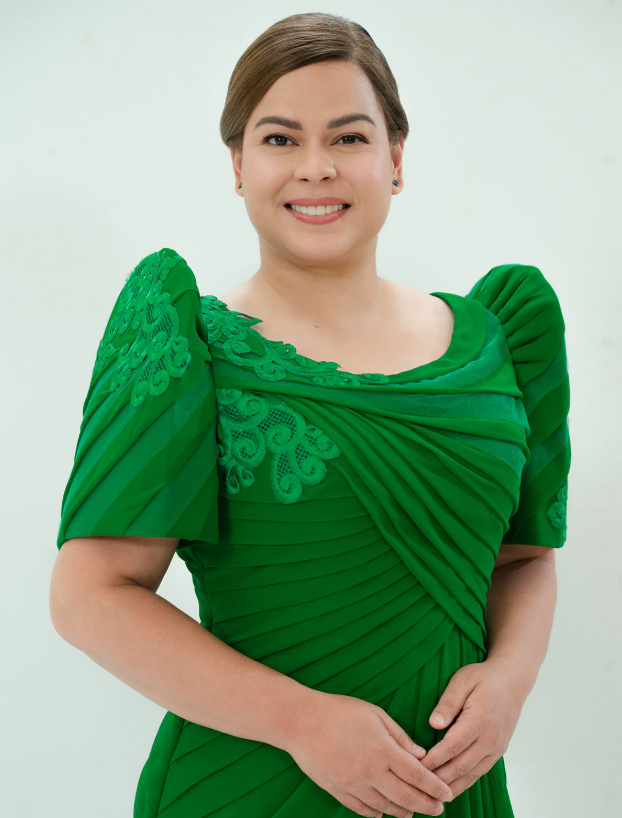
As the daughter of former President Rodrigo Duterte, Sara Duterte established her own political career long before assuming national office. Her rise in public service began in Davao City, where she served as vice mayor from 2007 to 2010 before making history as the city’s first female and youngest mayor in 2010. She held the mayoralty until 2013, succeeding her father, and later returned to the position in 2016 after a brief break from politics. She secured another term in 2019, leading the city until 2022.
Before entering politics, Duterte initially intended to pursue a career in medicine after graduating from San Pedro College. However, she later shifted her focus to law, studying at San Beda College before earning her law degree from San Sebastian College–Recoletos. Her legal background became a strong foundation for her public service and leadership roles.
During her second tenure as Davao City mayor, Duterte introduced several notable initiatives aimed at improving governance and public welfare. Among these were the Byaheng DO30 and Peace 911 programs, both designed to enhance community development and peace-building efforts. She also oversaw the city’s response to the COVID-19 pandemic, implementing policies intended to address public health and local governance challenges during the crisis.
Beyond Davao City, Duterte emerged as an influential political figure during the administration of her father. She built alliances with various political groups and played a significant role in national political developments, including the leadership change in the House of Representatives in 2018 that resulted in the removal of then-Speaker Pantaleon Alvarez.
- Sara Duterte | Lawyer, Biography, Political Career & Issues

- Ombudsman Files Fourteen Graft Cases Against Congressman Over Contract Links Today
- Macau Giant Pandas Complete Stunning Comeback For First Governors Cup Victory
- Typhoon Noul Threatens Southern China, Hong Kong Cancels Flights, Thousands Evacuated
- Cebu Youth Champions Showcase Untapped Philippine Basketball Talent and Promise
- Cebu Authorities Seize Unregistered Korean Luncheon Meat Worth ₱700,000 From Grocery Store


In the 2022 national elections, Duterte sought the vice presidency under Lakas–CMD, joining forces with Bongbong Marcos of the Partido Federal ng Pilipinas through the UniTeam alliance. The tandem achieved a decisive electoral victory, becoming the first presidential and vice-presidential running mates to win together since 2004 and the first pair to secure a majority mandate since the establishment of the Fifth Republic in 1986.
Sara Duterte officially assumed office as Vice President on June 30, 2022, although her inauguration ceremony was held earlier, on June 19, 2022, in Davao City. Since taking office, she has remained one of the country’s most prominent political leaders, continuing a career that has spanned local governance and national leadership.
Following her election as vice president, Sara Duterte simultaneously held the position of Secretary of Education, taking charge of the country’s education sector during a period marked by significant learning challenges. She also served as vice chairperson of the National Task Force to End Local Communist Armed Conflict (NTF-ELCAC). However, on June 19, 2024, she stepped down from both roles, signaling a major shift in her responsibilities within the Marcos administration.
Although Duterte and President Ferdinand Marcos Jr. campaigned together as political allies during the 2022 elections, their relationship reportedly became increasingly strained over time. Political analysts observed that throughout 2024, Duterte was rarely seen alongside the president during official engagements, fueling widespread speculation about growing tensions between the Marcos and Duterte political camps. The divide became more apparent in late August 2024, when Duterte publicly expressed regret over endorsing Marcos’ presidential bid during police operations targeting her father’s ally, religious leader Apollo Quiboloy. President Marcos later confirmed that the two had not spoken since Duterte formally resigned from the Cabinet.
Following the arrest of former President Rodrigo Duterte and his transfer to The Hague in March 2025, the vice president intensified her international engagements, making several overseas trips that were widely viewed as efforts to strengthen support for the Duterte family’s global network of supporters.
The political pressure surrounding Duterte escalated on February 5, 2025, when the House of Representatives voted to impeach her. The impeachment stemmed from concerns over her alleged use of confidential funds and controversial remarks interpreted as threats against President Marcos, First Lady Liza Araneta-Marcos, and House Speaker Martin Romualdez. The move made Duterte the first sitting vice president in Philippine history to be impeached and only the fifth national official to face impeachment proceedings.
Her legal and political challenges continued into 2026. By May of that year, Duterte became the first Philippine public official to face impeachment twice, marking another unprecedented development in the country’s political history. Despite the ongoing controversies, she announced on February 18, 2026, that she intends to seek the presidency in the 2028 national elections, setting the stage for another high-profile chapter in Philippine politics.
Sara Duterte: Early Life and Family Background
Sara Zimmerman Duterte was born on May 31, 1978, at Davao Doctors Hospital in Davao City. She is the second child of former Philippine President Rodrigo Duterte, who was then practicing law, and Elizabeth Zimmerman, a former flight attendant. Her family also traces part of its heritage to her maternal great-grandfather, a German American who emigrated from the United States to the Philippines.
During her childhood, Duterte grew up in what she has described as a “broken family.” She has openly spoken about the complex and often strained relationship she shared with her father during her younger years. According to her, disagreements over Rodrigo Duterte’s personal lifestyle—including his womanizing and frequent late-night activities—created a mixture of admiration and resentment that shaped their father-daughter relationship.
One of Sara Duterte’s earliest memories of Philippine history occurred on February 25, 1986, when she was seven years old. That evening, her father brought her and her siblings to San Pedro Cathedral in Davao City to celebrate the fall of President Ferdinand Marcos following the People Power Revolution. Her grandmother, Soledad Duterte, had participated in the historic movement. Sara later recalled her father’s words that night, urging his children to remember the significance of the occasion and never forget it.
Family changes continued throughout her adolescence. In 1994, her older brother Paolo Duterte left home to raise his first son with Lovelie Sangkola, remaining away from the family for several years. During the 1990s, after Rodrigo Duterte separated from Elizabeth Zimmerman, Sara chose to stay with her mother. She has said that even during her years as mayor of Davao City, she and her father were “not very close.”
Despite the challenges within the family, Rodrigo Duterte has publicly regarded Sara as his favorite child. He also consistently emphasized the importance of education, encouraging Sara and her siblings to pursue their studies and personal development as a foundation for their future.
Education and Legal Career
Sara Duterte built a strong academic foundation before entering public service. She earned her Bachelor of Science in Respiratory Therapy from San Pedro College in 1999. Despite pursuing a healthcare-related degree, Duterte later shared in her inaugural address as mayor of Davao City that her original ambition was to become a pediatrician, not a politician.
She eventually shifted her focus to the field of law. Duterte initially enrolled at San Beda College before transferring to San Sebastian College–Recoletos, where she completed her law degree in May 2005.
In the same year, she successfully passed the Philippine Bar Examination, obtaining a score of 80 percent. Following her admission to the legal profession, Duterte gained practical experience by serving for several months as a court attorney in the office of Supreme Court Associate Justice Romeo Callejo Sr. This early legal role provided her with firsthand exposure to the country’s judicial system before she embarked on her career in public service.
Rodrigo Duterte’s Hitler Remarks and the Controversy Over the Zimmerman Family’s Ancestry
Former Philippine President Rodrigo Duterte became the center of international controversy on September 30, 2016, after making remarks that drew widespread condemnation from governments, Jewish organizations, and human rights advocates around the world. During a speech defending his controversial anti-drug campaign, Duterte referenced Nazi dictator Adolf Hitler and compared the number of drug users in the Philippines to the millions of Jews who were killed during the Holocaust.
In his statement, Duterte said that Hitler had massacred millions of Jews and suggested that he would be “happy to slaughter” millions of alleged drug addicts in the Philippines. The comments immediately triggered outrage because they appeared to trivialize one of history’s greatest atrocities—the Holocaust, in which approximately six million Jews were systematically murdered by Nazi Germany during World War II. Critics argued that the comparison was deeply offensive to Holocaust victims and survivors, while several foreign governments and international organizations called on Duterte to retract his remarks and issue an apology.
Facing intense criticism, Duterte later sought to clarify his statement. On October 3, 2016, during the Jewish holiday of Rosh Hashanah, he insisted that he had never intended to insult the Jewish people. As part of his explanation, Duterte claimed that the family of his then-wife, Elizabeth Zimmerman, was of Jewish descent through her paternal lineage. He also stated that the Zimmermans had allegedly fled Nazi Germany before settling in the Philippines, arguing that this family connection made it unlikely that he would deliberately offend the Jewish community or disrespect the memory of Holocaust victims.
Duterte publicly declared that his wife was a descendant of an American Jew and questioned why he would insult Jewish people if his own family supposedly had Jewish ancestry. The statement was widely reported by both Philippine and Israeli media outlets, leading many to believe that the Zimmerman family indeed had Jewish roots.
However, years later, Duterte’s claims regarding the Zimmerman family’s ancestry were officially disputed.
On June 27, 2023, then-Press Secretary Trixie Cruz-Angeles released a statement clarifying that the long-circulated assertions about the Zimmermans being Jewish were inaccurate. According to her statement, the Zimmerman family did not arrive in the Philippines as refugees escaping Nazi persecution during World War II. Instead, she explained that the family migrated from the United States during the 1930s and was not of European Jewish origin.
The following day, June 28, 2023, historian Todd Sales Lucero, a columnist for the Cebu-based newspaper The Freeman, published additional historical findings regarding the family’s background. According to Lucero’s research, Elizabeth Zimmerman’s grandfather, George J. Zimmerman, was an American of German ancestry who originated from Unterlangau, Bavaria, and practiced the Lutheran faith rather than Judaism.
Lucero also emphasized that while the surname “Zimmermann” can indeed be found among some Jewish families of German origin, the surname itself does not automatically indicate Jewish heritage. He explained that the name is common in Germany and has been used by families belonging to different religious and ethnic backgrounds. Therefore, sharing the Zimmerman surname is not sufficient evidence to conclude that someone is of Jewish descent.
Further supporting this clarification, reports indicated that DNA testing conducted within the Zimmerman family did not show evidence of Jewish ancestry, reinforcing the conclusion that the family was not ethnically or religiously Jewish.
The clarification issued in 2023 effectively contradicted Duterte’s earlier explanation from 2016. Historians and commentators have suggested that Duterte’s references to Jewish ancestry may have been intended to defend or soften the backlash over his controversial Hitler remarks by arguing that he had a personal connection to the Jewish community. However, the later historical evidence and official statements rejected that narrative, concluding that the Zimmerman family originated from non-Jewish German-American roots.
The episode remains one of the most controversial moments of Duterte’s presidency, illustrating how public statements made by political leaders can have lasting international repercussions. While Duterte later expressed regret over the offense caused by his remarks, the controversy surrounding both the Hitler comparison and the inaccurate claims about the Zimmerman family’s ancestry continues to be discussed as a significant chapter in his political legacy.
Sara Duterte’s Electoral Track Record: Decades of Victories Culminate in 2022 Vice Presidential Win
As one of the most prominent political figures in the country, Vice President Sara Duterte has built a career defined by consistent electoral success, spanning nearly two decades of public service at both the local and national levels. Her electoral history shows overwhelming voter support from her early days in Davao City to her historic landslide victory in the 2022 national elections.
Duterte first entered public office in 2007, running for Vice Mayor of Davao City under the PDP–Laban banner. She secured a commanding win with 338,095 votes, representing 88.90% of the total ballots cast, and placing first in the race. She would go on to win re-election for the same post in 2010, garnering 388,465 votes and again finishing first, continuing her unbroken streak of victories.
In 2016, she stepped up to run for Mayor of Davao City under the Hugpong sa Tawong Lungsod (HTL) party. She claimed the post with 576,230 votes, topping the race once more. Four years later in 2019, running under the Hugpong ng Pagbabago (HNP) coalition, she retained the mayoralty with 580,440 votes, solidifying her standing as a dominant political force in her home region.
Her rise to national office came in the 2022 general elections, when she ran for Vice President of the Philippines under the Lakas–CMD party. In a historic showing, she received 32,208,417 votes equivalent to 61.53% of the national vote share finishing decisively in first place to claim the country’s second-highest executive post.
Political analysts note that Duterte’s unblemished electoral record reflects strong name recall, established trust among constituents, and deep political roots in Mindanao that have translated to broad support across the Philippines. Her victories have positioned her as a central figure in the nation’s political landscape, with her track record continuing to shape discussions on future leadership and policy directions.
Personal Life, Public Service, and Defining Moments of Sara Duterte
Beyond her career in law and politics, Sara Zimmerman Duterte has lived a life that has frequently drawn public attention—not only because of her position in government, but also because of the personal experiences and decisions that have shaped her journey. From her family life and legal career to her involvement in civic organizations, military service, and public controversies, Duterte’s personal story has remained closely intertwined with her public image.
Sara Duterte met lawyer Manases “Mans” Carpio while she was studying law at San Beda College. Their relationship eventually led to marriage, and on October 27, 2007, the couple exchanged vows at the Santuario de San Antonio in Forbes Park, Makati City. Over the years, many news reports stated that the couple had three children. However, Duterte clarified the matter in July 2024, revealing that she and her husband are actually parents to four children.
Manases Carpio also comes from a distinguished legal family. He is a nephew of former Ombudsman Conchita Carpio-Morales and retired Supreme Court Senior Associate Justice Antonio Carpio. Professionally, he has served as legal counsel for Lapanday Foods Corporation, one of the country’s major agribusiness companies.
Outside politics, Duterte has explored other interests that revealed a different side of her personality. Before assuming higher national office, she hosted television programs such as Una Ka BAI and Byaheng DO30 on GMA Davao, a regional station of GMA Network. Byaheng DO30 later expanded its reach throughout Mindanao through GMA Regional TV and was eventually aired internationally on GMA News TV International, allowing overseas Filipinos to follow developments in Davao and the region.
Duterte has also openly shared some of her personal interests. She has spoken about being a fan of Korean dramas, a hobby that resonates with many Filipinos. In a 2017 interview, she modestly remarked that the only talent she believed she truly possessed was writing, describing it as a skill she considered her strongest.
Following her decision not to seek another term as mayor from 2013 to 2016, Duterte temporarily stepped away from elected office and returned to legal practice. During this period, she became one of the partner lawyers at Carpio & Duterte Lawyers, where she focused on her legal profession. She also pursued preparations for a possible judicial career by successfully completing the Pre-Judicature Program of the Philippine Judicial Academy, an important training program for aspiring judges.
Her public service extended beyond law and politics. In 2014, Duterte was elected as one of the governors of the Philippine Red Cross, reflecting her involvement in humanitarian and community service initiatives. Years later, she also entered military service as a reserve officer in the Armed Forces of the Philippines. On March 11, 2020, her rank of Colonel in the AFP Reserve Force was officially confirmed, making her one of the country’s highest-ranking elected officials with military reserve status.
One of the most memorable moments of Duterte’s political life occurred during the lead-up to the 2016 Philippine presidential election. At the time, her father, then-Davao City Mayor Rodrigo Duterte, remained hesitant to seek the presidency because of concerns over campaign resources and the lack of a nationwide political organization. To persuade him to run, Sara Duterte made a dramatic public gesture by shaving her head in October 2015. The symbolic act attracted widespread media attention and became one of the defining images of the 2016 campaign, highlighting her determination to encourage her father’s presidential bid.
Several months later, another deeply personal episode became public. On April 18, 2016, amid controversy surrounding one of Rodrigo Duterte’s campaign speeches that included remarks about rape, Sara Duterte posted on Instagram revealing that she herself had once been a rape victim. Her disclosure was viewed by many as a deeply personal statement made in the midst of a heated national political debate. However, Rodrigo Duterte later dismissed his daughter’s revelation and publicly referred to her as a “drama queen,” a response that generated significant media attention and public discussion.
In March 2022, during a meet-and-greet with supporters, Duterte stated that she considered herself part of the LGBT community, explaining that her gender expression was male. The statement attracted considerable public attention and generated diverse reactions. While some supporters welcomed her remarks, the LGBT rights organization Bahaghari Philippines expressed skepticism regarding the statement and its context, illustrating the varied responses it received.
Duterte also became the subject of public scrutiny after assuming the vice presidency. In September 2022, criticism emerged over allegations that she had used the official Bell 412 presidential helicopter for personal trips to visit her children in Davao City. The issue arose after she publicly thanked President Ferdinand Marcos Jr. and the 250th Presidential Airlift Wing for making it possible for her to return home to her children despite her official schedule. Questions were raised regarding whether government aircraft had been used for personal purposes. The Philippine Air Force later clarified that the Vice President is authorized to use helicopters operated by the 250th Presidential Airlift Wing for official functions and denied reports alleging that the aircraft had been used solely for personal visits.
Another incident that sparked public curiosity occurred on June 12, 2024, during the Independence Day flag-raising ceremony in Davao City. Observers noticed a visible scar on Duterte’s neck and questioned its origin. She later claimed that the mark resulted from an attempted knife attack, locally referred to as a “gurgur.” When reporters sought additional details, Duterte maintained that her explanation was straightforward and jokingly remarked that the attack had been carried out by “all of those people,” a response that left many questions unanswered and generated further media attention.
Throughout her public life, Sara Duterte has remained one of the Philippines’ most closely watched political figures. Her story extends beyond elections and government positions, encompassing her family life, legal profession, civic involvement, military service, and a series of highly publicized personal experiences. These moments have collectively shaped public perceptions of her, illustrating the complex relationship between her private life and her role as one of the country’s most prominent political leaders.
Sara Duterte’s Response to Rodrigo Duterte’s ICC Arrest and Her Return to Philippine Politics
A major turning point in the political history of the Duterte family unfolded on March 11, 2025, when former Philippine President Rodrigo Duterte was arrested in Manila pursuant to a warrant issued by the International Criminal Court (ICC). The warrant charged the former president with crimes against humanity in connection with allegations arising from his administration’s anti-illegal drug campaign. The arrest immediately became one of the most closely followed political and legal events in the Philippines, drawing widespread attention both domestically and internationally.
Among the first prominent figures to respond was Vice President Sara Duterte, who strongly criticized the arrest and the manner in which it was carried out. In a public statement released shortly after her father’s detention, she described the development as “a blatant affront to our sovereignty and an insult to every Filipino who believes in our nation’s independence.” Her remarks reflected her long-standing position questioning the ICC’s jurisdiction over the Philippines and underscored her belief that Philippine institutions should handle legal matters involving Filipino citizens.
Later that evening, at approximately 11:00 p.m. Philippine time, former President Duterte was transported from Ninoy Aquino International Airport aboard a government-chartered private aircraft. Accompanying him on the flight was his legal counsel, former Executive Secretary Salvador Medialdea, who would assist in preparing the former president’s legal defense before the international tribunal.
Only minutes after the aircraft departed, President Ferdinand Marcos Jr. addressed the nation through a televised press conference. During his remarks, he confirmed that the plane’s destination was The Hague, Netherlands, where Rodrigo Duterte was scheduled to face proceedings before the International Criminal Court. The announcement formally confirmed that the former Philippine leader would be brought before ICC judges to answer allegations of crimes against humanity, marking the first time a former Philippine president would personally appear before the international tribunal.
The following morning, Sara Duterte left Manila for Amsterdam, demonstrating her commitment to personally support her father during the legal proceedings abroad. Her departure highlighted the Duterte family’s determination to remain united as the former president prepared to face one of the most consequential legal battles of his political career.
After arriving in the Netherlands, Sara Duterte became actively involved in organizing her father’s legal defense. On March 14, 2025, she publicly announced that she would not immediately return to the Philippines, explaining that her priority was to help establish and strengthen Rodrigo Duterte’s legal team before the ICC. The Vice President indicated that she intended to remain overseas for an indefinite period while assisting in the preparation of the former president’s defense.
The following day, March 15, Sara Duterte further explained her decision to remain in Europe. She stated that she would not leave the Netherlands until another member of the Duterte family had arrived to accompany her father. According to her, she wanted to ensure that Rodrigo Duterte would not be left without the presence and support of a close family member while undergoing legal proceedings before the international court.
For nearly a month, Sara Duterte remained with her father, balancing her responsibilities as Vice President with her role as a daughter supporting a detained family member. Her extended stay in the Netherlands drew considerable public attention, as observers closely watched how one of the country’s highest-ranking officials managed both personal and official obligations during an unprecedented political and legal crisis.
On April 7, 2025, Sara Duterte returned to the Philippines after spending approximately one month with her father in detention. Her return marked the resumption of her regular official duties and renewed speculation about her future political plans amid the continuing ICC proceedings involving the former president.
Despite the legal challenges confronting her family, Sara Duterte quickly re-entered the country’s political landscape. Approximately two weeks after returning home, she formally announced her endorsement of Senator Imee Marcos and Camille Villar as candidates in the 2025 Philippine Senate elections. The endorsements attracted significant political attention because they highlighted Sara Duterte’s continued influence in national politics despite the ongoing international legal case involving her father.
Her endorsement of Imee Marcos was particularly noteworthy given the evolving political dynamics between the Duterte and Marcos camps. Although both political families had previously formed a successful alliance during the 2022 national elections, relations between the two groups had become increasingly strained over time. Sara Duterte’s support for selected candidates was therefore widely interpreted as an indication of her continuing efforts to shape the political landscape ahead of future elections.
The events surrounding Rodrigo Duterte’s arrest, Sara Duterte’s immediate departure to the Netherlands, her participation in organizing his legal defense, and her eventual return to Philippine politics marked one of the most significant chapters in the Duterte family’s political history. They demonstrated how legal developments on the international stage intersected with domestic politics, while also illustrating Sara Duterte’s dual role as both a national political leader and a daughter standing beside her father during one of the most consequential legal battles of his life.
Vice President Sara Duterte Faces Historic Impeachment Trial Over Corruption, Abuse of Power, and National Security Allegations
| Article of Impeachment | Core Legal Ground | Primary Subject Matter |
|---|
| Article I | Culpable Violation of the Constitution | Alleged misuse of ₱612.5 million in confidential funds, including allocations under the Office of the Vice President and the Department of Education. |
| Article II | Betrayal of Public Trust and Graft | Allegations of unexplained wealth, discrepancies in Statements of Assets, Liabilities, and Net Worth (SALNs), and failure to disclose or divest certain business interests. |
| Article III | Bribery and Graft | Alleged bribery, kickback schemes, and procurement irregularities involving projects and transactions during Duterte’s tenure as Secretary of the Department of Education. |
| Article IV | Betrayal of Public Trust and Incitement to Sedition | Allegations arising from public statements in which Duterte said she had arranged for the assassination of President Ferdinand Marcos Jr., First Lady Liza Araneta-Marcos, and House Speaker Martin Romualdez should she herself be killed. |
The impeachment trial of Philippine Vice President Sara Duterte has become one of the most significant political and constitutional proceedings in the country’s modern history, as lawmakers prepare to examine a series of allegations that question her conduct in public office. The Articles of Impeachment filed against the Vice President present four principal accusations that collectively allege financial misconduct, abuse of official authority, corruption, and actions considered detrimental to national security and public trust.
The impeachment process does not automatically establish guilt. Instead, it initiates a constitutional trial in which the Senate, sitting as an impeachment court, will determine whether the evidence presented by the House prosecution is sufficient to warrant Duterte’s removal from office. Throughout the proceedings, the Vice President retains the right to defend herself, challenge the allegations, and present evidence and witnesses in her favor.
One of the central allegations concerns the alleged misuse of ₱612.5 million in confidential funds. According to the Articles of Impeachment, prosecutors contend that Duterte failed to properly manage and account for confidential funds entrusted to her while serving in two separate government positions. The total amount includes ₱500 million allocated to the Office of the Vice President (OVP) and another ₱112.5 million that was reportedly under her authority during her tenure as Secretary of the Department of Education (DepEd).
Confidential funds are government appropriations intended to support intelligence gathering, surveillance, and other sensitive operations related to national security and law enforcement. Because of their classified nature, they are subject to specialized auditing procedures. Prosecutors argue that questions surrounding the utilization, documentation, and liquidation of these funds warrant constitutional scrutiny, while Duterte and her allies have maintained that all expenditures complied with existing government rules and oversight mechanisms.
Another major ground for impeachment involves allegations of unexplained wealth and inaccurate financial disclosures. The Articles of Impeachment allege that Duterte accumulated assets that cannot be fully explained by her lawful income and that discrepancies exist in her Statements of Assets, Liabilities, and Net Worth (SALNs) covering the years 2022 through 2024.
Under Philippine law, public officials are required to file truthful and complete SALNs to promote transparency and accountability in government. Prosecutors claim that inconsistencies in Duterte’s declarations raise questions regarding her compliance with these legal obligations. The impeachment complaint also alleges that she failed to divest from business interests despite legal requirements intended to prevent conflicts of interest while occupying high public office.
Supporters of the Vice President have rejected these accusations, arguing that the allegations remain unproven and should be evaluated based on documentary evidence rather than political claims. They contend that any issues involving SALNs and financial declarations should be addressed through proper legal procedures and not through assumptions or speculation.
The impeachment articles likewise accuse Duterte of involvement in bribery and procurement irregularities during her leadership of the Department of Education. Prosecutors allege that illegal procurement practices and kickback schemes involving public officials occurred while she headed the agency. According to the complaint, these alleged activities involved irregularities in the acquisition of government goods and services, potentially violating procurement laws designed to ensure transparency, competition, and responsible use of public funds.
The accusations suggest that these procurement activities may have enabled improper financial benefits for individuals involved in government transactions. If substantiated through evidence presented during the impeachment trial, prosecutors argue that such actions could constitute serious violations of public accountability expected from one of the country’s highest-ranking elected officials.
Duterte has consistently denied allegations of corruption, while her legal team is expected to challenge the evidence presented by the prosecution throughout the Senate proceedings.
Perhaps the most politically explosive allegation centers on accusations involving betrayal of public trust and alleged threats against senior government officials. This charge stems from statements Duterte made during a widely publicized press conference in which she declared that she had instructed someone to kill President Ferdinand Marcos Jr., First Lady Liza Araneta-Marcos, and House Speaker Martin Romualdez if she herself were to be assassinated.
The remarks immediately generated intense public debate and prompted strong reactions from government officials. Prosecutors argue that the statements constitute an extremely serious breach of constitutional responsibility, alleging that they amount to inciting violence, undermining public order, and betraying the trust vested in the office of the Vice President.
Duterte has maintained that her statements were conditional in nature and have been taken out of context. Her camp has argued that the remarks should not be interpreted as an actual order or direct threat but rather as statements made under specific circumstances. Whether those explanations satisfy constitutional standards will ultimately be one of the issues considered during the impeachment trial.
Taken together, the four Articles of Impeachment present allegations that prosecutors argue demonstrate a pattern of misconduct involving the management of public funds, compliance with transparency laws, government procurement practices, and conduct allegedly inconsistent with the responsibilities of the nation’s second-highest elected official.
As the impeachment trial proceeds, both the prosecution and the defense are expected to present documentary evidence, witness testimony, legal arguments, and constitutional interpretations before the Senate impeachment court. Senators serving as judges will ultimately determine whether the allegations have been proven under the constitutional standard required for conviction.
The outcome of the proceedings is expected to have far-reaching political and constitutional implications, not only for Vice President Sara Duterte but also for the future of public accountability, executive leadership, and democratic institutions in the Philippines. Regardless of the verdict, the trial represents a landmark moment in Philippine political history, highlighting the constitutional mechanisms designed to hold the country’s highest officials accountable while ensuring that due process and the rule of law remain central to the proceedings.