Arnold Schwarzenegger’s life story is one of the most extraordinary examples of determination, ambition, and reinvention in modern history. Over the course of several decades, he has achieved remarkable success as a champion bodybuilder, internationally acclaimed actor, businessman, film producer, and politician, building a legacy that extends far beyond the entertainment industry.
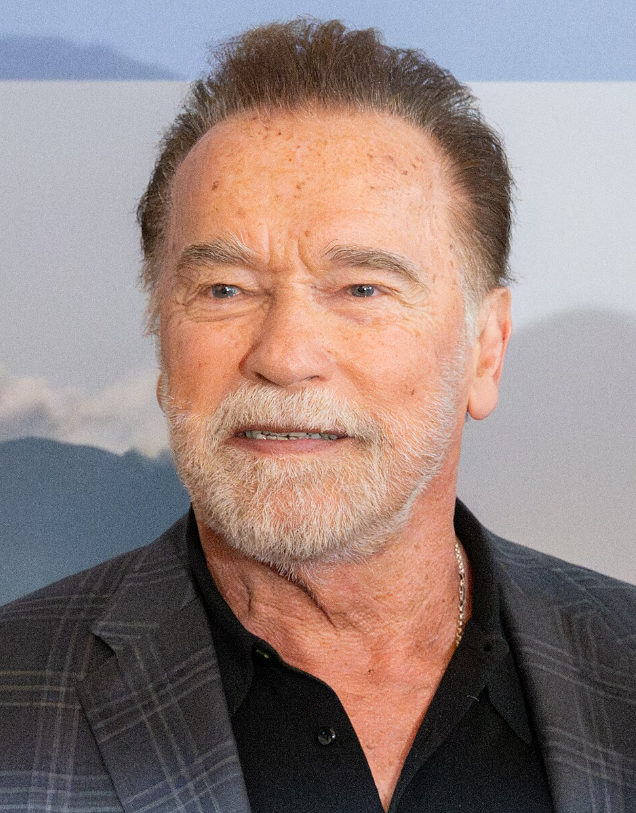
Born on July 30, 1947, in Austria, Arnold Alois Schwarzenegger displayed an intense passion for fitness from an early age. At just 15 years old, he began weightlifting, dedicating himself to rigorous training with dreams of becoming one of the world’s greatest bodybuilders. His commitment and relentless work ethic quickly produced impressive results, allowing him to rise rapidly through international bodybuilding competitions.
By the age of 20, Schwarzenegger had already captured the prestigious Mr. Universe title, making him one of the youngest athletes ever to accomplish the feat. He later dominated professional bodybuilding by winning the coveted Mr. Olympia championship seven times, placing him among the most successful competitors in the history of the sport. During his competitive years, he earned the nickname “The Austrian Oak,” a title that reflected both his Austrian roots and his imposing physique.
Schwarzenegger’s influence on bodybuilding extends well beyond competition. He has authored several highly respected books and publications on strength training, fitness, and bodybuilding, helping educate generations of athletes and enthusiasts worldwide. His autobiographical work Arnold: The Education of a Bodybuilder offered readers insight into his journey from a small Austrian town to international fame, while The New Encyclopedia of Modern Bodybuilding remains one of the sport’s most influential reference books.
His contribution to bodybuilding has also been immortalized through the Arnold Sports Festival, one of the world’s premier fitness and bodybuilding events. Considered second only to the Mr. Olympia competition in prestige, the annual festival attracts thousands of athletes and fitness professionals from across the globe, further cementing Schwarzenegger’s lasting impact on the industry.
Schwarzenegger’s transition into Hollywood began after appearing in the acclaimed 1977 documentary Pumping Iron, which introduced his charismatic personality to a worldwide audience. The documentary showcased not only his physical dominance but also his confidence, humor, and determination, qualities that would later define his acting career.
His breakthrough in cinema arrived in 1982 with the fantasy epic Conan the Barbarian, a film that established him as a rising action star. The movie’s success led to its sequel, Conan the Destroyer, before Schwarzenegger secured what would become the defining role of his career in James Cameron’s science-fiction classic The Terminator in 1984.
His portrayal of the relentless cyborg assassin transformed him into one of Hollywood’s biggest action stars and produced one of cinema’s most iconic catchphrases, “I’ll be back.” Schwarzenegger would reprise the legendary role in multiple sequels over the following decades, making the Terminator franchise one of the most successful science-fiction series in film history.
Throughout the 1980s and 1990s, Schwarzenegger dominated the global box office with blockbuster films including Commando, Predator, The Running Man, Total Recall, and True Lies. He also showcased his comedic abilities in films such as Twins, Kindergarten Cop, and Jingle All the Way, proving he could succeed beyond traditional action roles.
At the height of his acting career, Schwarzenegger became one of Hollywood’s highest-paid performers and developed a well-known professional rivalry with fellow action icon Sylvester Stallone. Their competition helped define an era of action cinema and captivated movie audiences around the world. Collectively, Schwarzenegger’s films have generated more than $5 billion in worldwide box-office revenue, making him one of the most commercially successful actors in history.
Beyond acting, Schwarzenegger established Oak Productions, his own film production company, while simultaneously expanding his investments into real estate and various business ventures, demonstrating his entrepreneurial abilities alongside his entertainment career.
In addition to his accomplishments in sports and entertainment, Schwarzenegger pursued public service. A longtime member of the Republican Party, he served as chairman of the President’s Council on Physical Fitness and Sports during much of President George H. W. Bush’s administration, promoting healthy lifestyles and physical activity across the United States.
His political career reached its highest point in 2003 when he successfully ran in California’s historic gubernatorial recall election. Winning nearly half of all votes cast, Schwarzenegger defeated several candidates to become the state’s 38th governor, replacing Gray Davis. He officially assumed office on November 17, 2003.
During his time as governor, Schwarzenegger focused on issues including fiscal reform, infrastructure improvements, healthcare, education, and environmental protection. His administration became particularly recognized for advancing clean-energy initiatives and supporting legislation aimed at reducing greenhouse gas emissions, helping position California as a national leader in climate policy.
In 2006, Schwarzenegger won reelection with an even larger share of the vote, allowing him to serve a full second term. After completing the maximum time permitted under California law, he left office in 2011 and returned to his entertainment career while continuing his advocacy for environmental conservation, fitness, and public health.
As of 2026, Schwarzenegger remains the most recent Republican to have served as Governor of California, underscoring the historic significance of his political career. His ability to excel in multiple fields—from championship bodybuilding and blockbuster filmmaking to business and public service—has made him one of the most influential and recognizable public figures of the modern era.
More than seven decades after beginning his remarkable journey, Arnold Schwarzenegger continues to inspire millions around the world through his message of perseverance, discipline, and ambition. His legacy serves as a powerful reminder that determination and relentless hard work can overcome even the greatest obstacles, transforming impossible dreams into extraordinary achievements.
Life actor and Politicians
Arnold Schwarzenegger is one of the most recognizable figures in modern entertainment and politics, earning worldwide acclaim through his remarkable achievements in bodybuilding, Hollywood, business, and public service. Born on July 30, 1947, in the small village of Thal, near Graz, Austria, Schwarzenegger transformed himself from a young athlete with ambitious dreams into one of the most influential personalities of his generation. His extraordinary journey from humble beginnings to international superstardom has become a symbol of determination, discipline, and perseverance.
Schwarzenegger first gained international recognition through the sport of bodybuilding. Inspired by legendary bodybuilders during his teenage years, he dedicated countless hours to training, developing a physique that would eventually make him one of the greatest competitors in the history of the sport. His relentless commitment paid off as he won numerous prestigious bodybuilding titles, including the coveted Mr. Olympia championship seven times. His dominance in bodybuilding earned him worldwide admiration and cemented his status as one of the sport’s all-time legends.
Following his unprecedented success in bodybuilding, Schwarzenegger set his sights on Hollywood despite facing significant obstacles. Arriving in the United States with limited English skills and a thick Austrian accent, many industry insiders doubted he could become a leading actor. However, Schwarzenegger refused to let criticism define his future. Through determination and relentless hard work, he gradually established himself as a rising star in action films.
His breakthrough came with the fantasy epic Conan the Barbarian in 1982, which introduced audiences to his commanding screen presence. Two years later, Schwarzenegger achieved global superstardom with his unforgettable portrayal of the relentless cyborg assassin in The Terminator. The film became one of the defining science-fiction movies of its era, while Schwarzenegger’s iconic line, “I’ll be back,” entered popular culture and remains one of cinema’s most recognizable quotes.
Schwarzenegger continued his remarkable Hollywood success throughout the 1980s and 1990s, starring in blockbuster films including Predator, Commando, The Running Man, Total Recall, Kindergarten Cop, True Lies, and Terminator 2: Judgment Day. His combination of physical strength, charismatic personality, and distinctive style made him one of the highest-paid and most bankable actors in the world. His films generated billions of dollars at the global box office and established him as one of the defining action stars of his generation.
Beyond entertainment, Schwarzenegger successfully expanded his career into business, investing in real estate, restaurants, and various entrepreneurial ventures. His business acumen allowed him to build substantial wealth outside the film industry, demonstrating his ability to succeed in multiple fields. He also became a bestselling author and an internationally respected advocate for health, fitness, and active living, encouraging millions of people to pursue healthier lifestyles through regular exercise and proper nutrition.
In 2003, Schwarzenegger embarked on an entirely new chapter in his career by entering politics. Running as a Republican candidate during California’s historic recall election, he was elected the 38th Governor of California. His victory attracted worldwide attention as one of the rare instances of a major Hollywood celebrity successfully transitioning into high-level public office.
As governor, Schwarzenegger served two terms from 2003 to 2011. During his administration, he addressed issues involving the state’s economy, infrastructure, environmental protection, healthcare, and government reform. He became particularly recognized for supporting renewable energy initiatives and implementing policies aimed at reducing greenhouse gas emissions, earning praise from environmental advocates for his efforts to combat climate change. His leadership style often emphasized bipartisan cooperation, reflecting his willingness to work across political lines despite ideological differences.
Following the completion of his gubernatorial service in 2011, Schwarzenegger returned to acting while remaining actively involved in environmental advocacy, fitness promotion, and philanthropic work. He has continued to speak at international conferences, support charitable organizations, and encourage young people to pursue education, discipline, and personal excellence.
Schwarzenegger’s personal life has also drawn significant public attention. He married journalist and author Maria Shriver in 1986, and together they had four children. Their marriage ended after revelations that Schwarzenegger had fathered a son, Joseph Baena, with the family’s longtime housekeeper, a scandal that became one of Hollywood’s most widely publicized celebrity controversies. Despite the difficult circumstances surrounding their separation, Schwarzenegger and Shriver have maintained a respectful co-parenting relationship and continue to come together for important family occasions involving their children.
Today, Arnold Schwarzenegger remains an enduring global icon whose influence extends far beyond bodybuilding and Hollywood. His remarkable journey—from a small Austrian village to becoming a seven-time Mr. Olympia champion, an international movie superstar, a successful businessman, and the Governor of California continues to inspire millions around the world. His life story stands as a testament to ambition, resilience, and the belief that extraordinary goals can be achieved through relentless determination and unwavering commitment.
Early Life and Education
Before Arnold Schwarzenegger became one of the world’s most celebrated bodybuilders, blockbuster movie stars, and political leaders, he spent his childhood in a modest Austrian village where discipline, hardship, and ambition shaped the foundation of his extraordinary life.
Arnold Alois Schwarzenegger was born on July 30, 1947, in Thal, a small community in the Austrian state of Styria. He was the younger of two sons born to Gustav Schwarzenegger and Aurelia Jadrny Schwarzenegger. His father served as the local police chief and had a military background during World War II, while his mother devoted herself to raising the family in the difficult years following the war.
Gustav Schwarzenegger’s wartime service has long been the subject of historical discussion. During World War II, he served as a military policeman in several military campaigns before being wounded during operations near Leningrad. He later contracted malaria and was eventually discharged from military service before returning to Austria, where he resumed work in law enforcement after the war. Historians have noted that while Gustav served in areas where wartime atrocities occurred, no historical evidence has established that he personally participated in those crimes. His military record became a topic of widespread media attention decades later when Arnold Schwarzenegger sought public office in California.
Arnold grew up in a household governed by strict discipline and traditional values. He has frequently recalled that life in postwar Austria was vastly different from modern childhood experiences, with corporal punishment commonly accepted as a method of discipline. According to Schwarzenegger, both he and other neighborhood children were often physically punished by their parents whenever they disobeyed household rules.
Raised in a Roman Catholic family, Schwarzenegger has spoken openly about the demanding environment created by his father. He has said that Gustav often favored his older brother, Meinhard, creating emotional challenges throughout his childhood. Schwarzenegger later suggested that his father harbored an unfounded belief that he was not his biological son, a suspicion that contributed to the unequal treatment between the two brothers.
Despite the strict upbringing, Schwarzenegger remained especially close to his mother, Aurelia. Throughout his life, he maintained a deep bond with her and continued to visit and support her until her death in 1998. He has often described her as a source of comfort during his younger years, balancing the rigid discipline imposed within the household.
In later interviews, Schwarzenegger openly discussed what he described as physical abuse during his childhood. He recalled being struck with belts and having his hair pulled by his father, explaining that such treatment reflected the parenting culture that existed in parts of postwar Germany and Austria at the time. Rather than breaking his spirit, however, Schwarzenegger said those experiences strengthened his determination to create a different future for himself.
He has explained that every criticism or punishment became additional motivation to succeed. As a young boy, he dreamed of leaving his small hometown, achieving financial success, and becoming someone recognized around the world. Those ambitions would eventually drive every major decision throughout his life.
Academically, Schwarzenegger considered himself an average student. Teachers reportedly remembered him less for exceptional grades than for his energetic personality, optimism, and sense of humor. Years later, he revealed that he had struggled with reading throughout childhood and was eventually diagnosed with dyslexia, a learning disorder that made academic work more challenging.
The Schwarzenegger family also experienced financial hardship during Arnold’s youth. He has shared memories of growing up with limited resources, recalling that purchasing the family’s first refrigerator was considered a major milestone and one of the happiest moments of his childhood. Those modest circumstances instilled in him an appreciation for hard work and reinforced his desire to pursue a better life.
Sports became an important part of Schwarzenegger’s early years. Encouraged by his athletic father, he participated in several activities, including football, while developing discipline through physical training. Gustav initially hoped his sons would excel in traditional Austrian sports, but Arnold gradually discovered a different passion.
His introduction to weight training came in 1960 after his football coach brought the team to a local gym. The experience proved life-changing. Fascinated by bodybuilding and strength training, Schwarzenegger quickly became captivated by the idea of transforming both his body and his future.
By the age of 14, he had already decided that bodybuilding—not football—would become his lifelong career. He immersed himself in intensive training while studying the science of physical development and even explored psychology to better understand the relationship between the mind and athletic performance. His unwavering dedication marked the beginning of a journey that would eventually make him one of the greatest bodybuilders in history.
Schwarzenegger has often recalled that his parents envisioned very different futures for him. His father hoped he would follow in the family’s tradition of becoming a police officer, while his mother preferred that he attend trade school and pursue a stable profession. Arnold, however, had already developed ambitions that extended far beyond his hometown.
Looking back on his teenage years, Schwarzenegger has said that by age 14 he had already mapped out his future. While those around him encouraged more conventional career paths, he believed bodybuilding would open doors to international success. That vision ultimately became the launching pad for a remarkable career that would take him from a small Austrian village to the pinnacle of professional bodybuilding, Hollywood stardom, business success, and public service as Governor of California.
His early years, marked by adversity, discipline, and unwavering determination, laid the foundation for one of the most extraordinary success stories of the modern era. Schwarzenegger’s childhood demonstrates how resilience, ambition, and an unshakable belief in one’s dreams can overcome even the most difficult beginnings.
Arnold Schwarzenegger’s journey from a determined teenager in Austria to becoming one of the world’s greatest bodybuilders and most recognizable public figures was built on years of relentless discipline, sacrifice, and an unwavering belief in his dreams. Long before he conquered Hollywood and entered politics, Schwarzenegger immersed himself in a lifestyle centered on physical excellence, laying the foundation for a career that would inspire millions around the globe.
As a young man growing up in Graz, Austria, Schwarzenegger spent much of his free time inside local gyms, where he trained tirelessly to develop the physique that would eventually make him a global icon. His passion for bodybuilding was fueled by watching films starring legendary athletes and actors such as Reg Park, Steve Reeves, and Johnny Weissmuller. Their accomplishments convinced him that success beyond his small hometown was possible, and they became powerful sources of inspiration during his formative years.
Among those heroes, Steve Reeves left an especially lasting impression. Years later, after Reeves’ death in 2000, Schwarzenegger paid tribute to the legendary bodybuilder, crediting him with giving him the confidence to believe in his own ambitions at a time when few people understood or supported his dreams.
A turning point came in 1961 when Schwarzenegger met former Mr. Austria Kurt Marnul, who welcomed the aspiring athlete into his training gym in Graz. Under Marnul’s guidance, Schwarzenegger intensified his workouts and developed the discipline that would define his career. His dedication became legendary. On weekends, when the gym was closed, he reportedly found ways to enter the facility so he would never miss a workout. Schwarzenegger later recalled that skipping even a single training session felt unbearable because he wanted to see continuous progress every time he looked in the mirror.
Outside the gym, Schwarzenegger developed a love for cinema. He often visited movie theaters in Graz and has fondly remembered his first unforgettable film experience—a John Wayne movie he watched with his father. During this period, he was also mentored by Alfred Gerstl, a respected political figure in Austria, whose guidance and friendship further influenced the young athlete’s personal development.
Despite his growing success, Schwarzenegger’s early life was marked by profound personal tragedy. In May 1971, his older brother, Meinhard Schwarzenegger, died instantly in a car accident after driving under the influence of alcohol. Meinhard left behind his fiancée and their young son, Patrick. Although Arnold did not attend his brother’s funeral, he later provided financial assistance for his nephew’s education and eventually helped him relocate to the United States, demonstrating his long-term commitment to supporting his extended family.
Another devastating loss followed in December 1972 when Schwarzenegger’s father, Gustav, died after suffering a stroke. Schwarzenegger’s absence from his father’s funeral later became the subject of widespread public discussion. Over the years, he has offered different explanations for not attending, while acknowledging that the period coincided with his intense preparation for major bodybuilding competitions. The circumstances surrounding that decision have remained one of the more debated aspects of his personal history.
Before his international breakthrough, Schwarzenegger fulfilled Austria’s mandatory military service in 1965. Even while serving in the Austrian Army, his determination to succeed in bodybuilding never diminished. During his military service, he entered the Junior Mr. Europe competition without official permission, temporarily leaving his military duties to compete. Although the decision resulted in a brief period of military detention, Schwarzenegger later said the opportunity to pursue his dream outweighed the consequences.
His competitive success continued to grow. After placing highly in bodybuilding contests across Austria, he gained recognition as one of Europe’s most promising young athletes. Although he finished second at the 1966 NABBA Mr. Universe competition in London, the experience proved invaluable. The competition introduced him to influential figures within the bodybuilding community who recognized both his immense potential and extraordinary determination.
Among those impressed was renowned bodybuilding coach Charles “Wag” Bennett. Seeing Schwarzenegger’s promise but recognizing his financial struggles, Bennett invited the young Austrian to live with his family in London while continuing his training. Under Bennett’s mentorship, Schwarzenegger focused on improving weaker areas of his physique, particularly his leg development, while also strengthening his English-language skills. The experience became transformational, providing him not only with world-class coaching but also with emotional support during a critical stage of his life.
During his stay in London, Schwarzenegger achieved another lifelong dream when he met his childhood idol, Reg Park. The meeting blossomed into a lasting friendship and mentorship that further strengthened Schwarzenegger’s belief that he could one day become the greatest bodybuilder in the world.
His hard work soon produced historic results. In 1967, at just 20 years old, Schwarzenegger won his first Mr. Universe title, becoming the youngest athlete ever to claim the prestigious championship. The victory established him as one of bodybuilding’s brightest stars and marked the beginning of an extraordinary competitive career that would include several additional Mr. Universe crowns.
Following his success, Schwarzenegger returned to Munich, Germany, where he combined business studies with intensive bodybuilding training while working at a local gym. Yet his ambitions extended far beyond Europe. Friends later recalled that even during those years he confidently predicted he would eventually become one of the world’s greatest movie stars.
That lifelong dream became reality in October 1968 when Schwarzenegger immigrated to the United States at the age of 21. Speaking only limited English, he settled in California and began training under legendary bodybuilding promoter Joe Weider at the famous Gold’s Gym in Venice Beach. Surrounded by elite athletes, Schwarzenegger dedicated himself entirely to becoming the best bodybuilder in the world.
His relentless commitment paid off in 1970 when, at only 23 years old, he captured his first Mr. Olympia championship in New York. The victory launched one of the greatest careers in bodybuilding history, as Schwarzenegger would ultimately win the prestigious title seven times and become the sport’s defining figure.
While building his athletic legacy, Schwarzenegger also pursued higher education. He studied English and other academic subjects at Santa Monica College and completed additional university coursework before enrolling in a distance-learning program at the University of Wisconsin–Superior. In 1980, he earned a bachelor’s degree in business administration and marketing, demonstrating that education remained an important personal goal even while competing at the highest levels of professional sports and launching a successful entertainment career.
Schwarzenegger officially became a United States citizen in 1983, fulfilling another lifelong aspiration. His remarkable transformation—from a determined Austrian teenager with limited resources to an American citizen, seven-time Mr. Olympia champion, Hollywood superstar, successful businessman, and future Governor of California—stands as one of the most inspiring success stories of the modern era. His journey continues to symbolize the power of discipline, resilience, and an unwavering commitment to achieving even the most ambitious dreams.