
Dharmendra Pradhan, a veteran Indian politician and senior leader of the Bharatiya Janata Party (BJP), played a significant role in the country’s national government through several high-profile Cabinet positions. Best known for serving as India’s Minister of Education from 2021 until his resignation in July 2026, Pradhan’s tenure was characterized by both policy initiatives and mounting controversies that eventually led to his departure from office.
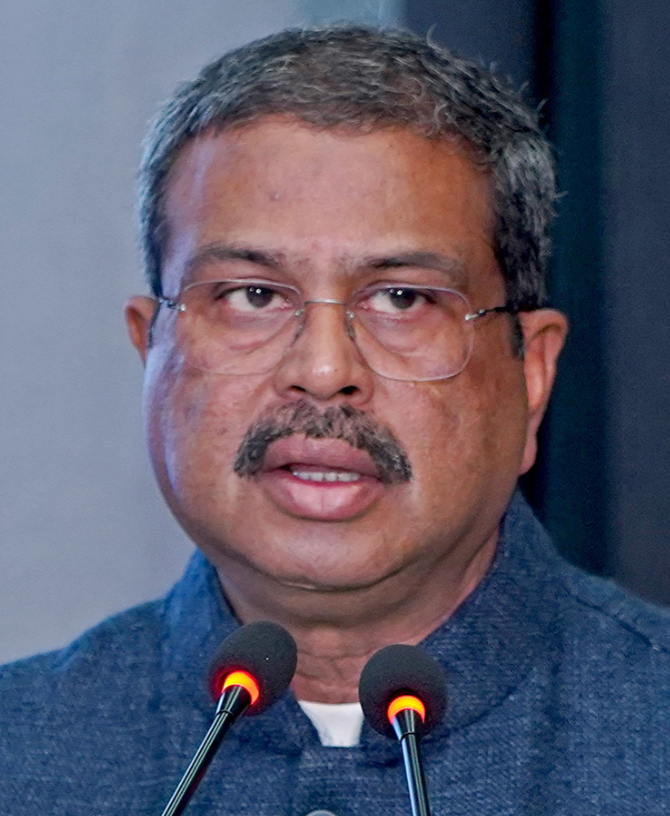
Born on June 26, 1969, Pradhan has built a long political career in India’s Parliament. He currently represents the Sambalpur constituency in the Lok Sabha, the lower house of Parliament, and has previously served as a member of the Rajya Sabha, representing the states of Bihar and Madhya Pradesh. Throughout his years in public service, he held several key Cabinet portfolios, including Minister of Petroleum and Natural Gas from 2014 to 2021, Minister of Steel from 2019 to 2021, and Minister of Skill Development and Entrepreneurship.
In 2021, Pradhan was appointed as India’s Minister of Education, placing him at the forefront of implementing educational reforms under the BJP-led government. His department oversaw policies affecting millions of students across the country, including national entrance examinations, higher education, and skills development.
- No to Pax Silica’ in the Philippines as Critics Raise Concerns Over Sovereignty, Environment, and Economic Benefits

- Israel 2026 legislative election
- Dharmendra Pradhan |Minister, Education, Lawyer, Biography, & Career
- Sara Duterte Witness Says OVP Used Gym Bags for ₱500 Million
- Beyond the Applause: The Issues Left Unspoken in President Marcos’ Fifth State of the Nation Address
- Is it SONA or SANA for the 2026 presidential address in the Philippines?
- What is Pax Silica, what is its purpose in the Philippines?
- Risa Hontiveros Warns of Nuclear Waste Risks as Zubiri Backs Marcos’ Nuclear Energy Push



However, his leadership at the Ministry of Education became increasingly controversial following repeated allegations of irregularities in the administration of the National Eligibility-cum-Entrance Test (NEET-UG), India’s highly competitive entrance examination for undergraduate medical programmes.
The first major controversy emerged in 2024, when reports surfaced that examination papers had been leaked before the test. The incident raised concerns about the integrity of one of India’s most important national examinations and prompted widespread criticism from students, parents, and education advocates.
The controversy intensified in 2026 after another alleged examination paper leak affected the NEET-UG examination. The second incident forced authorities to conduct a large-scale retest involving more than 2.2 million students, disrupting academic schedules and creating uncertainty for aspiring medical students across the country.
The repeated examination controversies generated widespread frustration among students, many of whom argued that they were unfairly burdened by failures in the examination system. Reports also linked the intense academic pressure surrounding the retest to the tragic deaths of at least 12 students, although such reports became part of broader public discussions and allegations surrounding the crisis.
Public dissatisfaction eventually led to large demonstrations in New Delhi, particularly at Jantar Mantar, where students and youth organisations gathered to demand accountability from the Ministry of Education and the Union Government. Protesters called for reforms to India’s examination system and urged Pradhan to resign, arguing that repeated lapses had undermined public confidence in the country’s educational institutions.
As demonstrations continued, tensions escalated between protesters and law enforcement authorities. Reports indicated that police used crowd-control measures, including baton charges and tear gas, to disperse demonstrators, drawing criticism from student groups and opposition leaders. The police response further intensified political debate over the government’s handling of the protests.
Amid mounting pressure and growing public scrutiny, Dharmendra Pradhan resigned as India’s Minister of Education on July 25, 2026, ending a five-year tenure marked by both educational reforms and significant controversy.
Despite his resignation from the Education Ministry, Pradhan remains an influential figure within the Bharatiya Janata Party and continues to serve as a Member of Parliament. His broader political career includes leadership roles in the energy, steel, and skills development sectors, where he was involved in implementing several national programmes before assuming responsibility for India’s education system.
His tenure as Education Minister continues to be the subject of public debate, with supporters highlighting policy reforms introduced during his administration, while critics point to the handling of the NEET examination controversies as a defining challenge of his time in office. The events surrounding the examination leaks have also renewed calls for stronger safeguards, greater transparency, and comprehensive reforms to India’s national testing system to restore public trust and protect the interests of millions of students.
Dharmendra Pradhan’s Early Life Shaped by Politics, Education, and Student Leadership
Long before becoming one of India’s most prominent Cabinet ministers, Dharmendra Pradhan built his political foundation through student activism, academic pursuits, and a family deeply rooted in public service.
Born on June 26, 1969, in the industrial town of Talcher in the eastern Indian state of Odisha, Pradhan grew up in a household where politics and public service played an important role. He is the son of Debendra Pradhan, a senior Bharatiya Janata Party (BJP) leader who served as India’s Minister of State during the administration of former Prime Minister Atal Bihari Vajpayee from 1998 to 2004. His mother is Basanta Manjari Pradhan.
Coming from the Chasa community, Pradhan was exposed to political discussions and public affairs at an early age—experiences that would later influence his own career in government and national politics.
His interest in leadership began while he was still a student. In 1983, Pradhan became actively involved in student politics through the Akhil Bharatiya Vidyarthi Parishad (ABVP), one of India’s largest student organizations. During his time at Talcher College, he quickly rose through the ranks of the student body, serving first as the president of the student union before later taking on the role of secretary.
His participation in campus leadership provided him with early experience in representing students, organizing activities, and engaging in public discussions on educational and social issues. These formative years helped shape his political skills and introduced him to grassroots leadership long before he entered national politics.
Alongside his involvement in student organizations, Pradhan pursued higher education and developed an interest in the study of human societies and cultures. He later completed a postgraduate degree in Anthropology from Utkal University in Bhubaneswar, one of Odisha’s leading educational institutions.
His academic background in anthropology provided him with insights into social structures, cultural diversity, and community development subjects that would later complement his work in public administration and policymaking.
The combination of a politically active family, leadership experience in student organizations, and advanced academic training laid the foundation for Pradhan’s rise in Indian politics. From his early days as a student leader in Odisha, he would eventually go on to serve in several key ministerial positions in the Government of India and become one of the country’s most recognizable political figures.
Dharmendra Pradhan Rose Through State Politics Before Taking National Leadership Roles
Dharmendra Pradhan’s political journey began in his home state of Odisha before expanding onto the national stage, where he steadily earned leadership positions within the Bharatiya Janata Party (BJP) and later became one of the party’s prominent Cabinet ministers.
Pradhan first secured an elected public office in 2000 when he won a seat in the Odisha Legislative Assembly, representing the Pallahara constituency. His victory marked the beginning of his legislative career and established him as one of the BJP’s emerging leaders in the state.
During his time in the Odisha Assembly, Pradhan focused on grassroots politics and constituency development while strengthening the party’s presence in the region. His performance at the state level helped pave the way for greater responsibilities within both the BJP and the national government.
In 2004, Pradhan successfully transitioned to national politics after winning a seat in the Lok Sabha, India’s lower house of Parliament. He represented the Deogarh parliamentary constituency, serving its constituents until 2009, when the constituency was abolished following the country’s parliamentary constituency delimitation exercise.
Alongside his legislative responsibilities, Pradhan also assumed key leadership positions within the BJP’s youth and national organisations. From 2004 to 2006, he served as the National President of the Bharatiya Janata Yuva Morcha (BJYM), the youth wing of the Bharatiya Janata Party. In this role, he worked to expand youth participation in politics, strengthen grassroots party networks, and encourage young people to become actively involved in public service.
His leadership of the BJYM further elevated his profile within the party and demonstrated his ability to organise nationwide political campaigns and youth outreach programmes.
As his influence continued to grow, Pradhan was entrusted with several senior organisational responsibilities within the BJP. He later served as the party’s National Secretary, where he helped coordinate party affairs across different states, before being promoted to the position of All India General Secretary, one of the BJP’s highest-ranking organisational posts.
These leadership roles allowed Pradhan to play a significant part in the party’s strategic planning, election campaigns, and organisational development across India. His experience at both the state and national levels eventually positioned him for appointment to several major Cabinet portfolios in the Government of India, including petroleum and natural gas, steel, skill development, and later education.
Pradhan’s rise through the ranks of the BJP reflects a political career built on grassroots leadership, legislative experience, and long-standing involvement in the party’s organisational structure, making him one of the influential figures in contemporary Indian politics.
Dharmendra Pradhan’s Ministerial Career Marked by Reforms, Challenges, and Education Controversies
Dharmendra Pradhan served in several key ministries of the Indian government over more than a decade, leading major reforms in the petroleum, steel, skill development, and education sectors. Throughout his tenure, he introduced policies that expanded access to essential services, promoted industrial growth, and strengthened vocational education. However, his later years as Education Minister were overshadowed by controversies surrounding national entrance examinations, eventually leading to his resignation in 2026.
Pradhan first assumed office as the Minister of State (Independent Charge) for Petroleum and Natural Gas in 2014 under Prime Minister Narendra Modi’s administration. His performance in the department earned him a promotion to full Cabinet Minister in 2017. During his leadership, the ministry rolled out several flagship initiatives designed to improve India’s energy accessibility and reduce dependence on traditional cooking fuels.
One of the most notable programs implemented during his tenure was the Pradhan Mantri Ujjwala Yojana, which provided millions of low-income households, particularly in rural communities, with access to liquefied petroleum gas (LPG) connections. The initiative aimed to replace traditional cooking methods that relied on firewood and other solid fuels, helping improve public health while reducing environmental pollution.
Aside from expanding LPG access, Pradhan also supervised the implementation of the Hydrocarbon Exploration and Licensing Policy (HELP), which sought to simplify exploration rules and encourage greater investment in India’s energy sector. The ministry likewise strengthened the PAHAL direct subsidy transfer program and encouraged financially capable consumers to voluntarily surrender their cooking gas subsidies so government assistance could be redirected to poorer families.
During this period, India also invested more than USD 60 billion in expanding its city gas distribution network, allowing more households, industries, and transportation sectors to gain access to cleaner energy sources.
In 2019, while continuing to oversee petroleum-related responsibilities, Pradhan was also entrusted with the Ministry of Steel. As Steel Minister, he introduced programs such as Ispati Irada and Mission Purvodaya, both designed to increase steel production, strengthen India’s secondary steel industry, generate employment opportunities, and stimulate industrial development, particularly in eastern India where mineral resources are abundant.
His administration focused on improving manufacturing capacity while encouraging private sector participation to support long-term economic growth and infrastructure development.
Another major responsibility assigned to Pradhan was the Ministry of Skill Development and Entrepreneurship, which he headed from 2017 until 2024. During this period, the government intensified efforts to prepare India’s workforce for rapidly changing industries by expanding vocational education and technical training.
Under his leadership, the country’s network of Industrial Training Institutes (ITIs) grew by more than 40 percent, while student enrolment increased significantly during the first two years of the expansion. The ministry also established the National Council for Vocational Education and Training (NCVET) to standardize skill certification and improve the quality of vocational education nationwide.
In addition, the government launched the Skill Saathi platform, providing trainees with easier access to information, career guidance, and employment opportunities.
While these initiatives received praise for broadening access to technical education, critics argued that several programs continued to face challenges in securing stable employment for graduates. Some observers also questioned whether the relatively short duration of many training courses adequately prepared participants for the demands of modern industries.
Pradhan entered one of his most closely watched roles in July 2021 when he was appointed India’s Minister of Education. His appointment came as the government pursued wide-ranging reforms in the country’s education system, including changes inspired by the National Education Policy.
As Education Minister, Pradhan initiated efforts to strengthen the functioning of the National Testing Agency (NTA), the body responsible for conducting several nationwide entrance examinations. He also commissioned a committee headed by former Indian Space Research Organisation (ISRO) Chairman K. Radhakrishnan to recommend improvements in examination management and restore public confidence in the testing process.
Despite these reform efforts, the ministry faced mounting criticism in 2024 after allegations emerged regarding irregularities in the National Eligibility cum Entrance Test for Undergraduate courses (NEET-UG). The issue drew nationwide attention, prompting investigations and legal challenges.
The Supreme Court of India later ruled that there was no evidence of widespread or systemic malpractice affecting the entire examination. However, investigations uncovered isolated incidents of wrongdoing, leading authorities to arrest more than 100 individuals allegedly involved in cheating and examination-related offenses.
Public scrutiny intensified once again in 2026 when another controversy erupted over the NEET-UG examination. Following allegations that examination papers had been leaked, the National Testing Agency cancelled the test originally conducted on 3 May 2026 and announced a nationwide re-examination scheduled for 21 June 2026.
The cancellation affected hundreds of thousands of aspiring medical students across India and reignited public debate over the security and integrity of the country’s examination system.
On 6 June 2026, supporters of the satirical youth political movement known as the Cockroach Janta Party staged a protest at Jantar Mantar in New Delhi. Demonstrators demanded accountability over repeated examination controversies, calling on Pradhan to resign as Education Minister amid concerns over examination leaks and issues involving the marking process.
As pressure continued to mount from students, opposition leaders, and various advocacy groups, Pradhan stepped down from his post as Minister of Education on 25 July 2026, bringing an end to his tenure in one of India’s most high-profile government positions.
Throughout his years in public office, Dharmendra Pradhan played a significant role in shaping India’s energy, industrial, vocational training, and education policies. While many of his initiatives contributed to expanding public services and institutional reforms, his final years in office were marked by examination controversies that ultimately overshadowed many of his earlier accomplishments.