The United States is preparing to unleash unprecedented economic pressure on Iran, warning Tehran to stand down as attacks on commercial shipping and a near-total collapse in traffic through the Strait of Hormuz send shockwaves through global energy markets turning the world’s most vital maritime artery into a dangerous geopolitical battleground where trade, energy security, and diplomatic leverage hang in the balance.
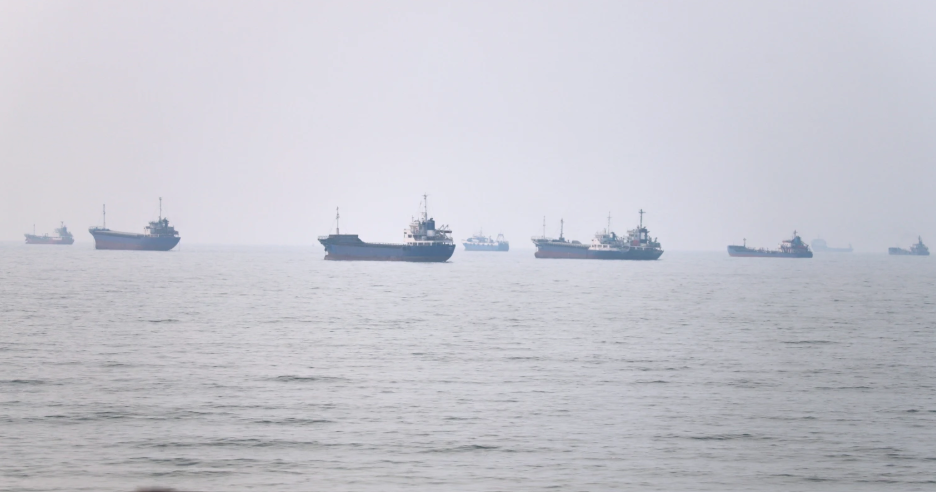
The United States has issued a stark and unambiguous warning to Iran: it stands ready to ratchet up economic pressure to unprecedented heights, as spiralling assaults on commercial shipping and a dramatic collapse in maritime movement through the Strait of Hormuz send ripples of alarm coursing through global energy markets and cast a long shadow over the health of the wider world economy. This pivotal waterway, for decades a lifeline of global commerce and energy supply, has suddenly transformed into a flashpoint where geopolitical might, economic survival, and diplomatic deadlock collide with growing urgency.
The sharpened tone from Washington came in the immediate wake of fresh aggression on the high seas: late on Thursday evening, two vessels belonging to the Abu Dhabi National Oil Company (ADNOC), the United Arab Emirates’ flagship energy enterprise, came under attack while navigating the sensitive waters of the Strait of Hormuz. The UAE has laid responsibility for these incidents squarely at Iran’s door, a serious diplomatic charge that has yet to draw formal acknowledgment or denial from authorities in Tehran. Mercifully, no casualties have been reported from either vessel, but the incident has nonetheless deepened the sense of peril hanging over one of the planet’s most vital shipping lanes.
These latest strikes have served to complicate, and in many ways exacerbate, an already fraught and dangerous standoff between the United States and Iran. Efforts to broker a lasting ceasefire appear to have stalled entirely, with both nations increasingly wielding control over access to the Strait of Hormuz as their most potent bargaining chip. What began as a war of words and isolated displays of military strength has hardened into a protracted test of endurance, where the free flow of trade hangs in the balance and every transit carries an element of peril.
By the close of business on Friday, the volume of commercial traffic passing through the strait had withered to a mere shadow of its former self, painting a troubling picture of disruption across a critical artery of global trade. Ship-tracking data analysed by Kpler tells a striking story of abandonment: only a handful of vessels were visible making the passage. Among them were a grain carrier heading into Iranian waters, an empty bulk carrier travelling in the opposite direction, and a liquefied petroleum gas tanker entering the Gulf yet notably, not a single crude oil shipment appeared to be making its way through the channel.
READ OTHER ARTICLES:
- Crypto, AI and Betting Firms Emerge as New U.S. Political Kingmakers
- US Warns Iran of Unprecedented Economic Pressure as Hormuz Shipping Nears Standstill
- Benjamin Netanyahu rejects Trump’s Gaza plan, demands Hamas disarm first
- Donald Trump Threatens Crushing Strike on Iran as Gaza Peace Plan
- Israel 2026 legislative election

- WASHINGTON: 15-Year-Old Suspect Arrested After Deadly Shootout at Seattle Food Festival Leaves Three Dead, Four Injured

The scale of this decline is nothing short of staggering. Before hostilities flared up, the strait would typically welcome more than 130 vessels every single day. By Thursday that number had plummeted to just nine; the day before, on Wednesday, a mere five transits were recorded. Even the broader August average, sitting at roughly twelve daily passages, underscores a state of near-paralysis in waters that once hummed with constant activity. While it remains possible that some ships have chosen to travel with their tracking systems disabled to avoid drawing unwanted attention, the available evidence points unmistakably to severe, widespread disruption within a maritime corridor upon which the world has long depended.
Against this backdrop of shrinking traffic and rising anxiety, the United States has made plain its intention to turn the screw of economic pressure even further. Defence Secretary Pete Hegseth declared with confidence that American naval forces possess both the capability and the resolve to maintain a robust, rotating military presence in the region indefinitely — a clear signal that any blockade imposed upon Iranian ports and shipping may endure far longer than many anticipated, rather than being swiftly lifted as part of some future diplomatic accord. Compounding this message, Treasury Secretary Scott Bessent revealed that Washington is finalising additional financial measures against Iran, describing them as potentially without precedent in the history of economic isolation ever imposed upon a nation, with formal announcements expected within the coming week.
This threat of sweeping, newly intensified sanctions forms part of a broader strategy: an attempt to push Tehran back toward the negotiating table and into constructive dialogue. Previous rounds of restrictive measures have already targeted individuals and entities the United States alleges have aided Iran in procuring military hardware, yet thus far the pressure campaign has failed to restore meaningful diplomacy to a workable footing. Instead, the two nations remain locked in a stalemate, each refusing to yield ground while the human and economic costs of confrontation continue to mount.
At the very heart of this impasse lies the Strait of Hormuz itself. This narrow stretch of water linking the Persian Gulf with the Gulf of Oman and the Arabian Sea has long stood as one of the most strategically significant energy thoroughfares on Earth. In peacetime, roughly one-fifth of all globally traded oil and liquefied natural gas made its way through these waters. Any sustained interruption to that flow therefore carries implications that stretch far beyond the borders of Iran or the Gulf states, touching industries, consumers, and economies across every continent.
Iran has firmly rejected assertions from Washington that the United States holds ultimate authority or command over the strait. Instead, Tehran has made its position abundantly clear: normal shipping will not resume until its core demands have been met chief among them the full removal of economic sanctions and the unfreezing of Iranian assets held abroad. For Iran, reopening the waterway without securing tangible concessions would mean surrendering perhaps its most valuable bargaining lever, a step it is in no hurry to take. Consequently, the dispute has evolved from a straightforward military face-off into a far broader struggle over trade rights, energy sovereignty, sanctions policy, and diplomatic leverage.
The ability to curtail shipping gives Iran immense strategic weight, precisely because the world remains so heavily reliant on the route. An analyst at Verisk Maplecroft has observed that Iran’s capacity to restrict access through the strait stands alongside threats to regional energy infrastructure as one of its most powerful sources of negotiating influence. Every vessel turned away, every voyage delayed, and every barrel of oil left stranded serves as a reminder to the international community of the costs of confrontation — and the value of a return to dialogue.
Nor do the risks end at the boundaries of the strait itself. Fears are growing that the conflict may be spreading beyond these already volatile waters. Reports of renewed drone strikes targeting energy infrastructure within Saudi Arabia, attributed to Iran-aligned Houthi forces, have awakened deep-seated concerns that the crisis could expand into a sweeping regional conflict, endangering Gulf energy installations, vital export terminals, and shipping lanes far beyond the immediate vicinity of Hormuz. What began as a bilateral standoff threatens to become a conflagration that consumes the whole region.
Already, the tremors are being felt in global oil markets. By Friday, crude prices had climbed sharply upward as traders factored in the rising risk of prolonged supply disruption. Brent crude advanced to around $88.50 per barrel, while West Texas Intermediate, the benchmark for U.S. oil, rose to approximately $82.81. These upward movements reflect a deepening unease over what may lie ahead. Yet market observers also caution that opposing forces are at play: softening global demand projections, swelling U.S. crude stockpiles, and forecasts of slower global economic growth may place a ceiling on how high prices can climb. That balance could shift dramatically, however, should shipments continue to dwindle and supply chains remain severed.
Among the nations most exposed are the major economies of Asia, which rely heavily upon energy imported from the Gulf. Indian buyers, for instance, have turned increasingly toward Russian crude purchases hitting record levels in July while Asian refiners more broadly have begun sourcing oil from the United States in a bid to secure future supplies and insulate themselves from the chaos unfolding within the Gulf. It is a telling indicator of how swiftly global trade patterns can shift when stability is threatened, and how far-reaching the consequences of regional conflict can become.
Within the United States, meanwhile, the confrontation carries mounting domestic political weight. President Donald Trump faces growing pressure at home to bring an end to a conflict that has already pushed fuel costs higher for American households a particularly sensitive issue as the nation approaches its midterm elections in November. Higher energy prices are politically costly, and the president has found himself balancing two distinct approaches: he has repeatedly threatened further military action against Iran, yet has also indicated that economic pressure may form the primary pillar of his strategy moving forward. Between the temptation of strength and the imperative of affordability, the administration faces difficult choices.
For each side, the stakes are extraordinarily high. For Iran, restoring free passage through the strait without securing sanctions relief and asset returns would mean forfeiting the leverage that keeps its negotiating position alive. For the United States, allowing the strait to remain effectively closed means accepting continued upward pressure on energy prices, growing hardship for consumers worldwide, and the risk that a limited conflict evolves into a full-blown crisis with unpredictable outcomes.
Both nations are therefore locked in a perilous calculus: Washington prepares unprecedented economic measures while sustaining its naval presence; Tehran guards its control over shipping access while demanding fundamental changes to its treatment on the world stage. With diplomatic channels largely silent and ceasefire efforts stalled, the Strait of Hormuz has become the stage upon which this standoff plays out every fresh attack, every cancelled voyage, and every barrel of oil delayed bringing the world a step closer to a wider energy emergency.
The most immediate evidence of this crisis is written plainly across the waters themselves. Where once a bustling procession of more than 130 vessels passed each day, now only a handful dare make the journey. And as the United States readies what it describes as unparalleled economic measures, and Iran continues to hold the world’s most important energy route as collateral, the prospect of a prolonged disruption is fast becoming a serious risk to global energy security, international trade, and shared prosperity. Until one side yields, or dialogue is somehow restored, the strait will remain both a symbol of interdependence and a warning of how fragile that connection truly is.