Attorney Kristine Ferrer challenged the competence of a prosecution witness during Vice President Sara Duterte’s impeachment trial, warning that proceeding with a witness unable to properly identify the presented documents would only waste the Senate’s time, prompting prosecutor Lorna Kapunan to defend the use of the evidence.
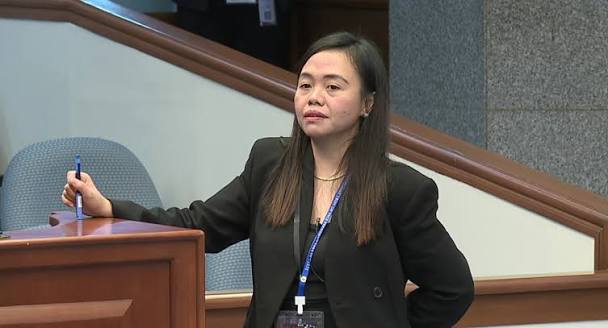
Tensions escalated inside the Senate impeachment court after defense lawyer Attorney Kristine Ferrer challenged the competence of one of the prosecution’s witnesses. She argued that allowing testimony from a witness who was unable to identify documentary evidence would only prolong the proceedings without contributing to the resolution of the case.
During the impeachment trial of Vice President Sara Duterte, Ferrer questioned whether the witness was qualified to authenticate the documentary evidence being presented by the prosecution. She emphasized that the purpose of the proceedings was to establish the witness’s competence before the documents could be admitted and relied upon by the court.
“We are here in open court to establish competence,” Ferrer argued before the Senate impeachment court. She added that even if the prosecution intended to use documents previously submitted by the defense, the effort would be futile if the witness could not properly identify or authenticate those records.
“If your witness is not competent to identify those exhibits, it will be a waste of time. It’s useless,” Ferrer said, stressing that the court should avoid spending valuable hearing time on testimony that would ultimately fail to establish the authenticity of the documentary evidence.
Following Ferrer’s remarks, veteran private prosecutor Attorney Lorna Kapunan sought permission to make a brief manifestation before the impeachment court.
- Alfred Tecsond Nagkuwento ng Umano’y Karanasan sa PNP General Bilang Kliyente
- Jonvic Remulla Urges Congress to Tighten Firearms Law, Revisit ‘Robin Padilla Law’ After School Shooting
- Col. Raymund Dante Lachica Challenges Ramil Madriaga’s Claims in Sara Duterte Impeachment Hearing

- Colonel Raymund Dante Lachica Faces Scrutiny Over ₱125M Confidential Funds
- Roblox, Terrorist Influence and Rising Youth Violence Alarm the Philippines

- ACDD Tasking Platform Goes Offline After Users Report Unpaid Funds and ‘Tax’ Demands

“Your Honor, may I make a brief manifestation?” Kapunan asked.
Senate President and Presiding Officer Francis “Chiz” Escudero granted her request, allowing her to explain the prosecution’s position regarding the documentary evidence.
Kapunan argued that Section 7, Rule 30 of the applicable rules supported the prosecution’s use of summary evidence. She explained that the provision allows the presentation of summaries when the facts sought to be established involve the general results of voluminous records or numerous documents.
According to Kapunan, the summary presented by the prosecution was based on the very same records that had already been submitted by the defense to the Commission on Audit (COA). She maintained that the documents were not new pieces of evidence but official records that included COA issuances, Notices of Suspension, and Notices of Disallowance.
Responding to the exchange, Escudero acknowledged that the documents being referred to were indeed the same records previously submitted to COA, including its official issuances and audit findings.
Seeking to keep the proceedings moving efficiently, Escudero reminded both parties to abbreviate the presentation of evidence whenever possible without compromising the rights of either side.
“Counsel, again, let’s abbreviate the proceedings,” Escudero said.
He explained that the admission of documentary evidence remains subject to cross-examination, giving the defense every opportunity to challenge the witness regarding the authenticity, contents, or significance of the records.
Escudero further noted that if both parties possessed identical copies of the documents, there would be little practical benefit in requiring lengthy testimony solely to establish that the copies were the same. Instead, any questions regarding the documents could be fully explored during cross-examination, allowing the impeachment court to proceed more efficiently while preserving the parties’ right to due process.
The exchange highlighted the continuing procedural disputes that have characterized Duterte’s impeachment trial, where both the prosecution and defense have vigorously contested the admissibility of evidence and the qualifications of witnesses. While the defense has insisted on strict compliance with the rules governing documentary evidence, the prosecution has maintained that the records being presented are official government documents already in the possession of both parties.
As the impeachment proceedings continue, the Senate impeachment court faces the challenge of balancing procedural fairness with judicial efficiency, ensuring that every piece of evidence is properly scrutinized while avoiding unnecessary delays in one of the country’s most closely watched constitutional proceedings.