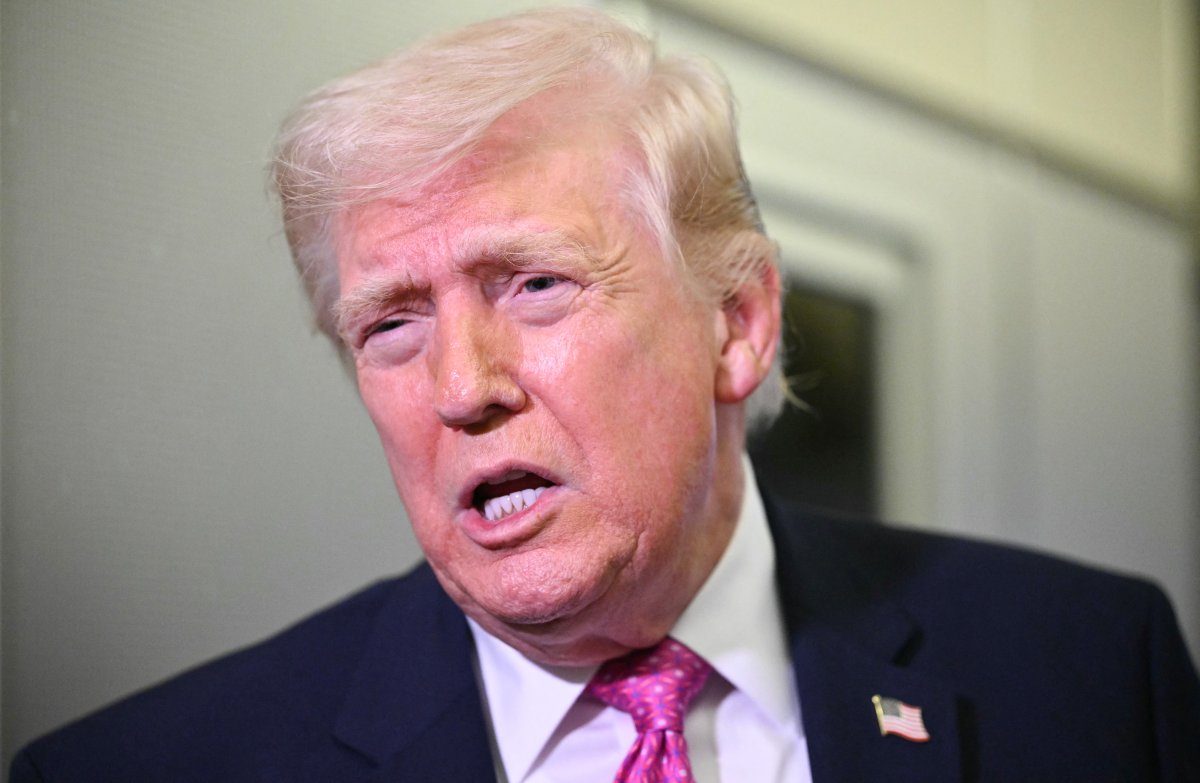
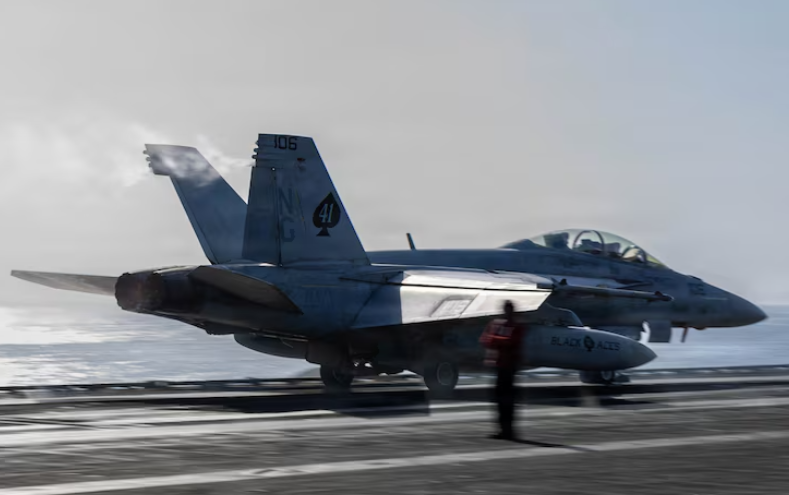
U.S. President Donald Trump has warned that the United States will strike Iran “hard” if Tehran continues actions that threaten American interests, as rising military tensions coincide with a new U.S.-backed Gaza peace proposal that has drawn international support despite continued violence in the Palestinian territory.
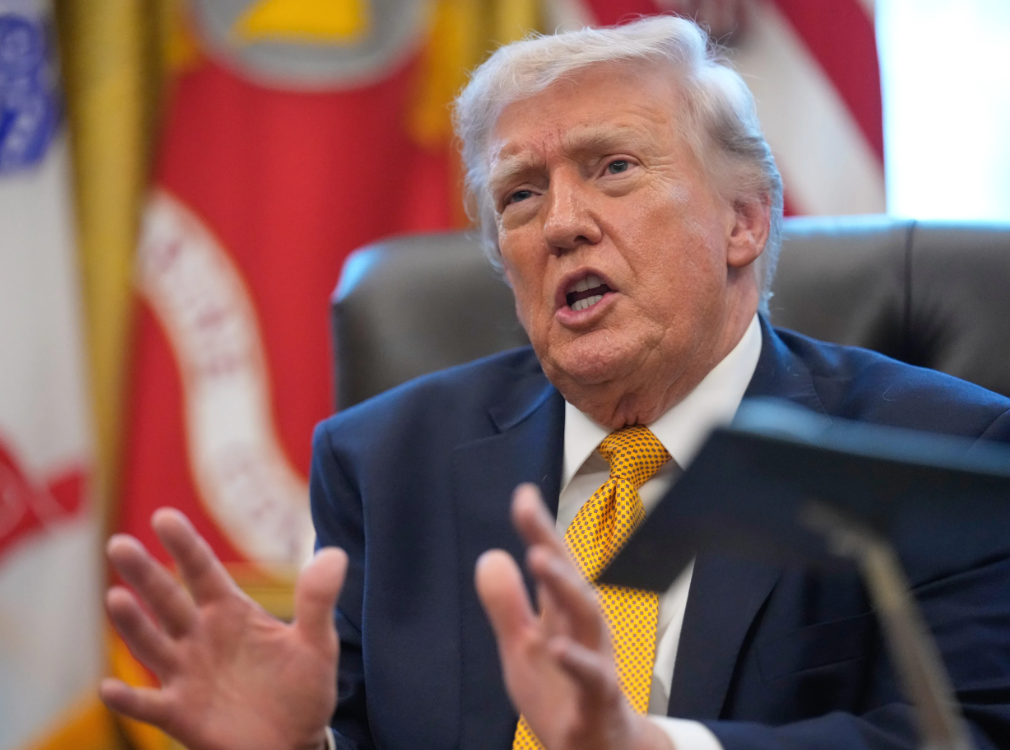
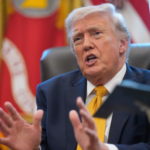
Global tensions have escalated once again as United States President Donald Trump issued a stern warning to Iran, declaring that Washington is prepared to respond with overwhelming force if Tehran continues actions that threaten American interests and regional stability. Speaking to reporters, Trump said the United States would be hitting Iran “hard” over the coming weeks, reinforcing his administration’s commitment to maintaining military pressure while pursuing diplomatic objectives in the Middle East.
Trump’s remarks came amid heightened concerns over the ongoing conflict involving Iran, Israel, and militant groups operating across the region. His statement signals that the United States remains prepared to take decisive military action should Iran continue activities that Washington views as destabilizing. Although the president did not provide specific operational details, his comments have drawn widespread international attention and renewed fears of further escalation between the two longtime adversaries.
The warning follows reports that Iran’s Islamic Revolutionary Guard Corps (IRGC) claimed responsibility for launching attacks targeting a U.S. military base in Kuwait. According to Iranian officials, the operation was carried out in retaliation for recent U.S. strikes against Iranian targets. The incident has heightened security concerns across the Gulf region, where American military installations remain on high alert amid fears of additional retaliatory attacks.
READ MORE OTHER ARTICLES:
- Donald Trump Threatens Crushing Strike on Iran as Gaza Peace Plan

- Israel 2026 legislative election
- Iran Hangs Abolhassan Montazer & Vahid Baniamerian After Supreme Court Upholds Death Sentences
- Iran New Peace Demand, control Strait of Hormuz — Bring Net Billions
- Iran Says No Negotiations With US
- Iran Demands Hormuz Control, War Reparations for Peace

![Glenn Torshizi, whose brothers were executed by Iran, protested at the U.S. State Department on March 30, 2026, in Washington D.C. The demonstration highlighted the executions of People's Mojahedin Organization of Iran members in Karaj, Iran. [Rod Lamkey JrAP]](https://www.aptikons.com/view/Glenn-Torshizi-whose-brothers-were-executed-by-Iran-protested-at-the-U.S.-State-Department-150x150.png)

While military tensions continue to dominate headlines, a separate diplomatic breakthrough has offered a rare glimmer of hope for the war-torn Gaza Strip. Hamas has reportedly agreed to a draft peace framework prepared under an initiative backed by President Trump’s Board of Peace. The proposed roadmap outlines a phased agreement that would see Hamas gradually disarm while Israeli forces simultaneously conduct a staged withdrawal from Gaza, with each side expected to fulfill commitments under international monitoring.
The proposed agreement has been welcomed by several governments and international observers, who view it as a potential opportunity to halt months of devastating conflict. If successfully implemented, the plan could pave the way for humanitarian assistance, reconstruction efforts, and renewed political negotiations aimed at achieving long-term stability in the region.
However, optimism surrounding the proposal has been overshadowed by continued violence on the ground. Despite the announcement of the peace initiative, Israeli military operations reportedly continued across parts of the Gaza Strip. Local health authorities said at least two Palestinians were killed and at least ten others were injured in strikes carried out after the peace framework became public. The continued bloodshed has underscored the fragile nature of any diplomatic progress and highlighted the immense challenges facing negotiators.
The international community has responded with cautious optimism, urging all parties to immediately de-escalate hostilities and commit fully to negotiations. Several world leaders emphasized that any lasting peace will require sustained dialogue, mutual concessions, and strict adherence to ceasefire commitments. Humanitarian organizations also renewed calls for the protection of civilians and unrestricted access to aid for those affected by the conflict.
The Middle East now stands at a pivotal moment, with diplomacy and military confrontation unfolding simultaneously. As the United States intensifies its warnings toward Iran while promoting a peace initiative for Gaza, the coming weeks are expected to be critical in determining whether the region moves toward broader conflict or takes meaningful steps toward lasting peace. Governments around the world continue to monitor developments closely, recognizing that the outcome could have far-reaching implications for regional security and global stability.
Trump Signals Massive Pressure on Iran as Gaza Violence Continues Despite Peace Push
Fresh uncertainty has gripped the Middle East after U.S. President Donald Trump declared that Washington is prepared to hit Iran “very hard,” while the Pentagon emphasized that the American military remains fully prepared for any scenario amid growing regional instability.
Speaking during a Cabinet meeting, Trump warned that the United States would intensify pressure on Tehran over the coming weeks when asked by reporters what he expected to happen in the region. Although he did not reveal specific military plans, his remarks came as reports circulated in several U.S. media outlets claiming that the White House was considering broad strikes against Iran’s energy infrastructure, a move that could significantly escalate tensions across the Middle East.
The Pentagon declined to confirm or deny the reports. Instead, a spokesperson said only that the U.S. military is “locked and loaded” and prepared to respond to any threat at any time, underscoring Washington’s readiness as security concerns continue to mount.
Trump’s latest warning comes at a delicate moment, with diplomatic efforts to end the war in Gaza unfolding alongside continuing military operations. The U.S. president said there is an “understanding” with Israel regarding a proposed Hamas disarmament plan, adding that Israeli officials have been “very good about it.” The proposal is expected to involve a phased process in which Hamas would gradually surrender its weapons while Israeli forces carry out corresponding withdrawals under an internationally supervised framework.
Despite the diplomatic initiative, violence has persisted across the Gaza Strip. Israeli military operations continued following the announcement of the peace proposal, with local reports indicating that at least two Palestinians were killed and at least ten others were wounded in attacks carried out across the enclave. The continued fighting has raised fresh concerns about whether negotiations can move forward while hostilities remain active.
Tensions have also intensified in the occupied West Bank, where confrontations involving Israeli settlers and Palestinian residents continue to fuel unrest. According to the Palestinian news agency Wafa, a 10-year-old Palestinian child was wounded after Israeli settlers allegedly opened fire during an attack on the village of al-Mughayyir, northeast of Ramallah. The report said the raid occurred under the protection of Israeli police, adding to long-standing accusations regarding settler violence in the occupied territory.
Meanwhile, regional security threats extended beyond Israel and the Palestinian territories. Kuwait’s military announced that it had successfully intercepted and destroyed drones that entered the country’s airspace, preventing potential attacks. Officials did not immediately identify who launched the drones, but the incident reflects growing fears that the widening regional conflict could draw more neighboring countries into direct confrontation.
The simultaneous developments underscore the increasingly volatile situation across the Middle East, where military threats, diplomatic negotiations, and humanitarian concerns continue to unfold at the same time. While international leaders have welcomed renewed efforts to pursue peace in Gaza, ongoing attacks, regional security incidents, and the escalating rhetoric between Washington and Tehran highlight the fragile nature of the current situation.
As global powers closely monitor events, the coming weeks are expected to be critical in determining whether diplomacy can gain momentum or whether the region will slide further into a broader and potentially more dangerous conflict.
Iran Vows Powerful Retaliation Against Any U.S. or Israeli Infrastructure Attacks
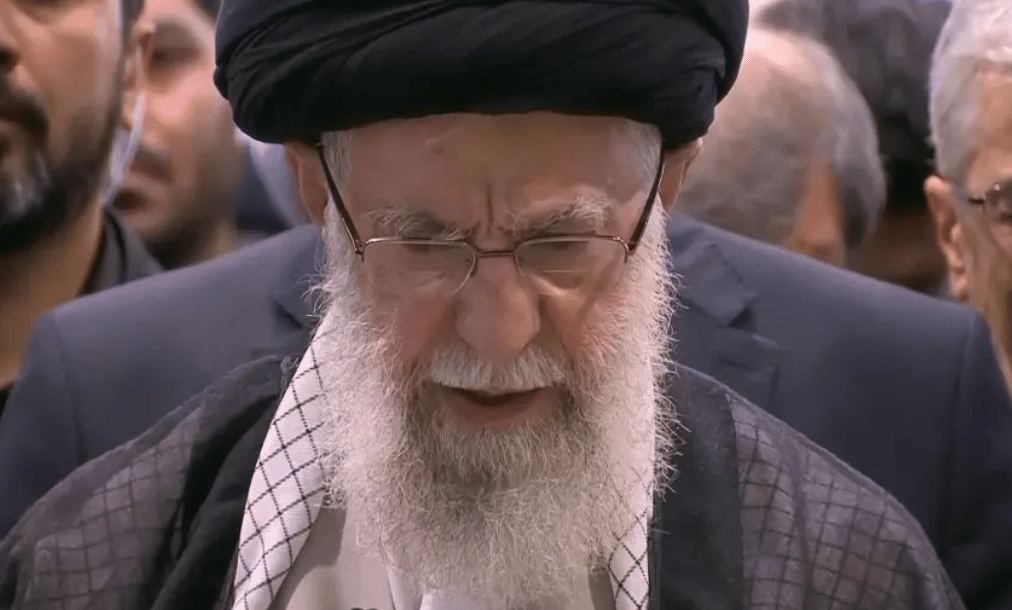
Iran has issued a strong warning that it is fully prepared to retaliate against any attacks by the United States or Israel targeting its critical infrastructure, raising fresh concerns over the possibility of a wider regional conflict in the Middle East.
According to Iran’s semi-official Tasnim News Agency, a senior Iranian official said Tehran has developed a comprehensive response plan designed to counter any military action aimed at the country’s strategic facilities. The warning comes amid growing speculation in international media that the United States is considering broader military options against Iran, including potential strikes on key energy infrastructure.
The Iranian official dismissed reports of possible U.S. attacks as an act of “madness,” arguing that such actions would only deepen instability across the region and provoke a swift and decisive response. He stressed that Iran is not seeking escalation but is fully prepared to defend its national interests should its territory or critical infrastructure come under attack.
According to the official, Iran’s planned retaliation would extend beyond conventional military targets. He said any attack on Iranian infrastructure would trigger strikes against what he described as the “vital infrastructure of the Zionist regime,” referring to Israel, as well as U.S. energy infrastructure located throughout the Middle East. The remarks represent one of Tehran’s clearest warnings yet regarding the potential consequences of military action against the country.
The statement follows heightened tensions between Washington and Tehran, fueled by recent military exchanges, regional security incidents, and increasingly forceful rhetoric from both sides. Reports that the United States could expand its military campaign have prompted Iranian leaders to reaffirm that any offensive action would be met with what they describe as a proportional and comprehensive response.
Security analysts warn that attacks targeting energy facilities could have far-reaching consequences beyond the battlefield. The Middle East remains one of the world’s most important energy-producing regions, and any disruption to oil and gas infrastructure could affect global energy markets, international trade, and economic stability.
The latest warning also underscores the growing risk that a direct confrontation between Iran, the United States, and Israel could expand beyond isolated military exchanges into a broader regional conflict involving strategic infrastructure and neighboring countries.
As diplomatic efforts continue to prevent further escalation, governments around the world are closely monitoring developments, urging restraint from all parties. With both Iran and the United States signaling readiness to respond to perceived threats, the coming days are expected to be critical in determining whether tensions can be contained through diplomacy or evolve into a more dangerous military confrontation. /aptikons