
Israel Prepares for Pivotal 2026 Elections as New Political Alliances Challenge Netanyahu’s Longtime Dominance
Israel is set to enter another defining chapter in its political history as citizens prepare to vote in legislative elections scheduled for October 27, 2026—an election widely viewed as one of the country’s most consequential in recent years. With all 120 seats in the 26th Knesset at stake, the vote will determine not only the composition of Israel’s parliament but also the shape of the next governing coalition, which will lead the nation through an increasingly complex period marked by security concerns, economic pressures, regional diplomacy, and domestic political divisions.
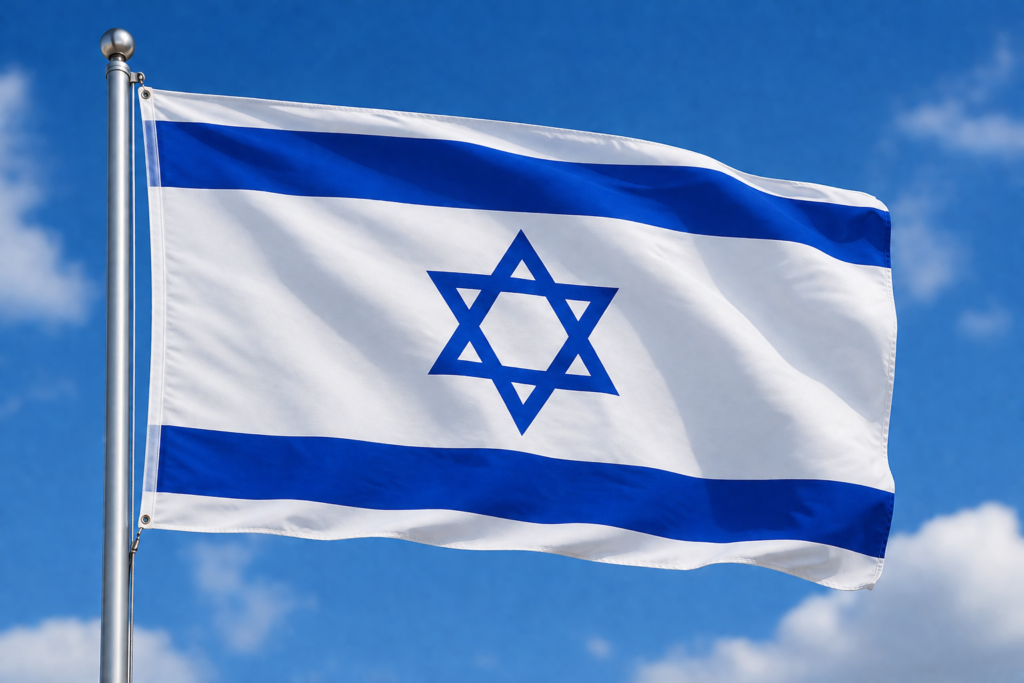
The upcoming election carries historic significance because the current 25th Knesset has become the first Israeli legislature since 1988 to complete its full four-year term. In a country long characterized by political instability, repeated elections, and fragile coalition governments, completing a full parliamentary term represents an unusual period of institutional continuity. However, despite that stability, Israel now heads toward an election that could dramatically reshape its political landscape.
Prime Minister Benjamin Netanyahu, Israel’s longest-serving leader, enters the campaign seeking to extend his political dominance after leading the country’s 37th government. Throughout his decades in politics, Netanyahu has remained one of the most influential—and polarizing—figures in Israeli public life. Supporters credit him with strengthening Israel’s security, expanding diplomatic ties with regional partners, and promoting economic growth despite persistent regional tensions. Critics, meanwhile, argue that the country needs new leadership capable of bridging political divisions and addressing long-standing domestic concerns, including the rising cost of living, judicial reform debates, and governance issues.
- No to Pax Silica’ in the Philippines as Critics Raise Concerns Over Sovereignty, Environment, and Economic Benefits

- Israel 2026 legislative election
- Dharmendra Pradhan |Minister, Education, Lawyer, Biography, & Career
- Sara Duterte Witness Says OVP Used Gym Bags for ₱500 Million
- Beyond the Applause: The Issues Left Unspoken in President Marcos’ Fifth State of the Nation Address
- Is it SONA or SANA for the 2026 presidential address in the Philippines?
- What is Pax Silica, what is its purpose in the Philippines?
- Risa Hontiveros Warns of Nuclear Waste Risks as Zubiri Backs Marcos’ Nuclear Energy Push

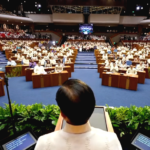

Unlike previous elections dominated primarily by familiar political rivals, the 2026 campaign introduces several significant developments that could alter the balance of power in the Knesset. Among the most closely watched is the emergence of Yashar, a newly established centrist political party founded by former Israel Defense Forces (IDF) Chief of Staff Gadi Eisenkot. The creation of Yashar has injected fresh energy into the political contest, positioning itself as a moderate alternative for voters seeking experienced leadership outside the traditional partisan divide.
Political analysts believe Eisenkot’s military background could strengthen his appeal among voters who place national security at the center of their electoral decisions while also favoring pragmatic governance. His entry into national politics has transformed what many initially expected to be another contest dominated by Likud into a far more competitive race for the position of the largest party in the Knesset.
Another major political development occurred in April 2026, when former Prime Minister Naftali Bennett and opposition leader Yair Lapid announced the formation of a joint electoral alliance. Bennett’s newly established Bennett 2026 party joined forces with Lapid’s Yesh Atid, creating a unified centrist bloc aimed at consolidating opposition support and presenting a stronger challenge to Netanyahu’s governing coalition.
The alliance reflects growing recognition among opposition leaders that fragmented electoral campaigns have often benefited larger parties under Israel’s parliamentary system. By combining their political resources and voter bases, Bennett and Lapid hope to maximize their representation in the next Knesset while positioning themselves as credible contenders for national leadership.
Meanwhile, Israel’s political left has also undergone significant reorganization. The historic Labor Party and Meretz, long considered the country’s principal center-left and progressive movements, have merged into a single political organization known as The Democrats, led by former deputy IDF chief Yair Golan. The merger represents an effort to strengthen progressive representation after years of declining electoral performance and political fragmentation among left-leaning parties.
Observers say the consolidation reflects broader strategic adjustments taking place across Israel’s political spectrum, as parties seek to overcome electoral challenges in a highly competitive proportional representation system. Under Israeli election law, political parties must secure at least 3.25 percent of the nationwide vote to enter the Knesset. While the threshold is relatively low compared with many electoral systems worldwide, it has nevertheless encouraged mergers and alliances among smaller parties hoping to avoid exclusion from parliament.
Israel’s electoral system is based entirely on nationwide proportional representation, meaning voters cast ballots for political parties rather than individual district candidates. The distribution of parliamentary seats closely reflects each party’s share of the national vote, resulting in a legislature where coalition-building is almost always necessary. No single party has ever won an outright parliamentary majority, making post-election negotiations a defining feature of Israeli politics.
As a result, the outcome of the October election is expected to extend well beyond election night. Once the votes are counted, political leaders will likely engage in complex coalition negotiations to assemble a governing majority of at least 61 seats in the 120-member Knesset. These negotiations often involve extensive discussions over cabinet appointments, legislative priorities, budget commitments, and national policy direction.
The campaign is also expected to focus heavily on issues extending beyond traditional political rivalries. National security remains a dominant concern as Israel continues to navigate evolving regional challenges. Economic issues—including inflation, housing affordability, employment opportunities, and the rising cost of living—are also anticipated to play a central role in voter decision-making. Questions surrounding judicial reforms, democratic institutions, civil liberties, and relations between religious and secular communities are likewise expected to shape public debate throughout the campaign.
International observers will closely monitor the election, recognizing that the composition of Israel’s next government could influence the country’s foreign policy, regional diplomacy, and strategic partnerships. Israel remains a central actor in Middle Eastern affairs, and changes in political leadership could affect relations with neighboring states, global allies, and international organizations.
With new political alliances emerging, established parties defending their positions, and voters weighing competing visions for the country’s future, the 2026 legislative election has become more than a routine parliamentary contest. It represents a pivotal moment that could redefine Israel’s political direction for years to come.
Whether Prime Minister Benjamin Netanyahu succeeds in securing another governing coalition or whether opposition forces capitalize on newly formed alliances to usher in a new political era will ultimately depend on the choices made by Israeli voters on October 27. Until then, the campaign is expected to remain one of the most closely watched political contests in the region, carrying significant implications not only for Israel’s domestic governance but also for its role on the international stage.
Israel Heads Toward Historic Election as Netanyahu Faces Toughest Political Test Since October 7 Attack
Israel is preparing for one of the most consequential national elections in its modern history as voters are scheduled to head to the polls on October 27, marking the country’s first parliamentary election since the devastating October 7, 2023, Hamas attack that transformed Israel’s security landscape and triggered a series of regional conflicts. The election is widely viewed as a defining moment for the nation, with Israelis expected to determine not only who will lead the next government but also the future direction of the country after nearly three years of war, political divisions, and growing public debate over national security and governance.
The October 7 attack, which resulted in the deadliest day in Israel’s history, fundamentally altered the country’s political climate. The unprecedented assault by Hamas shattered long-held assumptions about Israel’s security apparatus and led to a broad military campaign in the Gaza Strip. The conflict later expanded beyond Gaza, involving hostilities with Hezbollah in Lebanon and military confrontations with Iran, placing Israel at the center of one of the Middle East’s most volatile periods in decades.
As Israelis prepare to cast their ballots, opinion polls suggest that Prime Minister Benjamin Netanyahu could face a significant electoral setback. Surveys conducted over recent months consistently indicate declining public confidence in Netanyahu’s leadership, with many voters holding his government responsible for the security failures exposed by the October 7 attacks. Although a substantial portion of the Israeli public has supported military operations against Hamas, Hezbollah, and Iran, polling has shown that confidence in Netanyahu personally has remained considerably lower.
Political analysts note that the attacks severely damaged one of Netanyahu’s strongest political assets—his long-standing reputation as a leader capable of protecting Israel’s national security. For years, Netanyahu cultivated an image as an experienced statesman uniquely equipped to confront regional threats. However, the surprise Hamas assault raised difficult questions about intelligence preparedness, military readiness, and government decision-making, issues that continue to dominate public discussion as Election Day approaches.
Beyond national security concerns, Netanyahu’s government has also faced criticism over domestic issues, particularly policies involving religion and the state. Disputes over judicial reforms, exemptions from military service for ultra-Orthodox communities, and the broader relationship between religious and secular Israelis have intensified political divisions. These controversies have further weakened public approval of the governing coalition among many moderate and secular voters.
Despite unfavorable polling numbers, few observers are willing to count Netanyahu out of the race. As Israel’s longest-serving prime minister, he has repeatedly demonstrated an extraordinary ability to survive politically despite scandals, coalition crises, and previous predictions of defeat. Throughout his decades in public life, Netanyahu has repeatedly defied political expectations, rebuilding alliances and returning to power even after apparent setbacks.
Analysts caution that Israeli elections are rarely straightforward. The country’s proportional representation system produces a highly fragmented parliament in which no single political party has ever secured an outright majority. As a result, elections are often determined not solely by which party wins the most seats, but by which political leader can successfully assemble a governing coalition commanding at least 61 seats in the 120-member Knesset.
Current polling suggests that while Netanyahu’s coalition may lose significant ground, opposition parties are also struggling to establish a clear governing majority. This uncertainty has fueled speculation that post-election coalition negotiations could become lengthy and unpredictable, with smaller parties once again playing decisive roles in determining who ultimately becomes prime minister.
Among the most closely watched figures emerging during the campaign is Gadi Eisenkot, the former chief of staff of the Israel Defense Forces. Eisenkot has steadily gained momentum in national opinion surveys, presenting himself as a political outsider whose military career and personal sacrifices distinguish him from veteran politicians.
Eisenkot’s candidacy carries particular emotional weight for many Israelis. During the war in Gaza, he suffered a profound personal tragedy when his son was killed in combat. Supporters argue that his experience reflects both the human cost of the conflict and his commitment to national service. His image as a decorated military commander, combined with his relatively modest public profile compared with Netanyahu, has resonated with voters seeking new leadership grounded in security expertise but free from years of political controversy.
Another major political figure expected to influence the election is Naftali Bennett, who previously served as prime minister after helping form an unlikely coalition that temporarily removed Netanyahu from office following the 2021 election. Bennett governed alongside Yair Lapid, despite representing different ideological camps.
Their coalition was historic in several respects. It brought together liberal, conservative, nationalist, and centrist parties while also including, for the first time in Israeli history, an Islamist Arab political party as part of the governing alliance. Although the coalition ultimately survived only 18 months before collapsing, it demonstrated that broad political cooperation across ideological lines was possible under extraordinary circumstances.
Observers believe Bennett and Lapid may once again play significant roles in coalition negotiations after the election, regardless of whether either emerges as the largest individual political force. Their experience in assembling diverse governing alliances could prove valuable if no bloc achieves a clear parliamentary majority.
Also expected to influence coalition calculations is Avigdor Lieberman, a veteran politician whose relationship with Netanyahu has evolved dramatically over the years. Once considered one of Netanyahu’s closest political allies and advisers, Lieberman broke with the prime minister in 2018 after accusing him of taking an insufficiently aggressive approach toward Palestinian militant groups operating in Gaza.
Since leaving the government, Lieberman has become one of Netanyahu’s most outspoken critics while continuing to advocate hardline security policies. His position illustrates the complexity of Israeli politics, where political disagreements frequently revolve not only around ideological differences but also leadership style, coalition management, and strategic priorities.
Unlike presidential systems where voters directly elect a national leader, Israeli citizens vote for political parties competing for seats in the Knesset. Parliamentary seats are distributed according to each party’s share of the national vote, provided the party surpasses the electoral threshold. Once election results are finalized, the President of Israel consults party leaders before selecting the member of parliament considered most capable of forming a governing coalition.
The leader receiving that mandate is not necessarily the head of the largest party. Instead, the decisive factor is the ability to secure commitments from enough parties to command a majority of at least 61 lawmakers. Consequently, smaller political factions frequently become “kingmakers,” wielding influence far greater than their parliamentary size by determining which coalition ultimately governs.
This coalition-based political structure has contributed to repeated periods of instability. Between 2019 and 2022, Israel experienced an unprecedented cycle of repeated elections and short-lived governments as competing political blocs repeatedly failed to establish durable parliamentary majorities. The political deadlock ended only when Netanyahu returned to power in 2022 after securing enough support to form what has often been described as Israel’s most right-wing government.
The upcoming October election will therefore represent a notable constitutional milestone. Unlike many recent parliaments, the current Knesset has completed its full four-year term, making this one of the relatively rare occasions in modern Israeli history in which scheduled elections have occurred without the parliament being dissolved prematurely.
Nevertheless, political uncertainty remains exceptionally high. Polls may point toward losses for Netanyahu’s governing coalition, but they do not yet identify a clear alternative capable of uniting the country’s fragmented political landscape. Coalition negotiations following the election could therefore prove just as decisive as the voting itself.
For many Israelis, the election has become about more than political parties or individual personalities. It represents a national referendum on leadership during one of the country’s most turbulent periods, encompassing the legacy of the October 7 attacks, the ongoing consequences of regional conflicts, domestic political divisions, and competing visions for Israel’s future.
As the campaign enters its final months, voters face a choice that could reshape the country’s political direction for years to come. Whether Netanyahu once again demonstrates his renowned political resilience or a new coalition emerges to lead Israel into its next chapter, the October 27 election is expected to stand as one of the most closely watched and historically significant democratic contests in the nation’s history.
Netanyahu Coalition Survives Years of Political Turmoil, Judicial Crisis, and Internal Divisions as Israel Avoids Early Elections
Israel’s current government has weathered one of the most politically turbulent periods in the country’s modern history, overcoming judicial battles, nationwide protests, coalition rebellions, and the aftermath of war to remain in power despite repeated predictions of its collapse.
The political chapter began after Israel’s 36th government lost its parliamentary majority, forcing the country into snap elections in 2022. The elections reshaped the political landscape, giving former Prime Minister Benjamin Netanyahu and his bloc a clear parliamentary majority. Following the vote, Netanyahu successfully assembled a governing coalition composed of Likud, Otzma Yehudit, Noam, the Religious Zionist Party, United Torah Judaism, and Shas. The new administration officially took office on December 29, 2022, marking Netanyahu’s return to power and the formation of Israel’s 37th government.
Soon after assuming office, the coalition unveiled one of the most controversial legislative agendas in Israel’s recent history. In January 2023, the government introduced an ambitious package of judicial reforms that sought to significantly alter the balance of authority between the judiciary, the executive branch, and the legislature. Supporters argued that the reforms would restore democratic accountability by limiting judicial intervention in government decisions, while critics warned that the measures threatened judicial independence and weakened Israel’s democratic institutions.
The proposed reforms ignited an unprecedented wave of public opposition. Massive demonstrations erupted across Israel and continued week after week for several months, drawing hundreds of thousands of protesters from diverse sectors of society. The movement expanded beyond political activists to include business executives, technology leaders, academics, military reservists, labor organizations, and civil society groups, many of whom warned that the reforms could have lasting consequences for Israel’s democratic system and economic stability.
As pressure intensified, the country experienced a nationwide general strike, adding to mounting calls for compromise. Facing growing political and public resistance, Prime Minister Netanyahu announced in March 2023 that the legislative process would be temporarily suspended to create space for negotiations with opposition parties. The decision was viewed as an attempt to ease tensions and prevent the nation’s political crisis from escalating further.
Despite the pause, negotiations ultimately failed to produce a lasting agreement. The governing coalition later resumed advancing portions of the judicial reform agenda. In July 2023, the Knesset approved legislation amending Israel’s Basic Law: The Judiciary, preventing courts from using the “reasonableness” standard to review decisions made by the government and its ministers. The measure represented one of the central components of the broader reform package and remained highly controversial both domestically and internationally.
The legal battle continued into the following year. On January 1, 2024, Israel’s Supreme Court, acting as the High Court of Justice, ruled by a narrow 8–7 majority that the amendment was unconstitutional. The landmark decision struck down the legislation, setting up an extraordinary constitutional confrontation between the judiciary and the government while underscoring the deep divisions surrounding the reform effort.
The political landscape shifted dramatically following the Hamas-led attacks on October 7, 2023, which fundamentally changed Israel’s national priorities. In response to the unfolding conflict, the opposition party National Unity agreed to join Netanyahu’s government in an emergency national unity arrangement designed to strengthen Israel’s wartime leadership. Senior opposition figures Benny Gantz and Gadi Eisenkot entered the newly established war cabinet, presenting a rare display of cross-party cooperation during a period of national crisis.
Although the emergency coalition temporarily strengthened the government, it did not eliminate the political pressures facing Netanyahu. Public criticism persisted throughout the conflict, with many Israelis continuing to demand government accountability, leadership changes, and early elections. Questions surrounding national security, intelligence failures, and wartime decision-making kept political tensions high despite the temporary unity government.
Over time, internal disagreements gradually weakened the emergency coalition. In March 2024, Gideon Sa’ar’s New Hope faction separated from the National Unity alliance and resigned from the government. Although the faction later returned in September, it eventually reached an agreement in 2025 to merge with Netanyahu’s Likud party, further reshaping the governing coalition. Meanwhile, the remaining National Unity alliance formally withdrew from the government in June 2024, ending the broad-based wartime partnership.
Additional instability emerged in early 2025 when Otzma Yehudit temporarily left the coalition in protest over a Gaza ceasefire agreement. The party’s departure briefly threatened the government’s parliamentary strength, but it returned to the coalition in March after the ceasefire arrangement collapsed, restoring Netanyahu’s legislative majority.
Throughout this period, one of the coalition’s most persistent challenges involved disagreements over the military conscription of ultra-Orthodox, or Haredi, Israelis. The issue had long divided Israeli politics, placing secular demands for equal military service against the religious community’s longstanding exemptions. The dispute repeatedly tested coalition unity and exposed ideological differences among Netanyahu’s governing partners.
The crisis reached its most critical stage in July 2025 when both factions comprising United Torah Judaism—Degel HaTorah and Agudat Yisrael—withdrew from the government, protesting delays in legislation addressing Haredi military service. Their resignations significantly weakened the coalition and fueled speculation that the government might soon collapse.
The situation deteriorated further when the Shas party also removed its ministers from government positions, adding another layer of uncertainty to Netanyahu’s administration. Although these parties often chose to remain within the coalition or later returned to their ministerial roles to avoid triggering new elections, the repeated threats of withdrawal became a defining characteristic of the government’s tenure, leaving its parliamentary majority under constant pressure.
Political uncertainty continued into 2026 as lawmakers from across Israel’s political spectrum pushed for legislation that could dissolve the Knesset and force new elections. Momentum for early elections grew amid widespread debate over the coalition’s future, yet practical considerations complicated those efforts. Because the Knesset was already approaching the end of its regular four-year term, dissolving parliament would have advanced the election schedule by only a matter of weeks rather than significantly shortening the government’s mandate.
In the end, despite years marked by constitutional disputes, massive public protests, wartime governance, ideological divisions, coalition defections, and repeated predictions of political collapse, Netanyahu’s coalition succeeded in managing the mounting pressures. By surviving successive internal crises and maintaining sufficient parliamentary support, the government remained intact until the natural conclusion of the Knesset’s term, demonstrating both the fragility and resilience of Israel’s complex coalition-based political system.
Netanyahu’s Likud Leads Israeli Election Polls Ahead of October 27 Vote as Bennett Emerges as Main Challenger
Israel is preparing for a crucial parliamentary election on October 27, 2026, with Prime Minister Benjamin Netanyahu and his Likud Party maintaining a commanding lead in the latest opinion polls. However, former Prime Minister Naftali Bennett has emerged as Netanyahu’s strongest challenger, setting the stage for a highly competitive campaign that could reshape the country’s political landscape.
The upcoming election will determine the composition of the 120-member Knesset, Israel’s parliament, where a political bloc must secure at least 61 seats to form a majority government. While the latest polling suggests that Likud remains the country’s largest political party, the figures also indicate that no single party is expected to win an outright majority, making coalition negotiations once again the decisive factor in determining Israel’s next government.
According to the latest opinion surveys, Likud, led by incumbent Prime Minister Benjamin Netanyahu, is projected to win 32 seats, allowing the veteran leader to retain his position as the country’s most influential political figure. Netanyahu, Israel’s longest-serving prime minister, continues to campaign on issues of national security, economic development, and regional diplomacy while defending his government’s handling of recent political and military challenges.
Trailing Likud is the newly established Together party, headed by former Prime Minister Naftali Bennett, which is projected to secure 24 seats. Bennett’s strong showing reflects growing public support for an alternative center-right leadership and positions his party as the principal opposition force seeking to unseat Netanyahu after years of Likud dominance.
Among Israel’s religious parties, Shas, led by Aryeh Deri, is expected to capture 11 seats, maintaining its influential role in coalition politics. The ultra-Orthodox party has traditionally served as a key coalition partner in several Israeli governments and is once again expected to play a pivotal role in post-election negotiations.
Former Defense Minister Benny Gantz and his Blue and White party are projected to win eight seats, while the Religious Zionist Party, under the leadership of Bezalel Smotrich, is forecast to secure seven seats. The United Torah Judaism (UTJ) alliance, led by Yitzhak Goldknopf, is also expected to receive seven seats, reinforcing the continued influence of Israel’s ultra-Orthodox political factions.
The nationalist Otzma Yehudit party, led by Itamar Ben-Gvir, is projected to obtain six seats, matching the expected performance of Yisrael Beiteinu, headed by former Defense Minister Avigdor Lieberman. Both parties are expected to remain significant players in coalition-building efforts following the election.
Meanwhile, the Arab political party Ra’am, led by Mansour Abbas, is projected to secure five seats, equal to the anticipated result for the Joint List, led by Yousef Jabareen. Both parties continue to represent important voices within Israel’s Arab community and could influence parliamentary dynamics depending on the final election outcome.
The newly formed Democrats party, headed by Yair Golan, is forecast to win four seats, while New Hope, led by Gideon Sa’ar, is likewise expected to secure four seats. The religious-nationalist Noam party, under Avi Maoz, is projected to retain one seat in the next Knesset.
Despite Likud’s position as the largest party in the polls, the projected results underscore Israel’s deeply fragmented political landscape. No party appears close to reaching the 61-seat threshold needed to govern alone, meaning the country’s next administration will almost certainly depend on complex coalition negotiations among religious, nationalist, centrist, and conservative parties.
Political analysts note that Netanyahu’s path to another term as prime minister will largely depend on whether his traditional right-wing and religious allies can collectively secure a parliamentary majority. At the same time, Bennett and other opposition leaders are expected to explore alternative coalition arrangements should the election produce a divided Knesset.
With months remaining before Israelis head to the polls, party leaders are expected to intensify campaigning on key national issues, including security, the economy, judicial reforms, and governance. As Election Day approaches, opinion surveys may continue to shift, but the current projections indicate that the race will once again revolve around the political future of Benjamin Netanyahu and the alliances capable of forming Israel’s next government after the October 27, 2026, parliamentary elections.
Electoral Systems
Israel’s electoral system is regarded as one of the most distinctive democratic models in the world, relying on a nationwide proportional representation system that ensures political parties receive parliamentary seats in proportion to the number of votes they earn. Unlike many countries that divide elections into geographic districts, Israel treats the entire nation as a single electoral constituency, allowing voters to cast ballots for political parties rather than individual candidates.
This electoral framework has shaped Israel’s political landscape for decades, creating a vibrant but highly fragmented multi-party democracy where coalition governments have become the norm rather than the exception. The system encourages representation for a wide range of political, religious, and ideological groups, but it also presents significant challenges in forming stable governments, often leading to prolonged negotiations and, in many cases, early elections.
Under Israel’s current electoral rules, political parties must secure at least 3.25 percent of the nationwide vote to enter the Knesset, the country’s 120-member parliament. This requirement, known as the electoral threshold, is designed to limit excessive political fragmentation while still allowing smaller parties with meaningful public support to gain representation.
Once votes are counted, seats in the Knesset are allocated proportionally based on each qualifying party’s share of the national vote. As a result, every vote contributes directly to determining the political balance within parliament, making proportional representation one of the defining characteristics of Israeli democracy.
The Knesset is elected for a constitutional term of four years. However, Israeli political history demonstrates that few governments complete their full mandate. Coalition disagreements, legislative deadlocks, political crises, and shifting alliances frequently trigger the dissolution of parliament and the calling of snap elections before the expiration of the official term.
Israel has experienced numerous early elections over the years, reflecting both the strengths and weaknesses of its parliamentary system. While coalition governments encourage negotiation and compromise among diverse political groups, they can also become vulnerable when coalition partners withdraw support, causing governments to lose their parliamentary majority.
One of the most notable aspects of Israeli politics is that no single political party has ever won an outright majority of the 120 seats in a national election. Consequently, governing parties must negotiate agreements with other parties to establish coalition governments capable of commanding the support of at least 61 members of the Knesset.
The only historical exception occurred after the formation of the Alignment, an alliance of several political parties that collectively secured a parliamentary majority prior to the 1969 elections. Since then, coalition politics has remained a permanent feature of Israeli governance, requiring parties from different political backgrounds to negotiate policy compromises in exchange for participation in government.
Israel’s electoral process is based on universal suffrage. Every Israeli citizen aged 18 or older has the constitutional right to vote regardless of gender, religion, or ethnicity, provided they meet the legal qualifications established by election law.
Israeli citizens residing abroad generally cannot vote at embassies or consulates. Instead, they must travel back to Israel to cast their ballots during national elections. This policy distinguishes Israel from many democracies that allow absentee or overseas voting for citizens living abroad.
Meanwhile, Israeli citizens living in the Israeli-occupied territories are permitted to vote from within those territories through designated polling arrangements. In addition, special voting stations are established aboard Israeli ships, ensuring that eligible citizens serving or working at sea can still participate in the democratic process without returning to the mainland.
The responsibility for administering and supervising elections rests with Israel’s Central Elections Committee, an independent body tasked with ensuring that elections are conducted fairly, transparently, and according to the country’s legal framework. The committee oversees candidate registration, polling procedures, ballot counting, and the certification of official election results.
Israel’s elections are conducted under the Knesset Elections Law, which establishes the legal procedures governing parliamentary elections, voter eligibility, political party participation, campaign regulations, and vote tabulation.
Political analysts often describe Israel’s electoral system as one that balances inclusiveness with political complexity. Because representation closely reflects the national vote, minority voices and smaller political movements are more likely to gain parliamentary representation than under winner-take-all electoral systems. This broad representation contributes to an active and competitive democratic environment but also makes coalition-building a complex and often lengthy political process.
The country’s diverse population—including secular and religious communities, Jewish and Arab political parties, and groups representing various ideological perspectives—is reflected in the composition of the Knesset. As a result, government formation frequently involves extensive negotiations over cabinet positions, policy priorities, and coalition agreements.
International democracy assessments continue to monitor Israel’s electoral performance. According to the 2026 V-Dem Democracy Indices, Israel ranked as the 53rd most electorally democratic country in the world. The ranking reflects evaluations of electoral integrity, political competition, civil liberties, and democratic institutions, while also highlighting areas that researchers believe continue to evolve within Israel’s political system.
As Israel continues to navigate domestic political divisions and regional security challenges, its proportional representation system remains central to the country’s democratic identity. While the model promotes broad political inclusion and ensures that diverse segments of society have a voice in parliament, it also requires continuous negotiation, compromise, and coalition-building to maintain effective governance.
The Israeli electoral system remains one of the world’s most closely studied parliamentary models, demonstrating how proportional representation can simultaneously strengthen democratic representation while presenting enduring challenges in achieving long-term political stability.