Venezuela is reeling from one of the deadliest earthquakes in its history after twin powerful tremors struck the country’s northern region, killing at least 920 people, injuring more than 3,360 others, and leaving hundreds still trapped beneath collapsed buildings. As rescue teams race against time amid continuous aftershocks, international aid has begun pouring into the country, while thousands of families anxiously await news of missing loved ones in a disaster that has overwhelmed emergency services and devastated critical infrastructure.
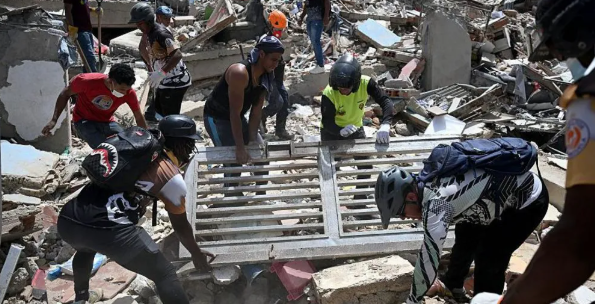
CARACAS, Venezuela — Venezuela is facing one of the deadliest natural disasters in its modern history after twin powerful earthquakes devastated large portions of the country’s northern region, leaving more than 920 people dead and at least 3,360 others injured. Rescue operations remain underway as emergency responders race against time to locate survivors trapped beneath collapsed buildings while thousands of anxious families continue searching for missing loved ones.
June 2026 Venezuela Earthquake Casualties
| Metric | Current Confirmed Count | Status |
|---|---|---|
| Total Confirmed Dead | 920 | Expected to rise significantly as rubble is cleared. |
| Total Injured | 3,360+ | Being treated in overwhelmed or makeshift facilities. |
| Reported Missing | Up to 50,000 | International rescue crews are actively searching. |
Government authorities confirmed that the death toll has climbed to 920, with officials warning that the number is expected to increase as rescue teams continue clearing mountains of debris across the affected provinces. At least 172 people are still believed to be trapped beneath collapsed structures, raising concerns that many remain beyond the reach of rescuers.
READ MORE ARTICLES:
- BANGLADESH: Mother and Three Daughters Killed in Brutal Home Attack in Lakshmipur
- 235 Dead After Powerful Venezuela Earthquakes as Rescuers Continue Search
- Venezuela Earthquake Kills 164, Thousands Affected
- Earthquakes in Venezuela knock Internet down to 59% Capacity, Recovery Underway
- 3 Patay, 5 Sugatan sa Pamamaril sa San Jose National High School sa Tacloban City
- From First Lady at 19 to Presidential Hopeful: Keiko Fujimori’s Fourth Bid for Peru
- Thai Princess Bajrakitiyabha Dies at Age 47 After More Than Three Years in Coma
The catastrophe unfolded on Wednesday when two powerful earthquakes struck within seconds of each other. The second tremor registered a magnitude of 7.5, making it one of the strongest earthquakes to hit Venezuela in more than a century. The violent shaking caused widespread destruction across the country’s northern coastline, toppling residential buildings, shopping centers, hospitals, schools, and public infrastructure.
La Guaira, located north of the capital Caracas, has suffered the greatest devastation. The coastal state, which houses Simón Bolívar International Airport in Maiquetía and one of Venezuela’s busiest seaports, experienced extensive structural collapse that has severely disrupted transportation, communications, and emergency response efforts. Entire neighborhoods have been reduced to rubble, while roads leading into the disaster zone have been damaged, complicating rescue operations.
In Caracas, authorities identified Los Palos Grandes and Altamira among the neighborhoods most heavily affected by the disaster. Numerous apartment buildings sustained severe structural damage, forcing thousands of residents to evacuate as aftershocks continue to threaten already weakened structures.
Government officials reported that more than 214 aftershocks have rattled the country since the initial earthquakes, creating additional hazards for both survivors and emergency personnel. The continuous seismic activity has delayed rescue efforts in several locations, forcing teams to temporarily suspend operations whenever new tremors occur.
Emergency medical services have been overwhelmed by the unprecedented number of casualties. With several hospitals either damaged or destroyed, healthcare workers have established makeshift treatment centers in temporary facilities to accommodate the thousands of injured. Medical staff continue working around the clock despite shortages of medicines, surgical equipment, and essential supplies.
Doctors on the ground have warned that Venezuela’s healthcare system, already weakened by years of economic hardship, is struggling to cope with the overwhelming demand for emergency medical care. Many facilities lack adequate equipment, medications, and personnel needed to treat the growing number of injured victims, forcing healthcare workers to rely on limited resources while caring for critically wounded patients.
Authorities estimate that hundreds of buildings have either collapsed or suffered significant structural damage, including hospitals, shopping malls, schools, and government facilities. In addition to major structures, approximately 1,000 other infrastructure sites have also sustained varying degrees of damage, affecting transportation networks, utilities, and essential public services throughout the affected regions.
Rescue teams have managed to pull dozens of survivors from the wreckage, offering moments of hope amid the tragedy. In La Guaira alone, authorities confirmed that at least 243 people have been rescued alive from collapsed buildings. Many of the successful rescues have occurred after survivors spent several days trapped beneath concrete and twisted steel.
One of the most emotional rescue operations involved three young siblings who were pulled alive from the ruins of a collapsed structure in La Guaira. Television footage showed emergency workers guiding the dust-covered children through a narrow opening in the debris before reuniting them with waiting responders. The rescue has become a symbol of hope for thousands of families still awaiting news of missing relatives.
Despite these successes, countless families continue to endure agonizing uncertainty as search operations persist. Among them is a mother whose two daughters, aged 22 and 23, remain trapped beneath the collapsed remains of a shopping center where they worked as manicurists. Similar stories have emerged across the disaster zone as rescue workers continue combing through unstable ruins in search of signs of life.
The scale of destruction has prompted an extensive international humanitarian response. Hundreds of rescue specialists from multiple countries have already arrived in Venezuela, with additional teams continuing to deploy. International search-and-rescue personnel equipped with specialized machinery, drones, thermal imaging technology, and search dogs are assisting local emergency services in locating survivors buried beneath collapsed buildings.
The United Kingdom dispatched a military aircraft from RAF Brize Norton carrying specialist urban search-and-rescue personnel from 14 fire and rescue services, accompanied by trained rescue dogs and advanced drone technology. The United States has announced $150 million in humanitarian assistance while deploying transport aircraft, naval vessels, and emergency response personnel to support relief efforts. Rescue teams from the Netherlands, Mexico, Switzerland, and several other countries have also joined the international operation.
International humanitarian organizations have described the devastation as catastrophic, with emergency coordinators emphasizing the urgent need for sustained global assistance. Aid agencies are working alongside Venezuelan authorities to deliver emergency shelter, food, medical supplies, clean water, and sanitation services to displaced communities as thousands remain without homes.
The United Nations has pledged to coordinate international humanitarian assistance, stressing that the magnitude of the disaster requires a comprehensive global response. Relief organizations continue assessing the full extent of humanitarian needs as emergency operations expand across the affected regions.
The earthquake has further intensified the challenges facing Venezuela, a country that has endured years of severe economic crisis that weakened public infrastructure and healthcare services long before the disaster struck. Humanitarian experts warn that rebuilding damaged communities will likely require years of sustained international support and substantial financial assistance.
Tributes continue pouring in for those who lost their lives during the disaster. Venezuelan footballer Héctor Bello announced the death of his wife, Andrea, who reportedly sacrificed her own life while protecting their young daughter during the earthquake. Her actions have drawn widespread admiration across the country as stories of courage, sacrifice, and survival continue to emerge from the devastated communities.
Foreign governments have also confirmed casualties among their citizens. Officials reported that one Portuguese national, two Brazilian citizens, and four Spanish nationals were among those killed. Spanish authorities also stated that more than 100 of their citizens remain unaccounted for as rescue and identification efforts continue.
Venezuelan authorities confirmed that the earthquakes affected multiple northern states, including La Guaira, Aragua, Carabobo, and Falcón, where aftershocks continue to pose ongoing risks. Emergency officials have urged residents to remain vigilant, avoid damaged buildings, and follow evacuation orders while engineers inspect structures for safety.
As search operations enter another critical phase, hopes of finding additional survivors remain alive despite the challenging conditions. Emergency responders continue working tirelessly through unstable rubble, determined to reach those still trapped beneath collapsed buildings. For thousands of families waiting for news, every rescue represents renewed hope amid one of the darkest chapters in Venezuela’s recent history.