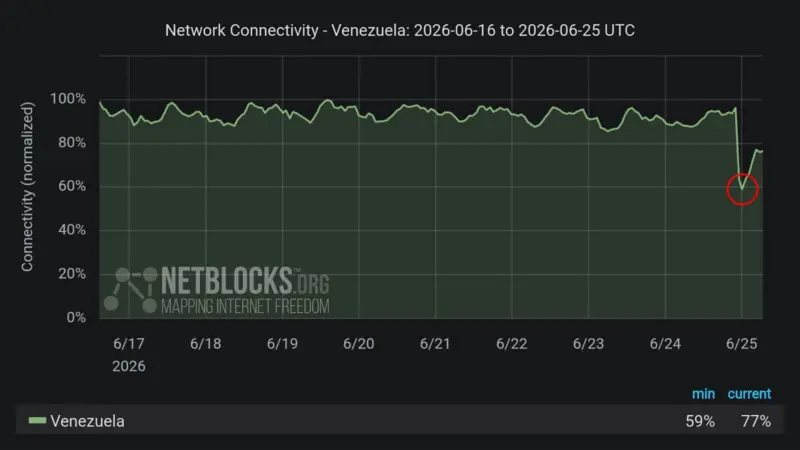
Earthquakes in Venezuela have caused significant disruption to internet connectivity, according to monitoring group NetBlocks. Service fell to just 59% of normal capacity shortly after the tremors struck, before recovering to around 77% by 08:00 BST (03:00 local time). The outages are linked to power cuts and infrastructure damage, hindering rescue operations and limiting information from affected areas. Separately, the UN’s Independent International Fact-Finding Mission has urged Venezuela’s telecommunications regulator to fully restore access to social media and all media outlets, warning that access to information is “a matter of life and death.
VENEZUELA — Natural disasters do not only destroy buildings, roads, and homes. In the modern world, they can also cripple one of the most essential lifelines of society communication.
Internet connectivity across Venezuela was significantly disrupted following the recent earthquakes, according to internet monitoring group NetBlocks. Data showed connectivity dropped to just 59% of normal levels shortly after the earthquakes struck before recovering to approximately 77% by 08:00 BST (03:00 local time).
NetBlocks said the widespread disruption was likely caused by power outages and damage to telecommunications infrastructure, hampering rescue operations and limiting access to information from affected areas.
READ MORE ARTICLES:
- 3 Patay, 5 Sugatan sa Pamamaril sa San Jose National High School sa Tacloban City
- From First Lady at 19 to Presidential Hopeful: Keiko Fujimori’s Fourth Bid for Peru
- Thai Princess Bajrakitiyabha Dies at Age 47 After More Than Three Years in Coma
- Anti-Bullying Act of 2013 (Republic Act No. 10627): Is It Truly Effective or Just Policy on Paper?
- 7.8-Magnitude Quake Strikes Off Sarangani; Tsunami Warning Issued, Evacuations Ordered
- 2-anyos na Bata, Natagpuang Patay na Lumulutang sa Hukay sa Ormoc City
- Pope Leo XIV’s Call for Peace in Lebanon and the Middle East
The disruption has also contributed to the limited flow of information from the earthquake’s rural epicenter, with much of the footage circulating online coming from the capital, Caracas.
The United Nations’ Independent International Fact-Finding Mission on Venezuela urged authorities to ensure full access to social media and news outlets, emphasizing that access to information during emergencies can be “a matter of life and death.”
Behind these numbers lies a much deeper humanitarian concern. When communication networks fail during disasters, the consequences extend far beyond inconvenience. Families become unable to contact loved ones. Emergency responders struggle to coordinate rescue operations. Hospitals may find it difficult to communicate with government agencies and relief organizations. Communities isolated by damaged roads and infrastructure become even more invisible to the outside world.
NetBlocks reported that the widespread connectivity problems corresponded with power outages and infrastructure damage caused by the earthquakes. These disruptions have complicated rescue efforts and reduced visibility into the situation unfolding on the ground.
In the digital age, internet access has become nearly as important as electricity and clean water during emergencies. Social media platforms often serve as emergency communication tools, allowing survivors to report their locations, request assistance, share safety information, and reunite separated families.
The collapse in connectivity may explain why much of the footage emerging from the disaster has come from the capital city of Caracas rather than from the areas closest to the earthquake’s epicenter. Urban areas generally possess stronger telecommunications infrastructure and more alternative communication channels, while rural communities can quickly become isolated when disaster strikes.
This creates a dangerous information gap. When rural areas disappear from digital communication networks, they can also disappear from public attention. Rescue resources, media coverage, and humanitarian assistance often flow toward places that are visible, while communities cut off from communication may wait longer for help to arrive.
The crisis has also reignited concerns about freedom of information in Venezuela. The United Nations Independent International Fact-Finding Mission on Venezuela has called on the country’s telecommunications authorities to fully unblock access to social media platforms and media outlets, emphasizing that access to information during disasters can literally become a matter of life and death.
Their statement highlights an increasingly important reality of modern disaster management: communication saves lives.
Citizens need accurate information about aftershocks, evacuation routes, shelter locations, medical services, and government advisories. Journalists need access to affected areas to report conditions on the ground. Humanitarian organizations require reliable communication systems to coordinate aid distribution and rescue operations.
Any barriers to the free flow of information during such emergencies can increase confusion, delay assistance, and potentially place additional lives at risk.
The issue also draws attention to broader concerns regarding press freedom and access to independent information in the country. Venezuela ranked 159th out of 180 countries and territories in the 2026 World Press Freedom Index compiled by Reporters Without Borders, reflecting longstanding challenges faced by journalists and media organizations operating within the country.
Disasters often expose weaknesses that already exist beneath the surface of society. In this case, the earthquakes have highlighted vulnerabilities not only in physical infrastructure but also in communication systems and information accessibility.
As climate change, urbanization, and population growth increase the risks associated with natural disasters worldwide, governments everywhere face an important challenge: ensuring that communication networks remain resilient during emergencies.
The ability to call for help, receive warnings, locate missing relatives, and share information should not become another casualty of disaster.
The earthquakes in Venezuela serve as a reminder that in the twenty-first century, internet connectivity is no longer merely a convenience or a luxury. During moments of crisis, it becomes part of the emergency response system itself.
When the internet goes silent, communities do not simply lose their connection to the digital world. They risk losing their connection to help, to information, and in some cases, to hope itself.
Recent Earthquakes
Venezuela has experienced a series of significant earthquakes over the past few years, which have raised concerns regarding their effects on infrastructure, including vital internet connectivity. One of the most notable earthquakes occurred on August 21, 2021, registering a magnitude of 7.0 with its epicenter near the northern coast, affecting cities such as Caracas and Maracaibo. This event was particularly alarming due to its depth of only 5 kilometers, which facilitated widespread damage across various regions.
Another substantial earthquake struck on March 2, 2022, with a magnitude of 6.5. Centered in the western part of the country, this earthquake also had a shallow depth, exacerbating the physical impacts. These seismic events not only resulted in considerable structural damage to buildings but also significantly disrupted transportation and communication networks crucial for everyday operations.
In 2023, Venezuela encountered further seismic activity, including several tremors in close succession, culminating in disturbances across the central and eastern territories. The cumulative effect of these earthquakes has raised alarms about the resilience of the nation’s internet infrastructure, leading to periodic downtimes and connectivity losses. Failures in telecommunication networks were often reported following these seismic disruptions, complicating the recovery efforts and further isolating affected communities.
Understanding the implications of these earthquakes on internet connectivity is essential. The geographical layout of Venezuela, combined with its existing telecommunications vulnerabilities, highlights the critical need for improved infrastructure to withstand such natural disasters. As likely future earthquakes loom, building resilience into the communication framework becomes paramount for maintaining stable internet connectivity across the nation.
According to BBC The Earth’s outer surface is made up of several massive sections known as tectonic plates, which fit together like pieces of a giant puzzle.
These plates are constantly moving, although very slowly usually only a few centimeters each year, about as fast as human fingernails grow.Northern Venezuela lies along the boundary where the Caribbean Plate meets the South American Plate.
As these plates gradually move against each other, some sections can become locked in place, causing pressure and stress to build over many years.When the accumulated stress becomes greater than the rocks can withstand, the plates suddenly shift or slide past one another. This sudden release of energy travels through the Earth as seismic waves, producing what we experience as an earthquake.
Internet Connectivity: A Critical Analysis
In Venezuela, internet connectivity serves a crucial role in navigating daily life, facilitating communication, and enabling access to essential services. The country has faced significant challenges regarding its internet infrastructure, which has been heavily impacted by socio-political factors. The advent of natural disasters, particularly earthquakes, further complicates this already fragile ecosystem. Recent data from organizations such as NetBlocks highlights substantial fluctuations in internet connectivity, particularly immediately following seismic events.
For instance, when earthquakes struck various regions of Venezuela, a noticeable drop in connectivity was recorded. This reduction was not merely a temporary anomaly; it reflected the underlying vulnerabilities of the country’s digital infrastructure. According to NetBlocks, the initial aftermath of these earthquakes saw an estimated decline of over 30% in connectivity, which severely hindered communication efforts. In many areas, residents reported difficulties in accessing the internet, thereby obstructing vital channels for both information and aid.
This situation was exacerbated by existing limitations within the country’s telecommunication networks. The reliance on a small number of service providers meant that the impact of physical damages from earthquakes was disproportionately felt by users. Moreover, the lack of redundancy in these networks contributed to prolonged outages, preventing timely responses to emergencies. As earthquake aftershocks hit, the vulnerability of the internet infrastructure became increasingly apparent, prompting both national and international bodies to reassess the need for a more robust and resilient communication framework.
The intersection of natural disasters and internet connectivity in Venezuela elucidates the importance of investing in resilient infrastructure. Without significant improvements, the ability to communicate and respond in the wake of such events will continue to remain compromised, further exacerbating the challenges faced by the populace during crises.
Cause of Connectivity Issues
The disruption of internet services in Venezuela following earthquakes highlights several interrelated causes, primarily rooted in damage to the nation’s infrastructure and associated power outages. Earthquakes can cause significant physical destruction, leading to the collapse or damage of critical facilities, including data centers and communication towers. When these infrastructures are compromised, the capability of internet service providers to deliver reliable connectivity is severely impaired. This situation is exacerbated by the fact that Venezuela’s internet infrastructure is already fragile due to years of underinvestment and maintenance issues.
Power cuts are another major contributor to connectivity issues after earthquakes. In regions impacted by seismic activities, local power supply systems may fail, leading to widespread outages that affect not only households but also telecommunications networks. Without a stable electricity supply, routers, servers, and other essential hardware cannot operate, significantly curtailing internet access. Furthermore, the restoration of power may take days or weeks, especially in remote areas, compounding the connectivity problems faced by users.
The challenges posed by the mountainous and uneven terrains of Venezuela complicate repair efforts. Accessing damaged sites becomes more difficult, leading to delays in restoring functionality. Service providers often struggle to secure necessary resources and technical expertise for comprehensive troubleshooting and infrastructure repairs. As a result, internet users experience prolonged periods of disconnection, affecting communication, access to information, and various online services that are increasingly vital in today’s digital age.
Consequences for Communication and Rescue Efforts
The impact of earthquakes on internet connectivity can significantly disrupt communication networks, which is particularly devastating in times of crisis. In Venezuela, a nation prone to seismic activity, the consequences extend beyond the immediate physical damage to infrastructure; they critically affect the flow of information necessary for effective rescue efforts. With the internet often serving as a primary means of communication, its disruption can hinder not only the coordination among rescue teams but also the communication needs of those affected by the disaster.
When an earthquake strikes, the immediate need for information is paramount. Affected communities require swift access to updates regarding safety measures, available resources, and contact with emergency services. However, if the local internet infrastructure fails or is severely compromised, essential communications become fragmented. This fragmentation can lead to a lack of situational awareness among first responders, ultimately delaying rescue operations and exacerbating the plight of those stranded in impacted areas.
The limitations posed by internet outages can hinder the ability of authorities to disseminate crucial information. It becomes increasingly challenging to mobilize additional resources or to disseminate warnings and safety protocols to at-risk communities. Furthermore, those in dire circumstances may find themselves isolated, unable to reach friends or family for assistance, thus prolonging their vulnerability.
The challenges do not only affect immediate response efforts; they extend to long-term recovery. The lack of reliable communication can impede the coordination of relief initiatives, community assessments, and the overall recovery process. As such, understanding the consequences of seismic activities on internet connectivity becomes vital in developing more resilient communication networks. Investing in alternative communication methods and improving infrastructure can bolster response capabilities, ensuring that, when disaster strikes, the flow of information remains as uninterrupted as possible.
Social Media and Information Flow
The impact of earthquakes on internet connectivity in Venezuela has highlighted the crucial role of social media platforms in disseminating information during crises. In the aftermath of a seismic event, these digital avenues have become essential for sharing real-time updates, coordinating efforts, and providing emotional support to affected individuals and communities. Notably, during significant earthquakes, residents in urban areas such as Caracas have quickly turned to platforms like Twitter, Facebook, and Instagram to upload footage and share their experiences.
Social media’s role as a primary information channel is particularly pronounced in densely populated cities where traditional media may struggle to report timely news. Citizens often take the initiative, using their smartphones to broadcast images and videos, effectively becoming citizen journalists. This grassroots information flow is not only crucial for situational awareness but also fosters a sense of community among residents affected by the disaster, as they rally support and share advice on safety measures.
Social media serves as a tool for aiding relief efforts following an earthquake. Organizations and volunteers use these platforms to organize humanitarian assistance and communicate the needs of affected individuals. The concentration of footage and updates from urban centers allows for a better understanding of the situation across the country, despite the challenges posed by compromised internet connectivity during and after natural disasters.
As residents adapt to the circumstances, they utilize social media to seek information about aftershocks, emergency services, and recovery initiatives. This flow of information can significantly influence the effectiveness of response strategies. Therefore, while earthquakes disrupt traditional infrastructure, the resilience and ingenuity demonstrated through social media ensure that vital information remains accessible, ultimately contributing to local and national emergency response efforts.
International Response
The impact of earthquakes on Venezuela’s internet connectivity has garnered significant attention from the international community. In the aftermath of recent seismic events, which have disrupted vital communication infrastructures, various organizations and nations have voiced the necessity of improving access to telecommunications. The United Nations, recognizing the pivotal role that communication plays in disaster response and recovery, initiated a fact-finding mission focused on Venezuela. This mission has underscored that resilient communication systems are essential not only for immediate response but also for promoting long-term recovery.
The UN has advocated for increased investment in telecommunication infrastructure in the region, which is crucial for both emergency services and the general populace. Enhanced connectivity can facilitate timely information sharing during emergencies and ensure that residents receive vital updates concerning safety and recovery measures. Consequently, the international body has called for collaborative efforts among governments, NGOs, and private sector stakeholders to address the existing deficiencies in internet access and media services in Venezuela.
Various international organizations are providing support in terms of funding and technical expertise to enhance telecommunication frameworks. The focus has been on establishing satellite communications, which can withstand natural disasters better than terrestrial networks. This strategic shift aims to ensure that, regardless of environmental conditions, residents have access to necessary communication platforms. Through these efforts, the international community illustrates a commitment to not only addressing the immediate effects of earthquakes on connectivity but also fostering long-term advancements in Venezuela’s telecommunication landscape.
Press Freedom in Venezuela
Press freedom in Venezuela has been a significant concern, particularly in the context of governmental constraints and censorship. According to the latest available data, Venezuela ranks among the lowest in the World Press Freedom Index. This ranking reflects a deteriorating environment for journalists, who face threats and hostility while attempting to report on key issues affecting the nation. The challenges for the media in Venezuela have been exacerbated by the political climate, where dissenting voices are often silenced, leading to restrictive press conditions.
The Venezuelan government has imposed numerous barriers to press freedoms, including legal actions against journalists, sporadic internet shutdowns, and outright censorship. These measures hinder the ability of media outlets to operate independently, thereby limiting citizens’ access to diverse perspectives and information. The implications of such repression are profound, undermining the democratic fabric of the nation and stifling civic discourse.
Natural disasters like earthquakes pose additional challenges to press freedom in the country. As internet connectivity is often disrupted during such events, local and international journalists face difficulties in disseminating information and reporting on crises. The role of journalism is crucial in these times for informing the public and holding authorities accountable. However, interruptions in connectivity can lead to misinformation and impede timely reporting, making it harder for citizens to receive critical updates.
The combination of governmental censorship and infrastructural challenges from events like earthquakes creates a complex landscape for press freedom in Venezuela. It highlights the vulnerabilities faced by journalists striving to inform the populace under increasingly difficult circumstances, necessitating a robust defense of press liberties to ensure a more transparent society.
The analysis of recent earthquakes in Venezuela highlights significant and multifaceted impacts on internet connectivity within the affected regions. The destruction of infrastructure, including telecommunications towers and data centers, has exacerbated existing vulnerabilities in the nation’s internet service. As discussed, the resultant outages not only hinder immediate communication but also impede access to critical information platforms vital for both emergency response and everyday activities.
Given Venezuela’s already precarious state of internet access, the earthquakes pose a serious challenge for both restoration and future developments in connectivity. Rebuilding efforts will need to take into account not just the physical repair of structures, but also the establishment of more resilient systems that can withstand natural disasters. This might involve investing in modern technologies, decentralizing internet access, and exploring alternative solutions such as satellite internet services.
The earthquakes may serve as a catalyst for policy changes that prioritize technological improvements in the telecommunications sector. Stakeholders, including government entities, non-profit organizations, and private companies, could find common ground in developing strategies that enhance internet infrastructure and ensure better access to information. Furthermore, fostering a culture of preparedness for natural disasters can significantly mitigate the consequences on connectivity.
While the immediate aftermath of the earthquakes presents significant challenges for internet connectivity in Venezuela, it also opens avenues for meaningful reform and resilient infrastructure development. The future of information access in the country hangs in the balance, reliant on collective efforts to build a more adaptive system capable of surviving both natural and socio-economic shocks.