The Supreme Court has ruled that an employee’s mere absence from work does not automatically constitute abandonment or justify dismissal, ordering the reinstatement of a production utility worker who was declared AWOL after unauthorized absences. In a landmark decision, the High Court emphasized that employers must prove not only that a worker was absent without valid reason but also that the employee clearly intended to permanently sever the employment relationship before termination can be considered lawful.
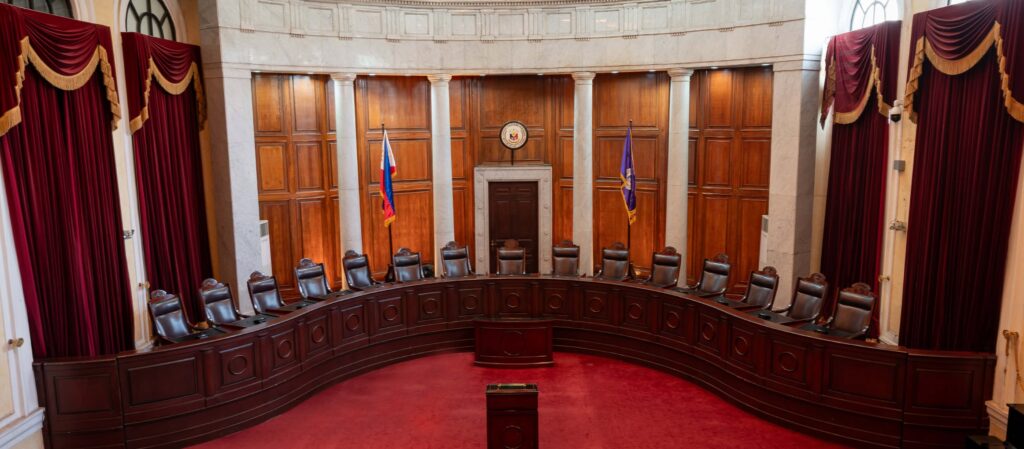
SC Philippines — The Supreme Court has reaffirmed a fundamental principle of Philippine labor law, ruling that an employee’s absence from work alone cannot automatically be treated as abandonment or serve as sufficient justification for dismissal. In a landmark decision that strengthens the constitutional protection afforded to workers, the High Court ordered the reinstatement of a production utility worker who had been terminated after being declared absent without official leave (AWOL), emphasizing that employers must prove not only that an employee was absent but also that the worker deliberately intended to sever the employer-employee relationship.
In a decision penned by Associate Justice Maria Filomena D. Singh and released on Friday, the Supreme Court’s Third Division ruled that Green Era Biotech Corporation and Great Value Management and Services Corporation illegally dismissed production utility worker Alvin G. Carpio. The Court overturned the earlier rulings of the Court of Appeals, the National Labor Relations Commission (NLRC), and the Labor Arbiter, all of which had previously upheld the legality of Carpio’s dismissal.
READ MORE ARTICLES:
- BANGLADESH: Mother and Three Daughters Killed in Brutal Home Attack in Lakshmipur
- Lucio Tan Control PAL Eyes Global Investors in First Dollar Bond Sale Since Bankruptcy Exit
- Converge ICT Ends Partnership With Sky Cable, Deepening Uncertainty for ABS-CBN’s Broadband Unit
- LEYTE: Carigara LGU Prioritizes Students Over Travel, Donates 32 Air Coolers to EVSU Classrooms
- DepEd Strengthened Steps for Safer, More Prepared Schools – Sonny Angara
- 235 Dead After Powerful Venezuela Earthquakes as Rescuers Continue Search
- Marizel Yukee’s Alleged $906 Million Health Care Fraud Scheme Should Not Tarnish the Filipino-American Healthcare Community
The High Court directed the employers to immediately reinstate Carpio to his former position without any loss of seniority rights, privileges, or benefits. However, the Court ruled that he would not be entitled to back wages. Should reinstatement no longer be possible because of changes in circumstances or the nature of the workplace, the employers were ordered to instead pay separation pay equivalent to one month’s salary for every year of service, in addition to nominal damages amounting to PHP30,000.
The case stemmed from Carpio’s employment history with Green Era Biotech Corporation, where he claimed he was initially hired before later being assigned to Great Value Management and Services Corporation, the company’s manpower service provider. During his employment, Carpio incurred eight consecutive days of absence from work due to illness. In response, Great Value issued him a notice requiring him to explain his unauthorized absences, citing company rules that considered prolonged unexplained absences as violations of company policy.
Under the firm’s internal regulations, employees who accumulated at least five days of unexplained absences could face dismissal. The notice likewise warned Carpio that another similar violation could result in his being declared absent without leave.
The situation escalated when Carpio was again absent for nine consecutive days. This prompted Great Value to issue him an AWOL notice, informing him that his continued absences constituted serious misconduct and abandonment of work—both recognized under the Labor Code as grounds for termination.
Despite these developments, Carpio maintained that he never intended to abandon his employment. He later took another leave, which he claimed had been approved by his supervisor. However, upon returning to work the following day, he was reportedly prevented from entering the company premises. Several days later, his foreman informed him that he could no longer report for work because he had already been declared AWOL.
Believing he had been unjustly removed from his job, Carpio filed a complaint for illegal dismissal along with other labor-related claims. His complaint, however, was initially dismissed by the Labor Arbiter. The National Labor Relations Commission affirmed the dismissal, and the Court of Appeals likewise sustained the earlier rulings, concluding that the employer had acted within its authority.
The Supreme Court, however, reached an entirely different conclusion after closely examining the facts and the legal standards governing abandonment as a valid ground for dismissal.
In its decision, the High Court reiterated that abandonment is not established merely by an employee’s failure to report for work. Instead, jurisprudence consistently requires employers to prove two essential elements before abandonment may be considered a valid basis for termination. First, the employee must have been absent without a valid or justifiable reason. Second—and more importantly—the employee must have clearly demonstrated an intention to permanently sever the employer-employee relationship through overt acts.
The Court emphasized that the second element carries greater weight because it reflects the employee’s actual intention. Mere absence, regardless of its duration, does not automatically translate into abandonment unless accompanied by clear actions showing that the employee no longer wishes to continue working.
The Supreme Court stressed that since abandonment is one of the just causes for dismissal under Philippine labor laws, the burden of proving both elements squarely rests upon the employer.
After reviewing the evidence, the High Court found that while Carpio may have incurred unauthorized absences, the employers failed to establish the more critical requirement—that he intended to abandon his job permanently.
Instead of showing a desire to leave his employment, Carpio actually attempted to return to work after his leave. When he was prevented from entering the workplace and subsequently informed that he had already been declared AWOL, he immediately pursued legal remedies by filing an illegal dismissal complaint. According to the Court, these actions were entirely inconsistent with any claim that he had voluntarily abandoned his employment.
The Supreme Court underscored this principle by declaring that absence from work, standing alone, cannot be treated as abandonment without convincing evidence of an employee’s intention to resign or sever ties with the company.
In its ruling, the Court declared that “absence from work, in itself, cannot generate a finding of abandonment, absent any overt act from the employee clearly manifesting his or her desire to end the employment.” It further emphasized that “mere absence from or failure to work is not tantamount to abandonment.”
Beyond addressing the issue of abandonment, the High Court also scrutinized Great Value’s internal company policy, which automatically imposed dismissal on employees who accumulated at least five days of unexplained absences. The Court ruled that such a policy could not, by itself, justify terminating Carpio’s employment because the penalty imposed was grossly disproportionate to the offense committed.
The decision serves as a significant reminder that while employers have the authority to enforce workplace discipline and implement reasonable company rules, disciplinary measures must always comply with the constitutional guarantee of security of tenure and the standards of fairness required under Philippine labor laws. Company policies cannot override established legal principles, particularly when the punishment imposed is excessive compared to the employee’s violation.
The ruling is expected to reinforce long-standing jurisprudence protecting workers against arbitrary dismissal and highlights the judiciary’s continuing emphasis that termination from employment must always be supported by substantial evidence and observance of due process. It likewise sends a clear message that employers must carefully distinguish between unauthorized absences and genuine abandonment of work, as the two are not legally synonymous.
Labor law practitioners say the decision strengthens employee protections by clarifying that dismissal cannot rest solely on prolonged absence. Employers must still establish, through clear and convincing evidence, that the employee intentionally chose to end the employment relationship. Without such proof, terminating a worker for abandonment would constitute illegal dismissal, entitling the employee to appropriate legal remedies under Philippine law.