The Passing of Princess Bajrakitiyabha: A Profound Loss for Thailand and an Uncertain Future for the Monarchy. Princess Bajrakitiyabha earned the nickname “lawyer princess” because of her extensive background in law and her strong commitment to promoting justice, women’s empowerment, and prison reform. Through initiatives such as the Kamlangjai Project and her collaborations with the United Nations, she emerged as one of the most internationally prominent members of the Thai royal family. Her death brings to a close an extraordinary life of public service and represents a notable chapter in the history of Thailand’s monarchy.
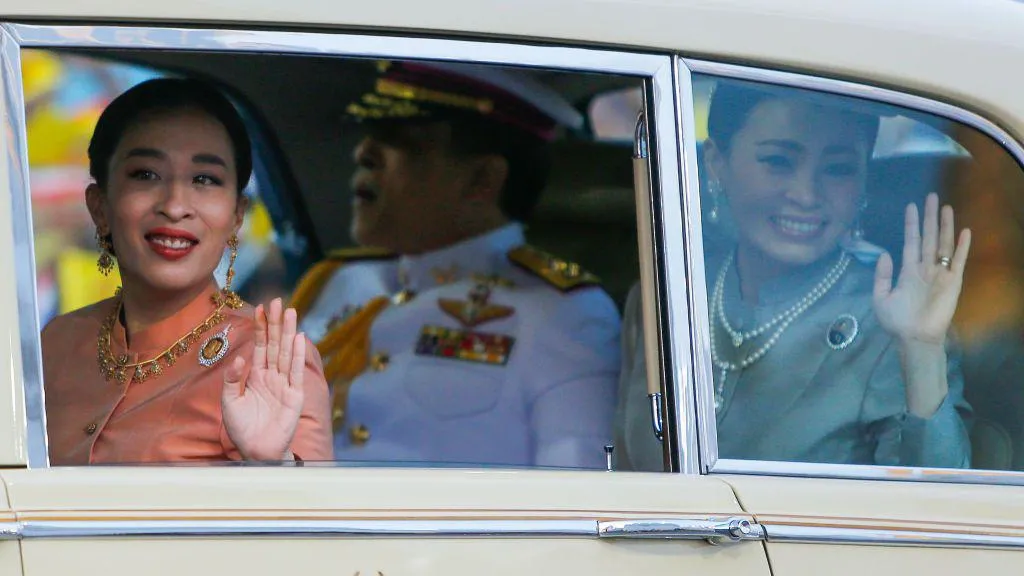
BANGKOK, Thailand — The death of Princess Bajrakitiyabha Mahidol at the age of 47 marks not only the end of a deeply personal tragedy for Thailand’s royal family but also the loss of one of the kingdom’s most respected and accomplished public figures. After spending more than three years in a coma following her sudden collapse in December 2022, the princess passed away at Chulalongkorn Hospital, bringing to a close a chapter that had been watched with hope, concern, and prayer by millions
Quick Facts
- Profession: Lawyer, diplomat, prosecutor, military officer, and royal representative.of Thais.
- Born: December 7, 1978, in Bangkok
- Died: June 11, 2026, at age 47
- Parents: King Maha Vajiralongkorn and Princess Soamsawali
- Education: Law degrees from Cornell University and Thailand’s Thammasat University
Her passing represents far more than the loss of a royal family member. It removes from Thailand’s national landscape a woman who had built a reputation through professional achievement, public service, and dedication to social reform. At a time when the future direction of the Thai monarchy remains uncertain, her death also revives questions about succession and leadership within one of the world’s most influential royal institutions.
According to the Royal Household Bureau, Princess Bajrakitiyabha died after her medical condition progressively deteriorated despite receiving the highest level of medical attention available. The princess had remained unconscious since collapsing while exercising her dogs in December 2022. Medical experts later attributed the incident to a severe cardiac arrhythmia triggered by a mycoplasma infection that affected her heart.
| Date | Event | Description |
|---|---|---|
| December 7, 1978 | Birth of Princess Bajrakitiyabha | Princess Bajrakitiyabha Narendira Debyavati was born in Bangkok as the first child of King Maha Vajiralongkorn and Princess Soamsawali. She would later emerge as one of the most influential figures within Thailand’s royal family. |
| 2001–2005 | Advanced Legal Studies | She pursued higher education in law at Cornell University in the United States, obtaining graduate degrees and establishing a notable career in legal affairs, diplomacy, and public service. |
| 2012–2014 | Ambassador to Austria | The princess represented Thailand as ambassador to Austria while also overseeing diplomatic relations with Slovenia and Slovakia. |
| 2017 | United Nations Role | She was named a UN Goodwill Ambassador for the Rule of Law in Southeast Asia, recognizing her contributions to legal advocacy and humanitarian initiatives. |
| December 14, 2022 | Sudden Collapse | During a dog training session in Nakhon Ratchasima Province, Princess Bajrakitiyabha suddenly collapsed. The Royal Palace later revealed that she had experienced a serious cardiac-related medical crisis. |
| December 2022 | Hospitalization and Coma | She was transported by air to Bangkok and admitted to King Chulalongkorn Memorial Hospital. Despite receiving extensive medical care, she lapsed into a coma and remained unresponsive. |
| 2023–2025 | Long-Term Critical Condition | Throughout these years, the princess stayed under intensive hospital care and depended on advanced medical assistance. Limited public information about her condition heightened concerns regarding her health and the monarchy’s future. |
| August 2025 | Severe Infection Reported | The Royal Household announced that she had developed a serious bloodstream infection and continued to rely on life-support measures for several organ systems. |
| May 2026 | Condition Deteriorates | Palace officials disclosed that her health had worsened considerably due to multiple infections, abdominal complications, cardiac rhythm disorders, and other organ-related problems. |
| June 11, 2026 | Death at Age 47 | Following nearly four years in a coma, Princess Bajrakitiyabha passed away in Bangkok at the age of 47. The Royal Palace stated that complications arising from her prolonged illness were the cause of her death. |
| June 12, 2026 | National Mourning and Funeral Preparations | Thailand initiated arrangements for royal funeral ceremonies. Her passing also reignited discussions surrounding royal succession, as she had long been regarded as one of the monarchy’s most respected and capable members. |
For many observers, the princess’s death feels particularly tragic because of the remarkable life she led before her illness. Born on December 7, 1978, she was the eldest child of King Maha Vajiralongkorn and Princess Soamsawali. From an early age, she distinguished herself through academic excellence and an unwavering commitment to public service.
Unlike many members of royal families around the world who are primarily known for ceremonial duties, Princess Bajrakitiyabha established herself as a highly educated legal professional. She earned advanced law degrees from Cornell University in the United States and pursued a career that extended beyond palace walls. Her work at Thailand’s mission to the United Nations in New York and later in the Office of the Attorney General demonstrated a desire to contribute meaningfully to governance and justice rather than simply occupy a symbolic position.
Her diplomatic service as Thailand’s ambassador to Austria between 2012 and 2014 further strengthened her international reputation. During this period, she developed close cooperation with the United Nations Office on Drugs and Crime (UNODC), laying the foundation for what would become one of her most enduring advocacies: criminal justice reform.
Perhaps more than any other member of the royal family, Princess Bajrakitiyabha became associated with efforts to improve the lives of vulnerable individuals caught within Thailand’s legal system. She consistently highlighted the plight of female prisoners and advocated for reforms that would provide greater opportunities for rehabilitation rather than punishment alone.
Her concern for women in detention resonated both domestically and internationally. Thailand has long struggled with prison overcrowding and one of the highest female incarceration rates in the world. Through her advocacy, the princess brought visibility to issues that often receive little public attention, helping to humanize those affected by the criminal justice system.
Even after returning to Thailand, she continued serving as the UNODC’s Ambassador for the Rule of Law in Southeast Asia, promoting fair legal processes and greater access to justice. These efforts earned her respect not only among royalists but also among legal experts, international organizations, and civil society advocates.
Beyond her professional accomplishments, Princess Bajrakitiyabha was known for her discipline, determination, and physical fitness. An avid runner and sports enthusiast, she frequently participated in endurance events and promoted healthy living. The image of an energetic and capable princess made the circumstances of her collapse all the more shocking.
In recent years, she had also become increasingly visible within the royal institution itself. In 2021, King Vajiralongkorn appointed her as chief of staff within his private bodyguard unit and granted her the rank of general. The appointment was widely interpreted as a sign of the king’s confidence in her abilities and loyalty.
These developments inevitably fueled speculation regarding the future of the monarchy. Although Thailand traditionally favors male succession, constitutional changes introduced decades ago permit a woman to ascend the throne under certain circumstances. As a result, many observers viewed Princess Bajrakitiyabha as one of the most capable and credible figures within the royal family.
The issue of succession remains particularly sensitive in Thailand. King Vajiralongkorn, now 73 years old, has not formally designated an heir. While Prince Dipangkorn is generally regarded as the most likely successor, discussions regarding the future of the monarchy remain limited due to Thailand’s strict lese majeste laws, which prohibit criticism or sensitive public debate concerning the royal institution.
For many supporters of the monarchy, Princess Bajrakitiyabha represented stability, competence, and continuity. Her extensive education, government experience, international exposure, and public service record made her a unique figure within the royal family. Some believed she could eventually serve as queen or potentially as a regent should circumstances require it.
Her death therefore creates not only an emotional void but also a political and institutional one. The monarchy remains a central pillar of Thai society, culture, and national identity. Losing one of its most accomplished members inevitably raises questions about who will carry forward similar responsibilities in the future.
Yet perhaps the most important aspect of Princess Bajrakitiyabha’s legacy lies not in succession politics but in her dedication to public service. Throughout her career, she demonstrated that royal privilege could be accompanied by meaningful engagement with society’s challenges. Whether advocating for prisoners, promoting legal reform, representing Thailand abroad, or serving within the nation’s institutions, she consistently sought to use her position to address issues affecting ordinary people.
As Thailand enters a period of mourning, many citizens will remember her not only as a princess but as a lawyer, diplomat, reform advocate, military officer, and humanitarian. Her life embodied a rare combination of royal responsibility and professional achievement.
The passing of Princess Bajrakitiyabha closes a significant chapter in modern Thai history. It leaves behind grief within the royal family, uncertainty regarding the monarchy’s future, and a legacy of service that will continue to be remembered long after the ceremonies of mourning have concluded.
For Thailand, the loss is profound. For the monarchy, the future remains unanswered. And for those who admired her work, Princess Bajrakitiyabha will be remembered as a figure whose potential was cut tragically short, but whose contributions left a lasting mark on the nation she served.
2022 The Passing of Princess Bajrakitiyabha: A Profound Loss for Thailand and an Uncertain Future for the Monarchy
When Princess Bajrakitiyabha collapsed while training her dogs on a December evening in 2022, Thailand was told that the king’s eldest daughter had suffered a heart-related medical emergency. Official statements described her condition cautiously, using the measured and often guarded language that has long characterized communications from the royal household.
At the time, many hoped that the princess widely regarded as one of the most capable and accomplished members of the Thai royal family would eventually recover.
That hope would never be realized.
More than three years later, the nation has been forced to confront a painful reality: the loss of a woman many viewed as the monarchy’s most competent, modern, and respected figure.
Her death is not merely a personal tragedy for the royal family. It is a national loss with consequences that extend far beyond the walls of the palace.
Princess Bajrakitiyabha was not famous simply because she was born royal. She earned respect through achievement.
Armed with advanced law degrees from prestigious American universities, she built a career that demonstrated intelligence, discipline, and public service. She worked as a diplomat, represented Thailand abroad, advocated for criminal justice reform, and championed the rights of female prisoners in a country that continues to struggle with prison overcrowding and harsh sentencing practices.
Unlike many public figures who speak about reform only when it is politically convenient, she consistently engaged with difficult issues. She understood that leadership requires more than ceremonial appearances and royal titles. It requires action.
That is what made her stand apart.
In an era when institutions around the world face growing skepticism, Princess Bajrakitiyabha represented credibility. She was educated, experienced, and deeply involved in matters that affected ordinary citizens.
Her collapse in 2022 instantly transformed what had once been a discussion about the future into a crisis of uncertainty.
For years, observers quietly viewed her as one of the strongest figures within the royal establishment. Although Thailand’s succession laws and traditions have historically favored male heirs, many believed she possessed the qualities necessary to guide the monarchy through a rapidly changing century.
She projected competence at a time when competence matters more than ever.
She projected stability in an era of uncertainty.
And she projected seriousness in a political environment often dominated by spectacle.
That is why her loss resonates so deeply today.
The tragedy also serves as a reminder of how fragile even the most powerful institutions can be. No amount of prestige, influence, wealth, or authority can shield anyone from the unpredictability of human life.
In 2022, Princess Bajrakitiyabha was known as a fitness enthusiast who participated in endurance events and maintained an active lifestyle. She embodied strength and discipline. Yet a sudden medical emergency changed everything within moments.
The lesson is sobering. History is often shaped not only by wars, elections, and revolutions but also by unforeseen events involving individuals whose influence extends far beyond their personal lives.
Thailand now faces a future without one of the figures many believed could have played a crucial role in the monarchy’s next chapter.
The question is no longer what role Princess Bajrakitiyabha might have played. The question is what Thailand has lost because she no longer can.
Her legal expertise, diplomatic experience, public-service record, and commitment to reform made her unique within the royal family. She possessed a combination of qualities that cannot easily be replaced.
The vacuum left behind is real. For many Thais, she symbolized a bridge between tradition and modernity. She represented the possibility that the monarchy could preserve its historical role while remaining relevant to contemporary society.
That possibility now belongs to history. As Thailand reflects on her life and legacy in 2026, one conclusion becomes increasingly difficult to ignore: Princess Bajrakitiyabha was not simply another royal figure. She was arguably one of the most prepared, accomplished, and respected members of her generation.
Her death closes a chapter filled with promise, service, and unrealized potential. Nations are often judged by the leaders they produce. But they are also defined by the leaders they lose.
Thailand has lost one of its brightest royal figures, and the impact of that loss may be felt for many years to come.
rincess Bajrakitiyabha (full name: Bajrakitiyabha Narendiradebyavati) was the eldest daughter of King Maha Vajiralongkorn and one of the most highly regarded figures within Thailand’s royal family. She was affectionately known throughout the country as “Princess Pa” or “Princess Bha.”
Quick Facts
- Born: December 7, 1978, in Bangkok
- Died: June 11, 2026, at the age of 47
- Parents: King Maha Vajiralongkorn and Princess Soamsawali
- Education: Earned law degrees from Cornell University and Thammasat University
- Career: Served as a lawyer, diplomat, prosecutor, military officer, and representative of the royal family
Why Was She Significant?
Princess Bajrakitiyabha gained the nickname “lawyer princess” because of her distinguished career in the legal field. She held positions within Thailand’s Office of the Attorney General and became a strong advocate for legal reforms, women’s empowerment, and improvements to the prison system. She also represented Thailand abroad as ambassador to Austria, while simultaneously overseeing diplomatic ties with Slovenia and Slovakia.
In 2017, she was designated as a United Nations Goodwill Ambassador for the Rule of Law in Southeast Asia, highlighting her global standing in legal affairs and humanitarian initiatives.
Health Emergency
On December 14, 2022, the princess unexpectedly collapsed while participating in a dog-training activity in northeastern Thailand. She experienced a serious cardiac-related medical event and was subsequently admitted to a hospital in Bangkok. She remained in a coma and unresponsive for almost four years, with her condition later deteriorating due to recurring infections and complications affecting several organs.
Death and Legacy
Princess Bajrakitiyabha passed away on June 11, 2026, at a hospital in Bangkok at the age of 47. Her death prompted a period of national mourning and brought renewed focus to issues concerning the succession of the Thai monarchy. She is remembered for her accomplishments in law, dedication to public service, humanitarian efforts, and unwavering commitment to justice and equal rights.
Many people in Thailand viewed her as one of the most competent and admired members of her generation within the royal family, making her death a major event in the country’s contemporary history.