Greater Manchester Mayor Andy Burnham scored a decisive victory in the high-profile Makerfield by-election on Friday, strengthening his position as a potential challenger to Prime Minister Keir Starmer for the leadership of the governing Labour Party. Burnham secured nearly 25,000 votes and defeated Reform UK candidate Robert Kenyon by more than 9,000 votes, winning the parliamentary seat necessary to launch a bid for the prime ministership.
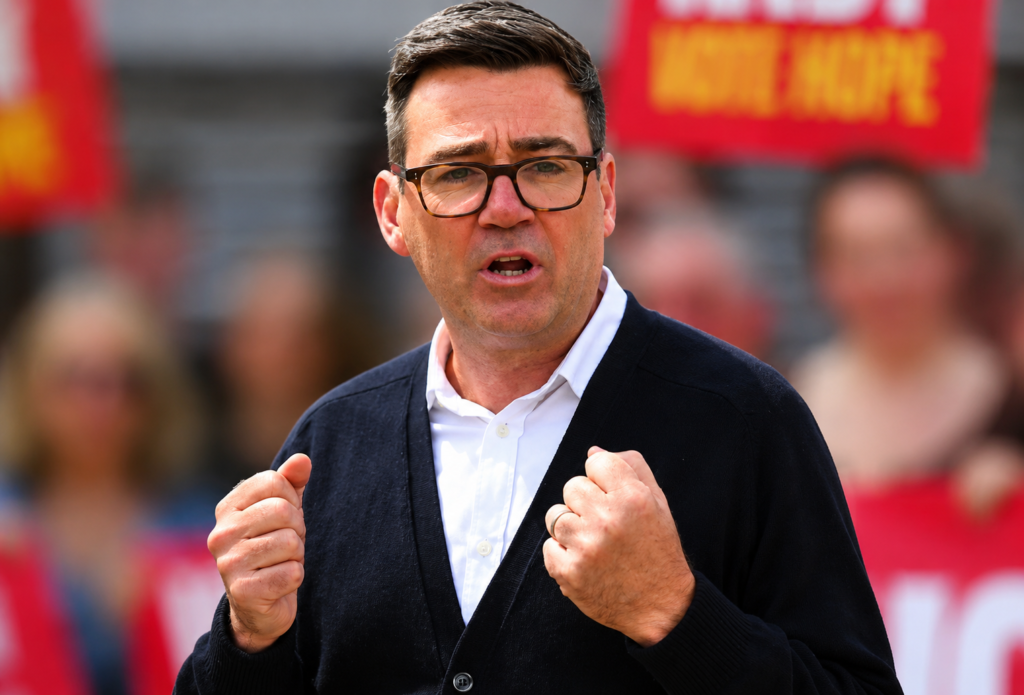
The political landscape of northern England has long been a bellwether for the mood of the entire United Kingdom, and this past Friday, it rang out with a message loud and clear: the status quo is no longer acceptable, and a new chapter in British politics is beginning. Andy Burnham, the popular and influential Mayor of Greater Manchester, has stormed to a commanding victory in the Makerfield by-election, securing a seat in the House of Commons and, in doing so, positioning himself as the most formidable challenger yet to Prime Minister Keir Starmer’s grip on the Labour Party leadership and the nation’s top office.
The result was never really in doubt once the votes began to be counted. Burnham racked up an impressive 24,927 votes, finishing more than 9,000 votes ahead of his nearest rival, Robert Kenyon of Reform UK a party that has built its platform on sharp criticism of immigration policies and the established political order. It was a defeat that laid bare the limits of Reform’s appeal in traditional Labour heartlands, and a victory that underscored Burnham’s unique ability to connect with voters across the political spectrum. Further back in the field were Rebecca Shepherd of Restore Britain, followed by the Conservative Party’s Michael Winstanley, the Green Party’s Sarah Wakefield, and the Liberal Democrats’ Jake Austin none of whom came close to threatening the top two, proof that this contest was always a two-horse race between a seasoned political heavyweight and a rising force in populist politics.
READ MORE ARTICLES:
- Donald Trump takes centre stage at G7 summit as leaders push to finalise Iran deal and secure Strait of Hormuz
- A Trillion Dollars Beyond Imagination, What Elon Musk’s Wealth Reveals About the Gap Between Billionaires and Ordinary Filipinos
- Elon Musk becomes world’s first trillionaire as SpaceX IPO Reshapes Global Wealth, New Age of Extreme Wealth or A Warning for Humanity?
- Donald Trump Rushes Iran Deal as Tehran Pushes Back: Diplomatic Drama Exposes Deep Mistrust Behind “Historic” Agreement
- Millions Affected as Facebook Suffers Major Outage Across the world
- CNN Analyst Points to Record Inflation Disapproval After Trump’s Controversial Remarks
In his victory speech, Burnham struck a tone that was equal parts empathetic, determined, and transformative words that have become his trademark over years of public service. “Everyone knows that politics is not working,” he declared, addressing a crowd of cheering supporters and a nation watching closely. “Everyone can feel that the country isn’t where it should be. Tonight could just could be the turning point. From here on, I will give everything that I have got to make it so, to ensure the name Makerfield is forever synonymous with bringing about the change this country needs.” It was a message that resonated far beyond the boundaries of Makerfield, tapping into a deep well of frustration felt by millions of people across the UK, frustration with slow economic growth, with public services stretched to breaking point, with a political class that too often feels disconnected from the daily struggles of ordinary citizens.
This by-election was never just about winning a seat in Parliament. For Burnham, it was the final piece of the puzzle he needed to launch a bid for the very top. Under the UK’s parliamentary system, the prime minister is drawn from the ranks of elected Members of Parliament, and leadership contests within governing parties can change the nation’s leader without the need for a full general election. By securing his place in the Commons, Burnham has cleared the last formal hurdle to challenging Starmer and political observers across the board agree that this victory has set in motion a chain of events that could reshape the country’s leadership in a matter of weeks or months.
What makes this moment so significant is not just the result itself, but what it represents for the Labour Party and the wider political landscape. For years, Burnham has carved out a distinct identity: a leader who champions northern communities, who fights for greater devolution of power, who stands up for working people and their rights, and who has not been afraid to speak out against his own party’s leadership when he believes it has lost its way. He has built a reputation as a man of principle and action someone who delivered tangible results as Mayor of Greater Manchester, from improving transport links to advocating for better healthcare and housing. This track record has earned him immense popularity, not just in the North, but across the UK, and polling data underscores just how strong his position is. An Ipsos survey released earlier this week found that 25% of British adults see Burnham as their preferred prime minister more than double the 12% who back Starmer. That gap is staggering, and it tells a story of a public that is increasingly looking for a different kind of leadership.
Take Keith Davis, a self-described “big union man” and lifelong Labour supporter, who summed up the feelings of many when he said, “I’ve lost belief in Keir Starmer. I just think he’s lost his way.” For people like Davis, Starmer’s leadership has felt cautious, distant, and lacking in the bold vision and clear values that drew them to the Labour Party in the first place. Critics argue that Starmer has spent too much time trying to appeal to swing voters in middle England, and too little time standing up for the party’s traditional base working-class communities in the North, the Midlands, and across the country that have long been the backbone of Labour’s support. Burnham, by contrast, has positioned himself as the voice of that base: someone who understands their struggles, who shares their values, and who will fight for them without compromise.
Starmer’s response to Burnham’s victory was measured, but it also revealed the deep tension now running through the party. On social media, the Prime Minister offered his congratulations, saying that voters “chose Labour’s campaign of hope and optimism over division and hate.” But behind the polite words, there is a battle for survival underway. Starmer has made it clear he has no intention of stepping down. When asked about the possibility of a leadership contest, he stated firmly: “Yes, I will run, I will stand. I’ve said repeatedly I’m not going to walk away from that.” It is a stance that sets the stage for a high-stakes showdown, one that could also draw in other key figures—most notably Wes Streeting, the former Health Secretary, who is seen by many as another potential contender and a bridge between different wings of the party.
Starmer has previously argued that a leadership contest would be “a bad thing for the country,” and there is some truth to that. A bitter internal fight could divide the party, distract from governing, and hand opportunities to political opponents. But for many, the status quo is no longer tenable. They argue that the country faces enormous challenges from economic uncertainty and the cost-of-living crisis to the future of the NHS, climate change, and regional inequality and that it needs a leader with the vision, energy, and connection to the public to meet them. For supporters of Burnham, that leader is clear. For Starmer and his allies, the task now is to prove that he still has what it takes to lead, and that he can reconnect with the voters who are drifting away.
Whatever happens next, one thing is certain: Andy Burnham’s victory in Makerfield is a turning point. It has shifted the balance of power within the Labour Party, it has given a voice to millions who feel ignored, and it has forced the entire nation to ask a fundamental question, what kind of leadership do we want, and what kind of country do we want to build?
In the coming weeks and months, we will see whether Keir Starmer can reassert his authority, or whether Andy Burnham will turn his victory in Makerfield into a march to Downing Street. Either way, British politics will never be quite the same again. The message from Makerfield was clear change is coming, and it is coming sooner than many expected.
Andy Burnham’s Makerfield Landslide Ignites Labour Civil War and a Battle for Britain’s Future
Let there be no more games, no more polite pretense, no more cowardly dodging of the brutal truth that just smashed into Westminster like a freight train: Keir Starmer is finished, and Andy Burnham has just lit the fuse that will blow his hollow, directionless leadership straight into the history books where it belongs.
Friday night in Makerfield was not just a by-election win. It was a declaration of war. It was the people of northern England screaming at the top of their lungs that they have had enough enough of being ignored, enough of being treated like an afterthought by a London-centric elite, enough of a Labour Party that promised so much and delivered absolutely nothing. Andy Burnham didn’t just win; he crushed every opponent, he spoke for millions who have been abandoned, and he laid out a vision so bold, so necessary, and so utterly different from the stagnant, out-of-touch garbage Starmer has been peddling that it leaves no comparison whatsoever.
Burnham stood before his supporters and said exactly what this broken country needs to hear: fundamental change from top to bottom, in every single part of our national life. He didn’t mince words. He didn’t wrap his message in weak, focus-grouped phrases. He told it like it is: Britain is failing because the people running it have forgotten who they serve. He called for an end to the so-called “trickle-down” economics that has been a cruel joke for decades policies that filled the pockets of the rich and powerful in the South East while the North was left to rot, while our industries died, while our towns crumbled, while working people were told to be grateful for scraps. He shouted from the rooftops that we must rebuild the North, re-industrialize the very regions that built this nation, and give back to the places that Westminster has deliberately neglected for generation after generation.
“It is our last chance to change, but we’re going to take it… We are going to take that opportunity, and we are going to lay out a new path for Britain!” That is not the voice of a politician who is afraid to lead. That is the voice of a leader who understands pain, who understands neglect, and who is ready to fight like hell to put this country back on its feet. And make no mistake: this is not just a campaign slogan it is a promise to every single person who has been let down by the system.
Let’s look at the disaster that is Keir Starmer’s time in charge. He won a massive majority in 2024 on the back of hope and promises, and what did he do? He betrayed every single one of them. In less than two years, TWENTY ministers have walked out of his government—nearly half of them openly saying they had lost all faith in him, or that his policies were weak, confused, and completely out of touch. Even his own former Health Secretary, Wes Streeting, couldn’t stomach working under a man who leads from behind, who makes decisions based on what he thinks will keep him in power rather than what is right for the country. Then came May’s elections—crushing, humiliating losses that proved the public had already turned their backs on him. Yet still he clings on, like a desperate man holding onto a sinking ship, refusing to accept that his time is up, that he has failed, and that the party and the nation deserve so much better.
Enter Andy Burnham—the man they call the “King of the North,” and for very good reason. He didn’t earn that title by sitting in a London office reading briefing papers. He earned it by being there, on the ground, listening, fighting, and delivering. First elected Mayor in 2017, re-elected twice with soaring majorities, he has built a movement that stretches across the whole of the United Kingdom because he speaks the language of ordinary people. He has spent years tearing apart the broken, London-obsessed political system that treats anywhere north of Birmingham as a foreign country. He has exposed the disaster of neoliberal policies that promised prosperity but delivered only decline. He has stood up and said clearly: “The places Westminster has neglected will now get fairness.” That is the Makerfield test he spoke about a test that every single policy, every single decision, every single pound of public money must now pass. If it doesn’t help the forgotten communities, the abandoned towns, the regions that built this nation, then it has no place in his Britain.
This is the man who came within a hair’s breadth of winning the Labour leadership back in 2015, before the chaos of the Corbyn years. This is the man who served under Blair and Brown, who knows exactly how Westminster works, and exactly how it fails. This is the man who has spent years building a following not through spin or media tricks, but through sheer, unyielding principle and genuine connection. And now, thanks to the resignation of Josh Simons—who did the right thing by stepping aside to clear the path Burnham has his seat in Parliament, and he has the mandate to demand the change this country is screaming for.
The numbers tell the whole story. Turnout in Makerfield shot up from 52.4% in the 2024 general election to nearly 59%—because people knew this wasn’t just another vote. They knew this was their chance to send a message. Burnham won by over 9,000 votes—an absolute landslide. He beat every challenger, from the right-wing populism of Reform UK to the fading irrelevance of the Conservatives, the Greens, and the Lib Dems. Even the polls had him leading by five points beforehand, and he smashed even those expectations. This wasn’t a narrow win; it was a mandate. It was a roar from the people that they want Burnham, not Starmer.
Since Brexit in 2016, we have had six different Prime Ministers each one failing to deliver the change people voted for, each one trapped in the same old broken system, each one looking out for the elite rather than the nation. If Burnham takes over, he will be the seventh and he will be the first one who actually understands what the country needs. He will be the first one who isn’t afraid to challenge the establishment, to tear up the rulebook, and to build something new, something fair, something that works for everyone, not just the few in the capital.
Starmer can stand there and say he will fight, he will run, he won’t walk away but that is nothing more than desperate, delusional noise. The game is already over. The public has spoken. His own party is crumbling around him. His own MPs know he cannot win the next general election, that he is dragging them all down, that he has lost the trust of the people. Burnham has already said he wants to “change Labour” so he can “change politics and change the country” and that is exactly what he is going to do.
Makerfield was the turning point. Makerfield was the moment the North rose up and refused to be ignored any longer. Makerfield was the moment the old, rotten order was put on notice. Andy Burnham hasn’t even formally announced his challenge yet, but he doesn’t need to. His victory speech was his manifesto, his win was his mandate, and the writing is on the wall in letters ten feet tall: STARMER MUST GO, AND BURNHAM IS COMING TO TAKE HIS PLACE—FOR THE NORTH, FOR THE WORKERS, FOR THE WHOLE UNITED KINGDOM, AND FOR THE FUTURE WE DESERVE.
- Top 1 Most Wanted sa Region 8, Arestado sa Palompon, Leyte
- CTBA Apologizes as Format Change Threatens Strong Group’s Three-Peat
- Crypto, AI and Betting Firms Emerge as New U.S. Political Kingmakers
- Davao City’s ₱10-Billion Waste-to-Energy Project Moves Closer to Reality
- CLE RESULTS August 2026: Criminology Licensure Examination