President Ferdinand “Bongbong” Marcos Jr. announced that Russian President Vladimir Putin has authorized the release of 24 Filipinos held in Irkutsk, Siberia, for nine months over immigration-related concerns. This breakthrough, achieved shortly after Marcos’ first official visit to Russia for the ASEAN-Russia Commemorative Summit, stands as far more than a resolution to a long-standing issue. It is a powerful testament to what high-level dialogue can achieve, a stark reminder of the vulnerabilities overseas Filipino workers face, and a defining milestone in the deepening partnership between the Philippines and the Russian Federation.
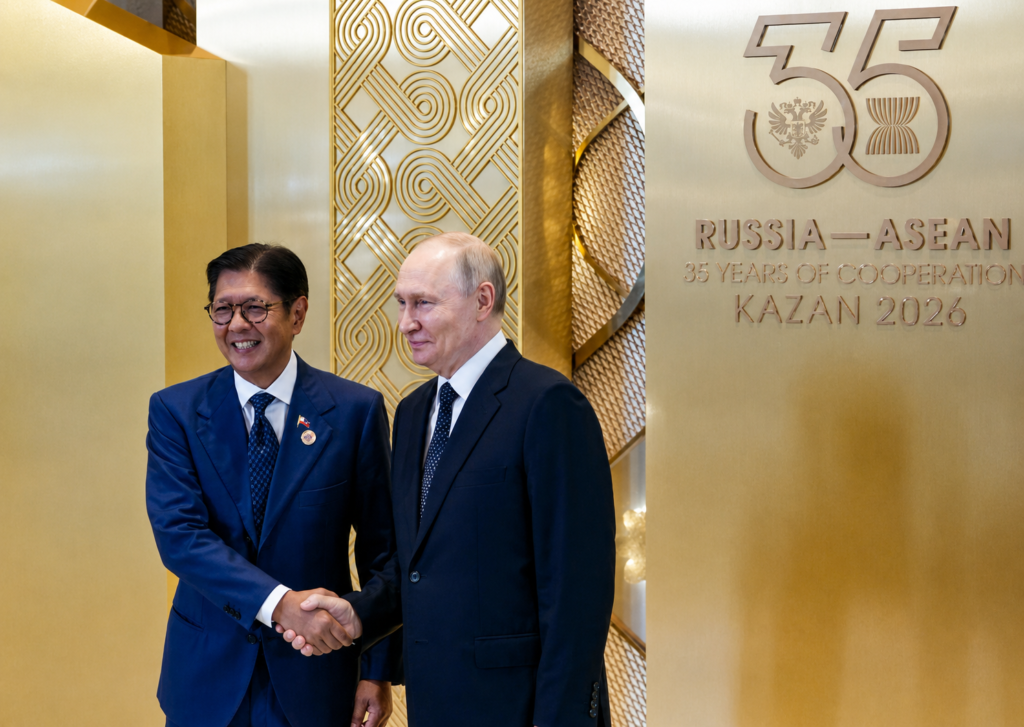
In a significant development that underscores the importance of diplomatic engagement and the priority of protecting citizens abroad, President Ferdinand “Bongbong” Marcos Jr. announced that Russian President Vladimir Putin has authorized the release of 24 Filipinos held in Irkutsk, Siberia, for nine months over immigration-related concerns. This breakthrough, coming on the heels of Marcos’ first official visit to Russia for the ASEAN-Russia Commemorative Summit, is far more than just a resolution to a long-standing issue it is a testament to the power of high-level dialogue, a reminder of the vulnerabilities of overseas Filipino workers, and a milestone in the evolving relationship between the Philippines and the Russian Federation.
The circumstances surrounding the detention of these 24 individuals paint a familiar yet deeply troubling picture of the risks faced by many Filipinos seeking better opportunities abroad. Reports confirm that they were victims of illegal recruiters, who lured them to Russia under questionable and often fraudulent arrangements. Once they arrived, irregularities in their documentation or employment status led to their detention, even though authorities explicitly stated that none of them had been charged with any criminal offense. For nine long months, they remained in custody—separated from their loved ones, uncertain of their fate, and trapped in a foreign legal and social system far from home. Their case highlights a persistent and pervasive problem: illegal recruitment remains one of the gravest threats to Filipino workers, preying on their hopes for a better life and leaving them vulnerable to exploitation, abuse, and legal complications in countries with different laws and procedures.
READ MORE ARTICLES:
- Ateneo Yet to Decide on UAAP Season 89 Participation Amid Ongoing Investigations
- Calls Grow for Higher P5,000 PERA as Teachers and Government Workers Struggle with Rising Cost of Living
- Supreme Court Dismisses Petition Seeking Recognition of 12-Senator Quorum
- Anti-Bullying Act of 2013 (Republic Act No. 10627): Is It Truly Effective or Just Policy on Paper?
- BiPSU Makes History as First and Only SUC in Leyte-Biliran Region to Offer Juris Doctor Program
- Former Police Official Rafael Dumlao Arrested in Quezon City Following Final Conviction in Jee Ick Joo Slay Case
- Ateneo Mourns Tragic Drowning of Promising Stars Rene Baterbonia and Divine Adili
What makes this outcome even more meaningful is the manner in which it was achieved. President Marcos did not treat this as a secondary or minor issue during his trip; instead, he made it a central part of his bilateral discussions with President Putin. During their meeting, he raised the plight of the detainees directly, speaking not just as a head of state, but as a leader advocating for the welfare of his people and responding to the pleas of the families left behind in the Philippines. The account Marcos shared with reporters of Putin expressing surprise upon learning the details, promising to study the matter, and later reassuring him with the words, “Don’t worry, we will find a way to fix this problem” reveals the value of open, personal, and direct communication between leaders. It shows that when human welfare is placed at the heart of diplomatic talks, even complex cross-border issues can be resolved.
Crucially, Marcos emphasized that he sought a solution that fully respected Russian laws and legal processes. This approach reflects a mature understanding of international relations: while advocating for one’s citizens, it is equally important to honor the sovereignty and legal frameworks of other nations. By framing the request within these boundaries, the Philippine government demonstrated respect for Russia’s authority, while Russia’s willingness to act once the facts were clarified showed its readiness to accommodate humanitarian concerns within its own legal system. The decision to deport the group and facilitate their return home is a resolution that satisfies both sides: it adheres to Russian immigration regulations while delivering the most important outcome for the Filipinos and their families freedom and reunion.
This development also marks a key moment in Philippines-Russia relations. Prior to this visit, ties between the two nations had been growing, with discussions focused on areas such as food security, energy cooperation, trade, and investment topics that were also high on the agenda during Marcos’ meetings in Moscow. But the release of the 24 detainees is the most tangible and immediate result of this engagement. It proves that diplomatic visits are not merely ceremonial or limited to economic and geopolitical matters; they are powerful tools to address real, human problems affecting ordinary citizens. By successfully advocating for these Filipinos, President Marcos has not only secured their freedom but also strengthened the foundation of trust and cooperation between Manila and Moscow. It sends a clear message that the Philippines is a partner that values mutual respect, and Russia is a nation willing to act on humanitarian grounds when issues are brought to its attention through proper channels.
Beyond the bilateral relationship, this case offers broader lessons for the Philippines and its policies toward overseas workers. It serves as a stark reminder that illegal recruitment networks continue to operate, preying on the desperation and aspirations of Filipinos. While the release of these 24 individuals is a victory, it also raises urgent questions: How can the government strengthen its mechanisms to prevent such cases from happening in the first place? How can recruitment agencies be better regulated, and illegal recruiters prosecuted more rigorously? How can the Philippine Embassy and consular offices in Russia and other countries improve their monitoring and assistance to Filipino nationals, so that detention or exploitation is identified and addressed far earlier than nine months? These are questions that must be answered if the country is to truly protect its citizens who work and travel abroad.
At the same time, this success reinforces the vital role of the Department of Foreign Affairs, consular services, and the Office of the President in safeguarding the rights and welfare of Filipinos overseas. It shows that when the government prioritizes these issues, and when leaders are willing to engage personally and directly, positive results are possible. For the families of the 24 detainees, this announcement is nothing short of a miracle. After months of anxiety, uncertainty, and separation, they will soon welcome their loved ones back home. Their relief is shared by the entire nation, which has long prided itself on caring for its citizens wherever they may be.
Looking ahead, this event should serve as both a model and a motivation. It is a model of how diplomacy can be used to advance humanitarian goals, and it is motivation to do more—more to prevent illegal recruitment, more to strengthen consular assistance, and more to build partnerships with other nations that are based on shared values and mutual respect. President Marcos’ visit to Russia, and the release of these 24 Filipinos, will be remembered not just as a diplomatic milestone, but as a moment when the government proved that no Filipino is forgotten, no matter how far they are from home, and no matter how complex the challenges they face.
This is about more than just 24 individuals being released from detention in Siberia. It is about the bond between a nation and its people, about the responsibility of government to protect its citizens, and about the power of dialogue to turn a difficult situation into a triumph of humanity. As these Filipinos prepare to return to the Philippines, they bring with them not just their freedom, but also a powerful message: that when leaders listen, when nations cooperate, and when the welfare of people is placed above all else, even the most difficult problems can be solved.
- Top 1 Most Wanted sa Region 8, Arestado sa Palompon, Leyte
- CTBA Apologizes as Format Change Threatens Strong Group’s Three-Peat
- Crypto, AI and Betting Firms Emerge as New U.S. Political Kingmakers
- Davao City’s ₱10-Billion Waste-to-Energy Project Moves Closer to Reality
- CLE RESULTS August 2026: Criminology Licensure Examination