On June 12, 2026, history was rewritten when Elon Musk’s net worth surged past USD 1.1 trillion a threshold no individual has ever reached driven by SpaceX’s record-breaking USD 75 billion public listing that valued the company at nearly USD 1.8 trillion. While hailed by investors as a triumph of innovation and entrepreneurship, the milestone sparks urgent debate: what it means for society, equality, and global power when one person holds more wealth than the entire annual economy of most nations.
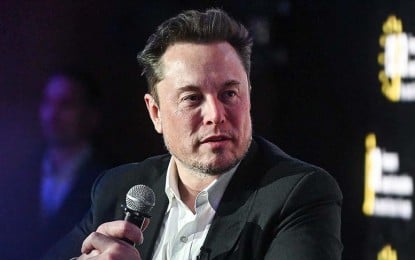
USA — The world crossed a historic economic threshold on June 12, 2026. For the first time in modern history, a single individual has accumulated a paper fortune exceeding one trillion dollars. That individual is Elon Musk.
Following the record-breaking initial public offering (IPO) of SpaceX, Musk’s estimated net worth surged beyond USD 1.1 trillion, placing him in a financial category that no king, industrialist, or billionaire has ever occupied in the modern era. The milestone has been celebrated by investors and technology enthusiasts as proof of innovation, entrepreneurship, and the limitless potential of private enterprise.
READ MORE ARTICLES:
- Donald Trump Rushes Iran Deal as Tehran Pushes Back: Diplomatic Drama Exposes Deep Mistrust Behind “Historic” Agreement
- Millions Affected as Facebook Suffers Major Outage Across the world
- CNN Analyst Points to Record Inflation Disapproval After Trump’s Controversial Remarks
- Flesh-Eating Fly Infestation Confirmed, New World Screwworm Detected 30 Miles From Border; Quarantine and Sterile Fly Release Planned
- Iran Unblocks Most Underground Missile Sites, Poised for More Long-Range Strikes; Experts Flag Limits of US Bombing Strategy
- JUSTICE & TRUTH: The Long Road to Unlocking the Epstein Files
Yet behind the headlines lies a far more uncomfortable question: What does it mean when one person possesses wealth greater than the annual economic output of many nations?
The SpaceX IPO shattered records, raising approximately USD 75 billion and valuing the company at nearly USD 1.8 trillion. For Wall Street, it was a triumph. For Musk, it was a coronation. His ownership stake in SpaceX alone was suddenly worth hundreds of billions of dollars, while his Tesla holdings continued to command enormous market value.
The achievement is undeniably remarkable. Musk transformed SpaceX from a startup dismissed by critics into a dominant force in space exploration, satellite communications, artificial intelligence infrastructure, and long-term Mars colonization projects. His companies have disrupted industries once considered untouchable, forcing governments and corporations alike to rethink the future.
But history teaches that extraordinary concentrations of wealth are never merely economic events. They are political events. They are social events. They are civilization-defining events.
At a time when millions of families worldwide continue struggling with inflation, housing costs, healthcare expenses, and stagnant wages, the image of a trillionaire highlights a widening gap between financial elites and ordinary citizens. The contrast is impossible to ignore. While billions of people worry about monthly bills, one man’s fortune has surpassed one thousand billion dollars.
Supporters argue that Musk earned every dollar through innovation, risk-taking, and relentless ambition. They point out that his wealth is largely tied to company shares rather than cash. They emphasize that SpaceX, Tesla, Neuralink, and other ventures have generated jobs, technological breakthroughs, and economic growth.
Critics counter that such unprecedented wealth concentration reveals deeper structural problems in modern capitalism. Markets increasingly reward ownership of assets while workers struggle to keep pace. Stock valuations create fortunes that dwarf the economic realities experienced by average citizens. In this view, the trillionaire milestone is less a celebration of progress and more a symptom of growing inequality.
Adding further complexity is the fact that much of Musk’s trillion-dollar valuation remains theoretical. SpaceX remains unprofitable despite rapid revenue growth. The company’s future valuation depends on investor confidence, future earnings, and ambitious projects that include permanent human settlements on Mars and space-based computing infrastructure. Should market sentiment change, billions could disappear almost overnight.
Yet even if the trillion-dollar figure fluctuates, the symbolism remains powerful.
For centuries, humanity measured wealth in millions. Then came billionaires. Now the world has entered the age of the trillionaire.
The implications extend beyond finance. A trillion-dollar individual possesses influence over technology, transportation, communications, artificial intelligence, space exploration, and even geopolitical discussions. Governments can regulate such power, but they increasingly find themselves reacting to innovations driven by private corporations rather than directing them.
The rise of Elon Musk as the world’s first trillionaire marks more than a personal achievement. It marks a turning point in human history. It forces societies to confront difficult questions about wealth, power, opportunity, and the future structure of the global economy.
Whether Musk’s trillion-dollar empire becomes a symbol of human ingenuity or a warning about unchecked economic concentration will depend not only on the man himself but on how governments, institutions, and citizens respond to this unprecedented era.
One thing is certain: the world has never seen anything like this before.
THE TRILLIONAIRE MYTH: ELON MUSK DIDN’T REACH $1 TRILLION ALONE
Elon Musk has officially entered the history books as the world’s first trillionaire on paper. Financial markets are celebrating. Investors are cheering. Admirers are hailing him as proof that capitalism rewards innovation and risk-taking.
But beneath the triumphal headlines lies an inconvenient truth that many of Musk’s supporters would rather ignore:
The road to a trillion dollars was paved not only by entrepreneurs and investors, but also by American taxpayers.
For years, Musk has cultivated the image of the self-made billionaire who challenged governments, disrupted industries, and built companies through sheer determination. Yet the historical record tells a more complicated story. Tesla and SpaceX were not simply born in the free market and left to survive on their own. They were nurtured, financed, protected, and sustained by government programs at critical moments when failure was a real possibility.
Without taxpayer assistance, there is a strong argument that neither company would exist in its current form today.
SpaceX’s rise is often portrayed as a triumph of private enterprise over bloated government bureaucracy. The reality is that NASA helped keep the company alive. In its early years, SpaceX received hundreds of millions of dollars in grants and support from the federal government. When the company was struggling financially, NASA awarded a groundbreaking $1.6 billion contract that provided a lifeline at a moment when bankruptcy was looming.
Even Elon Musk himself admitted that SpaceX could not have reached its current position without NASA’s help.
That raises a simple question: If taxpayers helped build the foundation, why are they not sharing in the trillion-dollar reward?
The same question applies to Tesla. Long before Tesla became the dominant electric vehicle manufacturer, it was a struggling startup with limited production and uncertain prospects. In 2010, the company received a $465 million government loan that helped finance development of the Model S, the vehicle that transformed Tesla from an industry curiosity into a global powerhouse.
Government subsidies for electric vehicles further boosted demand. Federal tax credits encouraged consumers to buy Tesla vehicles while helping the company command higher prices than the market might otherwise have supported.
But perhaps the most important government assistance came through environmental regulations. Under emissions credit programs, traditional automakers were effectively required to transfer billions of dollars to Tesla because Tesla’s all-electric lineup generated surplus regulatory credits.
Those credits became a financial lifeline. For years, Tesla generated billions in revenue from selling regulatory credits to competitors. In some periods, these credits represented a significant share of the company’s income. Without them, Tesla’s financial story could have looked dramatically different.
Yet when the company’s valuation exploded and Elon Musk’s fortune surged into the stratosphere, taxpayers received no ownership stake, no dividends, and no share of the wealth they helped make possible.
This is not an argument against Musk’s achievements. SpaceX revolutionized space launches. Tesla accelerated the global transition toward electric vehicles. Engineers, scientists, technicians, and workers across these companies deserve recognition for creating technologies that transformed entire industries.
But it is an argument against the myth of the completely self-made trillionaire. Modern innovation does not happen in a vacuum. It is built on public roads, public research, public infrastructure, public universities, public contracts, and public investment. Governments often absorb the risk while private investors capture the rewards.
The trillionaire milestone therefore reveals something larger than Elon Musk’s personal success. It exposes a modern economic system where public money frequently serves as seed capital for private empires. When profits arrive, they become private fortunes. When risks emerge, taxpayers often bear the burden.
The creation of the world’s first trillionaire is not just a story about innovation. It is a story about the relationship between government and corporate power. It is a reminder that behind every celebrated billionaire lies an ecosystem of public support that is too often forgotten once the fortunes are made.
Elon Musk may be the face on the magazine covers. He may be the world’s first trillionaire. But American taxpayers were among the earliest investors—and they never got their shares.