The United States and Iran are once again at the center of rising Middle East tensions after President Donald Trump warned that American missiles are “locked and loaded” against Iran in response to any alleged assassination attempt against him. As Tehran accused Washington of violating diplomatic commitments and vowed reciprocal action, regional mediators from Qatar and Oman intensified efforts to revive negotiations and prevent the escalating dispute from developing into a wider regional conflict.
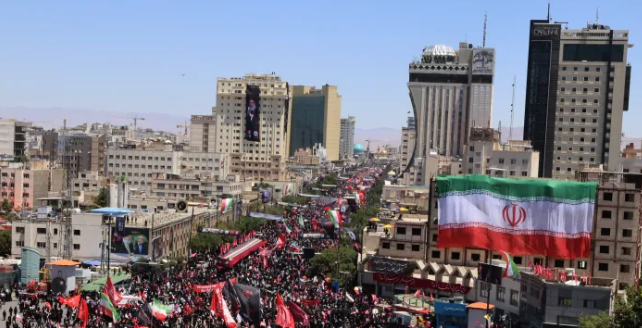
WASHINGTON, D.C. / TEHRAN — A renewed wave of tensions between the United States and Iran has placed the Middle East on high alert, as both governments exchange sharp warnings while regional mediators race to prevent the crisis from escalating into a broader military confrontation.
US President Donald Trump issued one of his strongest warnings yet against Iran, declaring that approximately 1,000 missiles are “locked and loaded and aimed at the Islamic Republic of Iran,” with thousands more reportedly prepared should Tehran allegedly attempt to carry out an assassination plot against him.
The statement significantly heightened concerns among international observers, who fear that increasingly hostile rhetoric could undermine ongoing diplomatic initiatives aimed at reducing tensions in the region. Security analysts warned that such declarations, whether intended as deterrence or political messaging, risk fueling further instability at a time when both countries remain deeply divided over security, sanctions, and regional influence.
READ MORE ARTICLES:
- U.S. Demands Iran Guarantee Strait of Hormuz Shipping Safety Amid Ceasefire
- US-Iran Tensions Escalate as Military Threats, Diplomatic Disputes, and Regional Mediation Efforts Intensify
- Thomas Redrick Williams Wanted After Wedding Reception Shooting Leaves Two Injured in Wisconsin
- Donald Trump Sparks Political Firestorm With Italy’s Prime Minister Giorgia Meloni
- Donald Trump Returns to Washington Hilton Under Tight Security After Foiled Assassination
The White House has maintained that the United States will respond decisively to any direct threat against American officials or national interests. While no immediate military action has been announced, defense observers noted that US forces continue to maintain a significant presence across the Middle East, including naval assets capable of rapid deployment.
Meanwhile, Iran firmly rejected Washington’s position, with Foreign Minister Abbas Araghchi accusing the United States of violating commitments made under a recently negotiated interim Memorandum of Understanding (MoU). Araghchi argued that the US administration had failed to honor key provisions of the agreement, describing Washington’s conduct as a clear breach of established diplomatic obligations.
Speaking on behalf of Tehran, Iranian officials stressed that confidence between the two nations has been severely weakened by what they characterize as inconsistent implementation of previously negotiated understandings. According to Iran’s Foreign Ministry, any violation of commitments by the United States would not go unanswered.
“The Islamic Republic will respond with reciprocal action to any breach of the Memorandum of Understanding,” the ministry said in a statement, emphasizing that Iran reserves the right to react proportionately should Washington fail to fulfill its obligations.
The disagreement has emerged amid ongoing efforts to revive diplomatic engagement after months of strained negotiations over regional security and sanctions-related issues.
Another major point of contention involves maritime security in the Persian Gulf. According to diplomatic sources, Washington is reportedly pressing Iran to issue a public declaration affirming that it will not target commercial vessels transiting the strategically vital Strait of Hormuz.
The narrow waterway remains one of the world’s most important energy corridors, carrying a substantial share of global oil and liquefied natural gas exports. Any disruption to commercial shipping through the Strait could have significant consequences for international energy markets, global trade, and regional stability.
Western governments have repeatedly expressed concern over previous incidents involving merchant vessels in the Gulf, while Tehran has consistently denied responsibility for attacks attributed to Iranian-backed groups or military units.
The reported US request is viewed by analysts as an attempt to reassure international shipping companies and reduce the risk of accidental escalation between military forces operating in the area.
Despite the growing rhetoric, diplomatic channels remain open.
Officials familiar with the negotiations confirmed that Qatari mediators recently traveled to Tehran in an effort to revive dialogue between Washington and Tehran. Qatar has frequently served as a trusted intermediary in regional conflicts, leveraging its relationships with both governments to facilitate indirect communication during periods of heightened tension.
Diplomatic observers described the Qatari initiative as an important confidence-building effort intended to prevent further deterioration of relations and encourage both sides to return to meaningful negotiations.
In addition, separate talks involving representatives from both countries are expected to take place in Oman on Saturday. Oman has long played a discreet but influential role in facilitating confidential discussions between Iran and the United States, including negotiations that eventually led to previous diplomatic agreements.
Regional experts believe the upcoming discussions could provide an opportunity to address immediate security concerns while laying the groundwork for broader negotiations on military de-escalation, sanctions, and maritime security.
The latest developments come amid an increasingly fragile geopolitical environment across the Middle East, where conflicts involving proxy groups, maritime security concerns, and broader regional rivalries continue to challenge diplomatic efforts.
International observers, including several allied governments, have urged restraint from both Washington and Tehran, warning that inflammatory statements and retaliatory actions could rapidly spiral into a larger conflict with far-reaching humanitarian, political, and economic consequences.
While military preparedness remains high on both sides, diplomats continue to express cautious optimism that ongoing mediation efforts by Qatar and Oman may yet prevent a further escalation of the crisis.
As negotiations continue behind closed doors, the international community will be closely monitoring whether diplomacy can succeed in easing one of the world’s most volatile geopolitical confrontations before tensions reach a critical tipping point.
Middle East Remains on Edge as Security Incidents, West Bank Displacement, and Diplomatic Efforts Shape Regional Crisis
Fresh security developments across the Middle East underscored the region’s fragile state on Saturday, as Iranian authorities clarified the cause of a loud explosion near Tehran, Israeli military operations continued in the occupied West Bank and southern Lebanon, the United Nations reported a sharp rise in Palestinian displacement, and Pakistan called on both the United States and Iran to honor their recent diplomatic commitments.
The series of developments highlights the growing complexity of regional tensions, where military activity, humanitarian concerns, and high-level diplomacy continue to unfold simultaneously, raising fears that localized incidents could further destabilize an already volatile region.
Controlled Explosion Reported Near Tehran
Iranian authorities moved quickly to reassure the public after residents in eastern Tehran reported hearing a powerful explosion on Saturday morning.
According to Iranian state media, the blast originated from a controlled ammunition disposal operation conducted by security authorities rather than from a military attack or accidental explosion.
Residents in the districts of Pakdasht and Qiyamdasht reported hearing the loud blast, prompting speculation on social media about its possible cause.
However, an official speaking to the state-affiliated Fars News Agency said the operation was planned in advance and posed no danger to nearby communities. Authorities emphasized that the controlled disposal was part of routine safety procedures aimed at eliminating old or unstable munitions.
The clarification came amid heightened regional tensions, where any unusual military-related activity is closely monitored by both domestic audiences and the international community.
UN Reports Sharp Increase in Palestinian Displacement
Meanwhile, humanitarian concerns in the occupied West Bank continue to deepen.
The United Nations Office for the Coordination of Humanitarian Affairs (OCHA) reported that at least 67 Palestinians have been displaced this month following the demolition of homes and other structures by Israeli authorities.
According to OCHA’s latest assessment, approximately two dozen Palestinian-owned structures have already been demolished during the month.
The UN agency stated that Israeli authorities generally cite the absence of building permits as the legal basis for demolitions. However, OCHA reiterated that such permits are extremely difficult for Palestinians to obtain, leaving many families vulnerable to losing their homes despite long-standing residency.
The humanitarian agency also revealed that more than 3,200 Palestinians have been displaced during the current year as a result of home demolitions and attacks by Israeli settlers.
That figure represents an average of 17 displaced people every day, roughly double the daily displacement rate recorded over the previous three years, reflecting what humanitarian organizations describe as a significant deterioration in living conditions throughout parts of the occupied West Bank.
Aid organizations have repeatedly warned that continued displacement places additional pressure on already vulnerable communities while complicating efforts to deliver humanitarian assistance.
Israeli Raid in Nablus Leads to Arrest
In another development in the occupied West Bank, Israeli forces carried out an early morning military raid in the city of Nablus.
According to the Palestinian news agency Wafa, Israeli soldiers entered the city before dawn and surrounded a residential building located on Tal Street.
During the operation, soldiers reportedly searched and vandalized the residence before arresting Malek Abdo.
Israeli authorities have not immediately released details regarding the reason for the arrest or any charges connected to the operation.
Military raids in the West Bank remain a regular occurrence as Israeli security forces continue operations they say are aimed at preventing attacks and dismantling militant networks. Palestinian officials and human rights organizations, however, have frequently criticized such operations, citing damage to civilian property and the impact on local communities.
Israeli Drone Drops Sound Bomb in Southern Lebanon
Across Israel’s northern border, tensions also persisted in southern Lebanon.
Lebanon’s National News Agency (NNA) reported that an Israeli drone dropped a sound bomb over the municipality of al-Mansouri, located in the Tyre district.
No injuries or significant property damage were immediately reported.
Sound bombs are commonly used for signaling, crowd dispersal, or psychological deterrence rather than causing direct physical destruction. Nevertheless, such incidents contribute to ongoing anxiety among residents living near the Israel-Lebanon border, where exchanges of fire and aerial surveillance have become increasingly common.
International observers continue to express concern that isolated military incidents along the border could escalate into a broader confrontation if tensions remain unresolved.
Pakistan Calls for Diplomacy Between Iran and the United States
Amid the continuing regional uncertainty, Pakistan renewed its appeal for diplomacy between Washington and Tehran.
Prime Minister Shehbaz Sharif spoke by telephone with Iranian President Masoud Pezeshkian, expressing what his office described as “deep concern” over the recent rise in tensions.
During the conversation, Sharif emphasized the urgent need to restore peace and stability across the Middle East while urging both Iran and the United States to fully implement the commitments contained in the Memorandum of Understanding (MoU) signed between the two countries last month.
Pakistan has emerged as one of the principal facilitators of diplomatic engagement between Washington and Tehran, maintaining communication with both governments while encouraging dialogue over confrontation.
Officials in Islamabad have consistently argued that sustained negotiations remain the most effective path toward reducing regional tensions and avoiding further military escalation.
A Region Facing Multiple Challenges
The latest developments demonstrate the interconnected nature of today’s Middle East security landscape. Military operations, humanitarian challenges, and diplomatic negotiations are unfolding simultaneously across several countries, each carrying implications for regional stability.
From controlled military activities inside Iran to humanitarian concerns in the occupied West Bank, continued security incidents along the Israeli-Lebanese border, and renewed diplomatic engagement involving Pakistan, regional leaders continue to navigate one of the most sensitive geopolitical environments in recent years.
International observers remain hopeful that ongoing diplomatic initiatives will help reduce tensions before isolated incidents evolve into a broader regional crisis. However, with security concerns persisting across multiple fronts, governments and humanitarian organizations alike continue to monitor developments closely, recognizing that sustained dialogue and restraint will be essential to preventing further instability throughout the Middle East. reuters / aptikons