US President Donald Trump said the United States remains “locked and loaded” for military action if necessary but stressed that diplomacy with Iran is still ongoing, raising hopes that a threatened large-scale attack could be avoided. His remarks came as tensions across the Middle East escalated, with Iran launching strikes targeting US military bases, Israel expanding military operations in the occupied West Bank, and both Washington and Tehran maintaining sharply opposing positions.
![Nablus in the Israeli-occupied West Bank, on Friday [Jaafar Ashtiyeh/AFP]](https://www.aptikons.com/view/Screenshot-2026-07-25-133516.png)
US President Donald Trump declared that the United States remains “locked and loaded” for potential military action against Iran while insisting that diplomatic efforts between Washington and Tehran are continuing in an attempt to prevent a wider regional conflict.
Speaking amid rising tensions in the Middle East, Trump said a previously threatened “massive” US attack may ultimately prove unnecessary if ongoing dialogue produces results. His comments reflected the administration’s strategy of combining military preparedness with continued diplomatic engagement as concerns grow over escalating hostilities involving Iran, Israel, and US forces in the region.
Despite Trump’s remarks, Iranian officials dismissed Washington’s warnings. Iranian Foreign Minister Abbas Araghchi said Tehran would neither fear military threats nor yield to political pressure, reaffirming Iran’s position that it would defend its sovereignty against any foreign aggression.
The latest exchange of rhetoric came as Iran’s military announced it had launched strikes targeting US military bases in Kuwait, Bahrain, and Jordan. While details regarding the extent of the attacks and any casualties were not immediately available, the strikes marked another significant escalation in the already volatile regional security situation.
READ MORE OTHER ARTICLES:
- Donald Trump Says US ‘Locked and Loaded’ as Washington Pursues Talks With Iran
![Nablus in the Israeli-occupied West Bank, on Friday [Jaafar Ashtiyeh/AFP]](data:image/gif;base64,R0lGODdhAQABAPAAAMPDwwAAACwAAAAAAQABAAACAkQBADs=)
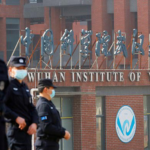
- United States Scientists Revisit Covid Origins After Private Messages Raise Fresh Questions
- Anthony Edwards Secret Wedding Surprises Fans Following Major Legal Victory And Family
- California Mother Angelica Brophy Still Missing as Family Pleads for Help in Second Week of Search
- Enrico Gloria Delivers Historic Mandarin Graduation Speech at Prestigious Tsinghua University Ceremony
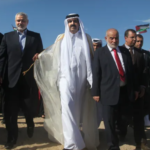
- Sheikh Hamad bin Khalifa Remembered for Historic Gaza Visit Supporting Palestinians
![Nablus in the Israeli-occupied West Bank, on Friday [Jaafar Ashtiyeh/AFP]](https://www.aptikons.com/view/Screenshot-2026-07-25-133516-150x150.png)



The conflict has also intensified in the Israeli-occupied West Bank. The Israeli military announced new “counterterrorism” operations following deadly violence southwest of Nablus that left six people dead, including four Palestinians and two Israeli soldiers.
Israeli authorities subsequently imposed a curfew in parts of the occupied West Bank as security forces expanded operations aimed at preventing further attacks. The military said additional troops had been deployed while investigations into the violence continued.
The overlapping crises have heightened fears of a broader regional confrontation involving Iran, Israel, and the United States. Analysts warn that any direct military confrontation could further destabilise the Middle East, drawing additional countries into the conflict and threatening regional security.
For now, Washington continues to pursue diplomatic channels even as it maintains a heightened military posture. Trump’s latest statement suggests that while the United States remains fully prepared to respond militarily if required, the administration still views negotiations as the preferred path to avoiding a wider war.
Iran, however, has made clear that it will not alter its position under external pressure, leaving the future of diplomatic efforts uncertain as military tensions continue to rise across the region.
Israel Quadruples Public Diplomacy Budget to £750 Million, Report Finds
Israel has dramatically increased its spending on public diplomacy, committing £750 million to international outreach and messaging efforts in 2026, according to a report released by the Quincy Institute for Responsible Statecraft. The figure represents nearly a fourfold increase from the £190 million allocated in 2025, underscoring what the institute describes as a significant expansion of Israel’s efforts to influence public opinion and strengthen its global image.
The report points to a growing emphasis on public diplomacy as Israel continues to face intense international scrutiny over its foreign policy and regional security challenges. Public diplomacy generally refers to government-funded initiatives aimed at communicating directly with foreign audiences through media campaigns, cultural programmes, digital platforms, public engagement and strategic communications.
According to the Quincy Institute, Israel has not only increased domestic funding for these efforts but has also expanded its activities abroad, particularly in the United States. Since 2023, more than £100 million has reportedly been spent through organisations and firms registered under the US Foreign Agents Registration Act (FARA), which requires individuals and entities representing foreign governments or political interests to disclose their activities to the US government.
The report further states that 17 new firms registered under FARA during 2024 and 2025 to represent Israeli interests. These organisations are involved in a range of activities, including government relations, strategic communications, public affairs and media outreach, all of which are subject to US disclosure requirements under federal law.
Researchers at the Quincy Institute say the increase reflects a broader strategy to strengthen Israel’s international messaging and diplomatic engagement at a time when debates surrounding Middle East security, regional conflicts and foreign policy have intensified across many countries.
The findings suggest that public diplomacy has become an increasingly important component of Israel’s international strategy, with greater financial resources being directed toward influencing public discourse and engaging policymakers, media organisations and foreign audiences.
The report does not suggest that the spending violates any laws, noting that activities conducted under FARA are legal provided they comply with disclosure and registration requirements established by US authorities. Instead, the institute argues that the figures illustrate the growing scale of Israel’s investment in shaping international narratives and maintaining diplomatic influence.
The latest data are likely to fuel further discussion over the role of public diplomacy, lobbying and foreign influence campaigns in democratic societies, particularly as governments around the world devote increasing resources to communicating their policies and interests beyond their own borders.
Israeli Forces Launch Overnight Raids Across West Bank Amid Escalating Violence
Israeli forces launched a new wave of overnight military raids across several areas of the occupied West Bank, conducting searches, arrests and security operations in multiple Palestinian communities as violence in the territory continued to escalate.
According to reports from correspondents on the ground, a Palestinian teenager and an elderly man were injured by gunfire during separate incidents in Bethlehem and Nablus, adding to growing concerns over the worsening security situation across the occupied territory.
The military operations extended across numerous cities, towns and refugee camps. Israeli troops entered the Aqabat Jabr refugee camp south of Jericho, the city of Qalqilya, the village of Kobar in the Ramallah district and the town of Kafr Aqab, located north of Jerusalem.
Further north, Israeli forces carried out raids in the town of Yabad together with the villages of Zababdeh and Burqin in the Jenin governorate. Another military operation targeted the village of Faroun, south of Tulkarem, as troops continued searches in several communities.
In the Nablus governorate, Israeli military units entered the villages of Tal and Qaryut as well as the town of Beit Furik. Witnesses reported that soldiers launched a large-scale detention campaign in Tal while conducting extensive house searches in Beit Furik.
During the operations, Israeli forces fired tear gas canisters toward Palestinian homes in Qaryut, causing panic among residents as military vehicles moved through residential neighbourhoods.
At the same time, violence involving Israeli settlers was also reported. Settlers allegedly attacked Palestinian homes in the village of Urif, south of Nablus, further heightening tensions in an area that has frequently witnessed confrontations between settlers and local residents.
The latest raids come amid a broader surge in violence across the occupied West Bank, where Israeli military operations have become increasingly frequent alongside rising clashes, arrests and attacks involving armed groups, security forces and settlers.
Israeli authorities have repeatedly said such operations are aimed at preventing militant attacks and dismantling armed networks operating in the West Bank. Palestinian officials and residents, however, argue that the repeated incursions, arrests and settler violence are worsening humanitarian conditions and fuelling further instability.
With military operations continuing across several governorates and tensions showing little sign of easing, the latest overnight raids underscore the fragile security environment in the occupied West Bank, where civilians remain caught in the midst of an increasingly volatile conflict. / aptikons.com