MANILA, Philippines — Former police official Rafael Dumlao, who was convicted for his role in the kidnapping and killing of South Korean businessman Jee Ick Joo in one of the most notorious criminal cases involving members of the Philippine National Police (PNP), was arrested early Tuesday morning in Quezon City.
Interior and Local Government Secretary Jonvic Remulla announced the arrest during a press briefing, saying PNP operatives successfully served a warrant of arrest against Dumlao at around 5:00 a.m. on June 9, 2026.
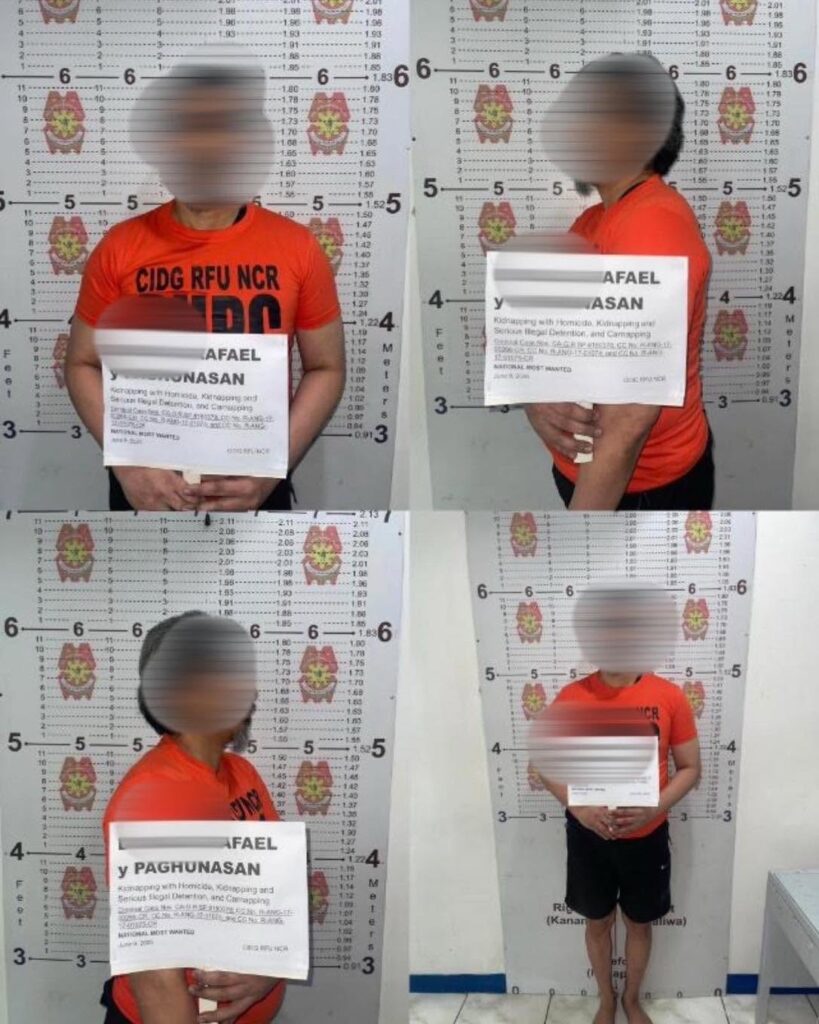
According to Remulla, law enforcement officers located Dumlao in a residence in Pasong Tamo, Quezon City, where he was taken into custody without reported incident.
“Today, June 9, 2026, at around 5 o’clock a.m., operatives of the PNP successfully arrested Police Lieutenant Colonel Rafael Dumlao. He was arrested in a house in Pasong Tamo, Quezon City pursuant to a warrant of arrest issued by the court,” Remulla said.
The arrest marks the latest development in a case that shocked both the Philippines and South Korea nearly a decade ago and became a symbol of corruption and abuse within the ranks of law enforcement.
READ MORE ARTICLES:
- Ateneo Mourns Tragic Drowning of Promising Stars Rene Baterbonia and Divine Adili
- 7.8-Magnitude Quake Strikes Off Sarangani; Tsunami Warning Issued, Evacuations Ordered
- Timing and Connections: VP Sara Visits Lawyer of Controversial Ex-Marines Amid Senate Hearing, Political Rivalries, and New Allegations
- President Marcos Joins LGBTQIA+ Community in Celebrating Pride Month, Reaffirms Commitment to Equality and Inclusion
- Alan Cayetano Remains Senate President Amid Leadership Dispute as Minority Bloc Challenges Control of Senate
A Crime That Shocked the Nation
The case stemmed from the abduction and killing of South Korean businessman Jee Ick Joo in October 2016.
Jee was reportedly kidnapped by individuals linked to police operations under the guise of an anti-drug campaign. Investigators later uncovered evidence that he had been abducted, extorted for money, and ultimately killed inside the headquarters of the Philippine National Police at Camp Crame in Quezon City.
The revelation that the businessman was murdered within the country’s national police headquarters sent shockwaves throughout the nation and drew widespread condemnation from the international community.
The case also strained diplomatic relations between the Philippines and South Korea, with Seoul demanding justice for its citizen and closely monitoring the legal proceedings that followed.
According to testimony presented during the trial, Jee was forcibly taken and pressured to provide a substantial amount of money in exchange for his release. Witnesses testified that when the victim failed to meet the demands of his captors, he was allegedly strangled to death.
Authorities further alleged that efforts were made to conceal the crime by burning the victim’s remains, adding another layer of brutality to an already disturbing case.
Conviction Upheld After Years of Legal Battles
Dumlao, who was dismissed from police service in 2018, spent years contesting the charges and pursuing legal remedies after his conviction.
Secretary Remulla disclosed that the legal landscape of the case changed significantly in September 2024 when the Court of Appeals reversed an earlier lower court ruling and found Dumlao guilty in connection with the kidnapping, extortion, carnapping, and killing of Jee Ick Joo.
The appellate court sentenced Dumlao to reclusion perpetua and ordered his immediate arrest without the possibility of bail.
Despite continued legal efforts to overturn the conviction, Dumlao’s appeals ultimately failed.
Remulla said that on June 30, 2025, the Supreme Court denied Dumlao’s petition and other legal remedies, effectively affirming the Court of Appeals’ decision and exhausting all available judicial options.
With the conviction becoming final and executory, authorities moved to implement the court’s order, leading to Tuesday’s arrest operation.
Government Signals Commitment to Accountability
During the briefing, Remulla described the arrest as a demonstration of the government’s determination to enforce the law regardless of an individual’s former position or influence.
“This morning’s operation is a clear demonstration of the government’s commitment to enforce the law and implement court decisions,” Remulla said.
“The arrest sends a strong message that no one is above the law regardless of rank, position, or former authority,” he added.
The Interior Secretary emphasized that the successful implementation of the warrant underscores the state’s responsibility to ensure that final court decisions are carried out and that justice is served for victims and their families.
PNP Praised for Enforcing Arrest Against Former Officer
Remulla also commended the police personnel who participated in the operation, noting that the arrest demonstrated the organization’s willingness to hold its own members accountable.
For years, the Jee Ick Joo case has been cited as a painful reminder of the challenges facing police reform in the Philippines. The case exposed serious abuses committed by individuals entrusted with enforcing the law and triggered widespread calls for institutional reforms within the PNP.
According to Remulla, the arrest shows that accountability remains possible even when those involved once occupied positions within the police force.
“Even though Colonel Dumlao was one of their own, he was not put above the law,” the Secretary said.
A Landmark Case in Police Reform
The killing of Jee Ick Joo remains one of the most controversial criminal cases in recent Philippine history. Beyond the tragedy suffered by the victim and his family, the case became a watershed moment that intensified public scrutiny of police operations and strengthened demands for transparency and accountability in law enforcement.
Nearly ten years after the crime was committed, the arrest of Rafael Dumlao represents another significant chapter in the long pursuit of justice for the South Korean businessman whose death exposed deep flaws within the criminal justice and law enforcement systems.
As Dumlao begins serving the sentence imposed by the courts, government officials maintain that the case stands as a powerful reminder that criminal accountability does not disappear with rank, position, or the passage of time.
At the center of the case is the gruesome kidnapping and killing of South Korean businessman Jee Ick-Joo in October 2016. The incident shocked both the Philippines and South Korea because of the direct involvement of rogue police officers and the fact that the murder was allegedly carried out within Camp Crame itself, the historic national headquarters of the Philippine National Police.
According to court records and investigations, Jee was abducted from his residence in Angeles City, Pampanga, during what appeared to be a legitimate anti-illegal drugs operation. Police officers involved in the scheme allegedly used the government’s anti-drug campaign as a cover to carry out a kidnapping-for-ransom operation.
Instead of being taken to a lawful detention facility, Jee was transported to Camp Crame, where he was allegedly held captive while his abductors attempted to extort money from his family. Prosecutors later established that the victim was strangled to death when the criminal operation unraveled.
The crime became even more disturbing when investigators uncovered efforts to destroy evidence. Following the killing, Jee’s body was reportedly brought to a funeral facility linked to a former police officer, where it was cremated. Authorities later revealed that his ashes were allegedly flushed down a toilet in an effort to erase all traces of the crime.
The case quickly became an international scandal, drawing condemnation from South Korean officials and intensifying scrutiny of police conduct in the Philippines.
For years, the legal proceedings surrounding Dumlao remained controversial. In 2023, a Pampanga trial court acquitted him of the charges, a decision that surprised many observers and the victim’s family. However, prosecutors appealed the ruling, arguing that serious errors had been committed during the trial.
In 2024, the Court of Appeals overturned the acquittal after finding grave errors in the lower court’s decision and determining that the evidence established Dumlao’s criminal liability. The appellate court found him guilty of kidnapping with homicide and imposed the penalty of reclusion perpetua.
The ruling represented a major turning point in the pursuit of justice for Jee Ick-Joo and his family, who had spent years seeking accountability for the crime.
Dumlao subsequently elevated the case to the Supreme Court, hoping to reverse the conviction. However, in 2025, the country’s highest court affirmed the appellate court’s ruling, effectively exhausting all available legal remedies and making the conviction final.
As a result, Dumlao was sentenced to reclusion perpetua, which carries imprisonment of up to 40 years under Philippine law. The sentence was imposed without eligibility for parole because of the gravity of the offense. Apart from the kidnapping-with-homicide conviction, he also faces penalties related to the carnapping charges connected to the case.
Beyond his criminal conviction, Dumlao’s legal career is also under threat. A member of the legal profession in addition to being a former police officer, he is reportedly facing disbarment complaints that could permanently strip him of his privilege to practice law.
The Jee Ick-Joo case remains one of the most damaging scandals ever to hit the Philippine National Police. The revelation that police officers allegedly abused their authority, conducted a kidnapping operation under the guise of anti-drug enforcement, and murdered a foreign businessman inside the country’s police headquarters severely undermined public confidence in law enforcement institutions.
The scandal ultimately prompted then-President Rodrigo Duterte to temporarily suspend the government’s anti-drug campaign and dismantle the PNP Anti-Illegal Drugs Group (AIDG), whose members were implicated in the case. The move was widely viewed as an acknowledgment of the profound institutional failures exposed by the murder.
Nearly ten years after Jee Ick-Joo’s death, the arrest and imprisonment of Rafael Dumlao III represent a major milestone in the long pursuit of justice. While the case remains a painful reminder of corruption and abuse within law enforcement, it also stands as evidence that accountability can prevail, even against individuals who once held positions of authority within the very institutions tasked with upholding the law.
The Jee Ick-Joo Case: The Murder That Shook the Philippine National Police
Nearly a decade after the brutal kidnapping and murder of South Korean businessman Jee Ick-joo, the case continues to stand as one of the darkest chapters in the history of Philippine law enforcement. The crime, carried out by rogue police officers who abused their authority under the guise of the government’s anti-drug campaign, exposed deep flaws within the Philippine National Police (PNP) and sparked national and international outrage.
Jee Ick-joo, a South Korean entrepreneur residing in Angeles City, Pampanga, became the victim of a shocking kidnapping-for-ransom operation on October 18, 2016. What initially appeared to be a legitimate anti-drug operation later turned out to be a criminal conspiracy orchestrated by corrupt members of the police force.
According to investigators, police officers arrived at Jee’s residence claiming to be conducting an operation under “Oplan Tokhang,” the government’s controversial anti-illegal drugs campaign. Using their authority and official status, the officers abducted the businessman and transported him away from his home.
What followed would become one of the most disturbing crimes ever linked to members of the country’s police organization.
Instead of being taken to a legitimate detention facility, Jee was brought to Camp Crame in Quezon City—the national headquarters of the Philippine National Police. There, according to court findings and witness testimonies, he was held captive and extorted for money.
The kidnappers allegedly demanded a large ransom from the victim and his family. Despite efforts to secure payment, Jee was eventually strangled to death inside his own vehicle within the premises of Camp Crame itself. The fact that the killing occurred inside the country’s premier police headquarters stunned the nation and raised serious questions about corruption and criminal activity within law enforcement institutions.
The perpetrators then undertook extraordinary measures to conceal the crime.
Investigators later discovered that Jee’s body had been transported to a funeral home operated by a former police officer. There, the remains were cremated in an attempt to destroy evidence. Authorities revealed that the ashes were reportedly flushed down a toilet, making recovery of physical evidence nearly impossible and highlighting the lengths to which the suspects went to cover up the murder.
The case quickly evolved from a kidnapping investigation into a national scandal.
Public outrage intensified as more details emerged about the involvement of active and former police personnel. The incident not only embarrassed the Philippine government but also strained diplomatic relations between the Philippines and South Korea, whose officials demanded justice for their slain citizen.
At the center of the case was former Police Lieutenant Colonel Rafael Dumlao III, who prosecutors identified as one of the key figures behind the crime. Although he was initially acquitted by a lower court, the legal battle continued for several years.
In September 2024, the Court of Appeals reversed the earlier acquittal and found Dumlao guilty of kidnapping and homicide. The appellate court sentenced him to reclusion perpetua, or life imprisonment, marking a major breakthrough in the long-running pursuit of justice.
Subsequent legal challenges failed to overturn the conviction. Following the exhaustion of all available judicial remedies, authorities moved to enforce the court’s decision. Dumlao was eventually arrested, bringing another significant development in a case that had remained a symbol of impunity and abuse of power for years.
The murder of Jee Ick-joo had far-reaching consequences beyond the courtroom.
The scandal severely damaged the public image of the Philippine National Police and triggered widespread calls for institutional reforms. The revelation that police officers had used the government’s anti-drug campaign as a cover for kidnapping and extortion operations intensified concerns about accountability and human rights abuses.
In response to the public backlash, then-President Rodrigo Duterte temporarily suspended the government’s war on drugs and ordered the disbandment of the PNP Anti-Illegal Drugs Group (AIDG), the unit linked to several officers implicated in the case. The move was seen as an acknowledgment of the seriousness of the scandal and the need to restore public trust in law enforcement.
Today, the Jee Ick-joo case remains a powerful reminder of the dangers of corruption within institutions entrusted with enforcing the law. It continues to be cited as one of the most significant criminal cases in recent Philippine history—a case that exposed systemic weaknesses, tested the country’s justice system, and underscored the importance of accountability regardless of rank or position.
For many observers, the eventual conviction and arrest of those involved represent not only justice for Jee Ick-joo and his family but also a crucial step toward ensuring that such abuses of power are never repeated. The case serves as a lasting warning that when law enforcers become lawbreakers, the consequences can reverberate throughout an entire nation.