The impeachment trial of Vice President Sara Duterte could extend for as long as seven months, potentially making it the longest impeachment proceeding in Philippine history, according to Senate Secretary Renato Bantug. With both the prosecution and defense requesting a combined 92 trial days, the Senate now faces the challenge of balancing its role as an impeachment court while continuing its legislative duties, including deliberations on the proposed ₱7.2-trillion national budget for 2027.
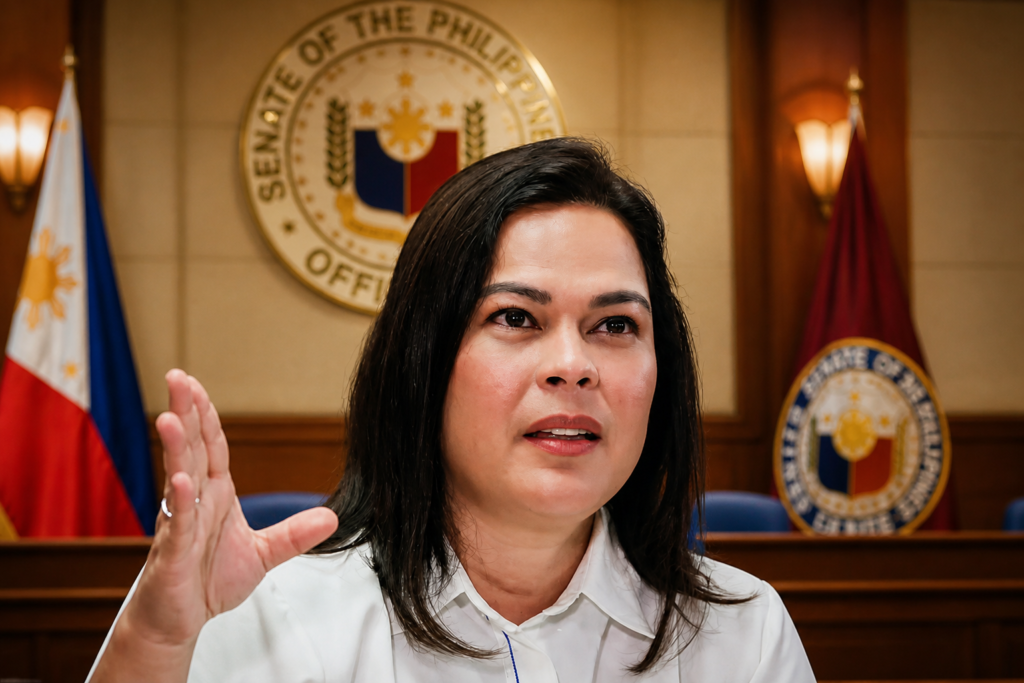
MANILA, Philippines — The impeachment trial of Vice President Sara Duterte is projected to become the longest impeachment proceeding in Philippine history, with Senate officials estimating that the trial could stretch for as long as seven months based on the number of hearing days requested by both the prosecution and defense panels.
Senate Secretary Renato Bantug said the projected duration was based on the prosecution’s request for 62 trial days and the defense panel’s request for 30 trial days, bringing the total to 92 trial days. Since the impeachment court is expected to convene only three times a week, the proceedings could extend over a period of approximately seven months before a verdict is reached.
Bantug explained that while the current estimate points to a lengthy process, the timeline may still be shortened if both parties decide to present multiple witnesses during a single trial day instead of limiting testimony to one witness per session. Such an arrangement could significantly reduce the number of hearing dates needed to complete the presentation of evidence.
READ MORE ARTICLES:
- Why Is HIV Rising So Rapidly in the Philippines? Young Filipinos Drive Fastest-Growing HIV Epidemic in Asia-Pacific
- PRC Suspends Dr. Lorraine Badoy for Six Months Over Red-Tagging, Against Healthcare Workers
- Supreme Court Orders Reinstatement of Worker, Rules Absence Alone Is Not Ground for Dismissal
- Lucio Tan Control PAL Eyes Global Investors in First Dollar Bond Sale Since Bankruptcy Exit
- Converge ICT Ends Partnership With Sky Cable, Deepening Uncertainty for ABS-CBN’s Broadband Unit
- LEYTE: Carigara LGU Prioritizes Students Over Travel, Donates 32 Air Coolers to EVSU Classrooms
- DepEd Strengthened Steps for Safer, More Prepared Schools – Sonny Angara
If the proceedings consume the full 92 trial days, the impeachment case against Duterte would eclipse every previous impeachment trial conducted in the country. The 2012 impeachment trial of the late Chief Justice Renato Corona lasted only 44 trial days before the Senate voted to convict him for failing to disclose substantial assets in his Statement of Assets, Liabilities and Net Worth.
The expected duration would also far exceed the impeachment trial of former President Joseph Estrada, which lasted just 23 days before it was abruptly halted. That proceeding ended after the prosecution panel staged a dramatic walkout in protest over the Senate impeachment court’s refusal to open the controversial “second envelope,” an incident that ignited widespread public demonstrations and eventually culminated in the EDSA People Power uprising that removed Estrada from office in 2001.
The Senate impeachment court is scheduled to formally open the trial on July 6, marking the beginning of what is anticipated to be one of the most closely watched political and legal proceedings in recent Philippine history.
Beyond the legal questions surrounding the impeachment complaint, the extended proceedings are expected to present significant operational and legislative challenges for the Senate. Senators will be required to balance their constitutional duty as members of the impeachment court while simultaneously carrying out their regular legislative responsibilities, including deliberating on priority bills and performing oversight functions.
Among the most pressing concerns is the upcoming deliberation on the proposed P7.2-trillion national budget for 2027. Senate Finance Committee Chairman JV Ejercito expressed hope that the impeachment proceedings would not disrupt the chamber’s work on reviewing and approving the government’s spending program for the next fiscal year.
Following the Department of Budget and Management’s announcement of the proposed budget, Ejercito acknowledged that the Senate finance committee faces an extensive workload in evaluating agency budget proposals, conducting hearings, and ensuring that appropriations are aligned with the country’s development priorities.
The Senate leadership also expects logistical challenges as impeachment sessions coincide with the chamber’s regular committee hearings. The influx of lawmakers, legal teams, witnesses, media organizations, government officials, and members of the public is expected to place additional pressure on Senate facilities and security arrangements throughout the duration of the trial.
Bantug acknowledged that managing simultaneous legislative activities and impeachment proceedings would require careful coordination but expressed confidence that the Senate would be able to fulfill both constitutional responsibilities effectively. He noted that accommodating large crowds while maintaining order during committee hearings and impeachment sessions would be among the institution’s primary administrative challenges in the coming months.
Preparations for the trial continue ahead of its scheduled opening. Acting on the instructions of Senate President Sherwin Gatchalian, Bantug said his office would continue working over the weekend to complete the pre-trial order summarizing the discussions and agreements reached during the five-day pre-trial conference that concluded last Thursday.
The draft pre-trial order is expected to be released to both the prosecution and defense panels for review and comment before being finalized. Any revisions resulting from the parties’ feedback will be incorporated into the final document that will govern various procedural aspects of the impeachment proceedings.
As the Senate moves closer to the formal opening of the impeachment court, attention is expected to intensify on both the legal arguments that will be presented and the institution’s ability to simultaneously perform its judicial role in the impeachment process and its legislative mandate. With months of hearings anticipated, the trial is poised to become a defining constitutional event that will test not only the strength of the country’s impeachment mechanism but also the Senate’s capacity to manage one of the most demanding proceedings in its history.
House Prosecutors Reject Duterte’s Free Speech Defense, Warn Assassination Remarks Undermine Public Trust and National Security
The House prosecution panel has firmly rejected Vice President Sara Duterte’s assertion that her controversial public statements regarding the assassination of President Ferdinand Marcos Jr., First Lady Liza Araneta-Marcos, and then-House Speaker Martin Romualdez are protected under the constitutional right to free speech, arguing that such remarks cannot be dismissed as mere expressions of opinion and instead pose serious implications for public safety, democratic institutions, and the rule of law.
The prosecutors’ response came after Duterte formally submitted her answer before the Senate impeachment court, where her legal team maintained that the statements she made during a widely viewed Zoom press conference in November 2024 were covered by the constitutional guarantee of freedom of expression. Her camp contended that the remarks should not be interpreted as criminal threats or acts warranting impeachment but rather as protected speech within the broader context of political discourse.
The controversy stems from Duterte’s declaration during the online briefing that she had already instructed someone to assassinate President Marcos, the First Lady, and then-Speaker Romualdez should an alleged plot against her life succeed. During the same press conference, she emphasized that her statement was “no joke,” a remark that immediately ignited widespread public concern and drew condemnation from government officials, constitutional experts, and legal observers.
House prosecutors, however, argued that invoking free speech cannot excuse statements that appear to threaten the lives of the nation’s highest-ranking officials. They stressed that while the Constitution strongly protects freedom of expression, such protection has never been regarded as unlimited or absolute, particularly when speech may incite violence, threaten public order, or undermine national security.
Lanao del Sur Representative Zia Alonto Adiong, a member of the House prosecution panel, underscored that constitutional rights are always accompanied by corresponding responsibilities and legal limitations. He emphasized that every lawyer recognizes that no constitutional freedom exists without reasonable regulation, noting that freedom of speech cannot be interpreted as a shield against accountability when statements carry the potential to create fear, destabilize institutions, or encourage unlawful acts.
According to the prosecutors, Duterte’s position as the country’s second-highest elected official further distinguishes her case from that of an ordinary citizen. They argued that public officials occupying the highest offices of government wield extraordinary influence over public opinion and national stability, making their words significantly more consequential than those of private individuals. Because the Vice President stands as the immediate constitutional successor to the presidency, the prosecution maintained that every public statement she makes carries institutional weight and demands the highest level of responsibility.
Deputy Speaker Paolo Ortega V likewise challenged the Vice President’s free speech defense by drawing comparisons with previous legal cases involving similar statements against public officials. He pointed specifically to the 2020 arrest of public school teacher Ronnel Mas, who was taken into custody after posting on social media a satirical offer of a ₱50-million bounty to anyone who could kill then-President Rodrigo Duterte.
Ortega argued that the apparent disparity between the treatment of Mas and the Vice President raises important questions regarding consistency in the application of the law. He noted that if an ordinary citizen could face criminal prosecution over an online post interpreted as a threat against the President, it would be difficult to justify treating similar statements made by the nation’s second-highest official as merely protected political speech.
The House prosecution panel maintained that Duterte’s remarks cannot be evaluated solely through the lens of individual expression because of the immense authority associated with her office. Prosecutors argued that preserving public confidence in democratic institutions requires elected leaders to exercise restraint and responsibility in their public communications, particularly when discussing matters involving violence against government officials.
The issue forms part of the broader impeachment proceedings against the Vice President, where lawmakers are examining whether her actions and public conduct constitute impeachable offenses under the Constitution. Prosecutors have consistently maintained that the case extends beyond political disagreements and instead concerns the preservation of constitutional accountability, ethical leadership, and respect for democratic institutions.
Meanwhile, Adiong also addressed developments involving one of the individuals identified as a potential witness in the impeachment proceedings. Former Davao City court sheriff Abe Andres recently appealed to be excluded from the witness list, expressing his desire not to become involved in what he described as partisan political matters.
Andres is widely known for his involvement in a 2011 demolition operation in Davao City during which Sara Duterte, then serving as mayor, physically confronted and punched him in an incident that drew nationwide attention and remains one of the most controversial episodes of her political career.
While acknowledging Andres’ reluctance to revisit what he described as an embarrassing chapter of his life, Adiong emphasized that the decision regarding witness participation ultimately rests with the Senate impeachment court. He explained that should the court determine that Andres’ testimony is relevant to the proceedings and issue a subpoena compelling his appearance, compliance would become a legal obligation regardless of personal preference.
As the impeachment trial continues, both the prosecution and the defense are expected to intensify their legal arguments over the constitutional boundaries of free speech, executive accountability, and the responsibilities carried by high-ranking public officials. The outcome of these proceedings is anticipated to establish significant legal and constitutional precedents regarding the conduct expected of elected leaders and the extent to which public statements made by government officials may be subject to constitutional scrutiny and impeachment.
Sara Duterte Defense Finally Agrees to Open Sealed BIR Tax Records—But With New Conditions
The impeachment proceedings against Vice President Sara Duterte took another procedural turn after the defense formally responded to the prosecution’s request to unseal the green Bureau of Internal Revenue (BIR) box containing the tax records and income tax returns of the Vice President and her husband, Manases Carpio. While the defense had repeatedly opposed the prosecution’s efforts during the five-day pre-trial conference to even have the sealed box physically marked as evidence, it has now indicated that it is willing to allow the opening of the container “in principle,” subject to specific conditions.
The development has drawn questions from the House prosecution panel, which argued that the defense’s latest position appears inconsistent with its earlier objections throughout the pre-trial proceedings. House prosecution panel trial spokesman Rep. Zia Alonto Adiong said the defense’s acceptance raises concerns about why it had strongly resisted procedural steps that could have been addressed much earlier if it ultimately intended to agree to the unsealing of the documents.
Speaking during the Saturday News Forum in Quezon City, Adiong questioned the timing of the defense’s change in position, noting that the prosecution had merely sought the physical marking of the sealed BIR box during the pre-trial conference. According to him, the prosecution’s request was intended to preserve the integrity of the evidence while allowing the impeachment court to determine its admissibility during the trial proper.
Adiong said that if the defense had always been prepared to permit the opening of the BIR box, there appeared to be little justification for opposing even the preliminary procedural act of identifying and marking the sealed container before the impeachment court. He added that the delay resulting from those objections could have been avoided had the defense made its current position known during the pre-trial stage.
Despite agreeing in principle to the opening of the BIR box, the defense attached several conditions to its proposal. It requested that the unsealing and pre-marking of the tax documents be conducted in a separate executive session rather than during the public proceedings of the impeachment court. At the same time, the defense maintained that it reserves the right to challenge the admissibility of the documents once they are formally offered as evidence during the trial.
The prosecution expressed concern that the proposed procedure could unnecessarily prolong the impeachment process. According to Adiong, conducting a separate executive session solely for the purpose of opening and pre-marking the documents may create another procedural layer before the impeachment court can finalize its pre-trial order and officially commence the trial on the merits.
Adiong emphasized that the prosecution’s request to open the BIR box does not automatically make the documents admissible as evidence. He explained that under impeachment procedures, the act of unsealing, identifying, and pre-marking documentary evidence is distinct from the court’s determination of whether those documents may ultimately be admitted and considered during the trial.
He stressed that questions regarding the authenticity, relevance, materiality, and admissibility of the tax records remain within the exclusive authority of the impeachment court. Those issues, he said, would only be resolved once the prosecution formally presents the documents and the defense is given the opportunity to raise objections during the presentation of evidence.
The green BIR box has become one of the focal points of the ongoing impeachment proceedings because it reportedly contains tax records and income tax returns pertaining to Vice President Duterte and Manases Carpio. The prosecution considers the documents potentially relevant to matters raised in the Articles of Impeachment, while the defense has consistently asserted its right to challenge both the handling and admissibility of the records.
The latest filing from the defense places the matter squarely before the impeachment court, which must now determine whether to grant the request for a separate executive session or proceed with the unsealing and pre-marking under a different procedure. The court’s ruling is expected to influence the pace of the proceedings as both parties continue preparing for the formal presentation of evidence.
As the impeachment process moves beyond the pre-trial phase, procedural disputes continue to shape the timeline of the case. While both the prosecution and defense now appear to agree, at least in principle, that the sealed BIR box may eventually be opened, they remain divided over how that process should be conducted. The impeachment court is expected to resolve the issue before issuing its pre-trial order, which will pave the way for the commencement of the full trial.
House Prosecutors Say VP Duterte’s 51-Page Impeachment Response Avoids Core Allegations as Senate Moves Toward Pre-Trial Proceedings
As the Senate moves closer to issuing its formal pre-trial order that will define the rules and procedures governing the impeachment trial of Vice President Sara Duterte, House prosecutors have sharply criticized the Vice President’s recently disclosed 51-page answer to the Articles of Impeachment, arguing that the document fails to directly confront the serious accusations lodged against her and instead depends heavily on procedural objections.
The criticism comes at a critical stage of the impeachment process, with senators preparing the framework that will govern the presentation of evidence, witness testimonies, and legal arguments once the trial formally begins. The House prosecution panel maintains that Duterte’s latest legal submission offers little in terms of substantive rebuttal to the allegations of corruption, grave threat, and other constitutional violations cited in the impeachment complaint.
House Assistant Majority Leader Zia Alonto Adiong said the defense’s response reinforced what prosecutors had already observed since the filing of the Articles of Impeachment—that the Vice President’s legal team has yet to provide specific evidence or factual arguments disputing the accusations contained in the complaint.
According to Adiong, the 51-page document is largely devoted to procedural arguments questioning the validity of the impeachment proceedings themselves rather than addressing the merits of the allegations. He noted that the defense repeatedly asserted that the Senate trial should be considered void due to what it described as bad faith, manifest partiality, and constitutional defects in the impeachment process.
For House prosecutors, however, those arguments do not answer the central questions that the impeachment trial is expected to examine. They contend that instead of presenting documentary evidence, legal explanations, or factual counterpoints to the accusations, the defense chose to focus on challenging the legitimacy of the proceedings through what prosecutors characterized as recycled procedural technicalities.
“It only confirms our initial observation that the defense could not provide particular counter-evidence or argument to challenge, even to contest, the allegations contained under the Articles of Impeachment,” Adiong said in his assessment of the Vice President’s submission.
The prosecution panel further argued that the latest filing appears inconsistent with previous public statements made by Duterte’s legal camp. Earlier, members of the defense team had expressed confidence that they were fully prepared to dismantle each allegation on its merits once the impeachment case reached the proper constitutional forum. House prosecutors now claim the newly released answer contradicts those earlier assertions because it largely refrains from engaging the factual basis of the accusations.
According to the prosecutors, if the defense possessed compelling evidence capable of disproving the allegations, such evidence would have been expected to appear in the initial response filed before the Senate. Instead, they argue that the filing concentrates on legal objections intended to challenge jurisdiction and procedure rather than provide direct explanations regarding the alleged acts cited in the impeachment complaint.
The Senate is expected to finalize its pre-trial order in the coming days, a procedural milestone that will establish the timetable, admissibility of evidence, filing requirements, and other rules governing the historic impeachment trial. The pre-trial stage is designed to streamline the proceedings by identifying the issues in dispute, determining the evidence to be presented, and resolving preliminary matters before the trial formally opens.
Political observers note that the issuance of the pre-trial order will signal the Senate’s transition from organizational preparations to the substantive phase of the impeachment proceedings. Once finalized, both the prosecution and the defense will be required to comply with the procedural framework established by the impeachment court.
The impeachment complaint against Vice President Duterte includes allegations involving corruption, grave threat, and other purported constitutional violations, all of which she has consistently denied. Her legal team has maintained that the impeachment process itself suffers from constitutional infirmities and procedural defects that, in their view, warrant the dismissal of the case before any examination of the allegations on the merits.
House prosecutors, however, insist that those procedural objections should not prevent the Senate from evaluating the evidence supporting the Articles of Impeachment. They argue that the impeachment trial exists precisely to determine whether the accusations have sufficient factual and legal basis, and they remain confident that the evidence gathered during the House investigation will withstand scrutiny before the Senate sitting as an impeachment court.
As anticipation builds over the Senate’s forthcoming pre-trial order, attention is increasingly shifting toward how both sides will present their respective cases once formal trial proceedings begin. The prosecution continues to express confidence in the strength of its evidence, while the defense is expected to pursue its constitutional and procedural arguments as it seeks to challenge the validity of the impeachment proceedings against the Vice President.
aptikons