New evidence reveals Iran has restored most of its underground missile infrastructure and repaired key facilities in just weeks, bouncing back from intense U.S.-Israeli airstrikes that initially suppressed its capabilities. This recovery underscores a critical limitation of modern air power: while precision strikes can deliver tactical successes, they often fail to deliver lasting strategic victory, as military expertise, national resolve, and the ability to rebuild remain intact. The development raises urgent questions about the long-term effectiveness of military campaigns, the risk of deadlier future confrontations, and the essential role of diplomacy in achieving sustainable regional stability.
USA — The latest revelations about Iran’s missile capabilities offer a sobering lesson about the limits of military power in modern warfare. Despite weeks of intense American and Israeli airstrikes aimed at crippling Tehran’s underground missile network, new evidence suggests that Iran has managed to recover a significant portion of its long-range missile infrastructure. The development raises difficult questions about whether tactical military victories can truly translate into lasting strategic success.
Throughout the conflict, the United States and Israel targeted Iran’s underground missile facilities with a clear objective: prevent Tehran from launching sustained attacks against Israel and its regional allies. Roads leading to missile bases were destroyed, tunnel entrances were buried, and critical infrastructure was repeatedly bombed. On the surface, these operations appeared highly successful. Iran’s missile launch rates dropped dramatically, and military planners in Washington and Tel Aviv pointed to the strikes as proof of the effectiveness of modern precision warfare.
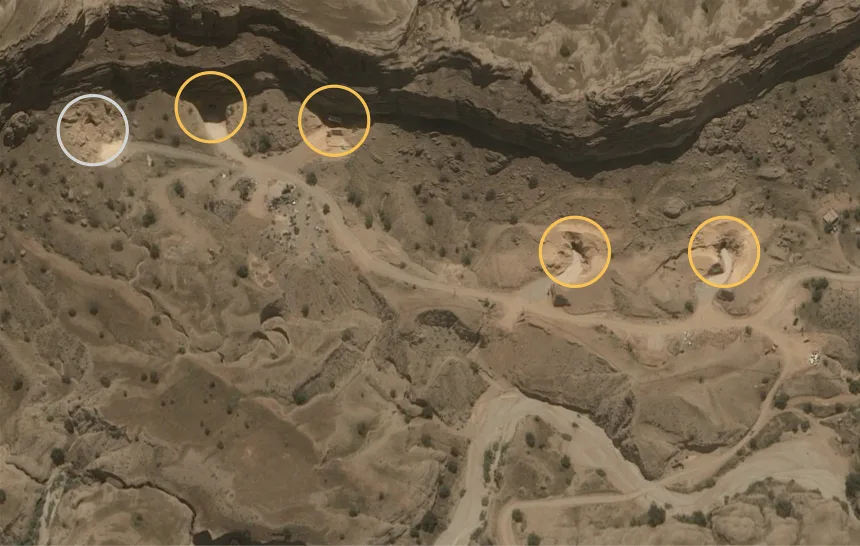
Yet war is rarely measured solely by what happens during active combat. The true test of a military campaign often comes after the bombs stop falling. Satellite imagery now indicates that Iran has reopened the majority of the tunnel entrances damaged during the conflict and repaired much of the supporting infrastructure around its underground missile bases. The country’s ability to restore these facilities in just a matter of weeks demonstrates a level of resilience that many observers may have underestimated.
- JUSTICE & TRUTH: The Long Road to Unlocking the Epstein Files
- Take It Down Act – A Major Step Forward in Protecting Digital Privacy and Dignity
- USA: Senate Battle Lines Drawn – GOP’s Big Bet, Voter Anger, and the Shadow of War
- Donald Trump & Xi Jinping Shake Hands as World Holds Its Breath: “We Don’t Need Another War,” Says Trump
- Cole Allen, Suspect in Alleged Donald Trump Assassination Attempt at Washington Gala, Agrees to Remain in Custody
- Trump Cancels Envoys’ Pakistan Trip for Iran Peace Mission as Israel Escalates Lebanon Strikes Amid Stalled Talks
- Donald Trump Calls Nominee Dr. Erica Schwartz a “STAR” as She’s Tapped for CDC Chief
The situation highlights a fundamental challenge facing modern military strategy. Destroying infrastructure is often easier than eliminating the political will, manpower, and technical expertise required to rebuild it. As long as Iran retains trained missile crews, mobile launchers, and substantial stockpiles of missiles, the threat remains alive even if production facilities have been damaged or temporarily disrupted.
Military analysts have long warned that underground missile networks are among the most difficult targets to neutralize permanently. Unlike conventional military bases, hardened facilities are specifically designed to survive bombardment. Even when entrances are blocked and roads are cratered, determined operators can often restore access over time. The Iranian case appears to reinforce that reality.
The broader strategic implications extend far beyond Iran and Israel. For decades, the United States has relied heavily on air power as a means of achieving military objectives while minimizing the risks associated with large-scale ground operations. From Iraq to Libya and now Iran, precision strikes have demonstrated impressive tactical effectiveness. However, tactical effectiveness does not automatically produce strategic victory.
The recent findings suggest that air campaigns alone may not be sufficient to permanently eliminate deeply entrenched military capabilities. Bombs can destroy structures, but they cannot easily erase technical knowledge, organizational experience, or national determination. History repeatedly shows that countries under pressure often adapt, rebuild, and find alternative ways to sustain their military programs.
Another concern is the possibility that future confrontations could become even more dangerous. If hostilities resume, Iran may enter the conflict with valuable lessons learned from the recent campaign. The country now has firsthand experience in repairing damaged facilities under wartime conditions, relocating assets, and maintaining missile operations despite sustained attacks. Such lessons could make future suppression efforts more difficult and costly.
At the same time, policymakers must avoid drawing simplistic conclusions. The strikes were not without effect. Iran’s missile operations were disrupted, launch rates were reduced, and military resources were forced into costly recovery efforts. Those outcomes undoubtedly provided strategic benefits to Israel and its allies. The question is whether those benefits justify the long-term costs and whether they can be sustained without a broader political solution.
The tentative agreement involving the Strait of Hormuz offers a reminder that diplomacy remains an essential component of regional stability. Military force can create leverage and shape conditions on the battlefield, but lasting security often depends on political agreements that address the underlying causes of conflict. Without such agreements, military actions risk becoming temporary interruptions rather than permanent solutions.
The Iranian missile recovery effort also serves as a warning about the dangers of overestimating what military technology can achieve. Precision-guided munitions, advanced surveillance systems, and sophisticated intelligence capabilities have transformed warfare, but they have not eliminated the enduring realities of conflict. Nations with sufficient resources, determination, and strategic depth can often absorb significant punishment and continue fighting.
Ultimately, the debate surrounding Iran’s missile arsenal is not simply about tunnels, launchers, or stockpiles. It is about the broader question of what constitutes success in war. If a military campaign destroys infrastructure but leaves the enemy capable of rebuilding and rearming, can it truly be considered a lasting victory? The answer depends not only on battlefield achievements but also on whether those achievements support a realistic and attainable political end state.
As tensions continue to simmer across the Middle East, the recovery of Iran’s missile network stands as a powerful reminder that military victories are often temporary unless reinforced by effective diplomacy, clear strategic objectives, and a sustainable vision for peace. Without those elements, even the most impressive battlefield accomplishments may ultimately prove fleeting, while the cycle of confrontation continues.
Burying the Entrances Is Not Destroying the Threat: The Dangerous Illusion of Iran’s Missile Defeat
President Donald Trump and his allies have promoted a narrative of overwhelming success against Iran’s missile program. The message was simple: bomb the tunnels, destroy the launchers, cripple the factories, and Iran’s ability to threaten the region would collapse. It was a powerful political slogan. It was also a dangerous oversimplification.
The reality emerging from military assessments and expert analysis is far less flattering. Despite thousands of strikes, despite the destruction of roads, tunnel entrances, launch sites, and manufacturing facilities, Iran’s missile force remains very much alive. The reason is simple: Tehran spent more than two decades preparing for exactly this scenario.
Iran did not build its missile program overnight. It did not hide its most valuable weapons in exposed warehouses waiting to be bombed. Instead, it invested billions of dollars constructing a vast underground network buried beneath mountains and layers of rock, specifically designed to survive American and Israeli airpower. These facilities were created with one objective in mind ensuring that Iran could continue fighting even after suffering devastating attacks.
The strikes carried out by the United States and Israel undoubtedly inflicted serious damage. Tunnel entrances were sealed under tons of rubble. Roads leading to missile complexes were shattered. Missile launchers positioned outside protective shelters were destroyed. Factories producing components and rocket fuel were targeted. But destroying access points is not the same as destroying what lies deep underground.
Military planners understand this distinction. A buried tunnel entrance may prevent immediate access, but it does not automatically eliminate the missiles stored hundreds of meters beneath the earth. Reports suggesting that Iran may still possess around 1,000 missiles hidden inside these hardened facilities should serve as a wake-up call to anyone claiming total victory.
The most striking contradiction comes from the triumphalist statements made after the ceasefire. Claims that Iran has “no defense industry” and no ability to recover ignore the historical resilience of the Iranian state. Nations under pressure often adapt rather than collapse. History has repeatedly shown that bombing campaigns can destroy infrastructure, but they rarely erase knowledge, expertise, or determination.
What makes the situation even more concerning is the illusion of success. Political leaders often celebrate military operations as decisive victories because victory is easier to sell than uncertainty. Yet wars are not won through press releases. They are won through measurable strategic outcomes. If Iran still retains a significant missile stockpile and the technical capacity to rebuild production over time, then the goal of completely degrading its missile capability remains unfulfilled.
The deeper issue is that air power alone has limits. Modern militaries possess astonishing technology, but even the most advanced bombs struggle against deeply buried and heavily fortified facilities. The notion that a few weeks of strikes could erase twenty years of preparation was always optimistic at best and misleading at worst.
Iran’s missile network was designed to absorb punishment and survive. The current evidence suggests that it has done exactly that.
This does not mean Iran emerged unscathed. It suffered substantial losses. Its logistics networks have been disrupted. Its manufacturing base has been damaged. Recovery will require time, resources, and effort. But that is very different from the picture of total destruction painted by political rhetoric.
The uncomfortable truth is that the war exposed not only the vulnerabilities of Iran’s missile program but also the limitations of American and Israeli military power. Despite overwhelming technological superiority, they could not simply bomb away a strategic capability that Tehran spent decades building underground.
For all the declarations of victory, Iran’s missiles remain buried beneath the mountains — waiting, surviving, and reminding the world that reality often proves more stubborn than political promises.
Bulldozers Beat Bombs: Iran’s Rapid Rebuild Exposes Costly, Failed US Strategy
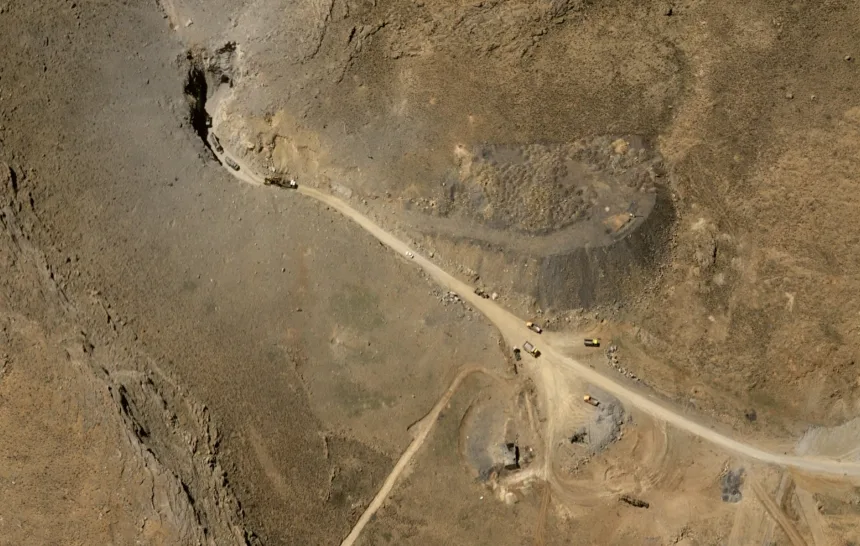
The United States and Israel poured thousands of high-tech, multimillion-dollar munitions into burying Iran’s missile network, blowing craters deep into tunnel entrances and turning access roads into rubble. They counted this as a victory — a masterclass in precision warfare meant to cripple Tehran’s ability to strike back for years, if not decades. But what is happening right now across Iranian military sites is a humiliating, expensive lesson in failure: bulldozers, dump trucks, and front-end loaders are undoing every single “success” they claimed.
Satellite imagery tells the brutal, undeniable truth. Outside Isfahan, at least 18 craters pocked the ground around just two tunnel entrances — proof of how much firepower was wasted to seal them off. Today, those entrances are wide open, roads repaved, rubble cleared away. At another base near Khomeyn, a fleet of 10 construction vehicles worked openly to dig out blocked access points, turning weeks of airstrikes into nothing more than a temporary inconvenience. Even production facilities targeted repeatedly — as far back as last June and again during the Twelve-Day War are already being rebuilt, with drone lines restarted and launchers replaced faster than they can be destroyed.
This is not resilience; it is a complete exposure of a broken approach. The math here is damning: the West spends billions on advanced interceptors and precision ordnance, stocks of which are now dangerously low. Iran counters with cheap, basic earthmoving equipment and unskilled labor. As analyst Kadyshev bluntly put it, “You have to use very sophisticated, very expensive weapons to do this kind of damage, and the recovery is very low tech it’s just bulldozers.”
Worse still, while Washington and Tel Aviv celebrate temporary disruptions, Iran is fully restoring a massive arsenal that remains vastly underestimated. Every tunnel reopened, every road repaved, every factory rebuilt means the threat is not just back — it is stronger, because Iran now knows exactly how to survive and recover from whatever bombs are dropped.
This isn’t warfare; it is throwing money and military resources into a hole, only to watch Iran fill it back in with dirt and concrete. The strategy was flawed from the start: you can bomb infrastructure, but you cannot bomb away determination, or technical knowledge, or the will to rebuild. Right now, the scoreboard is clear: high-tech bombs have been outmatched by cheap construction gear, and the so-called victory over Iran’s missile program is nothing but a dangerous illusion.
aptikons
- PAMPANGA Room Assignments CLE August 2026 Criminology Licensure Exam
- DUMAGUETE Room Assignment CLE August 2026 Criminology Licensure Exam
- BACOLOD Room Assignments CLE August 2026 Criminology Licensure Exam
- Manila – Conditioned Room Assignment CLE August 2026 Criminology Licensure Exam
- CEBU Room Assignments CLE August 2026 Criminology Licensure Exam