The case surrounding Jeffrey Epstein and Ghislaine Maxwell represents one of the most persistent and controversial chapters in modern legal and public life. For years, the existence of extensive records detailing investigations into their criminal activities has fueled debate, speculation, and demands for full disclosure. These files consist of travel records, communications, and personal accounts gathered during probes into a global sex trafficking operation. Interest intensified sharply following Epstein’s death in 2019, an event that left many questions unanswered and deepened calls for transparency regarding the full scope of the network and those connected to it.
The Epstein Files: Transparency, Redactions, and Unresolved Questions
The Epstein files represent one of the most extensive and controversial collections of documents in modern legal history, comprising thousands of pages gathered during investigations into the sex trafficking operations of Jeffrey Epstein and Ghislaine Maxwell. Containing travel records, communications, and personal logs, these materials have remained at the center of public debate ever since Epstein’s death in 2019 halted his trial and left many questions unanswered. What began as a search for justice for victims has evolved into a complex discussion about accountability, the limits of government transparency, and the relationships between powerful individuals and a criminal network.
A major turning point came in late 2025, when emails recovered from Epstein’s estate suggested that former and current U.S. President Donald Trump may have been aware of Epstein’s illegal activities—allegations he has consistently denied. This revelation provided the momentum for legislative action, resulting in the near-unanimous passage of the Epstein Files Transparency Act. With a vote of 427–1 in the House, followed by approval in the Senate and a presidential signature, lawmakers signaled strong public and political demand for full disclosure. The message was clear: the public had a right to see the evidence held by the state, especially given the gravity of the crimes and the high-profile names mentioned over the years.
However, the actual release of documents told a different story. The first major disclosure in December 2025 included previously unseen photographs of figures such as former President Bill Clinton and various celebrities, offering glimpses into Epstein’s social circle. Yet, the vast majority of the content was heavily redacted, meaning key details, names, and context were blacked out entirely. This prompted immediate criticism from both sides of the political aisle as well as from survivors of the abuse, who argued that partial disclosure falls short of true transparency. For victims, every redacted line represents a missing piece of the truth they have waited years to uncover; for lawmakers and citizens, it raised concerns about whether information was being hidden for legitimate legal reasons or to protect powerful individuals from scrutiny.
Subsequent releases added further layers to the picture. Around 30,000 pages revealed references to President Trump traveling on Epstein’s private aircraft during the 1990s, facts that add to the public’s understanding of their association but still leave unclear exactly what was known or when. By the final release in January 2026, which included roughly three million pages and was declared the last major disclosure, the scale of available information had grown massively, but so had the number of unresolved questions. The documents show how broad Epstein’s network was, how he moved between elite circles, and how carefully he documented his interactions—but they do not yet provide a complete, unobscured account of who knew what, who participated, and who enabled his crimes.
This process highlights a fundamental tension in cases of this magnitude. There is a legal and ethical duty to protect ongoing investigations, national security, and the privacy of individuals who may be named but not implicated in wrongdoing. At the same time, withholding information fuels suspicion, conspiracy theories, and a growing sense that justice is being applied differently depending on a person’s status. For survivors, the goal is not just the release of papers, but a full accounting of the system that allowed Epstein to operate for so long without being stopped.
Ultimately, the Epstein files are more than just records of one man’s crimes. They are a test of how society handles truth when it intersects with power. While the disclosures so far have revealed important details, the heavy use of redactions and the piecemeal nature of releases mean the full picture remains out of view. Until all relevant information is made available in full and verified, the conversation will likely continue—not just about what the files contain, but about what they represent: the need for a system where influence does not override accountability, and where transparency serves as the foundation of public trust.
The Fall from Grace: How Ties to Epstein Are Destroying Reputations and Careers
For years, the standard defense for anyone linked to Jeffrey Epstein was simple: being photographed with him, exchanging messages, or appearing in his records did not amount to a crime. For the longest time, the price of association was little more than public embarrassment or uncomfortable questions. That era is now definitively over. Since the massive release of documents in late 2025 and early 2026, the landscape has shifted entirely. What began as a scandal about sex trafficking has evolved into a historic reckoning, where proximity to Epstein—regardless of legal guilt—has become a career-ending liability for powerful figures across politics, business, academia, royalty, and culture. The list of prominent individuals brought down by these disclosures is long, international, and devastating, proving that reputations built over decades can crumble in an instant when connections to a criminal network are laid bare.
The damage respects no border and no industry. In the corporate world, the fallout has been swift and severe. Thomas Pritzker, executive chair of Hyatt Hotels, stepped down after it was revealed he maintained contact with Epstein even after Epstein’s first criminal conviction, admitting he failed in his duty to lead responsibly. Brad Karp, who had led the elite law firm Paul Weiss for 18 years, resigned abruptly after files showed he leveraged his friendship with Epstein to secure favors for his family and described social events with the financier as unforgettable. Kathryn Ruemmler, former White House counsel under President Obama and later top lawyer at Goldman Sachs, saw her career derailed after appearing over 10,000 times in documents, exchanging messages calling him “Uncle Jeffrey,” accepting luxury gifts, and providing legal guidance to help him manage questions about his personal life. Similarly, marketing mogul Casey Wasserman is selling his company stake and fighting to keep his role in the 2028 Olympics after messages with Ghislaine Maxwell exposed a close and inappropriate relationship. Even the wellness industry was touched, as prominent doctor and CBS contributor Peter Attia walked away from major roles when it was revealed he exchanged crude emails, arranged medical services, and expressed deep fondness for a man he claims he knew nothing bad about.
In the political sphere, the consequences are even graver, moving beyond resignation to criminal investigation and arrest. Norway’s former Prime Minister Thorbjørn Jagland faces charges of gross corruption, with authorities suspecting he accepted financial benefits in exchange for influence while running the Council of Europe. The evidence shows he actively tried to connect Epstein to high-level foreign officials, revealing how the financier used relationships to gain access to global power centers. Fellow Norwegian diplomat Mona Juul resigned and is under investigation after it was disclosed Epstein left her family $10 million in his will, a sum that raises serious questions about the true nature of their connection. In Slovakia, national security adviser Miroslav Lajčák was forced out over emails containing disturbing comments about sharing young women with Epstein, revealing a mindset that is incompatible with public trust. In France, respected cultural figure Jack Lang left his post at the Arab World Institute after video evidence placed him alongside Epstein at the Louvre, a symbol of prestige now tarnished by association.
Perhaps nowhere has the collapse been more dramatic or consequential than in the United Kingdom. Peter Mandelson, one of the country’s most influential politicians and former ambassador to the United States, was fired, forced out of his party and the House of Lords, and ultimately arrested. Documents showed he called Epstein his “best pal,” leaked sensitive information, and potentially profited from their bond. His fall took down others around him, including Prime Minister Keir Starmer’s chief of staff, who resigned for ignoring known ties when recommending Mandelson for high office. Most spectacular of all is the destruction of Prince Andrew. Once a working royal and trade envoy, he has lost his titles, his status, and now faces arrest allegations of misusing state power to supply Epstein with confidential documents. His case is the ultimate example of how far the tentacles of this network reached, and how completely the protection of privilege has evaporated.
Even the world of academia and public service has not been spared. Lawrence Summers, a former Treasury Secretary and president of Harvard, has been forced to leave every major role he held. Newly released emails showed him seeking personal advice from Epstein long after his crimes were public knowledge, and even his wife’s public television show was canceled due to Epstein’s financial involvement. George Mitchell, celebrated statesman and architect of the Northern Ireland peace agreement, has seen his legacy rewritten. Honors and institutions bearing his name are being removed or renamed, and his decades-long friendship—once seen as harmless—is now viewed as a stain on a distinguished career. His warm tribute describing Epstein as a “blessing” now reads as a tragic testament to misplaced trust.
These downfalls send a clear and powerful message. Society is no longer willing to separate professional achievement from moral character. It is no longer acceptable to claim ignorance when the person you are dealing with is publicly known as a predator. The documents have revealed that for many powerful people, Jeffrey Epstein was not just an acquaintance; he was a benefactor, a confidant, a bridge to other powerful people, and a source of favors. The fact that so many continued to stand by him, support him, and interact with him even after he was convicted of serious crimes suggests a level of moral blindness or indifference that society will no longer tolerate.
This reckoning is about more than just the law. It is about the unwritten rules of power, influence, and accountability. For too long, the wealthy and connected operated in a bubble where normal standards did not apply, where friendship with a criminal was acceptable as long as it was useful. The collapse of these careers proves that the bubble has burst. The release of these files has served as a mirror, reflecting uncomfortable truths about how power operates and who gets protected. In the end, the damage done to these reputations is not just the result of what Epstein did, but of what his associates chose to overlook, accept, and enable. History will remember not just the crimes, but the long list of distinguished names that fell because they chose to stand beside him.
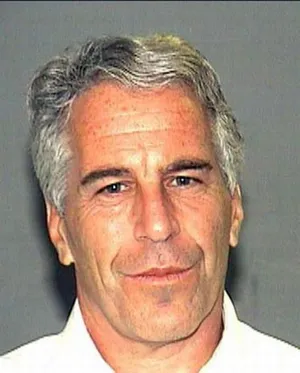
Developments took a significant turn in November 2025. Three emails recovered from Epstein’s estate emerged, suggesting that former and current United States President Donald Trump had prior awareness of the criminal practices involved. This revelation stood in contrast to long-standing statements from the president denying any knowledge of wrongdoing by Epstein or his associates. The public reaction was swift, prompting legislative action. On November 18, the House of Representatives voted overwhelmingly, by a margin of 427 to 1, to approve the Epstein Files Transparency Act. The measure subsequently passed the Senate and was signed into law, establishing a formal mandate for the government to make these records accessible to the public.
The first major release occurred on December 19, 2025. In compliance with the new law, the Department of Justice made hundreds of thousands of documents available. While the release included previously unseen photographs featuring former President Bill Clinton and various public figures, much of the content was obscured or redacted. This approach drew sharp criticism from multiple sides of the political aisle, as well as from survivors of Epstein’s abuse. Many argued that heavy editing defeated the purpose of the legislation, leaving the public with more questions than answers and failing to provide the clarity promised.
Further disclosures followed. A batch of roughly 30,000 pages revealed references indicating that President Trump had traveled on Epstein’s private aircraft during the 1990s, adding another layer to the ongoing discussion about associations and awareness. The process culminated on January 30, 2026, when the Justice Department released approximately three million additional pages, describing this as the final major installment of materials to be made public.
This sequence of events highlights the complex balance between the public’s right to know, legal constraints, and the search for accountability. Supporters of full disclosure argue that complete access is essential for justice, particularly for victims seeking acknowledgment of what happened and who was involved. They maintain that transparency acts as a safeguard against powerful individuals avoiding consequences and helps restore trust in institutions. Opponents of broad release, however, often cite privacy concerns, national security issues, and the risk of misinterpreting incomplete or taken-out-of-context information.
As the last documents are now published, the conversation shifts from access to interpretation. The materials cover decades of interactions involving some of the world’s most recognizable people. While some information confirms existing reports, other parts remain open to debate or remain unclear due to redactions. Ultimately, the release of the Epstein Files reflects a struggle common to democratic societies: the effort to uncover truth while navigating legal limits and competing interests. Whether these records will settle the controversies or spark further inquiries remains to be seen, but the process itself underscores how seriously the public and lawmakers view the need for openness in matters of significant public interest.
The Epstein Files: Transparency, Limits, and Unanswered Questions
The release of documents related to Jeffrey Epstein marks one of the most anticipated and debated transparency efforts in recent United States history. Triggered by the Epstein Files Transparency Act, the process began officially on December 19, 2025, when the Department of Justice made hundreds of thousands of files public. This first disclosure immediately captured global attention, notably through previously unseen photographs featuring former President Bill Clinton and various public figures. Yet, the reaction was far from celebratory. Lawmakers from both major political parties, alongside survivors of Epstein’s abuse, voiced strong criticism because large portions of the material remained heavily blacked out. Many observers felt that the extensive redactions obscured crucial details and fell short of the full accountability the legislation promised.
Subsequent releases added further layers to the public record and renewed controversy. A batch of roughly 30,000 pages brought former President Donald Trump into the conversation, containing references to his travel aboard Epstein’s private aircraft during the 1990s. Then, on January 30, 2026, the scope expanded dramatically with the publication of three million additional documents. Each new release intensified public scrutiny and fueled speculation about the full extent of connections between Epstein, powerful individuals, and institutions.
However, it is essential to understand that transparency does not mean total disclosure. Authorities have established clear boundaries regarding what information will remain permanently sealed or withheld. These restrictions are rooted in legal, ethical, and safety considerations. First, details that could identify survivors are protected, a necessary measure to safeguard the privacy and well-being of victims who have already endured profound trauma. Second, material touching on national security is kept confidential to prevent harm to public safety or government operations. Third, documents related to ongoing investigations remain out of public view, as premature disclosure could compromise legal processes or endanger witnesses. Finally, any content containing explicit depictions of harm inflicted on children is excluded entirely, both to comply with the law and to avoid the distribution of material that exploits or revictimizes minors.
The debate surrounding these files highlights a persistent tension. On one side is the public demand for full truth and accountability, driven by concerns about influence, power, and potential cover-ups. On the other side are the legal and moral obligations to protect vulnerable individuals, preserve national interests, and uphold the integrity of the justice system. Critics argue that the heavy redactions and withheld information hinder the ability to understand the complete story and ensure justice is fully served. Supporters of the government’s approach maintain that unchecked disclosure would cause irreversible harm and violate fundamental rights.
As more information becomes available or remains sealed, the Epstein files continue to serve as a complex case study. They raise important questions about how societies balance the right to know with the duty to protect. While the releases so far have revealed new details and revived discussions, they have also made it clear that the complete picture may never be fully visible to the public. What remains certain is that the conversation will persist, shaped by what is revealed, what is kept hidden, and the ongoing pursuit of justice for those affected.
Which six individuals were identified in the newly unsealed Epstein documents?
The release of previously redacted sections of documents related to Jeffrey Epstein has once again thrust this controversial figure into global discussion. When U.S. Representative Ro Khanna placed the names of six individuals into the congressional record earlier this year, it sparked immediate public curiosity and concern. It is essential to emphasize from the outset that inclusion in these files does not constitute proof of illegal activity or moral fault. These names appear in records associated with a convicted sex offender, but the nature, extent, and purpose of their connections vary widely, and much of the context remains unclear or incomplete. Understanding who these individuals are and what is currently known about their associations helps frame the broader conversation about transparency, accountability, and the limits of available information.
Among the six individuals named, Les Wexner is the most recognizable and has the best-documented history with Epstein. As a prominent billionaire and retail leader, Wexner employed Epstein to manage his personal finances for many years. Experts have noted that this professional relationship served as one of the primary foundations upon which Epstein built his own financial power and social influence. This connection has been the subject of previous investigations and reports, as it offers insight into how Epstein operated within elite circles and leveraged trust to advance his standing. Unlike others on the list, the link here is defined by a formal working arrangement, though questions persist regarding how much Wexner knew or suspected about Epstein’s illegal activities during their long association.
The second person identified, Sultan Ahmed bin Sulayem, brings a different dimension to the revelations. A major business leader based in Dubai and closely connected to high-profile global industries, his appearance is tied to communications that referenced disturbing material described as a “torture video.” The disclosure prompted immediate reactions, including leadership changes at DP World, the large logistics firm he formerly headed. While the existence of such correspondence raises serious concerns, the content of these messages, the intent behind them, and bin Sulayem’s specific role or knowledge have not been fully explained or verified. This case illustrates how the files sometimes contain references to alarming topics without providing the full evidence or narrative required to draw firm conclusions.
The remaining four names present a stark contrast to the first two. Nicola Caputa is tentatively identified as possibly being an Italian politician, but this identification is not confirmed, and no details regarding any meetings, transactions, or communications have been established. For Salvatore Nuara, Zurab Mikeladze, and Leonic Leonov, there is currently no verifiable information available to explain who they are, how their names entered the records, or what kind of interaction, if any, they had with Epstein. They remain essentially unknown figures in this context, highlighting a significant challenge in interpreting the documents. Being named in files related to Epstein could stem from anything from a casual introduction or business inquiry to something more significant, yet without further data, speculation remains just that speculation.
The broader significance of these disclosures lies not only in the specific individuals named but also in what they represent about the larger investigation. The files show the wide range of people who crossed paths with Epstein, from powerful industry leaders to individuals whose identities and roles are yet to be clarified. It also highlights the complexity of transparency itself. While making these records public serves the public interest in understanding the scope of Epstein’s network, releasing names without accompanying context or verified facts carries risks. Reputations can be affected unfairly, and the focus may shift toward individuals when the ultimate goal is to uncover systemic failures or patterns of behavior that enabled abuse.
As discussions continue, the central issue remains the search for truth and justice for the victims. Every name revealed is a piece of a larger puzzle, but each piece must be examined carefully and responsibly. It is important to distinguish between what is proven, what is alleged, and what is simply unknown. Further investigation, verification, and context will be necessary to understand the true meaning behind these entries. Until then, the list serves as a reminder of how complex networks operate and of the ongoing need for thorough, fair, and evidence-based inquiry into the full extent of Epstein’s activities and the people connected to him.