Is Prince Harry truly happy? That is the question most frequently asked of royal commentator Emily Andrews, and the answer, she concludes with clarity and compassion, is no. Despite a life of luxury, freedom, and family in California, the Duke of Sussex appears lost and searching for something he will never find trapped between the royal life he walked away from and the new life he chose, belonging fully to neither.
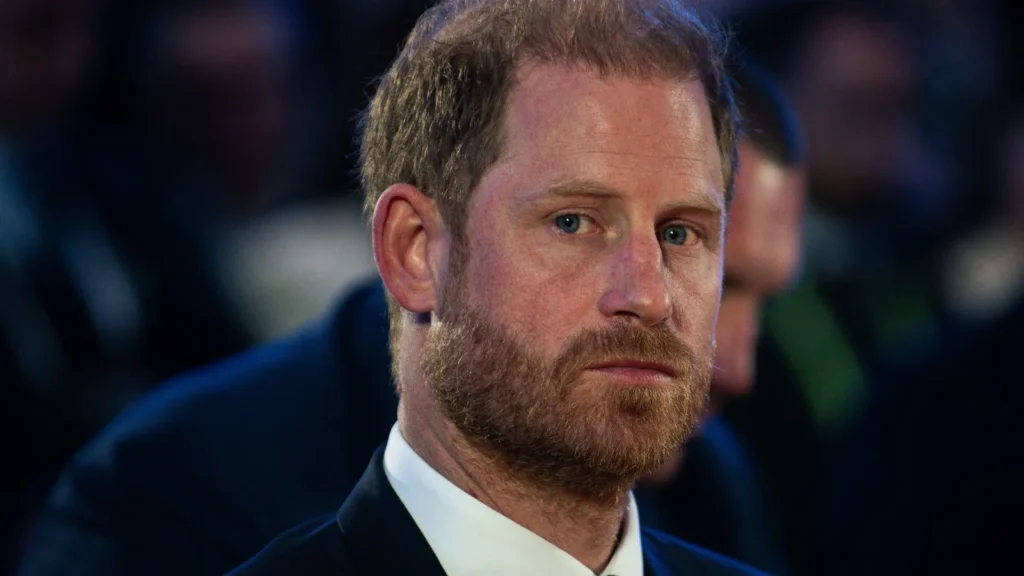
Is Prince Harry truly happy? It is the question most frequently asked of royal commentator Emily Andrews, and perhaps the most difficult one to answer. On paper, the Duke of Sussex appears to possess every ingredient of a fulfilled life: a magnificent home in the sun-drenched hills of Montecito, California; freedom from the relentless constraints and heavy ceremonial duties that once defined his daily existence; a beloved wife, Meghan Markle, and two adored children, Prince Archie and Princess Lilibet. Yet, as anyone who has observed him closely in the years since his departure from royal life can see, something fundamental remains missing. For nearly six years since that momentous departure widely known as “Megxit,” Harry has appeared, time and again, angry, stressed, unsettled, and profoundly emotional. He is a man visibly in search of something he cannot quite name, and which, according to those who study him most closely, he is unlikely ever to find.
The most recent chapter in this unfolding story played out during his visit to the United Kingdom last month. It was a journey intended, in part, to celebrate the Invictus Games, the noble initiative he founded to support wounded and veteran service personnel, yet one that descended almost immediately into disappointment and public setback. Within moments of his arrival, Harry learned that he had been comprehensively defeated in his high-profile privacy lawsuit against Associated Newspapers Limited, publishers of the Daily Mail. The ruling, delivered by Justice Matthew Nicklin after an eleven-week trial, dismissed every claim Harry and his co-claimants, including Sir Elton John and actress Elizabeth Hurley, had brought.
READ OTHER ARTICLES:
- Prince Harry’s Endless Search for Happiness Raises Brutal Questions About His Life
- King Charles Touched by Young Fan’s Heartfelt Gift as He Continues Royal Duties
- Kate Middleton Reclaims Tatler’s Best-Dressed Crown for 2026, Meghan Markle Left Off Prestigious List
- Queen Camilla’s Presence During Prince Harry’s Meeting With King Charles Reportedly Played a Key Role
- Prince William and Kate Middleton Move On From Harry and Meghan Drama, Royal Expert Claims
- Princess Beatrice, Edoardo Face Marriage Rumours Amid Renewed Royal Family Scrutiny Before Anniversary
The court found no credible evidence that the newspaper had obtained information through unlawful means. The financial consequences alone are staggering. Associated Newspapers has indicated it will seek costs estimated at approximately £35 million, a sum that could potentially leave Harry facing bankruptcy and yet another battle he cannot easily win. Appearing shortly afterward onstage at what should have been a triumphant Invictus event, he looked not like a celebrated founder returning home, but like a man who had been dealt a crushing blow. He appeared nervous, stunned, and visibly shaken by the scale of his defeat.
Even the prospect of family reunion, the very thing that appears to draw him back to Britain time and again, became tangled in confusion, conflict, and last-minute uncertainty. There was public drama over whether he would come at all, turning entirely upon the question of security. Harry insisted he could not travel safely without the armed police protection he had enjoyed as a working royal, protection no longer automatically afforded to someone who had stepped back from public duty. For days, the public was told his family would not join him in Britain because adequate security could not be guaranteed. Then, abruptly, it was announced that they would come after all. Yet when they arrived, they remained entirely out of sight, proving conclusively that it was indeed possible for his wife and children to visit the United Kingdom safely, despite Harry’s repeated and fervent protestations that it was not. The contradiction was unmistakable, and the optics were deeply damaging.
Even when he finally travelled to Highgrove House for that long-awaited private tea with his father, King Charles III, and his children, a moment he had reportedly longed for and anticipated with such hope, Harry appeared subdued, flat, and far from joyful. Those who saw him noted little of the warmth or relief one might expect from such a reunion. Instead, he seemed weighed down by legal defeat, by financial anxiety, and by the widening rift between himself and the land he left yet cannot fully leave behind.
Perhaps the most revealing moment of all came during his appearance on former England rugby player Joe Marler’s podcast, recorded during the same visit. When asked to state his occupation, Harry offered a list that spoke volumes: “Full-time dad. British Army veteran. Prince of England. Duke.” Setting aside the historical inaccuracy, since there has been no “Prince of England” since the Act of Union in 1707, what stands out is the yearning, the uncertainty, and the desperate reaching backward. He described himself in terms that belong to different chapters of his life, as if he were attempting to stitch together an identity from pieces that no longer fit. He is a father, yes, and an Army veteran, undeniably. That part of him remains perhaps the most solid ground he stands upon. But “Prince of England”? That title, that role, that place in the order of things, he walked away from it. And yet, he still names it. He still claims it. He still reaches for it, as if it were a coat he had hung upon a door and could simply pick up and wear again, whenever the California sunshine grew too cold.
That, ultimately, is the tragedy of Harry’s situation. He appears to be a man without a purpose, caught perpetually between two worlds and belonging fully to neither. He chose freedom from royal duty, yet he continues to wage war upon the very institutions, the government, the press, the judiciary, and the monarchy itself, that once gave his life structure, definition, and meaning. He misses his family, his friends, and the familiarity of Britain. Yet he has burned the bridges that would allow him to return comfortably or reintegrate smoothly. He wants the status, the deference, the security, and the sense of purpose, but without the obligations, the constraints, the public scrutiny, and the duty that come inextricably attached to them. He is searching for something that does not exist: a way to be both inside and outside, to be free and yet protected, to walk away and still be welcomed back as if he had never left.
Reports have suggested that the Duke and Duchess of Sussex are even considering moving back to the United Kingdom, or at the very least spending significantly more time there. If true, it speaks to a restlessness in Harry’s spirit that no amount of sunshine, luxury, or distance can cure. He is homesick, not merely for a place, but for a version of himself that no longer exists, for a role he surrendered, and for a relationship with his family and his country that has been strained almost to breaking by his own choices.
And so the question returns, is Prince Harry truly happy? Royal expert Emily Andrews, whose insight guides this assessment, answers with clarity and compassion. She does not believe he is. More poignantly still, she observes that Harry is searching for something he is simply not going to find, and for that reason, she fears he never truly will be happy. Happiness, after all, requires a sense of belonging, an acceptance of one’s path, and peace with the choices one has made. Until Harry finds a way to reconcile the life he chose with the life he left behind, until he builds a purpose that does not depend upon titles he renounced or battles he has already lost, he will remain suspended between worlds, searching for a satisfaction that will always recede just beyond his reach.
It is a heartbreaking realization that the son of Princess Diana, a man who has known great privilege and great sorrow, who has fought for noble causes and built a family he adores, should remain so unmoored and so uncertain of who he is and where he belongs. Until he finds peace within himself rather than in the approval of others, in the work of his own hands rather than in the titles of his ancestors, and in the life he has chosen rather than the one he left behind, the search will continue. And until then, tragically, the happiness he seeks will remain the one thing he cannot quite bring himself to grasp.
- UK Steps Up Emergency Plans as Iran War Threatens Food and Fuel Supplies

- UK Sees Wave of Anti-Immigrant Protests Following Suspect’s Arrest in Belfast Stabbing

- Security Dispute Puts Prince Harry’s Planned UK Reunion With Meghan and Children in Doubt
- Queen Camilla’s Presence During Prince Harry’s Meeting With King Charles Reportedly Played a Key Role
- Princess Beatrice, Edoardo Face Marriage Rumours Amid Renewed Royal Family Scrutiny Before Anniversary
- Prince William and Kate Middleton Move On From Harry and Meghan Drama, Royal Expert Claims