The horrific knife attack in Northern Ireland deserves condemnation. A man was brutally wounded, a community was left shaken, and authorities must ensure that justice is swift and uncompromising. Violent crime is violent crime, regardless of who commits it.
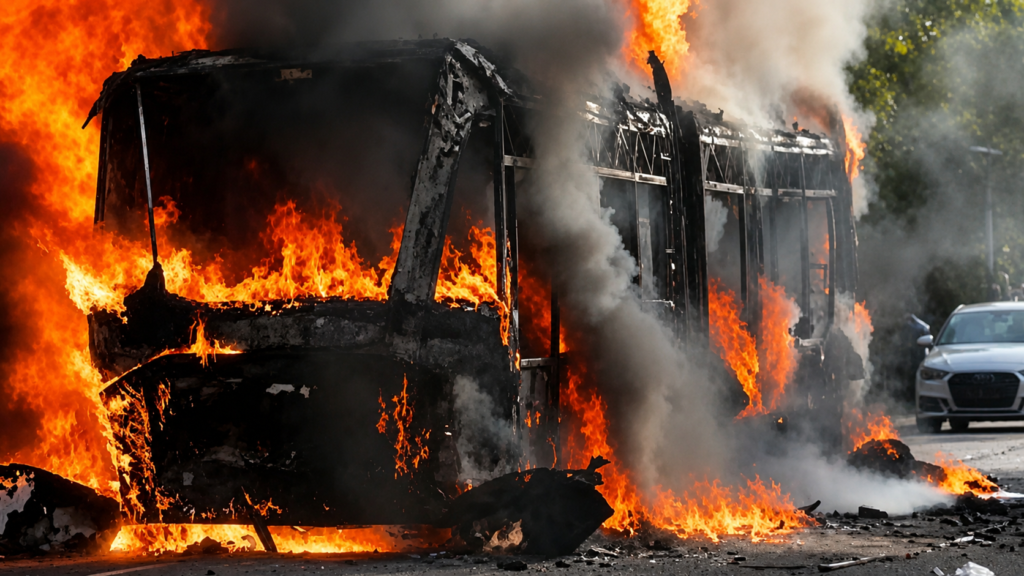
But what followed on the streets of Belfast should alarm every defender of law and order. Within hours, anger over the attack was transformed into something far more dangerous. Houses were burned. Vehicles were torched. Families were terrorized. Neighborhoods became battlegrounds. What began as outrage over a violent crime quickly descended into mob rule.
This is the problem with modern politics and social media. Facts become secondary. Due process becomes irrelevant. A criminal act committed by an individual is immediately weaponized by activists, agitators, and opportunists seeking to inflame public anger for their own agendas.
The result is predictable: innocent people become targets.
No civilized society can claim to uphold justice while allowing mobs to decide who deserves punishment. The moment protesters start burning homes and threatening families, they cease to be defenders of public safety and become participants in the very lawlessness they claim to oppose.
The images emerging from Belfast are disturbing not only because of the violence itself but because they reveal how quickly fear can be manipulated. Social media outrage has become a political accelerant, transforming isolated incidents into collective blame and turning legitimate public concerns into spectacles of intimidation.
- Iran Unblocks Most Underground Missile Sites, Poised for More Long-Range Strikes; Experts Flag Limits of US Bombing Strategy
- JUSTICE & TRUTH: The Long Road to Unlocking the Epstein Files
- Take It Down Act – A Major Step Forward in Protecting Digital Privacy and Dignity
- USA: Senate Battle Lines Drawn – GOP’s Big Bet, Voter Anger, and the Shadow of War
- Donald Trump & Xi Jinping Shake Hands as World Holds Its Breath: “We Don’t Need Another War,” Says Trump
- Cole Allen, Suspect in Alleged Donald Trump Assassination Attempt at Washington Gala, Agrees to Remain in Custody
Governments across Europe have spent years refusing to confront difficult questions surrounding immigration, integration, crime, and social cohesion. Citizens who raise concerns are often dismissed. Critics are frequently labeled. Public frustration festers. Then, when a shocking crime occurs, that frustration explodes.
But there is a difference between demanding accountability and embracing vigilantism. A government that cannot secure its borders will lose public confidence. A government that cannot protect its citizens from crime will face growing anger. Yet a society that responds by attacking innocent people destroys its own moral authority.
The lesson from Belfast is not that violence is justified. The lesson is that political leaders ignored mounting tensions for too long and allowed distrust to deepen. Now communities are paying the price.
Prime Minister Keir Starmer was correct to condemn both the knife attack and the subsequent unrest. However, statements alone will not solve the deeper crisis. Citizens want safety. They want transparency. They want honest discussions about crime and immigration. They want leaders who confront problems rather than manage headlines.
At the same time, those taking to the streets must understand a simple truth: burning homes does not honor victims. Terrorizing families does not create justice. Destroying neighborhoods does not strengthen a nation.
A society governed by anger eventually becomes a society governed by fear. The United Kingdom now faces a critical choice. It can continue down a path where every tragedy becomes fuel for political extremism and street violence, or it can recommit itself to the principles that define a democratic nation: law, accountability, evidence, and equal justice.
The knife attacker should face the full force of the law if convicted. Those responsible for riots, arson, and intimidation should face the same. Justice cannot survive when mobs believe they are entitled to deliver it themselves.
When “Legal Status” Is Not Enough: The Growing Crisis of Public Safety and Immigration Accountability
A man in his 40s now lies in a hospital bed with devastating injuries to his eyes, face, and back after being brutally attacked on Canard Avenue. Police have charged a Sudanese national with attempted murder, possession of a bladed weapon in public, and threats to kill. The suspect reportedly entered Ireland from Paris in 2023, claimed asylum, and was granted permission to remain in the United Kingdom until 2028.
Authorities have stressed that there is currently no evidence linking the attack to terrorism. That distinction is important. However, for many ordinary citizens, the absence of a terrorism connection does little to lessen the fear and anger generated by such a violent crime.
The uncomfortable reality is that immigration systems are increasingly being judged not by their intentions but by their outcomes. Governments across Europe have repeatedly assured the public that asylum and migration processes are carefully managed, that background checks are conducted, and that those granted legal status pose no threat to society. Yet every high-profile violent incident involving an asylum seeker or migrant further erodes public confidence in those assurances.
Critics argue that political leaders have become too focused on demonstrating compassion while failing to address legitimate concerns about security and integration. The result is a widening trust gap between government institutions and the communities they serve.
The issue is not the nationality of the suspect. Millions of migrants and refugees obey the law, contribute to society, and seek nothing more than safety and opportunity. But neither should governments hide behind that fact whenever a serious crime occurs. Public officials have a responsibility to answer difficult questions about how individuals with legal residency status are monitored, assessed, and integrated after their arrival.
The attack also highlights a broader problem confronting many Western democracies: citizens increasingly feel that concerns about crime and immigration are dismissed as politically inconvenient. When people believe their fears are ignored, frustration can quickly spill into the streets, fueling protests, polarization, and the rise of political movements that promise tougher immigration controls.
This is where responsible leadership becomes essential. Politicians must resist both extremes—neither demonizing entire communities nor refusing to confront failures within immigration systems. Transparency, accountability, and honest public discussion are the only ways to preserve trust.
The victim in this case deserves justice. The public deserves answers. And governments must recognize that every violent crime involving an individual granted legal residency will inevitably raise questions about the effectiveness of immigration policies.
Citizens are not demanding perfection. They are demanding confidence that public safety remains the government’s highest priority. When that confidence disappears, social cohesion begins to crumble.
The lesson from Northern Ireland is clear: legal status alone does not guarantee public trust. Governments must prove that compassion and security can coexist. If they fail to do so, public anger will continue to grow, and the political consequences could be far-reaching.
A Knife Attack Ignites a Firestorm: Britain’s Immigration Debate Reaches Boiling Point
What began as a criminal investigation quickly exploded into a national controversy. The arrest of a Sudanese asylum seeker over the brutal stabbing of a man in Belfast has become the latest flashpoint in an already volatile political climate. While police have emphasized that there is no evidence linking the attack to terrorism and investigations remain ongoing, public anger has spread rapidly, fueling anti-immigration protests and violent unrest.
The reality is that many citizens are no longer separating individual crimes from broader questions about immigration policy. Whether fair or unfair, every high-profile incident involving a migrant or asylum seeker is increasingly viewed through the lens of a system that many believe has lost public confidence.
The outrage is not occurring in isolation. Just days before the Belfast attack, Britain was already reeling from controversy surrounding the death of Henry Nowak, a White student whose killing triggered fierce political debate and accusations that far-right activists were exploiting the tragedy to inflame racial tensions. The fact that the convicted killer was born in Britain did little to stop immigration from becoming a central talking point in the public discourse.
Across social media, facts are often drowned out by emotion. Every violent incident becomes ammunition in a broader ideological war. Political activists, influencers, and extremists rush to fit complex crimes into simple narratives. Some blame migrants for every societal problem. Others dismiss legitimate public concerns as nothing more than racism.
Both approaches are dangerous.
The growing unrest in Northern Ireland demonstrates how quickly fear and anger can spiral into chaos. Vehicles have been burned, property damaged, and neighborhoods terrorized. Communities already struggling with social and economic challenges are being pushed further into division.
Justice Minister Naomi Long was correct to condemn those engaging in violence under the banner of community protection. There is nothing heroic about attacking homes, setting fires, or intimidating innocent people. Mob rule is not justice. It is lawlessness.
At the same time, political leaders cannot simply lecture angry citizens while ignoring the root causes of their frustrations. Public concern about crime, border control, and immigration enforcement cannot be wished away through slogans. When governments fail to address these concerns transparently, they create a vacuum that extremists eagerly fill.
The greatest threat to Britain today may not be immigration itself. It may be the collapse of trust.
Trust in government. Trust in institutions. Trust in the ability of authorities to maintain public safety while managing migration fairly and effectively.
When citizens feel their concerns are ignored, they become vulnerable to political manipulation. When minority communities feel collectively blamed for crimes they did not commit, they become vulnerable to fear and discrimination. Both outcomes weaken the social fabric.
The Belfast stabbing should be investigated rigorously and judged solely on the facts presented in court. The suspect, like anyone accused of a crime, is entitled to due process. But the broader political questions raised by the incident cannot simply be brushed aside.
Britain now faces a choice. It can allow fear, anger, and racial division to dominate the conversation, or it can confront difficult questions about immigration, integration, and public security honestly and responsibly.
What the country cannot afford is another cycle of violence in which criminals commit crimes, politicians exploit outrage, extremists hijack public anger, and ordinary citizens are left more divided than ever.
The knife attack in Belfast may have wounded one man. The political fallout threatens to wound an entire nation.
- What is Pax Silica, what is its purpose in the Philippines?
- Risa Hontiveros Warns of Nuclear Waste Risks as Zubiri Backs Marcos’ Nuclear Energy Push
- SONA: Marcos Says Ombudsman Set to File Charges Against Cousin Martin Romualdez Over Flood Control Scandal
- WASHINGTON: 15-Year-Old Suspect Arrested After Deadly Shootout at Seattle Food Festival Leaves Three Dead, Four Injured
- House Prosecutors: Cayetano’s Objection Will Not Stop Subpoenas for VP Sara Duterte’s Financial Records