Europe is facing an unprecedented start to summer as back-to-back record-breaking heatwaves sweep across the continent, shattering temperature records and intensifying fears over the accelerating impacts of climate change. Scientists warn that these extreme weather events are no longer rare occurrences but a stark preview of a hotter future driven by rising greenhouse gas emissions, with another powerful heatwave already forecast to strike.
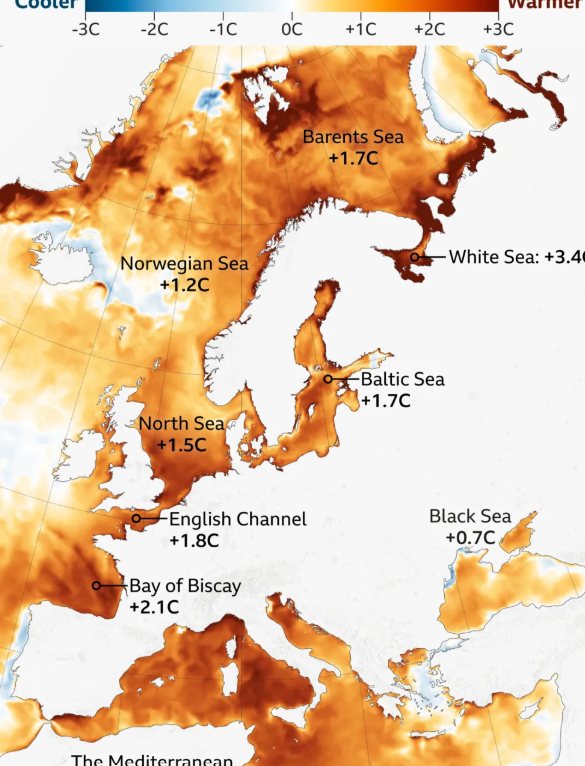
LONDON, UK —Europe is entering the heart of summer, yet the continent has already endured two extraordinary heatwaves that have rewritten weather records and raised fresh concerns about the accelerating effects of climate change. What once would have been considered rare and exceptional is increasingly becoming part of a dangerous new normal, with scientists warning that extreme heat is no longer an occasional anomaly but an expected consequence of a warming planet.
The United Kingdom and much of Europe experienced unusually high temperatures throughout May and June, with meteorological records not simply broken but shattered in several regions. The unprecedented conditions prompted the United Nations’ weather agency to describe the event as “extraordinary,” highlighting the scale and intensity of the heat that swept across the continent. After only a brief period of cooler weather, forecasts indicate that another powerful heatwave is already approaching, suggesting that Europe may face repeated episodes of dangerous heat before the summer season has even reached its peak.
The rapid succession of heatwaves has fueled growing concern among climate experts, who emphasize that these events are not random fluctuations but part of a long-term trend linked to human activity. Scientists have consistently warned for decades that rising concentrations of greenhouse gases from burning fossil fuels would increase the frequency, duration, and intensity of extreme weather. Those predictions are now unfolding with remarkable accuracy.
Professor Stephen Belcher, Chief Scientist at the UK Met Office, stressed that human-induced climate change has significantly increased the likelihood of such severe heat events. According to climate research, every fraction of a degree in global warming increases the probability of prolonged heatwaves, placing greater stress on public health systems, agriculture, infrastructure, and natural ecosystems.
READ MORE ARTICLES:
- PM Keir Starmer Unveils £15 Billion Defence Boost as Britain Prepares for a More Dangerous World
- Security Dispute Puts Prince Harry’s Planned UK Reunion With Meghan and Children in Doubt
- King Charles Makes History by Revealing £12.9 Million Tax Bill, Ranking Among UK’s Highest Taxpayers
- Keir Starmer to Step Down as Prime Minister and Labour Leader, Triggering Leadership Contest After Months of Political Turmoil and Internal Rebellion
Across Europe, soaring temperatures have disrupted daily life. Hospitals have reported increased admissions related to heat exhaustion and dehydration, while firefighters in several countries remain on high alert as dry conditions elevate the risk of wildfires. Farmers continue to monitor crops under intense heat stress, raising concerns over reduced harvests and food security. Urban areas, where concrete and asphalt trap heat, have become particularly vulnerable as temperatures remain dangerously high even after sunset.
The United Kingdom, traditionally known for its mild summers, has also witnessed temperatures far above seasonal averages. Weather data from May and June revealed striking departures from historical norms, illustrating how rapidly the country’s climate is changing. Climate scientists note that the warming observed across Britain mirrors broader trends seen throughout Europe, where average temperatures continue to rise faster than many other regions of the world.
Beyond the immediate discomfort, the economic consequences are becoming increasingly significant. Heatwaves strain electricity supplies as demand for cooling systems rises, disrupt transportation networks through buckled railway tracks and softened road surfaces, and reduce labor productivity as outdoor work becomes hazardous. Tourism patterns are also shifting, with some travelers reconsidering destinations traditionally associated with extreme summer temperatures.
The latest events have renewed calls for governments to accelerate efforts to reduce greenhouse gas emissions while investing in climate adaptation measures. Experts argue that reducing dependence on fossil fuels, expanding renewable energy, improving urban planning, and strengthening emergency response systems will be essential if societies are to cope with increasingly severe heat events.
Perhaps the most sobering reality is that what was once described as a future climate scenario is now unfolding in real time. The repeated heatwaves sweeping across Europe serve as a powerful reminder that climate change is no longer an abstract scientific projection but a lived experience affecting millions of people.
As another wave of extreme temperatures approaches, the message from scientists remains clear: these heatwaves are not isolated incidents but warning signs of a rapidly changing climate. Without sustained global action to curb greenhouse gas emissions, the extraordinary summers of today could become the ordinary summers of tomorrow, leaving future generations to confront even harsher and more frequent extremes.
Britain’s Record-Breaking Heat Signals a Dangerous Climate Turning Point
The United Kingdom is experiencing a summer unlike any seen in modern history, with record-breaking temperatures rewriting climate records and reinforcing scientists’ long-standing warnings that global warming is accelerating faster than many expected. What began as an unusually warm spring has evolved into a series of historic heatwaves that are transforming Britain’s weather patterns and offering a glimpse into the country’s climatic future.
June delivered extraordinary temperatures across nearly every corner of the UK, although southern England and south Wales endured the most intense heat. Very few regions escaped the relentless warmth as thermometers climbed to levels that only a generation ago would have seemed almost unimaginable. According to provisional weather observations, temperatures reached 37.7 degrees Celsius in Lingwood, Norfolk, surpassing the previous national June record of 35.6 degrees Celsius that had stood since 1957 and was matched again in 1976.
For climate scientists, the significance extends well beyond a single record being broken. The manner in which previous records were exceeded has become the real story. Rather than edging past historical highs by a few tenths of a degree, many weather stations exceeded their previous June records by more than two degrees Celsius, a margin experts describe as exceptionally rare.
Professor Stephen Belcher, Chief Scientist at the UK Met Office, described the unprecedented temperatures as a sobering reminder of the changing climate. Scientists note that weather records are typically surpassed gradually over decades, making this dramatic leap particularly alarming. Professor Ed Hawkins, a climate scientist at the University of Reading, explained that records are usually broken by fractions of a degree, perhaps half a degree or one degree at most. Seeing multiple records shattered by such wide margins immediately stands out as an extraordinary event that reflects a climate moving into unfamiliar territory.
The June heatwave did not emerge in isolation. It followed another unusually intense period of warmth in May, creating two powerful heatwaves in rapid succession. Weather data tracking daily maximum temperatures throughout 2026 reveal a striking transformation. The first months of the year were generally cooler than the long-term climate average, but conditions shifted noticeably during March. By late spring, temperatures consistently exceeded the historical average, culminating in two dramatic spikes during May and June that rose well beyond the upper limits of what has typically been experienced since records began.
The second June heatwave became the defining weather event of the year so far, with daytime temperatures climbing far above seasonal expectations. More concerning for health experts, however, was that the heat refused to disappear after sunset.
High humidity accompanied the scorching temperatures, making the heat feel even more oppressive. Normally, the human body cools itself through perspiration, but elevated humidity reduces the effectiveness of sweating, increasing the risk of dehydration, heat exhaustion, and heatstroke. The lack of nighttime cooling further intensified the health risks, preventing people from recovering after enduring extreme daytime temperatures.
One of the most remarkable records occurred in Cardiff, where overnight temperatures remained above 23.5 degrees Celsius during the night of June 24 into June 25. It became the warmest June night ever recorded anywhere in the United Kingdom. Across England and Wales, many communities experienced what meteorologists call “tropical nights,” when temperatures never fall below 20 degrees Celsius. Historically, such nights have been exceptionally rare in Britain, but they are becoming increasingly frequent as the climate continues to warm.
Scientists believe these warmer nights may ultimately pose an even greater threat than record daytime temperatures. Human bodies depend on cooler nighttime conditions to recover from prolonged heat exposure. Without that relief, stress on the cardiovascular system increases, sleep quality deteriorates, and vulnerable populations—including older adults, young children, and people with existing medical conditions—face significantly higher health risks.
The consequences extend well beyond personal discomfort. Hospitals across parts of Europe have reported increased cases of heat-related illnesses, while emergency services remain on alert for wildfires fueled by dry vegetation and persistent high temperatures. Farmers are closely monitoring crops under heat stress, with concerns growing over reduced harvests and the broader implications for food production. Infrastructure is also coming under pressure, as prolonged heat affects railways, roads, electricity networks, and water supplies.
Climate experts argue that these events closely match decades of scientific projections about the effects of increasing greenhouse gas emissions. The continued burning of fossil fuels has steadily raised global temperatures, making extreme weather events both more frequent and more intense. Every additional fraction of a degree of warming increases the likelihood that heatwaves will become longer, hotter, and more widespread.
The UK’s latest weather records are therefore viewed not simply as isolated meteorological events but as evidence of a broader global trend. Scientists caution that unless greenhouse gas emissions are substantially reduced, today’s exceptional summers may become tomorrow’s average conditions. The increasing frequency of tropical nights, prolonged heatwaves, and shattered temperature records suggests Britain is entering a new climate era where extremes become increasingly common.
As another period of intense heat threatens parts of Europe, researchers emphasize that these events should serve as more than headlines—they should act as urgent warnings. The science has consistently predicted a future marked by more severe heat, and recent events indicate that future is arriving faster than anticipated. The challenge now lies not only in adapting to rising temperatures but also in addressing the underlying causes driving the planet’s accelerating climate crisis before today’s extraordinary records become the baseline for generations to come. / BBC and Aptikons Report
APTIKONS