President Ferdinand Marcos Jr.’s official visit to Canada was met with protests in Vancouver as Filipino migrants, activists, and supporters gathered to voice criticism against his administration, overshadowing efforts to strengthen bilateral ties in trade, energy, labor, and tourism between the Philippines and Canada. Add as Preferred on google search
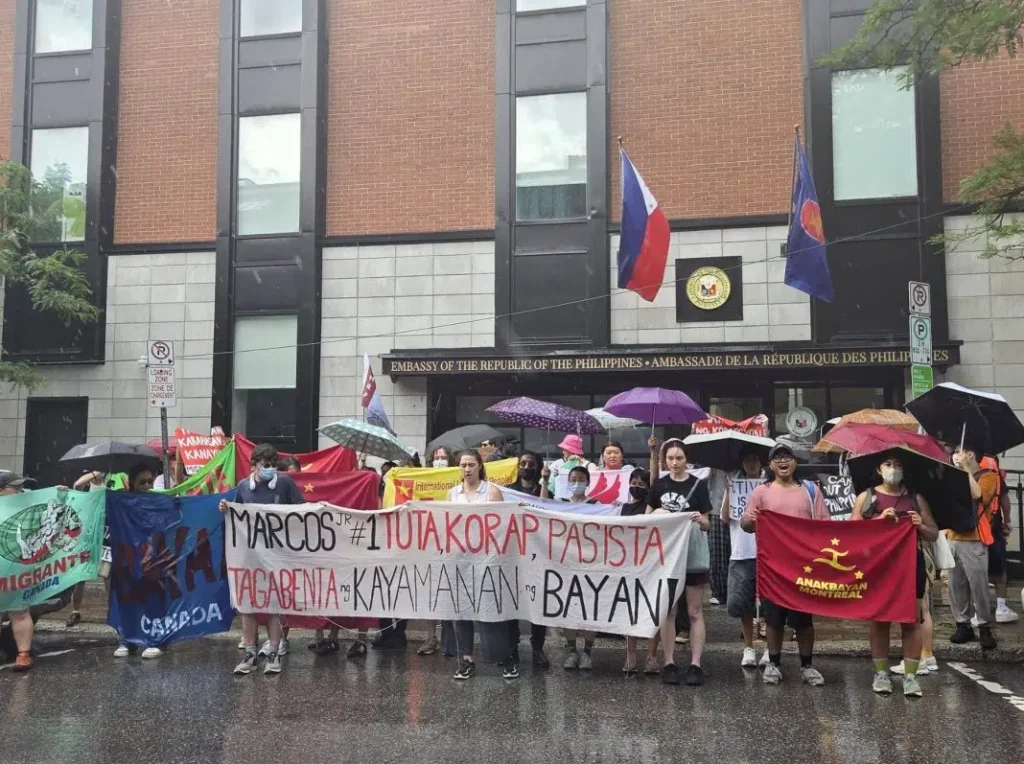
VANCOUVER, Canada – Philippine President Ferdinand Marcos Jr. was met by protesters during his official visit to Vancouver, where different groups and members of the Filipino community gathered to express their dissatisfaction with his administration. Demonstrators assembled near areas connected to the presidential visit carrying placards and banners, some of which displayed messages calling for Marcos to leave office and criticizing the direction of the Philippine government under his leadership.
The visit to Canada was intended to strengthen cooperation between the two countries in important areas such as trade, energy, labor, and tourism. Philippine officials said the trip aimed to create more opportunities for Filipino workers, attract investments, and improve economic relations between Manila and Ottawa. However, the planned diplomatic activities were overshadowed by the visible protests that drew attention from local residents, international observers, and members of the media.
READ MORE ARTICLES:
- Alfred Tecsond Nagkuwento ng Umano’y Karanasan sa PNP General Bilang Kliyente
- Jonvic Remulla Urges Congress to Tighten Firearms Law, Revisit ‘Robin Padilla Law’ After School Shooting
- Col. Raymund Dante Lachica Challenges Ramil Madriaga’s Claims in Sara Duterte Impeachment Hearing
- Colonel Raymund Dante Lachica Faces Scrutiny Over ₱125M Confidential Funds
- Roblox, Terrorist Influence and Rising Youth Violence Alarm the Philippines
Among those participating in the demonstrations were Filipino migrants, activists, labor advocates, and even some foreign supporters who joined in solidarity with the protesters’ concerns. Many expressed frustration over economic hardships in the Philippines, including the rising cost of living, expensive food prices, and the daily struggles faced by ordinary Filipino families. Several protesters argued that many citizens continue to experience financial difficulties despite government promises of economic recovery and growth.
Some Filipino demonstrators in Canada described the situation as embarrassing for the country, saying they believed many Filipinos were still suffering from poverty and economic pressures. Others compared the present administration to the government led decades earlier by the President’s father, expressing fears that the country could repeat painful chapters of its history. These opinions reflected the sentiments of some protesters and do not represent the views of all Filipinos either in Canada or in the Philippines.
The demonstrations in Canada came at a time when the Marcos administration was also facing a series of protests back home, including public gatherings organized by members of the Iglesia ni Cristo along portions of EDSA and other areas in the country. Political tensions and public debates have continued to dominate discussions in recent months, with supporters and critics of the administration clashing over issues involving governance, the economy, and national policies.
Despite the protests overseas and political noise in the Philippines, President Marcos continued with his official schedule in Canada and proceeded with meetings intended to strengthen bilateral relations. Malacañang officials maintained that the administration remains focused on advancing economic partnerships and creating opportunities for Filipinos both at home and abroad.
The events in Vancouver highlighted the reality that Filipino communities overseas remain deeply connected to political developments in their homeland. For many overseas Filipinos, living thousands of miles away has not weakened their interest in the future of the Philippines. Instead, it has given them another platform from which to express support, criticism, or concern regarding the direction of the country.
Political protests during foreign visits by heads of state are not uncommon and are often viewed as part of democratic expression in many countries, including Canada. The demonstrations against President Marcos reflected the divisions that continue to exist within Philippine politics, where opinions about leadership remain strong and passionate on both sides. As the President concludes his visit and returns home, the images of protesters gathered in Vancouver serve as another reminder that the debates surrounding his administration continue to reach far beyond Philippine shores.
Marcos Faces Protests as Canada Visit Sparks Debate Over Trade, Energy, and Human Rights
The official visit of Philippine President Ferdinand Marcos Jr. to Canada has become one of the most closely watched diplomatic engagements of 2026, bringing together discussions on trade, energy security, labor mobility, investment, and military cooperation while simultaneously igniting widespread protests from Filipino communities and human rights organizations across the country.
Canadian Prime Minister Mark Carney announced on June 26 that President Marcos would undertake an official visit to Canada from July 1 to July 4, with the Philippine leader arriving at Vancouver International Airport at 4:46 p.m. local time on July 1. The visit marked another significant step in the growing relationship between the Philippines and Canada as both nations seek deeper economic cooperation and stronger strategic partnerships in the Indo-Pacific region.
According to reports, President Marcos traveled with a high-level delegation that included several cabinet secretaries and representatives from the Philippine business sector, signaling the importance both governments place on strengthening bilateral ties. Philippine Ambassador to Canada Jose Victor Chan-Gonzaga noted that discussions between the two countries were expected to focus heavily on energy security, particularly as the Philippines seeks alternative and reliable sources of energy amid growing global uncertainty and increasing domestic demand.
Energy cooperation has emerged as one of the central pillars of the visit, with liquefied natural gas and oil supplies expected to feature prominently in discussions between officials from both countries. Canada, one of the world’s major energy producers, is increasingly being viewed by the Philippines as a potential long-term partner capable of supporting Manila’s efforts to diversify its energy imports and reduce vulnerability to supply disruptions in the region.
Business leaders from both countries also prepared to use the visit as an opportunity to deepen commercial ties. The anticipated signing of a memorandum of understanding between the Business Council of Canada and the Philippines Chamber of Commerce and Industry is expected to pave the way for expanded investment opportunities, increased trade activity, and stronger cooperation between private sector stakeholders from both nations.
The Philippine government likewise highlighted several agreements expected to be signed during the state visit covering key sectors such as energy, natural resources, trade and investment, labor and immigration, tourism, culture, and the arts. Philippine Palace Press Officer Claire Castro stated that the agreements would serve as a foundation for broader and more institutionalized cooperation between Manila and Ottawa in the years ahead.
President Marcos himself expressed optimism that discussions with Canadian officials would result in the establishment of a comprehensive bilateral Plan of Action designed to guide future initiatives and elevate relations between the two countries to a higher level. Observers note that such a framework could shape cooperation not only in economic matters but also in defense, education, technology, and people-to-people exchanges.
Yet while government officials and business leaders focused on diplomacy and economic opportunities, the visit was met with vocal opposition from various Filipino organizations and advocacy groups across Canada. Demonstrations were organized in several cities, including Vancouver, Toronto, Calgary, and Ottawa, where protesters gathered to express their dissatisfaction with the Marcos administration and to raise concerns regarding corruption, human rights, and militarization.
Among the organizations leading the demonstrations was Anakbayan Canada, which declared that every stage of President Marcos’ Canadian visit would be met with protest actions aimed at holding his administration accountable for alleged corruption and governance failures. The group emphasized that overseas Filipinos and younger generations continue to demand transparency and accountability from Philippine leaders regardless of where official visits are conducted.
Human rights advocates and solidarity organizations also joined the demonstrations. The Ottawa Committee for Human Rights in the Philippines criticized the visit, arguing that economic and military agreements primarily benefit corporate and geopolitical interests rather than ordinary Filipinos. The organization accused multinational mining corporations and foreign defense interests of profiting from the country’s natural resources and strategic location while communities continue to struggle with poverty and social inequality.
Meanwhile, migrant advocacy network Radyo Migrante reported that progressive organizations, labor groups, human rights advocates, and members of the Filipino community gathered in Ottawa to denounce the visit and call attention to alleged abuses committed under the current administration. Protesters carried placards condemning corruption and criticizing what they described as failures in accountability and governance, particularly in relation to controversial public infrastructure projects and allegations surrounding so-called ghost flood control projects that have become subjects of public debate in the Philippines.
The demonstrations also reflected growing concern among some Canadians regarding the expansion of military cooperation between Canada and the Philippines, particularly as geopolitical tensions continue to rise in the Indo-Pacific region. Critics argued that defense agreements should not come at the expense of human rights protections and democratic accountability.
Human rights concerns have continued to shadow the Marcos administration internationally. Less than two weeks before the Canadian visit, the Observatory for the Protection of Human Rights Defenders released a report alleging that anti-terrorism laws and counterinsurgency policies in the Philippines have been used to target activists, environmental defenders, journalists, trade unionists, lawyers, and indigenous leaders. The report argued that these policies have contributed to an atmosphere of intimidation and criminalization directed toward civil society organizations and dissenting voices.
Responding to the report, Shahindha Ismail, secretary-general of the Paris-based International Federation for Human Rights, stated that the current administration had failed to fully dismantle mechanisms established under previous governments that critics say contributed to repression and impunity. According to Ismail, meaningful accountability and protection for human rights defenders remain urgent issues that require sustained action.
Despite the protests and criticism surrounding the visit, both Canadian and Philippine officials continue to emphasize the strategic importance of strengthening relations between the two countries. Canada is home to a large and influential Filipino diaspora community that has played a significant role in the country’s economy, healthcare system, and labor force, making the bilateral relationship one of increasing significance for both governments.
As President Marcos concludes his visit, the trip leaves behind a complex picture of modern diplomacy where trade agreements, energy partnerships, labor cooperation, and geopolitical strategy intersect with public demands for accountability, transparency, and human rights protections. While officials celebrate new opportunities for cooperation, the demonstrations that followed the president across Canadian cities underscored the reality that international diplomacy often unfolds alongside intense public scrutiny and unresolved political debates that extend far beyond official meeting rooms and ceremonial signings.
Marcos Canada Visit Advances Strategic Ties Amid Protests and Criticism
Philippine President Ferdinand Marcos Jr. arrived in Vancouver, Canada for an official visit aimed at strengthening diplomatic and economic relations between the Philippines and Canada, but his arrival was met with protests from Filipino organizations, human rights advocates, and activists who voiced opposition to his administration and its policies. Accompanying the President during the visit was First Lady Liza Araneta-Marcos, along with members of his official delegation that included Trade Secretary Maria Cristina Aldeguer-Roque, Environment Secretary Juan Miguel Cuna, Finance Secretary Ralph Recto, and Communications Secretary Dave Gomez.
The official visit centered on discussions between President Marcos and Canadian Prime Minister Mark Carney regarding the future of Philippine-Canadian relations and the growing importance of cooperation in the Indo-Pacific region. Both leaders discussed expanding trade opportunities, strengthening defense and security partnerships, and improving collaboration in addressing regional challenges. Canada also reiterated its support for the Philippines regarding developments in the West Philippine Sea, an issue that continues to shape the country’s foreign and security policies.
Economic cooperation became one of the central themes of the visit as Philippine officials sought to attract investments in strategic sectors such as mining, renewable energy, information technology, and artificial intelligence. Meetings with Canadian investors focused on encouraging partnerships that could generate jobs, improve infrastructure, and contribute to long-term economic growth in the Philippines. Discussions also covered opportunities in strategic mineral development, a sector increasingly viewed as important for global energy transition efforts.
The welfare of overseas Filipino workers and migrants in Canada was likewise placed high on the agenda. Philippine officials pushed for stronger labor protections, improved migration agreements, and greater recognition of Filipino professional credentials to help skilled workers gain better opportunities abroad. The administration emphasized that improving the livelihood and working conditions of Filipinos overseas remains one of its priorities as thousands of Filipino families continue to rely on remittances sent from abroad.
Despite the diplomatic objectives of the visit, President Marcos was greeted by demonstrations organized by progressive Filipino organizations and human rights advocates in Canada. Protesters gathered in Vancouver from July 1 to July 4 carrying placards and banners criticizing the administration’s policies and governance. Several groups accused the government of failing to address rising living costs, inflation, and persistent poverty affecting many Filipino families. Others raised concerns regarding corruption allegations and longstanding issues connected to accountability for abuses committed during the Martial Law period under the administration of the late President Ferdinand Marcos Sr..
Members of organizations such as BAYAN Canada called for greater government accountability and transparency, while some demonstrators criticized what they described as worsening economic conditions in the Philippines despite government claims of economic recovery. Protest groups argued that the official visit was intended to attract foreign investments while ordinary Filipinos continued to struggle with high food prices, expensive utilities, and limited economic opportunities.
The recently signed Status of Visiting Forces Agreement between the Philippines and Canada also became a major source of criticism among demonstrators. Activists from Friend of the Filipino People in Struggle expressed concern that increased military cooperation could contribute to militarization in local communities and potentially affect rural areas and farming regions in the Philippines. These groups argued that defense agreements should be accompanied by stronger safeguards for affected communities.
Human rights organizations also voiced objections during the visit. Members of Canada-Philippines Solidarity for Human Rights criticized the Canadian government for hosting President Marcos despite what they described as unresolved human rights concerns in the Philippines. Some protesters argued that welcoming the Philippine leader while promoting human rights internationally presented a contradiction in Canadian foreign policy.
The demonstrations highlighted the political divisions that continue to surround the Marcos administration both in the Philippines and among overseas Filipino communities. Supporters view the President’s foreign engagements as essential steps toward attracting investments, creating jobs, and strengthening international partnerships. Critics, however, argue that economic agreements and diplomatic successes should be accompanied by stronger action against poverty, corruption, and social inequality.
Despite the protests, official meetings between the Philippine and Canadian governments proceeded as scheduled, resulting in renewed commitments to strategic cooperation, investment promotion, labor protection, and regional security collaboration. The visit underscored Canada’s growing role as an important partner of the Philippines in the Indo-Pacific while also demonstrating how domestic political debates in the Philippines continue to resonate among Filipino communities around the world. As President Marcos concluded his Canadian visit, the images of diplomatic meetings alongside street demonstrations reflected the complex political realities surrounding his administration and the challenges that remain ahead. / reuters, aptikons holistic group
APTIKONS