

Former Justice Secretary and current Mamamayang Liberal (ML) Party-list Representative Leila de Lima is once again drawing public attention after a 2015 Commission on Audit (COA) report resurfaced, showing that the Department of Justice (DOJ), during her tenure, had ₱123.8 million in unliquidated confidential fund cash advances at the end of the year. The issue has gained renewed interest as De Lima has become one of the lawmakers actively scrutinizing the confidential fund expenditures of Vice President Sara Duterte. While the COA report documented the unliquidated cash advances and cited procedural violations involving Special Disbursing Officers, De Lima has maintained that the transactions were later fully settled through the submission of supporting documents and that no final COA disallowance or criminal case was filed against her over the matter.
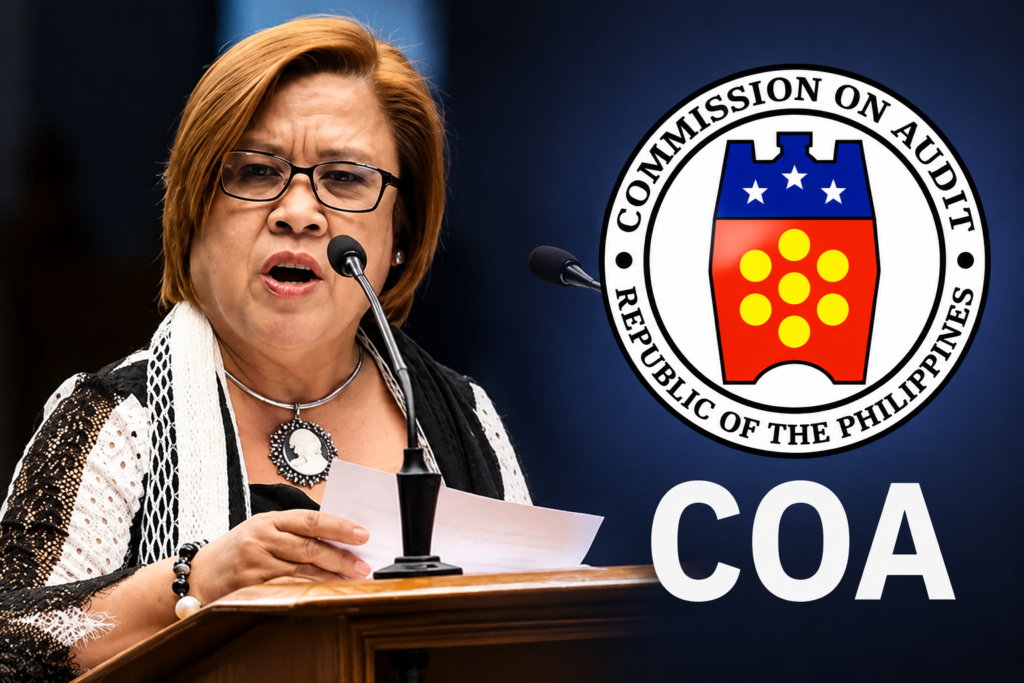
MANILA, Philippines — Former Justice Secretary and now Mamamayang Liberal (ML) Party-list Representative Leila de Lima once faced audit observations from the Commission on Audit (COA) regarding confidential funds during her tenure at the Department of Justice (DOJ), an issue that has resurfaced as she takes an active role in questioning the confidential fund expenditures of Vice President Sara Duterte.
According to the Commission on Audit’s 2015 Annual Audit Report on the DOJ, the agency had a total of ₱123.8 million in unliquidated confidential fund cash advances as of the end of 2015. The audit showed that from January 1 to December 31, 2015, the DOJ granted ₱173.76 million in confidential fund cash advances to Special Disbursing Officers (SDOs). Of that amount, only ₱49.94 million had been liquidated during the audit period, leaving approximately ₱123.8 million still awaiting liquidation.
COA further observed that several Special Disbursing Officers received additional confidential fund cash advances despite failing to submit liquidation reports for previous releases. The audit body said this practice violated Section 6.1.5 of the COA-Department of Budget and Management Joint Circular No. 2015-01, which requires the liquidation of prior cash advances before additional funds are released.
The audit observations were made while De Lima was serving as Justice Secretary. She later won a seat in the Senate during the May 2016 national elections and served as senator from 2016 until 2022.
READ MORE OTHER ARTICLES:
- Leila de Lima’s DOJ Recorded ₱ 123.8 Million Unliquidated Confidential Funds, COA Report Shows

- Chiz Escudero Seeks 2028 BSKE Elections, Longer Five-Year Terms for Officials
- Enrique Razon Reigns as Philippines’ Richest Billionaire for Third Consecutive Year
- Marcos Appoints Ronald Chua as New Sandiganbayan Justice; Randolph Pascasio Named to Court of Appeals
- Rafael Consing, Maharlika Loan Fuels Celsius Foreclosure Case Over Kalinga Mine
- ICC Defends Independence Following Sara Duterte’s Marcos Puppet Allegations in The Hague
- No to Pax Silica’ in the Philippines as Critics Raise Concerns Over Sovereignty, Environment, and Economic Benefits
- Sara Duterte Witness Says OVP Used Gym Bags for ₱500 Million
- Beyond the Applause: The Issues Left Unspoken in President Marcos’ Fifth State of the Nation Address
- What is Pax Silica, what is its purpose in the Philippines?


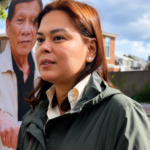
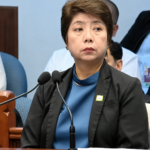

Today, De Lima serves as the representative of the Mamamayang Liberal (ML) Party-list in the House of Representatives. She also holds the position of House Senior Deputy Minority Leader, serves as one of the prosecutors in the impeachment trial, and is the current chairperson of the Liberal Party of the Philippines.
The reemergence of the 2015 COA findings has drawn public attention because De Lima has become one of the most vocal lawmakers scrutinizing the confidential funds of Vice President Sara Duterte. Some critics have questioned whether De Lima should lead such inquiries, pointing to the DOJ audit observations during her own administration.
De Lima, however, has consistently maintained that the matter was resolved years ago. She explained that the confidential fund cash advances were used for legitimate intelligence and operational activities of the DOJ and its attached agencies. According to her, the necessary supporting documents were subsequently submitted to the Commission on Audit, allowing the transactions to be cleared.
She has likewise emphasized that the COA observations did not result in any final notice of disallowance against her, nor did they lead to any criminal conviction or final administrative finding of liability related to the confidential funds.
It is important to distinguish between an audit observation and a finding of legal wrongdoing. COA audit reports often identify deficiencies in documentation, accounting procedures, or the timing of liquidation. Such observations may later be resolved through the submission of supporting records or compliance with audit requirements. An audit observation, by itself, does not automatically establish criminal or administrative liability.
The issue has nevertheless become part of the broader political debate surrounding the government’s use of confidential and intelligence funds. Supporters of Vice President Duterte argue that officials who previously faced COA audit observations should also be subject to public scrutiny, while De Lima and her allies maintain that accountability requires examining whether public funds were properly spent regardless of who is involved.
As discussions over confidential funds continue in Congress and in the public sphere, both the historical COA audit involving the DOJ and the current investigations into other government offices remain subjects of public interest, with transparency and accountability continuing to be central issues in the national debate.