The International Criminal Court (ICC) has reaffirmed its independence and impartiality after Vice President Sara Duterte accused the Hague-based tribunal of serving as a “lapdog” of the Marcos administration, insisting that its judicial proceedings are conducted solely under the mandate of the Rome Statute and free from political influence. The statement came in response to Duterte’s remarks outside the ICC headquarters in The Hague, where she criticized the court over the prosecution of her father, former President Rodrigo Duterte, who is scheduled to stand trial later this year on charges related to his administration’s controversial anti-drug campaign.
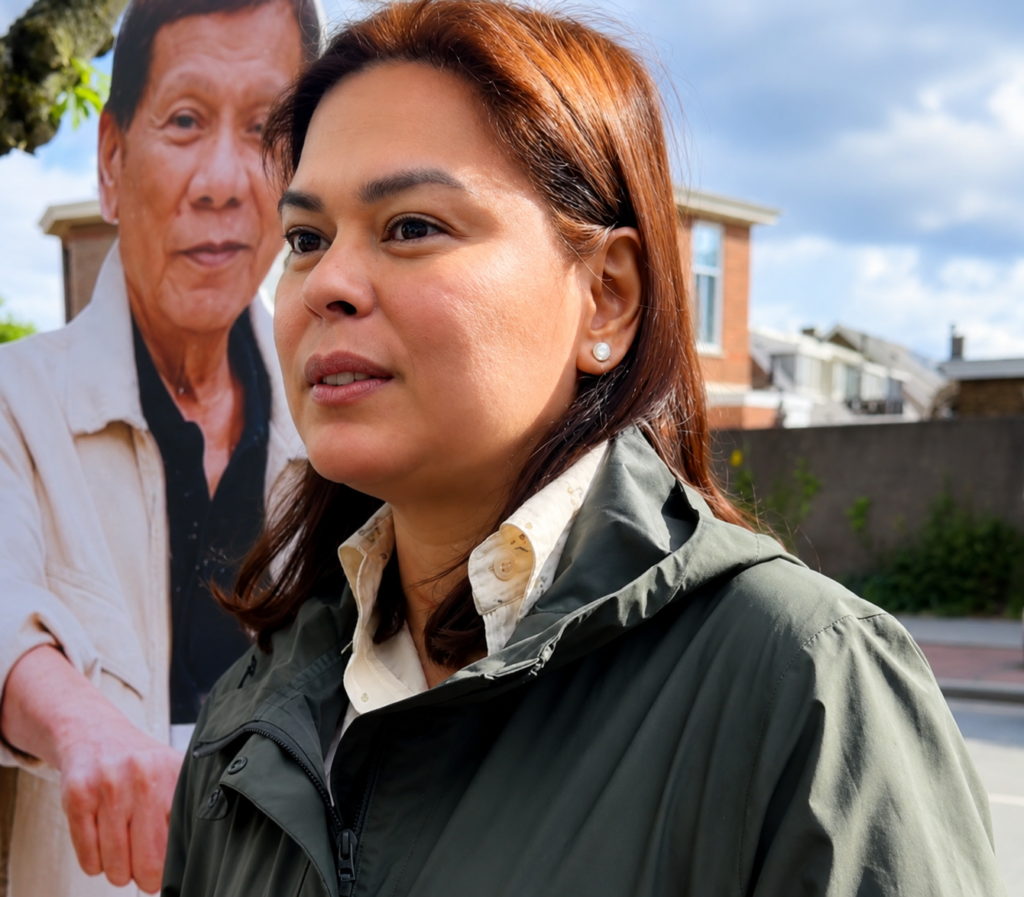
MANILA, Philippines — The International Criminal Court (ICC) has firmly defended its independence after Vice President Sara Duterte accused the tribunal of acting as a “lapdog” of the Marcos administration, rejecting claims that its decisions are influenced by political figures in the Philippines.
In a statement provided to the Philippine Daily Inquirer, ICC spokesperson Oriane Maillet emphasized that the Hague-based court operates independently and impartially in carrying out its mandate under the Rome Statute, the international treaty that established the tribunal. Maillet stressed that the ICC remains committed to applying the law without political interference and does not allow external parties to influence its judicial processes.
The statement came after Duterte addressed supporters gathered outside the ICC headquarters in The Hague on Wednesday, where she launched a fresh attack against the international court. She alleged that the ICC had become a “lapdog” or “puppet” of President Ferdinand Marcos Jr. and former Senator Antonio Trillanes IV, both of whom she accused of working against her father, former President Rodrigo Duterte.
Trillanes was among the individuals who submitted a communication to the ICC in 2017 requesting an investigation into the thousands of deaths associated with the Duterte administration’s anti-illegal drug campaign. That communication later became part of the information reviewed by the Office of the Prosecutor before the formal investigation was authorized.
READ MORE OTHER ARTICLES:
- When Hearts Heal, Strength Rises Beyond the Pain of Betrayal & Cheating

- When Love Turns Into Fear: The Pain of Cheating and the Courage to Walk Away
- Heart Evangelista | Net worth, Education, Husband, Professional career & Properties
- Former TAPE Inc. Co-Founder and Ex-Lawmaker Romeo “Nonong” Jalosjos Sr. Dies at 85
- Prayer of Worship and Thanksgiving | August 2
- Veteran Entertainment Journalist Jobert Sucaldito Dies at 65




Addressing the crowd, the vice president described Marcos and Trillanes as traitors and insisted that the ICC had aligned itself with their political interests. She further claimed that the international tribunal had deliberately focused on her father while ignoring other potential cases around the world.
Duterte also criticized what she described as the ICC’s selective pursuit of justice, arguing that the tribunal was highlighting her father as its primary target. She suggested that the court was using Rodrigo Duterte as a symbolic case, alleging that he had been “delivered” to the ICC by the Marcos administration.
Despite the vice president’s accusations, the ICC declined to engage further in the political rhetoric. Maillet said the court would not provide additional comments regarding Duterte’s statements, maintaining its longstanding policy of refraining from responding to political criticisms while judicial proceedings remain ongoing.
The vice president likewise asserted that the ICC was concentrating solely on her father’s case because it supposedly had no other active proceedings. However, publicly available records from the tribunal indicate that the court continues to handle multiple international cases involving individuals accused of crimes against humanity, war crimes, and other serious offenses under its jurisdiction.
Among those currently in ICC custody is Libyan national and former militia commander Khaled Mohammed El Hishri, who faces charges of crimes against humanity and war crimes. Judges recently confirmed the charges against him, clearing the way for his case to proceed to trial. The tribunal is also handling several other proceedings involving suspects from different regions, underscoring that its docket extends far beyond the Philippine case.
Rodrigo Duterte, meanwhile, is scheduled to stand trial beginning on Nov. 30 after ICC judges ruled that there are substantial grounds to believe he may bear criminal responsibility for the killings of 78 individuals identified in the charges filed against him. The upcoming proceedings are expected to mark one of the most closely watched cases before the international court in recent years due to their legal and political significance.
Vice President Duterte has remained in Europe since last week to support her father during the legal proceedings. During a July 29 interview in The Hague, she provided an update on the former president’s health, saying that the 81-year-old was generally in stable condition but had recently developed a skin problem. She said they were seeking clarification from the detention facility’s medical unit regarding his condition and expressed appreciation that medical personnel had already taken steps to address the issue.
The Office of the Vice President later distributed the interview transcript to reporters in Manila, providing further details of her remarks as discussions surrounding the ICC proceedings continue to draw national and international attention.
The ICC investigation into the Duterte administration’s anti-drug campaign remains one of the most consequential international legal cases involving a former Philippine head of state. While the vice president continues to challenge the tribunal’s credibility and motives, the ICC has reiterated that its work is guided solely by its judicial mandate under the Rome Statute and that its proceedings are conducted independently, impartially, and in accordance with international law. /aptikons