A 31-year-old man named Cole Allen is now in jail after being accused of trying to assassinate President Donald Trump during a high-profile event in Washington, D.C. The incident allegedly happened outside the White House Correspondents’ Dinner, a formal gathering attended by about 2,600 journalists, politicians, and government officials at the Washington Hilton hotel.
USA — What happened at the recent incident involving an alleged assassination attempt against Donald Trump has raised serious concerns about safety, political tensions, and how quickly violence can erupt even in highly secured public events.
According to prosecutors, the accused, Cole Allen, is said to have traveled across states carrying multiple weapons and attempted to attack outside a major political media gathering at the White House Correspondents’ Dinner held at the Washington Hilton. Authorities claim the incident was not random, but planned, pointing to messages and actions that suggest intent to target government officials.
READ MORE ARTICLES:
- Trump Cancels Envoys’ Pakistan Trip for Iran Peace Mission as Israel Escalates Lebanon Strikes Amid Stalled Talks
- Donald Trump Calls Nominee Dr. Erica Schwartz a “STAR” as She’s Tapped for CDC Chief
- Justin Fairfax Former Virginia Lt. Governor, Dies in Apparent Murder-Suicide That Killed Wife Dr. Cerina Fairfax
- US Commander Claims Sea Blockade Halts 90% of Iran’s Economy Amidst Peace Talks
- Donald Trump Turns on Ally PM Giorgia Meloni After Public Clash Over Pope and Iran Policy
- Dave Chappelle Supports Revival of Ohio Radio Station, Preserving Hometown Roots Through Building Restoration
- Soleimani Family Members Arrested in US; State Department Alleges Deception
From a legal standpoint, Allen is currently facing very serious charges, including attempted assassination and illegal weapons transport. However, it is important to remember that these are allegations, and the court process is still ongoing. He has not entered a plea, and his defense is already questioning parts of the prosecution’s version of events.
What stands out in this case is not only the seriousness of the accusations, but also the broader issue it highlights: how fragile public security can be, even in controlled environments with trained protection teams like the Secret Service. Incidents like this test how prepared institutions are when threats come unexpectedly.
At the same time, the defense has raised personal background details about the accused, including the lack of prior criminal history and his involvement in a church community. These points do not excuse the allegations, but they will likely be part of how the court evaluates intent, risk, and credibility of evidence.
In the end, this case is not only about one individual’s actions, but also about how society balances security, justice, and fairness. Courts are expected to carefully weigh evidence before reaching conclusions, especially in cases involving political figures and potential mass harm.
Donald Trump says ‘I don’t think about’ another assassination attempt
President Donald Trump recently said he’s not worried about attempts on his life, even after prosecutors said there may have been a third assassination attempt against him in just two years. This latest case involves a gunman who allegedly tried to target him during a journalists’ dinner at the Washington Hilton on April 25.
When asked directly if he feels concerned about being attacked again, Trump basically said he doesn’t think about it. In his words, if he did worry too much, he wouldn’t even be able to do his job as president.
He also joked about not wearing a bulletproof vest, saying he probably couldn’t handle the extra weight. The comment got laughs from officials who were with him during an event where he signed an order about retirement savings for workers without access to 401(k) plans.
This comes just hours after the suspect, Cole Tomas Allen, appeared in court. He is accused of bringing weapons including a shotgun, a handgun, and knives into the hotel where the event was held. He was caught by Secret Service officers before he could get closer to where Trump and top officials were dining.
During the confrontation, a Secret Service agent was shot, but survived because his protective vest absorbed the bullet. Authorities are still investigating whether the shot came from the suspect or was accidentally fired by another officer.
Trump also said he believes it was not “friendly fire,” meaning he thinks the shot did not come from his own security team.
This incident is part of a worrying pattern. Trump has already faced other serious threats in the past year. In one case in 2024, he was shot at during a campaign rally in Pennsylvania, where he was hit in the ear and one person in the crowd was killed. In another case later that year, a man was arrested near one of his golf courses in Florida with plans to attack him, and that suspect was later convicted and sentenced to life in prison.
Trump is downplaying the danger publicly, but the repeated attempts highlight how serious and ongoing the security risks around him have become.
Man Accused of Trump Assassination Attempt to Stay in Custody; 31-Year-Old Allegedly Stormed White House Correspondents’ Dinner
A man accused of trying to attack President Donald Trump during a high-profile dinner in Washington, D.C. has agreed to stay in jail while his case moves forward in court.
The suspect, 31-year-old Cole Tomas Allen, is accused of showing up at the Washington Hilton hotel during the White House Correspondents’ Dinner and trying to force his way into the event, where Trump, the First Lady, and other top officials were present.
According to prosecutors, Allen didn’t just show up randomly—he allegedly traveled from California to Washington carrying multiple weapons, including a shotgun, a handgun, and knives. They believe he planned the attack ahead of time and intended to cause serious harm to government officials gathered at the event.
Things turned chaotic when Allen allegedly broke through a security area and fired a shotgun near the entrance leading to the main ballroom. Security agents quickly responded, shots were fired during the confrontation, and Allen was tackled and arrested before he could get inside. Officials later evacuated the building, and the dinner was stopped early as a safety measure.
One Secret Service agent was injured during the incident, but survived because of a protective vest. Authorities are still reviewing exactly who fired the shot that hit the agent.
Allen is now facing serious charges, including attempted assassination and illegal weapons transport. He has not yet entered a plea in court.
His lawyers argue that the government’s case still has gaps and questions, especially about some of the early claims made by authorities. They also pointed out that Allen has no criminal history and was active in his church community.
Prosecutors, however, say there is strong evidence that Allen planned the attack in advance. They also point to an alleged message he sent to relatives, where he reportedly expressed anger toward Trump and government officials.
The case is still in its early stages, but the accusations are very serious. For now, the court has decided he will stay in jail while investigators and lawyers continue building their cases.
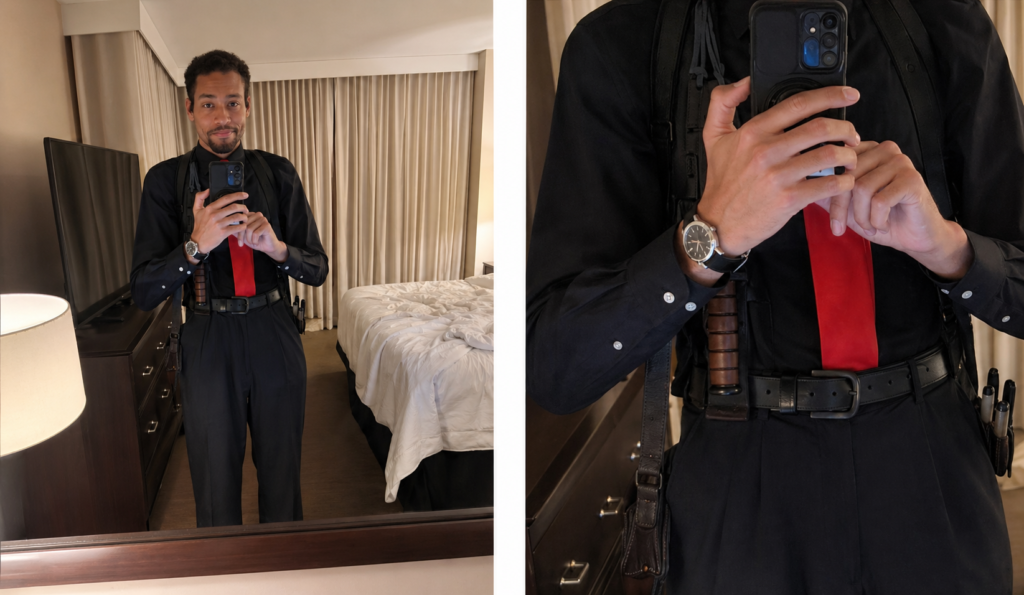
Prosecutors Release Hotel Mirror Selfies of Alleged White House Dinner Shooter, Move to Detain Him Ahead of Trial
prosecutors are saying they have strong evidence that a 31-year-old man, Cole Tomas Allen, planned a serious attack targeting former President Donald Trump during a major political media event in Washington.
According to their filing, Allen allegedly spent weeks preparing for the attack. One of the key pieces of evidence they presented includes selfies he supposedly took in a hotel room mirror, where he is seen wearing a suit and carrying weapons. Prosecutors say these same weapons were later recovered after the incident.
The government is asking the court to keep him in jail while he waits for trial. Their argument is basically: the evidence against him is very strong, and because of how serious the accusations are—attempted assassination and possible plans against other government officials—he should not be released.
The case centers around an incident outside the White House Correspondents’ Dinner, a high-profile annual gathering attended by journalists and political figures. Prosecutors say Allen tried to enter the secured area carrying a shotgun and other weapons. A Secret Service officer confronted him, and shots were fired during the encounter. Officials say one officer was hit but protected by a bulletproof vest and not seriously injured. The United States Secret Service has not publicly confirmed all disputed details, but it is heavily involved in the investigation.
Investigators also say Allen sent emails shortly before the incident that suggest political anger and a desire to justify violence. These messages, along with his online activity on gaming and social platforms, are being used to understand his mindset leading up to the event. Reports from outlets like the CNN and The Washington Post say his online posts shifted over time from gaming topics to increasingly extreme political views.
He has not yet entered a plea, meaning he has not formally said whether he is guilty or not guilty in court.
At this stage, it’s important to remember: this is still an allegation. The court process will determine what is proven and what is not. Prosecutors are presenting their strongest evidence now to justify keeping him in detention until trial begins.
The Attack: Actions Taken by Cole Allen
On the night of the White House Correspondents’ Dinner, an event known for its light-hearted celebration of the press and the presidency, a shocking incident unfolded that turned what should have been a festive occasion into a scene of chaos. Cole Allen, a man with intentions far darker than the ambiance of the gala, approached a security checkpoint with a shotgun in tow. His actions were deliberate and premeditated, as he successfully maneuvered past initial security measures that were in place for the event.
Once he reached the checkpoint, Allen brandished his weapon, causing immediate panic among the attendees. The location of the gunfire was significant; it erupted just outside the ballroom, where hundreds of journalists, politicians, and celebrities mingled. The sound of the shotgun firing pierced through the otherwise cheerful atmosphere, marking a turning point in the evening’s proceedings. As the shots resonated, guests began to duck for cover, with some grappling for exits while others sought safety behind walls and tables.
Within moments, the sense of security that had enveloped the gala evaporated. Security personnel rushed to the scene, attempting to neutralize the threat posed by Allen. The ensuing chaos was unlike anything previously witnessed at this annual gathering; shouts filled the air, and the laughter that had characterized the evening was replaced by the sounds of fear and confusion. This sudden violence not only disrupted the event but also forced a swift response from the Secret Service, which had been tasked with protecting the president and other high-profile guests.
As law enforcement officers swarmed the area, the gravity of the situation became apparent. This incident highlighted vulnerabilities within security protocols, especially at high-profile events where large crowds gather. The attack exposed how quickly a festive event can turn into a crisis, serving as a grim reminder of the ever-present threat to public figures in today’s political climate.
Legal Charges Against Cole Allen
The incident that transpired during the White House Correspondents’ Dinner has led to serious legal repercussions for Cole Allen. He faces multiple charges, with the most significant being attempted assassination of President Trump. This charge alone carries severe penalties, highlighting the gravity of the situation and the potential implications for national security.
In addition to attempted assassination, Cole Allen has also been charged with discharging a firearm during a crime of violence. This charge is particularly concerning as it suggests a blatant disregard for human life and the safety of individuals attending the high-profile event. The use of a firearm in the commission of an attempted murder not only exacerbates the severity of the charges but also showcases the extent of his alleged actions.
The gravity of these accusations has led to an intense scrutiny of the incident, with law enforcement and judicial bodies keen on ensuring justice is served. The legal proceedings against Allen are expected to be complicated and lengthy, as prosecutors will need to gather substantial evidence to prove their case. This may involve witness testimonies, forensic evidence, and possibly even surveillance footage from the event, all of which will be instrumental in establishing a coherent narrative around the attempted assassination.
Already, legal experts are weighing in on the potential outcomes of these charges, suggesting that if Allen is found guilty, he could face decades in prison. The implications of such charges extend beyond the individual, potentially affecting perceptions of security at public events, especially those involving high-ranking officials. As the legal process unfolds, the nation watches closely, with many concerned about the effects this incident may have on future gatherings involving prominent figures.
Prosecutors’ Arguments and Evidence Presented
In the case surrounding the attempted assassination of President Trump, the prosecution has put forth a compelling set of arguments aimed at demonstrating the premeditated nature of the attack. Prosecutors allege that the accused, identified as Allen, meticulously planned the assault in advance, taking several deliberate steps to prepare himself for the occasion of the White House Correspondents’ Dinner. Such allegations assert that Allen did not act impulsively but instead demonstrated a calculated approach towards executing his plans.
A critical component of the prosecution’s argument revolves around the weapons that Allen allegedly brought to the venue. It has been reported that he was found with firearms and other implements that could be utilized for harm. This brings forth concerns about not only the severity of his intentions but also the broader implications for security at public events attended by the President and other high-profile individuals. The nature and sophistication of the weapons suggested a level of planning that the prosecutors argue is indicative of premeditation.
Moreover, the prosecution has highlighted communications allegedly between Allen and his family members that support the theory of his intent to carry out an attack. Evidence presented includes text messages and phone calls that suggest discussions surrounding his plans to confront the President. This element of the case purports to reveal that those close to Allen were cognizant of his escalating intentions, contributing to the prosecution’s thesis that he was resolutely focused on a harmful end goal.
Overall, the evidence cited in court filings, including witness testimonies and forensic analysis, seeks to create a comprehensive narrative of Allen’s motivations while simultaneously underlining the meticulous nature of his planning. If successful, the arguments made by the prosecution could result in significant legal consequences for Allen, reinforcing the seriousness of threats against public figures.
Defense Arguments and Challenges
The defense in the attempted assassination case of President Trump contends that the prosecution’s case is riddled with inconsistencies and lacks compelling evidence. One significant argument presented by the defense revolves around the character of the accused, Allen. The defense strives to portray Allen as an individual who has led a life devoid of criminal activities, emphasizing his absence of a prior criminal record. This aspect plays a crucial role in asserting that Allen is not the type to engage in such violent conduct.
Moreover, the defense highlights Allen’s commitment to community service, portraying him as a constructive member of society. The argument stresses that his involvement in various community initiatives signifies a personality that is fundamentally opposed to violence and criminal behavior. The intention behind this strategy is to create doubt in the minds of the jury regarding Allen’s alleged intentions, suggesting that an individual who actively participates in community well-being is unlikely to commit an act as severe as an assassination attempt.
Additionally, the defense challenges the reliability of the evidence presented by the prosecution. They argue that certain testimonies lack credibility and that the timeline proposed by the prosecution raises several questions. Through this lens, the defense aims to undermine the prosecution’s narrative, suggesting that the evidence is not only insufficient but potentially misinterpreted or exaggerated.
In navigating the complexities of this case, the defense balances arguments centered around character, community involvement, and a critical analysis of the evidentiary foundation laid by the prosecution. By doing so, they aim to construct a robust case that fosters reasonable doubt about Allen’s alleged motives and actions.
Impact of the Incident on Security Protocols
The attempted assassination of President Trump during the White House Correspondents’ Dinner marks a critical event that may influence how security protocols are structured for high-profile public events. Historically, the presence of dignitaries at such gatherings necessitated stringent security measures; however, this incident has underscored the urgent need for revised approaches to safeguarding attendees, particularly in light of evolving threats.
In the aftermath of this shocking incident, it is likely that the United States Secret Service and other relevant security agencies will undertake comprehensive assessments of their current protocols. These evaluations may include scrutinizing existing measures regarding guest filtration, on-site security personnel deployment, and surveillance techniques. Enhanced technologies—such as facial recognition systems and advanced threat detection tools—may be integrated to provide heightened security oversight and rapid response capabilities.
Moreover, the involvement of collaboration among various federal and local agencies is crucial. The integration of intelligence-sharing practices can facilitate quicker responses to potential threats, ensuring that security remains vigilant and proactive rather than reactive. Tactics may evolve to accommodate a diverse range of events, possibly resulting in more stringent measures at even seemingly benign gatherings, as the ramifications of this incident echo through the security landscape.
Additionally, public awareness and the perception of safety may shape future events. A more visible security presence might alter attendees’ experiences, fostering an environment where security is paramount without detracting from the event’s intention. Balancing security imperatives and the nature of public engagement will be a significant challenge moving forward.
In conclusion, the attempted assassination has undoubtedly prompted a reassessment of security protocols at public events, potentially leading to comprehensive changes that prioritize the safety of high-profile officials and their audiences alike.
Public Reaction and Media Coverage
The attempted assassination of President Trump at the White House Correspondents’ Dinner sent shockwaves through the nation and garnered significant media attention. News outlets quickly pivoted from their planned coverage of the event to provide minute-by-minute updates on this unsettling development. Major television networks and online news platforms inundated viewers and readers with live coverage, expert analyses, and eyewitness accounts, reinforcing the gravity of the situation. Coverage ranged from breaking news alerts to in-depth explorations of the motivations and contexts behind such an act of political violence.
The immediate public reaction was one of both shock and concern. Social media platforms erupted with discussions about the implications of this incident, reflecting a widespread unease about political extremism and violence. Many users shared their thoughts on how the political environment might have influenced the motivations behind the attack, illustrating a possible connection to heightened tensions in national politics. The incident stirred conversations not only about the safety of public officials but also about the need for a collective reassessment of political communication and rhetoric in the country.
Furthermore, political analysts and commentators began drawing parallels between this incident and past events, suggesting that political violence has become increasingly part of the broader narrative in contemporary American politics. The media’s framing of the story highlighted a persistent culture of anger and division, which some argued contributed to the normalization of extreme behaviors. In turn, this incident prompted discussions on the measures necessary to protect public figures and control the narrative surrounding political discourse, emphasizing the importance of addressing the root causes of such violence.
Cole Tomas Allen: Background, Education, and Allegations in the 2026 White House Correspondents’ Dinner Incident
Cole Tomas Allen, a 31-year-old resident of Torrance, California, is currently facing federal charges in connection with an alleged attempt to assassinate U.S. President Donald Trump during the White House Correspondents’ Dinner held on April 25, 2026. The case has drawn significant public and legal attention due to the nature of the allegations and Allen’s academic and professional background.
Background and Education
Allen is reported to have lived and worked in Torrance, California, where he was employed as a tutor at C2 Education. His academic record is notably distinguished, with two advanced degrees:
A Bachelor’s degree in Mechanical Engineering from the California Institute of Technology (Caltech), earned in 2017
A Master’s degree in Computer Science from California State University, Dominguez Hills
His education reflects a strong technical and engineering background, particularly in fields related to computation and systems design.
Professional Work in Game Development
Outside of tutoring, Allen is described as an independent video game developer. He has reportedly released titles on the Steam platform, including:
First Law, a physics-based platformer
Bohrdom, a bullet-hell style racing game
These projects suggest involvement in indie game development communities, with a focus on experimental gameplay mechanics.
The April 2026 Incident
According to federal allegations, Allen was involved in a security breach at the Washington Hilton during the annual White House Correspondents’ Dinner on April 25, 2026. Prosecutors claim he attempted to enter a restricted area and was in possession of a shotgun and knives before being apprehended by U.S. Secret Service personnel.
Authorities also allege that Allen fired a weapon during the incident, though details remain part of ongoing legal proceedings.
Alleged Motive and Writings
Investigators reportedly discovered written materials and messages sent to family members shortly before the incident. In these communications, Allen allegedly referred to himself as a “Friendly Federal Assassin” and expressed strong criticism of political figures and government policies.
Authorities are treating these materials as part of their broader investigation into his intent and state of mind at the time of the alleged attack.
Legal Status and Charges
Allen is currently facing multiple federal charges, including:
Attempted assassination of the President of the United States
Assault on a federal officer
Additional related weapons and security offenses
He made his initial appearance in federal court on April 27, 2026, and remains in custody as proceedings continue. Prosecutors are seeking to keep him detained pending trial, citing the severity of the charges and the evidence presented.
- Enrique Razon Reigns as Philippines’ Richest Billionaire for Third Consecutive Year
- COMMENTARY: Sara Duterte’s Impeachment Battle Ends, but the 2028 Political Contest Begins
- Walang Pasok sa NCR at 22 Lalawigan Ngayong Huwebes, Agosto 6; Sinuspinde ng Malacañang ang Klase at Trabaho sa Pamahalaan
- Marcos Appoints Ronald Chua as New Sandiganbayan Justice; Randolph Pascasio Named to Court of Appeals
- BSKE 2026, Posibleng Mailipat sa 2028 sa Ilalim ng House Bill
- LET Results September 2026 Teachers Board Exam in Elementray & Secondary
- Barangay Captain, Dalawa Pa Huli sa Buy-Bust sa Palo; Higit ₱5.4 Milyong Shabu Nakumpiska
- Rafael Consing, Maharlika Loan Fuels Celsius Foreclosure Case Over Kalinga Mine
- When Hearts Heal, Strength Rises Beyond the Pain of Betrayal & Cheating