Ellora Caves Deserved Global Recognition Despite Missing New Seven Wonders List
MAHARASHTRA, India — Every year, millions of tourists travel across the globe to witness some of humanity’s greatest architectural achievements. Among the most famous are the New Seven Wonders of the World, a list that includes landmarks such as the Great Wall of China, the Roman Colosseum, Machu Picchu, Petra, Chichén Itzá, Christ the Redeemer, and India’s iconic Taj Mahal. Yet one masterpiece that many historians, archaeologists, engineers, and travellers believe deserved a place on that prestigious list is the remarkable Ellora Caves in Maharashtra, India.
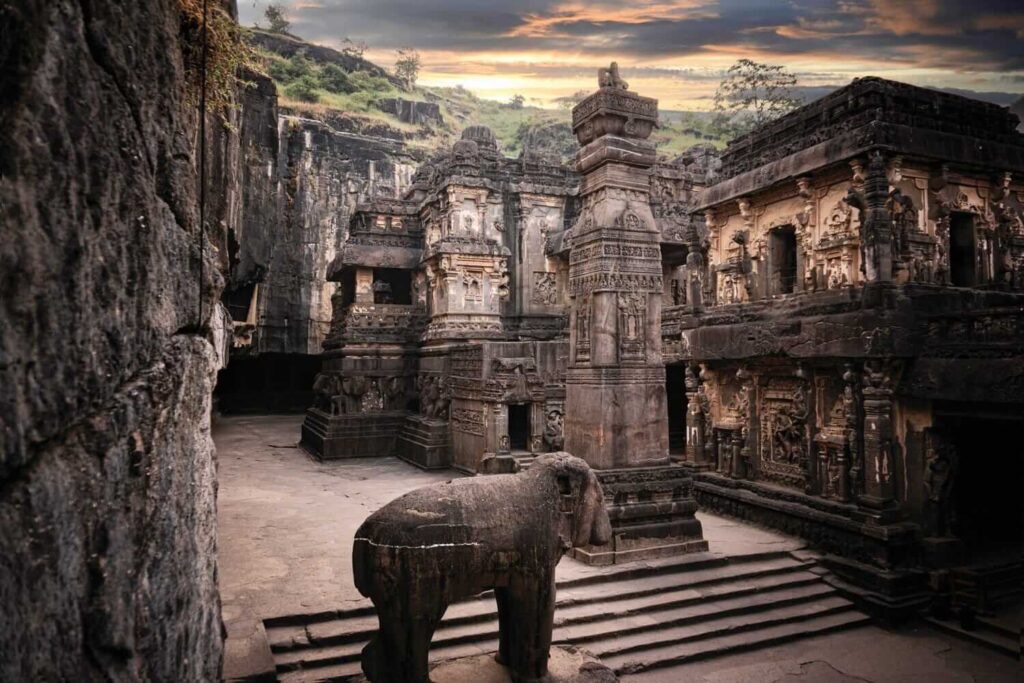
Despite being recognised internationally as one of the world’s greatest archaeological treasures, the Ellora Caves failed to secure a place among the New Seven Wonders of the World. However, experts point out that the reason has little to do with the site’s historical importance, architectural brilliance, or engineering achievement. Instead, it was largely the result of how the competition itself was conducted.
The New Seven Wonders campaign was organised by the private New7Wonders Foundation between 2000 and 2007. Unlike UNESCO’s World Heritage programme, the winners were not selected by historians, architects, archaeologists, or conservation experts. Instead, the final list was determined through a worldwide public voting campaign conducted via the internet and SMS messages.
More than 100 million votes were reportedly cast during the campaign, effectively turning the selection process into a global popularity contest. Naturally, landmarks that were already internationally recognised and backed by extensive tourism promotions enjoyed a significant advantage over equally remarkable but less-publicised historical sites.
For India, national attention was overwhelmingly directed toward promoting the Taj Mahal. Already one of the world’s most famous monuments and a global symbol of love, the white marble mausoleum received widespread support from both the Indian tourism sector and millions of voters across the globe. As a result, the Taj Mahal comfortably secured its place among the New Seven Wonders.
READ MORE OTHER ARTICLES:
- Why the Ellora Caves in India Never Made the Seven Wonders List

- Incitement to Sedition in Philippine Law
- Agustinian Colleges Inc. Continues to Shape Future Leaders Through Quality Education and Academic Excellence, Colleges, SHS, JHS, & Elementary
- English Grammar Rules
- 10 Toxic Habits Students Should Never Display in School
- School Safety Must Be a National Priority After San Jose National High School Tragedy



This left little room for another Indian monument, regardless of its historical significance. Although the Ellora Caves are regarded as one of India’s greatest cultural achievements, they did not receive the same level of international marketing, public awareness, or organised voting campaign.
Another important factor was internet accessibility during the early 2000s. Between 2000 and 2007, internet access across many parts of India remained relatively limited compared to today. Mobile internet was still in its infancy, and millions of potential supporters simply had no practical way to participate in the online voting process. Consequently, the Ellora Caves received far fewer votes than more globally recognised landmarks.
Many people also mistakenly believe that UNESCO was responsible for choosing the New Seven Wonders. In reality, UNESCO publicly clarified that it had no involvement whatsoever in the campaign or the selection of winners.
Rather than ranking monuments against one another, UNESCO focuses on identifying and protecting sites of outstanding universal value based on rigorous historical, cultural, scientific, and archaeological standards. The Ellora Caves earned UNESCO World Heritage Site status in 1983, decades before the New Seven Wonders campaign even began. For conservation experts and historians, this designation represents one of the highest forms of international recognition a historical site can receive.
Located in the Indian state of Maharashtra, the Ellora Caves comprise an extraordinary complex of 34 rock-cut temples and monasteries carved directly into the Charanandri Hills. Constructed between the sixth and tenth centuries, the site is celebrated for peacefully bringing together three major religions—Buddhism, Hinduism, and Jainism—within a single monumental complex, reflecting centuries of religious harmony and artistic excellence.
Among all the caves, Cave 16, better known as the Kailasa Temple, stands as the greatest marvel.
Unlike conventional buildings that are assembled stone by stone, the Kailasa Temple was carved from a single massive rock. Ancient craftsmen began at the top of the mountain and worked downward, carefully removing enormous quantities of solid basalt while gradually revealing the entire temple beneath.
This engineering technique is almost unparalleled in human history. Once a section of rock had been removed, there was no opportunity for correction. A single mistake could have permanently ruined the structure. Every cut required extraordinary planning, precision, and craftsmanship.
Historians estimate that builders removed somewhere between 200,000 and 400,000 tonnes of solid volcanic basalt using only basic hand tools such as chisels and hammers. Even with modern machinery, reproducing such a feat would be an enormous engineering challenge. The achievement becomes even more astonishing considering it was accomplished more than a thousand years ago without cranes, explosives, or advanced construction equipment.
Because of this remarkable accomplishment, many scholars, architects, engineers, and visitors have argued that the Kailasa Temple deserves to be recognised as the “Eighth Wonder of the World.” Its breathtaking scale, intricate carvings, flawless symmetry, and unique method of construction continue to amaze researchers and tourists alike.
Although the Ellora Caves did not make the New Seven Wonders list, their absence should not be mistaken as a reflection of their true importance. The outcome was largely determined by public popularity, international campaigning, and voting accessibility rather than objective historical or architectural evaluation.
Today, the Ellora Caves remain one of humanity’s greatest surviving masterpieces a monument that showcases the extraordinary skill, creativity, and determination of ancient Indian civilisation. For many who have stood before the towering Kailasa Temple, the site represents far more than a tourist destination. It is living proof that some of the world’s greatest wonders do not always require a title to earn their place among history’s most extraordinary achievements.
Ellora Caves Missed New Seven Wonders List Amid Popularity Contest, Not Political Ban
The magnificent Ellora Caves, one of the world’s greatest archaeological masterpieces and a UNESCO World Heritage Site, continue to captivate historians, architects, engineers, and millions of visitors each year. Yet despite their extraordinary cultural and engineering significance, the ancient cave complex was not included among the New Seven Wonders of the World—a result that has sparked curiosity and debate for nearly two decades.
Contrary to widespread belief, there was never an official political decision, religious discrimination, or international ban that excluded the Ellora Caves from the prestigious list. Historians explain that the site’s absence was primarily the consequence of the selection process itself, which relied on a worldwide popularity vote organised by the private New7Wonders Foundation rather than an evaluation conducted by UNESCO or a panel of international heritage experts.
Between 2000 and 2007, the foundation invited people around the world to vote online and through SMS messages for what they believed should become the New Seven Wonders of the World. More than 100 million votes were reportedly cast, making the campaign one of the largest global public polls ever conducted. While the initiative generated enormous public interest, many cultural experts noted that the outcome reflected global popularity, tourism marketing, and public awareness more than historical or architectural significance.
The Ellora Caves, despite their unparalleled craftsmanship, simply could not compete with monuments that already enjoyed worldwide recognition and extensive promotional campaigns. India’s tourism authorities and national marketing efforts largely concentrated on promoting the Taj Mahal as the country’s official candidate, believing that uniting public support behind a single monument would maximise India’s chances of securing a place on the final list. The strategy proved successful, with the Taj Mahal ultimately becoming one of the New Seven Wonders.
As a result, other remarkable Indian heritage sites—including the Ellora and Ajanta Caves—received considerably less international publicity during the campaign. Cultural observers argue that this was not an intentional effort to diminish their importance but rather a practical decision to avoid dividing public votes among multiple national landmarks.
Beyond the voting process, some historians have also examined broader historical and cultural factors that may have contributed to the site’s relatively limited international recognition. One frequently discussed issue is the long-standing Eurocentric perspective that shaped early interpretations of world history and architecture.
During the colonial era, many Western scholars focused heavily on monumental buildings constructed by stacking stone blocks or erecting towering structures, such as the Colosseum in Rome or the Parthenon in Greece. By comparison, India’s tradition of rock-cut architecture—where entire temples and monasteries were carved directly from solid mountains—received far less scholarly attention in Europe during the nineteenth and early twentieth centuries.
Researchers note that many early colonial accounts underestimated the sophistication of ancient Indian engineering. In some cases, speculative theories even suggested that structures such as the Kailasa Temple were too advanced to have been created by ancient Indian craftsmen. Such claims, including sensational suggestions involving lost civilisations or extraterrestrial intervention, have been thoroughly rejected by archaeologists and historians, who attribute the monument’s construction to the remarkable skill, planning, and ingenuity of Indian artisans during the Rashtrakuta dynasty.
Today, archaeological evidence overwhelmingly supports the conclusion that the Kailasa Temple was carved by human hands over many decades using traditional tools and extraordinary engineering precision.
Another factor often discussed by tourism analysts is what they describe as the politics of international promotion. Global competitions based on public voting naturally favour landmarks that receive the strongest advertising campaigns, government backing, celebrity endorsements, and media exposure. In India’s case, nearly all official tourism efforts were directed toward the Taj Mahal, already one of the country’s most recognisable symbols. While this strategy strengthened the Taj Mahal’s chances of victory, it inevitably reduced international awareness of equally remarkable sites such as Ellora.
Experts also point to more recent discussions surrounding the interpretation of the site’s history. Reports in Indian media have highlighted concerns about some unauthorised tourist guides presenting inaccurate or overly simplified narratives regarding the Hindu, Buddhist, and Jain monuments found within the cave complex. Heritage specialists have stressed the importance of ensuring that visitors receive historically accurate information reflecting the site’s unique role as a symbol of religious coexistence and artistic collaboration.
The Ellora Caves stand as one of the few places in the world where monuments dedicated to Buddhism, Hinduism, and Jainism were created side by side over several centuries. Scholars regard this remarkable concentration of sacred architecture as powerful evidence of cultural exchange and religious tolerance in medieval India.
At the heart of the complex lies the world-famous Kailasa Temple, widely considered one of humanity’s greatest engineering achievements. Unlike conventional buildings assembled from individual stones, the temple was carved entirely from a single mass of basalt rock by removing hundreds of thousands of tonnes of stone from the top downward. Archaeologists estimate that between 200,000 and 400,000 tonnes of rock were excavated using only hammers, chisels, and other simple hand tools.
The scale of this accomplishment continues to astonish engineers today. Every carving, pillar, courtyard, and shrine had to be planned before excavation began because any mistake would have permanently damaged the monument. The extraordinary precision required has led many historians, architects, and travellers to describe the Kailasa Temple as an unofficial “Eighth Wonder of the World.”
Although the Ellora Caves were absent from the New Seven Wonders list, experts emphasise that this should not be interpreted as a measure of the site’s historical importance. The New Seven Wonders project represented a global public popularity campaign rather than an academic or archaeological ranking. UNESCO itself has repeatedly clarified that it had no role in organising the competition or selecting its winners.
- Why the Ellora Caves in India Never Made the Seven Wonders List
- Sara Duterte | Lawyer, Biography, Political Career & Issues
- Ombudsman Files Fourteen Graft Cases Against Congressman Over Contract Links Today
- Macau Giant Pandas Complete Stunning Comeback For First Governors Cup Victory
- Typhoon Noul Threatens Southern China, Hong Kong Cancels Flights, Thousands Evacuated
- Cebu Youth Champions Showcase Untapped Philippine Basketball Talent and Promise
- Cebu Authorities Seize Unregistered Korean Luncheon Meat Worth ₱700,000 From Grocery Store
- Donald Trump Says US ‘Locked and Loaded’ as Washington Pursues Talks With Iran






![Nablus in the Israeli-occupied West Bank, on Friday [Jaafar Ashtiyeh/AFP]](https://www.aptikons.com/view/Screenshot-2026-07-25-133516-150x150.png)
For archaeologists, conservationists, and heritage professionals, Ellora’s designation as a UNESCO World Heritage Site since 1983 remains one of the highest international recognitions a cultural monument can receive. Protected for its outstanding universal value, the cave complex continues to attract visitors from across the globe who come to witness one of the most extraordinary examples of human creativity ever carved into stone.
While marketing campaigns and public voting may have determined the outcome of the New Seven Wonders competition, many experts believe the enduring legacy of the Ellora Caves cannot be measured by rankings alone. More than a thousand years after artisans first began carving into the volcanic cliffs of Maharashtra, the monument remains a timeless testament to human imagination, engineering brilliance, and the shared cultural heritage of civilisation.