Bruises, Privilege, and Public Trust: Why Questions About Accountability Never Disappear. The sight of Andrew Mountbatten-Windsor bearing a prominent facial bruise has once again thrust the disgraced former royal into the spotlight, but beyond the speculation surrounding his appearance lies a far deeper and more persistent debate. From favorable property deals and questions of financial privilege to complex, long-running legal investigations, every chapter of his public life reinforces a critical question that extends well beyond one individual: whether those born into power and status are truly subject to the same rules, standards, and accountability as everyone else. As controversies continue to surface and public scrutiny intensifies, the issue has evolved from a matter of personal conduct into a broader test of transparency, fairness, and the fragile bond of trust between institutions and the people they serve.
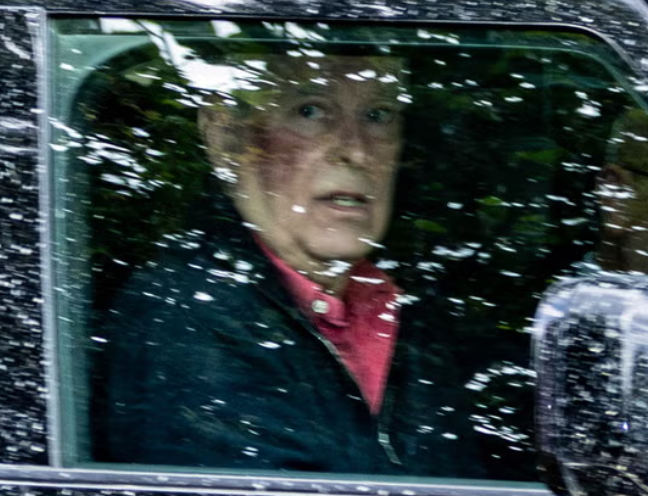
UK — A photograph can sometimes tell a story that official statements cannot. The recent appearance of Andrew Mountbatten-Windsor, formerly known as Prince Andrew, sporting a noticeable bruise around his eye immediately sparked speculation and public curiosity. While reports suggest the injury may have resulted from a non-serious medical condition, the image nevertheless became another chapter in a public saga that refuses to fade from public consciousness.
The fascination surrounding Andrew is not merely about a bruise or a photograph. It reflects a much larger issue: the ongoing debate over privilege, accountability, and public trust in institutions that have historically operated above ordinary scrutiny.
For years, controversies surrounding the former royal have generated headlines across Britain and beyond. Each new revelation, whether related to financial arrangements, property agreements, or legal investigations, reignites questions about whether powerful individuals are held to the same standards as ordinary citizens. These questions are not unique to the British monarchy. They emerge in democracies around the world whenever public figures appear to benefit from status, influence, or connections unavailable to the average taxpayer.
READ MORE ARTICLES:
- Iran Unblocks Most Underground Missile Sites, Poised for More Long-Range Strikes; Experts Flag Limits of US Bombing Strategy
- JUSTICE & TRUTH: The Long Road to Unlocking the Epstein Files
- Take It Down Act – A Major Step Forward in Protecting Digital Privacy and Dignity
- USA: Senate Battle Lines Drawn – GOP’s Big Bet, Voter Anger, and the Shadow of War
- Donald Trump & Xi Jinping Shake Hands as World Holds Its Breath: “We Don’t Need Another War,” Says Trump
- Cole Allen, Suspect in Alleged Donald Trump Assassination Attempt at Washington Gala, Agrees to Remain in Custody
The controversy surrounding leasing arrangements connected to Royal Lodge has fueled this perception. Critics argue that preferential treatment, even when technically legal, creates a sense of unfairness at a time when many families struggle with rising housing costs and economic uncertainty. To ordinary citizens working hard to pay mortgages, rent, and utility bills, reports of favorable agreements for wealthy and well-connected individuals can seem disconnected from reality.
This is where public frustration often begins.
People are generally willing to accept differences in wealth and status. What they find difficult to accept is the perception that rules apply differently depending on one’s social position. Every new report, investigation, or controversy reinforces a belief among some citizens that there are separate standards for elites and everyone else.
The issue extends beyond one individual. It touches the credibility of institutions themselves. Monarchies, governments, courts, and public agencies all rely on public confidence to function effectively. When confidence erodes, skepticism grows. Citizens begin to question whether justice is truly impartial and whether accountability applies equally across society.
The challenge facing modern institutions is not merely proving innocence or legality. It is demonstrating transparency. In today’s world, legal compliance alone is often insufficient. The public increasingly expects ethical conduct, openness, and a willingness to answer difficult questions.
For the British monarchy, the stakes are particularly high. The institution survives not because of political power but because of public support. Every controversy involving a member of the royal family inevitably affects perceptions of the Crown itself. While King Charles III has sought to modernize and streamline the monarchy, lingering controversies continue to test public patience and institutional resilience.
The image of Andrew Mountbatten-Windsor leaving Sandringham with a visible bruise may ultimately prove insignificant. The mark on his face will heal. Headlines will move on. Another news cycle will emerge.
Yet the deeper questions raised by his public appearances remain unresolved. They concern fairness, accountability, and the responsibilities that accompany privilege. These are questions that transcend any single royal figure and resonate across democratic societies worldwide.
Ultimately, the public’s concern is not about bruises or photographs. It is about trust. And once trust is damaged, restoring it becomes far more difficult than explaining any visible mark.
Who was photographed with a large purple bruise across his right eye and cheek?
Andrew Mountbatten-Windsor, formerly known as the Duke of York, was photographed with a noticeable purple bruise across his right eye and cheek. The photographs were taken while he was driving away from Sandringham Estate with another man. Although the bruise attracted public attention, reports indicated that it was likely the result of a non-serious medical condition. No official statement was released explaining the exact cause of the injury, which led to speculation and media interest regarding his health and well-being.
Why did the bruise on Andrew Mountbatten-Windsor’s face attract public attention?
The bruise attracted significant public attention because Andrew Mountbatten-Windsor is a well-known public figure whose activities and appearance are closely monitored by the media. The large purple mark on his face raised questions about his health and circumstances. Since the cause of the bruise was not immediately explained, many observers became curious. Additionally, the photographs emerged during a period when he was already facing public scrutiny over property arrangements, investigations, and security concerns, making the images even more newsworthy.
What did the National Audit Office review reveal about Andrew Mountbatten-Windsor’s living arrangements?
The National Audit Office review found that Andrew Mountbatten-Windsor’s leasing agreement with The Crown Estate allowed him to sublet three of the eight cottages located on the Royal Lodge estate while he occupied the main 30-bedroom residence. This arrangement became controversial because critics argued that it enabled him to benefit financially from a property connected to the Crown Estate while paying only a minimal or “peppercorn” rent. The findings sparked debate about fairness, accountability, and the privileges enjoyed by members of the royal family.
What criticism did Labour MP Rachael Maskell make regarding the leasing arrangement?
Rachael Maskell criticized Andrew Mountbatten-Windsor by arguing that he had repeatedly benefited from his position and used it for personal advantage. She expressed concern that he paid only a symbolic or “peppercorn” rent while being allowed to sublet properties. According to Maskell, this situation was especially troubling during a period when many ordinary citizens were struggling with housing costs and rising rents. Her comments reflected broader public concerns about privilege, accountability, and the use of publicly connected assets.
Why could the investigations involving Andrew Mountbatten-Windsor and Lord Peter Mandelson take a long time?
According to Director of Public Prosecutions Stephen Parkinson, the investigations could take more than a year because of their complexity. He explained that such inquiries often involve gathering evidence from multiple sources and may include international elements that require cooperation between different jurisdictions. Formal legal procedures, court approvals, and requests for evidence can all create delays. Parkinson emphasized that the lengthy timeline would not be due to a lack of urgency but rather the complicated nature of the investigations.
What explanation did Stephen Parkinson provide regarding the pace of the investigation?
Stephen Parkinson explained that complex investigations often require extensive evidence gathering and legal procedures. Even when investigators act quickly, international cooperation can slow the process because evidence requests may need to pass through courts and official channels. He stressed that the public should not expect an immediate outcome because legal investigations must follow proper procedures to ensure accuracy, fairness, and compliance with the law.
What security incident reportedly occurred near Andrew Mountbatten-Windsor’s home?
The report stated that Andrew Mountbatten-Windsor was allegedly confronted by a man wearing a balaclava near his residence. The incident was serious enough to attract police attention, and a suspect named Alex Jenkinson, aged 39, was later charged with offenses involving threatening, abusive, or insulting behavior. The confrontation reportedly caused concern and renewed discussion about the level of security provided to the former royal.
How did the security scare affect discussions about Andrew Mountbatten-Windsor’s protection?
Following the alleged confrontation, reports suggested that Andrew Mountbatten-Windsor requested the reinstatement of his taxpayer-funded security protection. The incident highlighted concerns about personal safety and reignited debate over whether former senior royals should continue receiving publicly funded security services. Supporters argued that his profile could make him vulnerable to threats, while critics questioned the financial burden on taxpayers.
What decision regarding security funding was attributed to King Charles?
According to the report, King Charles withdrew private funding for the security operation at Andrew Mountbatten-Windsor’s residence in 2024. This decision became a subject of public discussion because it reflected broader efforts to redefine financial arrangements within the royal family. The withdrawal of funding also increased attention on debates over who should bear responsibility for security costs.
Why is it important to distinguish between allegations and proven facts when reading such reports?
It is important to distinguish between allegations and proven facts because allegations have not necessarily been verified in court or through official findings. Responsible readers should recognize that investigations are designed to determine the truth of claims and that individuals are generally presumed innocent unless proven otherwise. Treating allegations as established facts can lead to misinformation, unfair judgments, and damage to reputations. Critical reading requires examining evidence, understanding context, and waiting for official conclusions before drawing firm conclusions.
Royal Privilege Under Scrutiny: Questions Mount Over Andrew Mountbatten-Windsor’s Property Arrangements
For more than two decades, a little-known property arrangement quietly operated behind the walls of one of Britain’s most prestigious royal estates. Now, a National Audit Office (NAO) report has pulled back the curtain, revealing a system that critics say symbolizes the enduring gap between privilege and public accountability.
The report found that Andrew Mountbatten-Windsor privately sublet three cottages located on the Royal Lodge estate while residing in the sprawling 30-room mansion at the heart of the property. What has ignited controversy is not merely the subletting itself, but the financial terms under which it occurred. Despite generating personal income from the cottages, he reportedly paid only a nominal “peppercorn rent” for the main residence under a lease agreement with The Crown Estate.
Legally, the arrangement was permitted under the terms of the lease. Yet legality and public perception are often two very different things.
At a time when millions of families across the United Kingdom continue to grapple with rising housing costs, soaring rents, and economic uncertainty, the revelation has triggered a wave of criticism from politicians and transparency advocates. Critics argue that while ordinary citizens face increasing financial burdens, members of the royal establishment appear to enjoy opportunities unavailable to the public.
Labour MP Rachael Maskell was among the most vocal critics, condemning what she viewed as a system that allowed personal financial gain from public assets. Former Liberal Democrat minister Norman Baker went even further, describing the arrangement as outrageous and questioning why income derived from Crown Estate properties was not returned to the estate itself.
The controversy extends beyond a single individual. The NAO report also sheds light on the broader management of royal properties, revealing that the Prince and Princess of Wales pay £307,200 annually for their residence at Forest Lodge. Meanwhile, Edward and Sophie, the Duke and Duchess of Edinburgh, were also reported to have sublet properties within the Bagshot Park estate under separate arrangements.
These disclosures have widened the debate from one royal figure to the entire system governing royal residences and land holdings. Questions are now being raised about transparency, oversight, and whether current arrangements reflect modern expectations of accountability.
Defenders of the royal property system may point out that these agreements were authorized, documented, and conducted within established legal frameworks. However, critics argue that the issue is not simply whether rules were followed, but whether those rules themselves serve the public interest.
The timing of the report is particularly significant. Public trust in institutions increasingly depends on openness and fairness. In an era where governments, corporations, and public officials face growing demands for transparency, royal property arrangements are no longer shielded from scrutiny. What may once have been viewed as a private matter is now being examined through the lens of public accountability.
The NAO’s findings will soon be presented to Members of Parliament on the Public Accounts Committee, potentially setting the stage for a broader inquiry into how royal properties are managed and whether reforms are needed. The outcome could have implications far beyond Royal Lodge, touching on the relationship between privilege, public resources, and modern governance.
Ultimately, the controversy is about more than cottages, leases, or rental income. It reflects a larger question confronting institutions across the world: should historic privilege continue to operate under exceptional rules, or should it be held to the same standards of transparency and accountability expected of everyone else?
As Parliament examines the findings, the debate is likely to intensify. What began as a review of a lease agreement has evolved into a broader conversation about fairness, public trust, and the responsibilities that accompany privilege in the twenty-first century.
- Why the Ellora Caves in India Never Made the Seven Wonders List
- Sara Duterte | Lawyer, Biography, Political Career & Issues
- Ombudsman Files Fourteen Graft Cases Against Congressman Over Contract Links Today
- Macau Giant Pandas Complete Stunning Comeback For First Governors Cup Victory
- Typhoon Noul Threatens Southern China, Hong Kong Cancels Flights, Thousands Evacuated
Rules for the Powerful vs. Rules for All: The Growing Debate Over Accountability Shaking the Foundations of the Monarchy
For centuries, the British monarchy has projected an image of dignity, honor, and public service. But every institution, no matter how old or prestigious, faces a moment when public trust is tested. The controversies surrounding Andrew Mountbatten-Windsor have become one of those moments.
What began as questions about his association with convicted sex offender Jeffrey Epstein evolved into a broader debate about accountability, privilege, and whether members of powerful institutions are subjected to the same standards expected of ordinary citizens.
The damage to public confidence did not come from a single allegation or controversy. It came from the accumulation of unanswered questions, disputed claims, and a perception that powerful figures often operate within a system that shields them from the scrutiny faced by everyone else.
For years, Andrew’s name has remained linked to one of the most notorious scandals in recent history. Regardless of legal outcomes, the association alone has cast a long shadow over the Royal Family. Every new revelation, every released document, and every renewed investigation has reignited public debate and intensified demands for transparency.
The larger issue is not simply one individual. It is whether institutions built on public trust can survive repeated controversies without meaningful accountability. Modern democracies demand openness. Citizens expect leaders, public officials, and influential figures to answer difficult questions rather than rely on status, tradition, or privilege as protection.
Critics argue that royal privilege has too often functioned as a protective barrier between powerful individuals and public scrutiny. Defenders counter that allegations should never be confused with proof and that due process must be respected. Both principles are essential. Accountability requires evidence, and justice requires fairness.
Yet public frustration continues to grow whenever controversy appears to be followed by silence, delay, or secrecy. Trust is not preserved by avoiding scrutiny. It is preserved by confronting it directly.
The controversy has also raised uncomfortable questions about the relationship between privilege and responsibility. When public resources, official positions, or institutional prestige are involved, expectations inevitably rise. Citizens who obey laws, pay taxes, and struggle through economic hardship expect those in positions of influence to meet the highest standards of conduct.
The monarchy’s greatest strength has always been public confidence. Its greatest vulnerability is the loss of that confidence. Every scandal chips away at the belief that the institution operates according to the values it publicly represents.
History shows that institutions rarely fall because of a single controversy. They weaken when people begin to believe that there is one set of rules for the powerful and another for everyone else.
Whether the allegations, investigations, and controversies surrounding Andrew Mountbatten-Windsor ultimately lead to legal consequences is a matter for authorities and the courts. But in the court of public opinion, the debate is already underway. The question facing Britain is no longer simply about one royal figure.
It is about whether privilege can continue to exist without accountability—and whether public trust can survive when questions remain unanswered