The annual Brigada Eskwela program of the Department of Education is officially scheduled from June 1 to 5, 2026, as public schools across the country prepare for the opening of classes on June 8, 2026, for School Year 2026–2027.
Under DepEd Memorandum No. 27, s. 2026, this year’s Brigada Eskwela carries the theme, “Bayanihan sa Paaralan: Nagkakaisa para sa Kaayusan at Kaalaman,” highlighting the importance of unity, volunteerism, and community participation in ensuring schools are clean, safe, and ready for learners.
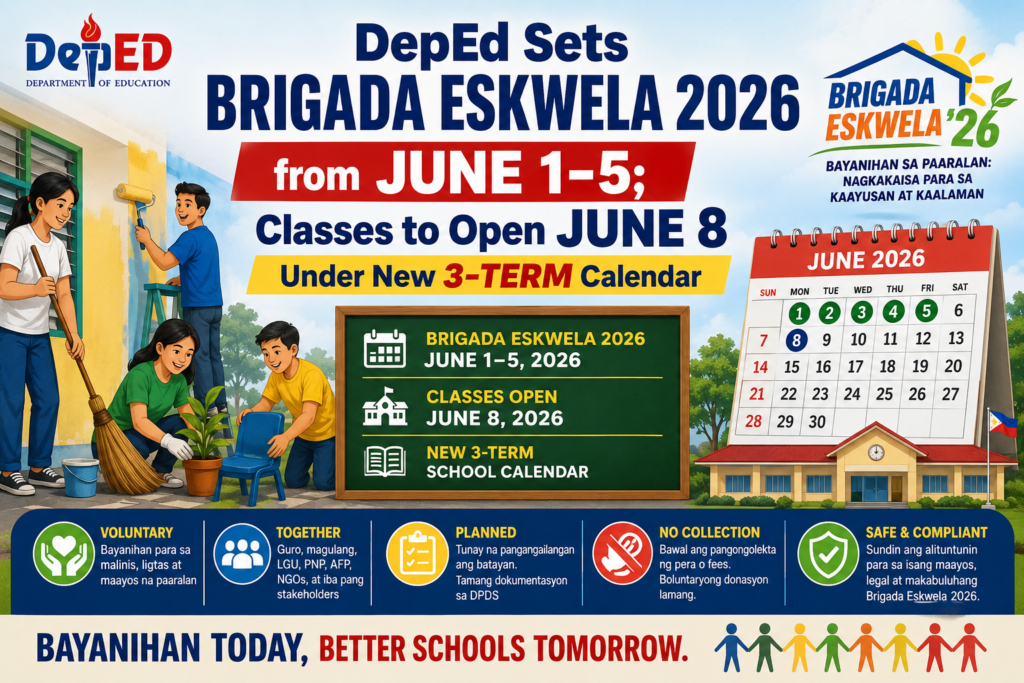
The nationwide initiative encourages teachers, parents, students, local government units, private organizations, and community volunteers to work together in rehabilitating and improving school facilities before the start of classes. Activities commonly include classroom cleaning, repainting, repair of chairs and school equipment, gardening, waste disposal, and sanitation efforts.
READ MORE ARTICLES:
- Meralco vs. People? Meralco Pushes Stricter Solar Rules as High Electricity Costs Spark Public Backlash
- CSC Government Employees Banned from All Gambling Activities
- Impeachment of Vice President Sara Duterte-Carpio: Discussion, Judgment, Politics, and Consequences
- Lopez Inc. Leadership Shake-Up: 71% Family Bloc Forces Out Piki Lopez Amid Governance Storm
- #FACTCHECK: Deen Chase Says President Bongbong Marcos Jr. Has HIV/AIDS
- CEBU: Meet the Mind Behind RUTA, the AI App Aiming to Simplify Cebu Commuting
- Two Americans Among 19 Killed in Clash Between Philippine Troops and Suspected Communist Rebels
DepEd emphasized that Brigada Eskwela remains a voluntary activity and should not become a burden to parents or stakeholders. According to the memorandum, schools are strictly prohibited from collecting any form of mandatory contribution or “Brigada fees” from parents, volunteers, or donors. Participation in the program must not be required for student enrollment or for the release of school records and grades.
The agency also reiterated several important prohibitions during the implementation of Brigada Eskwela. Schools are not allowed to display oversized commercial advertisements, sponsorship tarpaulins, or product endorsements inside campuses. Assistance from tobacco companies is likewise prohibited. Bringing firearms or deadly weapons inside school premises is also strictly banned, including among uniformed personnel participating in volunteer activities.
To ensure proper compliance with guidelines, schools are instructed to organize working committees that will oversee advocacy campaigns, resource mobilization, documentation, and volunteer coordination. Administrators are also required to conduct facility assessments using BE Form 1 to identify the actual needs of the school before seeking support from stakeholders.
All donations, whether in the form of materials, equipment, or volunteer services, must be properly documented and recorded through the DepEd Partnerships Database System (DPDS). Schools are also encouraged to maintain cleanliness by removing unnecessary decorations, outdated posters, and damaged materials from classrooms and hallways.
Brigada Eskwela continues to symbolize the Filipino spirit of “Bayanihan,” where communities unite to support education and provide students with a better learning environment. Participants include teaching and non-teaching personnel, parents, student organizations such as the Supreme Student Government (SSG) and Supreme Pupil Government (SPG), local officials, members of the Philippine National Police and Armed Forces of the Philippines, as well as civic groups, churches, non-government organizations, and private companies willing to donate services or school supplies.
Meanwhile, School Year 2026–2027 will also mark the implementation of the new Three-Term School Calendar under DepEd Order No. 009, s. 2026, replacing the previous four-quarter academic system in public schools.
Brigada Eskwela 2026-2027: Fostering Community Involvement in Education
Brigada Eskwela, an initiative established by the Department of Education (DepEd) in the Philippines, plays a paramount role in preparing public schools for the academic year. This program fosters a spirit of community involvement and cooperation among various stakeholders, including students, parents, educators, and local organizations. Its primary objective is to enhance the learning environment by encouraging communities to actively participate in the school maintenance process, thereby ensuring a conducive atmosphere for education.
The essence of Brigada Eskwela lies in its collaborative approach, which brings together volunteers to undertake activities such as cleaning classrooms, repairing facilities, and organizing resources. This year, the Brigada Eskwela is scheduled from May 29 to June 3, 2026, as schools gear up for the upcoming academic year. This initiative is more than just a preparatory measure; it reinforces the idea that quality education is a shared responsibility, bridging the gap between education and community.
Furthermore, Brigada Eskwela aligns with the broader educational framework set forth by DepEd, emphasizing the significance of community support in achieving educational goals. By promoting engagement and participation, the program not only beautifies schools but also strengthens the bond between educators and their communities. In this way, Brigada Eskwela contributes to the holistic development of students, fostering values of cooperation and social responsibility that extend beyond the classroom.
Thus, as the 2026-2027 school year approaches, the emphasis on community involvement through Brigada Eskwela remains crucial for creating an enriching, well-maintained learning environment. The active participation of all stakeholders signifies the community’s commitment to education, underlining its importance as a foundational pillar for the country’s development.
Theme and Objectives of Brigada Eskwela 2026-2027
The official theme for Brigada Eskwela 2026-2027, “Bayanihan sa Paaralan: Nagkakaisa para sa Kaayusan at Kaalaman”, encapsulates the essence of community involvement in education, highlighting the collective effort towards maintaining schools that are not only conducive to learning but also safe and orderly. The term “Bayanihan” depicts a traditional Filipino custom of communal unity and cooperation, which resonates deeply with the spirit required to foster a thriving educational environment. This theme underlines the necessity for collaborative initiatives that encourage active participation from various stakeholders including parents, teachers, and local government units.
The primary objectives of Brigada Eskwela focus on enhancing the cleanliness and safety of schools. By mobilizing community members, the program aims to create an environment in which students can thrive. Cleanliness is a fundamental aspect of this initiative, ensuring that educational facilities are well-maintained and free from hazards. A clean school environment can significantly impact students’ health and learning outcomes, allowing them to focus on their studies rather than potential distractions or illnesses related to poor hygiene.
Moreover, safety is paramount in the objectives of Brigada Eskwela. As schools serve as second homes for many students, ensuring their safety is a shared responsibility. The program encourages communities to actively assess and address potential safety concerns within school facilities. This collective approach to fostering a safe atmosphere not only promotes a secure environment for learning but also strengthens the bond between the schools and the communities they serve.
Finally, orderliness is emphasized in the objectives, as structured school environments promote better discipline among students. By encouraging participation and cooperation among community members, Brigada Eskwela also aims to instill a sense of responsibility and ownership regarding the upkeep of schools. Altogether, the theme and objectives aim to cultivate a culture of mutual support that benefits both the educational institutions and the wider community, ultimately fostering a bright future for the learners.
Overview of Activities During Brigada Eskwela
Brigada Eskwela, an initiative aimed at reinforcing the partnership between schools and local communities in the Philippines, involves a range of activities that contribute significantly to the educational environment. One of the primary activities is classroom cleaning, where community members come together to ensure that educational spaces are tidy and conducive for learning. This not only enhances the aesthetics of the classrooms but also promotes health and safety, creating an inviting atmosphere for students.
In addition to cleaning, repainting is a common activity during Brigada Eskwela. Volunteers often engage in repainting classroom walls and school facilities. This practice not only revitalizes the appearance of the educational buildings but also helps protect the structures from decay and deterioration, ensuring that they stay in good condition for longer periods. The fresh and vibrant colors can also positively affect students’ mood and motivation.
Repairs are another critical component of Brigada Eskwela. Many schools face issues such as damaged furniture, broken windows, or malfunctioning restrooms. Community involvement allows for these repairs to be addressed promptly and effectively. Engaging skilled individuals from the community to assist in these tasks fosters a sense of ownership and responsibility toward the school environment.
Landscaping is frequently undertaken during this initiative, aiming to beautify the school grounds. Participants plant trees, flowers, and maintain gardens, creating an environment that is not only pleasant but also educational, as students learn the importance of nature and sustainability. Moreover, donation management plays a vital role, where community members contribute materials, books, or equipment that are essential for improving educational resources.
Collectively, these activities during Brigada Eskwela enhance the learning environment, showcasing the vital role of community involvement in education and fostering a spirit of cooperation that can lead to lasting improvements in educational quality.
DepEd Guidelines and Prohibitions
The Department of Education (DepEd) has outlined several critical guidelines and prohibitions in Memorandum No. 027, s. 2026, concerning the execution of Brigada Eskwela for the school year 2026-2027. These guidelines aim to ensure that the initiative remains focused on community involvement and educational enhancement while adhering to ethical standards.
One of the primary directives is the no-collection policy, which prohibits any form of monetary contributions from community members for activities related to Brigada Eskwela. This ensures that participation is accessible to all, irrespective of financial status, fostering an inclusive environment. Additionally, this policy aligns with the DepEd’s goal of promoting volunteerism without the burden of fees or donations, thereby encouraging widespread involvement from families and local organizations.
Moreover, the memorandum strictly prohibits the display or distribution of commercial advertisements on school grounds during the event. This ban aims to prevent the commercialization of the educational landscape and maintains the integrity of the initiative. It is essential that Brigada Eskwela remains a community-based effort, emphasizing genuine support and cooperation rather than commercial interests.
Another significant prohibition centers around any support or sponsorship from entities within the tobacco industry. The involvement of such corporations is seen as contradictory to the educational values championed by DepEd. It is vital to create a safe and healthy environment for students and staff, and associations with the tobacco industry undermine these principles. By adhering to these guidelines, schools, learners, and communities can fully engage in Bridging Eskwela, strengthening their collective commitment to creating conducive learning environments.
Compliance Strategies for Schools
To effectively align with the Department of Education (DepEd) policies during Brigada Eskwela 2026-2027, schools must implement systematic compliance strategies that enhance community involvement and ensure adherence to established guidelines. One of the foundational strategies involves creating advocacy committees comprising teachers, parents, and community leaders. These committees serve as platforms for discussing compliance requirements and promoting active participation in school improvement initiatives.
Additionally, conducting thorough resource inventories is crucial. Schools should assess their current resources, identifying both strengths and areas needing improvement. This assessment allows for effective planning of activities and resource allocation, ensuring that all requirements set forth by DepEd are met while fostering collaboration among community members. An accurate inventory serves not only for immediate compliance but also helps in strategizing for future Brigada Eskwela and other school initiatives.
Maintaining proper documentation is another essential aspect of compliance strategies. Schools are encouraged to keep meticulous records of activities, participant involvement, and resources utilized during Brigada Eskwela. This documentation fosters transparency and provides a reliable reference for future events. Furthermore, schools can utilize documentation to report progress to DepEd and for internal evaluations to improve subsequent initiatives.
Promoting overall school cleanliness plays a significant role in compliance during Brigada Eskwela. It involves engaging students, teachers, and community members in cleaning and beautifying the school environment. Schools should schedule clean-up drives as part of their activities, emphasizing the importance of a clean and conducive learning space. This not only meets compliance standards but also instills a sense of responsibility and pride in the school premises among all stakeholders.
Stakeholder Participation in Brigada Eskwela
Brigada Eskwela serves as a remarkable platform aimed at enhancing community involvement in education through active participation from various stakeholders. Teachers play a pivotal role by organizing activities and fostering a collaborative environment within schools. They are essential in coordinating efforts and ensuring that all necessary resources are available for the successful implementation of the initiative. Furthermore, teachers not only facilitate the activities but also provide guidance to volunteers, ensuring that the goals of Brigada Eskwela are met.
Parents, as primary stakeholders, are encouraged to partake in this endeavor by lending their hands during preparation activities. Their involvement is crucial in creating a supportive environment conducive to learning. Parents can assist in various ways, from helping with maintenance tasks around the school premises to engaging in community communication efforts, thereby strengthening the bond between home and school.
Local government officials also play a significant role in Brigada Eskwela. Their active participation can lead to better resource allocation and needed logistical support. By working closely with schools, local government units ensure that initiatives receive the backing of structure and policy, enhancing the outreach and impact of the program within the community. Moreover, civic organizations contribute much-needed volunteer power and fundraising, promoting awareness and involvement through their networks.
Private sector participation adds another layer of support to Brigada Eskwela. Businesses can contribute not only financially but also by offering supplies, materials, and even their workforce to assist with school preparations. This collaboration leads to a holistic approach to educational enhancement, demonstrating the collective responsibility of community members to uplift local educational standards.
Local Government Units (LGUs) play a crucial role in the success of Brigada Eskwela, a nationwide initiative aimed at fostering community involvement in education. Their contributions encompass a variety of responsibilities, primarily focusing on coordination, resource mobilization, and direct support to schools. Effective coordination by LGUs ensures that all stakeholders—parents, teachers, and local communities—are aligned in their efforts to prepare public schools for the upcoming academic year.
One of the key responsibilities of LGUs during Brigada Eskwela is the mobilization of resources. This includes not only financial assistance but also the provision of materials and services that schools may need to improve their facilities. For instance, LGUs often collaborate with local businesses and organizations to secure donations or sponsorships, which can significantly enhance the physical environment of schools. Through such partnerships, LGUs demonstrate their commitment to advancing educational standards, thus fostering a sense of communal responsibility.
Furthermore, LGUs are essential in promoting awareness regarding Brigada Eskwela activities within the community. By organizing meetings, workshops, and promotional campaigns, they encourage active participation from residents. This involvement is vital, as it cultivates a spirit of unity among residents, emphasizing the notion that education is a shared responsibility. The presence of local government representatives during Brigada Eskwela events also reinforces the importance of government support in educational initiatives, instilling confidence within the community.
In summary, Local Government Units are indispensable in the execution of Brigada Eskwela. Their coordinated efforts in mobilization and support not only enhance the educational landscape but also strengthen community engagement. This collaborative approach ultimately aims to create a welcoming and conducive learning environment for students, ensuring their readiness for the academic challenges ahead.
The Importance of Voluntary Participation
Voluntary participation is a cornerstone of Brigada Eskwela, an initiative designed to foster community involvement in education. This program emphasizes the significance of individuals choosing to engage without any form of pressure or obligation. By highlighting the voluntary aspect, the organizers ensure that all participants feel comfortable and willing to contribute, whether through financial means, labor, or simply sharing their time and skills. This approach not only cultivates a sense of community spirit but also allows for genuine involvement, as individuals participate based on their capabilities and desire to contribute to local educational initiatives.
The implications of mandatory participation in community programs can be detrimental. When individuals feel coerced into contributing, it may lead to resentment and disengagement rather than fostering a spirit of cooperation. It is crucial for educational policies, such as those set forth by the Department of Education (DepEd), to clearly communicate that participation in Brigada Eskwela is entirely voluntary. This alleviates any concerns that families or community members might have about financial commitment or compulsory labor, thus encouraging a diverse cross-section of the community to join in.
The impact of fostering a voluntary atmosphere cannot be understated. The inclusive nature of Brigada Eskwela acts as a catalyst for increased community engagement, as it invites participation from individuals from various backgrounds and circumstances. It encourages knowledge sharing and resource pooling, ultimately benefiting the educational environment. Through this lens of voluntary participation, Brigada Eskwela stands as a testament to what communities can achieve when individuals come together out of their own free will, truly uplifted by a shared commitment to education.
As we have explored throughout this blog post, Brigada Eskwela serves as a vital initiative that brings together various stakeholders in the community to support education. By fostering collaboration among parents, teachers, local businesses, and community leaders, this program significantly enhances the learning environment for students. The commitment to maintaining schools and preparing classrooms ensures that children receive the best possible education in a nurturing atmosphere. This collective effort not only benefits students academically but also strengthens community ties, creating a support system that can have lasting impacts.
Moreover, the active involvement of community members demonstrates the power of unity in tackling educational challenges. Initiatives such as Brigada Eskwela highlight the importance of making education a shared responsibility, where everyone plays a role in the developmental journey of students. Engaging in this program allows individuals to contribute positively to their community while ensuring that schools are equipped with the necessary resources and support to thrive.
Therefore, we urge all community members—whether you are a parent, teacher, student, or local resident—to join forces in the upcoming Brigada Eskwela events for the school year 2026-2027. Participating does not only enrich the educational experience for students but also fosters a spirit of collaboration and solidarity. By volunteering your time, resources, or expertise, you can make a significant difference and contribute to a holistic educational framework that benefits everyone. Let us come together to realize the vision of an empowered and educated generation, ensuring that no student is left behind.
Addressing the Challenges Faced by Public Schools Before Brigada Eskwela
The primary objective of Brigada Eskwela is to prepare schools for the incoming academic year by addressing infrastructural and maintenance needs. Volunteers participate in various activities, such as cleaning classrooms, repainting school buildings, repairing furniture, and organizing educational materials. Through this collective effort, the initiative not only beautifies the school premises but also instills a sense of ownership and responsibility among various stakeholders, including students, parents, teachers, and local government units.
The significance of Brigada Eskwela extends beyond mere facility improvement; it also serves as a platform for strengthening the bond between schools and their respective communities. By actively involving community members in the educational process, Brigada Eskwela fosters a culture of collaboration and support, which is vital for addressing various challenges faced by public schools. Moreover, the initiative encourages families to take an active role in their children’s education, promoting values such as teamwork, community service, and shared accountability. Indeed, the success of Brigada Eskwela depends on the active participation and commitment of community members, showcasing the meaningful impact that collective efforts can have on public education.
Unprepared classrooms significantly hinder student engagement and educational success in public schools. These challenges manifest in various forms, impacting not only the learning environment but also student motivation and academic performance. One of the most pressing issues is the prevalence of dirty environments. Classrooms that lack regular cleaning and maintenance can be unsightly and even unhealthy, fostering an atmosphere where students may feel uncomfortable or distracted. Dusty surfaces, overflowing trash cans, and unclean restrooms detract from the overall educational experience, making it difficult for students to focus on their studies.
In addition to cleanliness, damaged furniture is another critical factor that undermines an effective learning environment. Broken desks, chairs with missing parts, and deteriorating resources create physical barriers that can inhibit student participation. When students are seated on uncomfortable or unstable furniture, they are less likely to engage fully in classroom activities. Furthermore, inadequate learning spaces, such as overcrowded classrooms or poorly designed layouts, can hinder the delivery of instruction and limit opportunities for collaborative learning. A classroom that cannot accommodate the needs of its students makes it challenging to foster a positive learning experience.
Moreover, the lack of sufficient learning materials exacerbates these challenges. In classrooms where textbooks are outdated and educational tools are lacking, teachers struggle to deliver engaging and relevant lessons. This situation not only affects teachers’ performance but also leads to a disconnect between the educational content and the students’ learning needs. Addressing these issues is crucial to ensuring that all students have access to an environment conducive to learning. Schools must prioritize the preparation of classrooms to create a supportive atmosphere that encourages student engagement and facilitates educational success.
Resource Gaps in Public Schools
The quality of education in public schools is increasingly being challenged by insufficient funding, leading to significant resource gaps that hinder the overall academic environment. These schools often struggle to maintain their facilities while ensuring the provision of necessary supplies for both students and teachers. The allocation of funds is often inadequate, leaving schools to make difficult choices about what needs to be prioritized, which can result in the deterioration of their infrastructure and inadequate educational resources.
For instance, a public school with an aging building may experience frequent issues such as plumbing failures or electrical outages, making it challenging for teachers to conduct lessons effectively. Additionally, out-of-date textbooks and a lack of instructional materials can significantly impair the learning experience. When students do not have access to up-to-date resources, their ability to engage with the material and perform academically is compromised.
The impact of these resource gaps extends beyond physical infrastructure and supplies. Without sufficient funding, schools may also be unable to support extracurricular activities that enhance student learning and development. Activities such as sports, music programs, and educational trips are often the first to be cut when budgets dwindle, depriving students of well-rounded educational experiences. Furthermore, teacher retention becomes problematic; without competitive salaries and professional development opportunities, attracting and keeping qualified educators is a considerable challenge.
Ultimately, these gaps in resources reflect a much larger systemic issue within public education funding. As schools continue to grapple with these challenges, the call for better financial support is more critical than ever to ensure that every student has access to a quality education that fosters growth and learning.
Lost Instructional Time due to Preparation Activities
In many public schools, the start of the academic year is characterized by a significant period dedicated to preparation activities, which often leads to a considerable loss of instructional time. The initial weeks are frequently consumed by cleaning, repairs, and organizing classrooms to ensure a conducive learning environment. While these activities are essential for creating a safe and effective space for education, they inadvertently detract from the time allocated for actual teaching and learning.
The impact of lost instructional time is particularly pronounced as teachers and students shift their focus from academic engagement to maintenance tasks. This situation presents a challenge in meeting the curriculum standards, as educators find themselves racing against the clock to cover the necessary content within a reduced timeframe. Furthermore, the disruption in routine can hinder the establishment of a productive classroom atmosphere, making it challenging for students to transition into a learning mindset.
For students, this loss of instructional time can adversely affect their learning outcomes. The delay in the commencement of curricular activities, coupled with the lack of early exposure to critical concepts, can set back their academic progress. Particularly in foundational subjects such as mathematics and language arts, a shaky start may lead to gaps in understanding that persist throughout the school year. Moreover, the initial period of the school year is vital for establishing learning habits and social interactions; therefore, when academic activities are postponed, students may miss out on crucial developmental milestones.
Consequently, it is imperative for school administrators and education stakeholders to explore strategies to minimize the disruption caused by preparation activities. By efficiently planning and executing necessary cleaning and repairs before the school year begins, schools can ensure that instructional time is maximized, ultimately benefiting both teachers and students in the academic journey ahead.
Infrastructure Decay and Its Consequences
The rapid deterioration of infrastructure in public schools has emerged as a significant challenge, hampering the educational environment. Facilities that once provided safe and conducive learning conditions are increasingly plagued by neglect due to limited funding for regular maintenance and repairs. This decay manifests in various forms, including crumbling walls, leaking roofs, and faulty plumbing, which collectively compromise the safety and comfort of students.
When school facilities are not adequately maintained, the implications for student safety become severe. Hazardous conditions can lead to accidents that not only disrupt the learning process but also pose risks to the physical well-being of both students and staff. Furthermore, infrastructure decay can hinder the overall educational experience, as uncomfortable and unsafe environments detract from students’ ability to focus and engage fully in their studies.
Moreover, the lack of proper amenities can negatively affect student morale and motivation. For instance, dilapidated classrooms and outdated equipment can create a sense of neglect, leading to disengagement among students. This is particularly concerning as it contributes to widening the achievement gap, where students from under-resourced areas may struggle due to inadequate facilities, thereby perpetuating cycles of disadvantage.
The consequences of infrastructure decay extend beyond individual schools, impacting entire communities. Schools often serve as community hubs, and their decline can diminish local investment and support. Consequently, addressing this challenge requires a collective effort from policymakers, educators, and the public to prioritize funding for repairs and maintenance, ensuring that public schools can provide safe, comfortable, and effective learning environments for all students.
Reasons Behind Continued Money Collection Practices
Despite the Department of Education’s ‘no collection policy’, many public schools continue to collect fees from parents and guardians. This practice can be attributed to several underlying reasons that are often rooted in financial constraints and operational challenges faced by the education system.
One significant factor is the financial difficulties that many public schools experience. Funding from government sources may be inadequate to meet the operational costs associated with maintaining educational standards. Schools often rely on additional income from fees to procure essential materials and resources that are not covered by government funding. This reliance on parent contributions can sometimes take precedence over adherence to the ‘no collection policy’ due to the pressing need for resources.
Another contributing element is the competition faced by public schools from private institutions that offer enhanced facilities and supplemental educational programs. In a landscape where educational quality is highly regarded, public schools may feel compelled to enhance their offerings and maintain competitive standards. As a result, they may solicit funds to improve school infrastructure, enrich the curriculum, or provide extracurricular activities that could attract and retain students.
Additionally, delays in the disbursement of government funds can further intensify the need for schools to generate their own financial resources. Schools may encounter significant waiting periods for essential budgetary transfers, leaving them with insufficient funds for immediate operational needs. This can lead to a culture where the collection of fees becomes a stopgap measure to address pressing fiscal challenges. These complexities illustrate the distressing reality of many public schools, which often find themselves in a precarious situation balancing policy compliance with the imperative to provide quality education.
Legal and Ethical Issues Surrounding Fund Collection
Public schools play a vital role in shaping the educational landscape, yet they often face considerable challenges when it comes to funding. One of the pressing issues in this domain revolves around the collection of funds, which can sometimes lead to legal and ethical violations. The solicitation of financial contributions from parents should ideally reflect a sense of community support; however, illegal collections can severely undermine the trust placed in educational institutions.
One notable legal violation is the collection of funds without proper authorization from the Department of Education (DepEd). Such unauthorized fundraising activities can lead to misappropriation of funds, as there may be ambiguities regarding how the collected money is spent. This misuse of funds can result in significant consequences for both the schools and the individuals involved. Furthermore, schools may sometimes pressure parents to contribute despite being prohibited from doing so legally. This situation presents a conflict of interest, as parents are left feeling compelled to support their child’s school financially, even when they should not have to.
The ethical implications of these practices are equally concerning. Schools are designed to be places of learning and growth, not arenas for financial coercion. When parents are approached for contributions, it subtly communicates that the burden of providing quality education lies primarily on their shoulders, which can lead to feelings of inequality among families. Wealthier families may contribute more, thereby widening the gap between students based on socioeconomic status. This situation ultimately undermines the principle of equity in education, where every child should receive the same quality of learning opportunities, irrespective of their financial background.
Moreover, the reliance on fund collection from parents can detract from the government’s responsibility to provide adequate funding for public schools. Public education should be supported through state resources rather than through external contributions, which may not be accessible to all families. Addressing these legal and ethical concerns is essential for the future of public schools, paving the way for a transparent, fair, and inclusive education system.
The Workload Dilemma for Teachers
The demanding roles of teachers encompass not only imparting knowledge but also facilitating various administrative and logistical tasks. A significant challenge arises from the increasing expectations placed on educators to engage in fundraising activities. This added responsibility diverts teachers from their core mission of teaching and may lead to a detrimental impact on their overall performance and job satisfaction.
Fundraising efforts, although essential for supporting school programs, can create an overwhelming workload for teachers who are already managing lesson planning, grading, and individual student support. The necessity to organize events or procure resources can lead to teacher burnout, as they find themselves stretched thin between their teaching duties and the demands of fundraising initiatives. The time that could be dedicated to developing lesson plans or engaging in professional development is compromised due to these additional obligations.
As teachers juggle these tasks, the quality of education delivered in the classroom may suffer. When educators are preoccupied with fundraising responsibilities, they may have less time to invest in crafting engaging lessons or providing personalized attention to students. The pressure to secure funds can detract from their passion for teaching, leading to decreased morale among staff. Furthermore, this burden can hinder collaboration among teachers, as they become more focused on meeting fundraising goals rather than fostering a supportive and cooperative atmosphere within the school community.
Ultimately, addressing the workload challenges associated with fundraising is crucial for enhancing teacher performance and job satisfaction. Schools need to explore alternative funding solutions that alleviate this burden from educators, enabling them to concentrate on their primary role as facilitators of learning. Only by balancing these responsibilities can we ensure that teachers remain motivated and effective in their critical roles.
Social Discrimination and the Impact on Students
The social dynamics within public schools can often pose significant challenges to the academic environment. One of the prominent issues is social discrimination, which can manifest in various forms. Public schools, especially during initiatives like Brigada Eskwela, may unintentionally foster an atmosphere where students from less fortunate backgrounds feel marginalized. When contribution expectations are set, such as fundraising for supplies or participating in extracurricular activities, students from low-income families may struggle to meet these financial demands. This creates an unequal playing field.
Moreover, the pressure to contribute can lead to implicit and explicit discrimination. Students who are unable to contribute might experience stigmatization or social isolation. This can adversely affect their self-esteem and, consequently, their academic performance. The sense of belonging is vital in school settings, and when certain students feel excluded, it hampers their school experience and hinders their educational growth.
Social discrimination not only affects students emotionally but can also contribute to a wider culture of division within schools. This issue can escalate into bullying, whereby students who are deemed less fortunate may be subjected to taunts or exclusion from social groups. The ramifications of such discrimination are profound, often leading to long-term psychological effects and a diminished sense of worth. Furthermore, it is essential for educators and school administrators to recognize these dynamics and implement inclusive policies that ensure all students, regardless of their economic background, feel valued and supported. Programs should prioritize fostering an environment of empathy and understanding, which can help mitigate the impact of social discrimination and enhance the educational experience for all students.
- Alfred Tecsond Nagkuwento ng Umano’y Karanasan sa PNP General Bilang Kliyente
- Jonvic Remulla Urges Congress to Tighten Firearms Law, Revisit ‘Robin Padilla Law’ After School Shooting
- Col. Raymund Dante Lachica Challenges Ramil Madriaga’s Claims in Sara Duterte Impeachment Hearing
- Colonel Raymund Dante Lachica Faces Scrutiny Over ₱125M Confidential Funds
- Roblox, Terrorist Influence and Rising Youth Violence Alarm the Philippines
- ACDD Tasking Platform Goes Offline After Users Report Unpaid Funds and ‘Tax’ Demands
- Rey Grabato II Named to FBI Most Wanted List Over $650 Million Fraud Case
- From Unjust Vexation Case to Impeachment Court: The Return of Atty. Lorna Kapunan
- Attorney Kristine Ferrer Questions Witness Competence, Kapunan Defends Evidence Before Senate Impeachment Court
- Philippines Attracts Strong Developer Interest in 400-MW Waste-to-Energy Power Auction
- Amando Ligutan Defends Facebook Post, Says It Is Part of His Right as a Human Being to Post
- Ramon Ang Acquires 25.7% Stake in Lopez Inc. from Gabby Lopez Family Branch
- Robinsons Land Posts 5% Profit Growth to ₱7.2 Billion in First Half of 2026
- Leila de Lima’s DOJ Recorded ₱ 123.8 Million Unliquidated Confidential Funds, COA Report Shows
- Chiz Escudero Seeks 2028 BSKE Elections, Longer Five-Year Terms for Officials
- Enrique Razon Reigns as Philippines’ Richest Billionaire for Third Consecutive Year
- Marcos Appoints Ronald Chua as New Sandiganbayan Justice; Randolph Pascasio Named to Court of Appeals
- Rafael Consing, Maharlika Loan Fuels Celsius Foreclosure Case Over Kalinga Mine
- ICC Defends Independence Following Sara Duterte’s Marcos Puppet Allegations in The Hague
- No to Pax Silica’ in the Philippines as Critics Raise Concerns Over Sovereignty, Environment, and Economic Benefits
- Sara Duterte Witness Says OVP Used Gym Bags for ₱500 Million
- Beyond the Applause: The Issues Left Unspoken in President Marcos’ Fifth State of the Nation Address
- What is Pax Silica, what is its purpose in the Philippines?
- Risa Hontiveros Warns of Nuclear Waste Risks as Zubiri Backs Marcos’ Nuclear Energy Push
- SONA: Marcos Says Ombudsman Set to File Charges Against Cousin Martin Romualdez Over Flood Control Scandal