Newly released private messages show that several leading scientists who publicly dismissed the possibility that COVID-19 came from a laboratory later admitted they could not completely rule out the theory. The documents reveal growing uncertainty over the virus’ origins, renewed debate about research conducted at the Wuhan Institute of Virology, and fresh calls for transparency and accountability as the global scientific community continues searching for definitive answers.
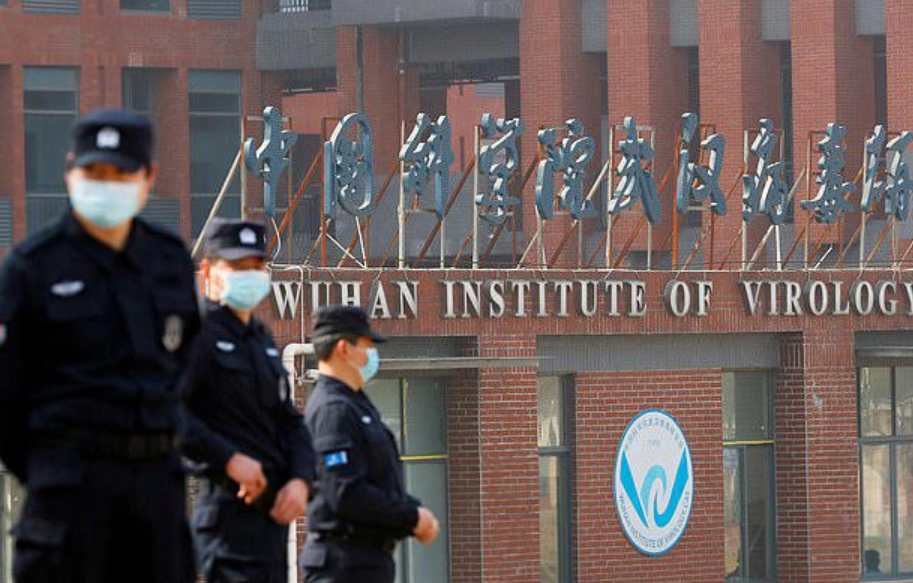
WUHAN, China —The long-running debate over the origins of the COVID-19 pandemic has taken another dramatic turn after newly released private messages revealed that several of the world’s leading scientists privately questioned conclusions they had previously presented publicly regarding how the virus first emerged.
The documents, released by United States Senator Rand Paul and published by the Department of Homeland Security, indicate that some scientists who co-authored one of the most influential scientific papers on the origins of COVID-19 later admitted there was not enough evidence to completely dismiss the possibility that the virus may have escaped from a laboratory.
The revelations have reignited global discussions about one of the most controversial scientific and political questions since the pandemic began, with renewed calls for greater transparency, more complete investigations, and continued international cooperation to determine exactly how the virus first infected humans.
READ MORE OTHER ARTICLES
- Global Tourism Rebounds Strongly As Fastest Growing Destinations Welcome More Visitors Worldwide

- Indian Activist Sonam Wangchuk Ends 26-Day Hunger Strike as ‘Cockroach’ Protests Intensify
- Young Filipino Baseball Stars Shock Powerful Japan With Historic Championship Victory Together
- REGION 2 PASSERS June 2026 Fire Officer Exam (FOE) Results
- Isang Patay Tatlong Sugatan Matapos Magbanggaan Dalawang Motorsiklo Sa Dagami Leyte
- Mali, Algeria Restore Diplomatic Relations, Ending Yearlong Airspace and Ambassador Dispute



In March 2020, during the early months of the pandemic, a group of prominent American virologists published a highly influential paper in the respected scientific journal Nature Medicine. The paper argued that the available evidence strongly supported the idea that the coronavirus most likely originated naturally through an animal-to-human transmission, commonly known as a spillover event.
The authors also stated that they did not believe any laboratory-based scenario was plausible. Because the paper was written by respected scientists and appeared in one of the world’s leading scientific journals, it became one of the most frequently cited studies during the pandemic and helped shape scientific and public opinion around the world.
Many governments, health officials, journalists, and researchers referred to the study as evidence that the virus had almost certainly emerged naturally rather than through a laboratory accident.
However, the newly released messages suggest that some of the same researchers privately expressed increasing uncertainty only a few months after their paper was published.
Among the messages was one from Dr. Kristian Andersen of the Scripps Research Institute in California, who was one of the lead authors of the paper.
Writing on the communication platform Slack in July 2020, Andersen reportedly acknowledged that there was still no definitive evidence proving either theory.
According to the released messages, Andersen wrote that researchers did not have hard evidence supporting one explanation over the other and admitted that new information made it impossible to completely rule out the possibility that someone may have inserted the virus into a laboratory setting.
He reportedly emphasized that this did not mean such an event actually happened but acknowledged that the earlier paper had expressed greater confidence than he personally felt at that stage.
His message suggested that his confidence in the paper’s firm rejection of a laboratory origin had weakened as additional information became available.
The messages also revealed discussions about coronavirus research being conducted at the Wuhan Institute of Virology, commonly referred to as WIV.
The laboratory is located approximately eight miles from the seafood market in Wuhan, China, where the earliest known COVID-19 cases were first identified in late 2019.
The institute had long been known for conducting research on bat coronaviruses, making it a major focus of international attention once the pandemic began.
According to the newly released conversations, Andersen also acknowledged that his earlier paper stated coronavirus research had been taking place around the world.
Later discussions reportedly admitted that this description was not entirely accurate because much of the specific research under discussion had been conducted primarily at the Wuhan Institute of Virology.
The messages suggest that Andersen believed new information had shifted his personal opinion away from being strongly convinced of a natural origin toward a more balanced position in which both possibilities remained open.
The debate over COVID-19’s origins has remained one of the most politically sensitive issues since the beginning of the pandemic.
Early suggestions that the virus may have escaped from a laboratory were often criticized by many scientists, public health experts, and media organizations, with some dismissing the theory as lacking sufficient evidence.
Supporters of the laboratory leak theory argued that an accidental release from a research facility studying bat coronaviruses could not be excluded, especially given the institute’s location near the outbreak’s epicenter.
Others continued to support the natural spillover theory, pointing to previous outbreaks such as SARS and MERS, which originated through animal transmission.
To date, no scientific investigation has produced conclusive evidence proving either explanation.
Former United States President Donald Trump publicly stated in May 2020 that he believed evidence pointed to a laboratory origin for the virus, although no definitive proof was presented publicly to settle the matter.
In February 2023, former FBI Director Christopher Wray stated that the bureau believed COVID-19 most likely originated from a laboratory controlled by the Chinese government.
Chinese officials strongly rejected those claims, describing them as politically motivated and insisting there was no evidence supporting a laboratory accident.
China has consistently maintained that investigations should remain scientific rather than political and has denied accusations involving the Wuhan Institute of Virology.
The newly disclosed messages have also attracted attention because they reference concerns reportedly expressed by Dr. Shi Zhengli, one of China’s leading coronavirus researchers at the Wuhan laboratory.
According to one message shared by Professor Edward Holmes of the University of Sydney, Dr. Shi was reportedly worried that a laboratory accident could have been responsible for the outbreak.
Holmes wrote that internal safety audits were conducted at the institute and reportedly found no evidence of an accidental release.
Even so, Holmes indicated that the reported concern itself suggested laboratory escape had been considered a possible explanation within scientific discussions.
The publication of the messages has prompted renewed criticism from some scientists, politicians, and commentators who argue that public debate surrounding COVID-19’s origins was unnecessarily limited during the early stages of the pandemic.
British science author Viscount Matt Ridley, who co-authored a book examining the origins of COVID-19, said the messages demonstrated that several researchers privately continued considering the possibility of a laboratory leak even after publishing a paper that strongly rejected the idea.
He questioned why the authors did not revise or clarify their earlier conclusions as their own confidence changed.
Senator Rand Paul also criticized the situation, arguing that the messages showed a significant difference between private scientific discussions and public statements.
He claimed that legitimate questions regarding the virus’ origins were dismissed too quickly and called for accountability regarding decisions made during the early months of the pandemic.
Scientists around the world continue to emphasize that determining the exact origin of COVID-19 remains an extraordinarily difficult scientific challenge.
Several international investigations have examined available evidence, but researchers continue to face obstacles including incomplete access to original data, limited biological samples from the earliest cases, and restricted access to records related to laboratory activities.
Many experts continue to argue that additional scientific cooperation between countries remains essential before any definitive conclusion can be reached.
Public health specialists also stress that understanding how the pandemic began is not simply about assigning blame.
Determining the origin of the virus could help improve laboratory safety standards, strengthen disease surveillance, enhance early warning systems, and reduce the risk of future pandemics affecting millions of people worldwide.
More than seven million deaths have officially been attributed to COVID-19 globally, while the pandemic disrupted economies, overwhelmed healthcare systems, closed schools and businesses, and permanently changed daily life across nearly every country.
Although vaccines, improved treatments, and widespread immunity have significantly reduced the global impact of the virus, the question of how COVID-19 first emerged remains unresolved.
The newly released private messages are unlikely to settle the debate by themselves, but they provide new insight into how leading scientists privately evaluated evolving evidence during one of the most challenging public health crises in modern history.
As investigations continue and additional records become available, the search for the true origin of COVID-19 remains one of the most important unresolved scientific questions of the twenty-first century, with governments, researchers, and the global public continuing to seek clear, evidence-based answers. / aptikons