Ukraine’s Defence Minister Mykhailo Fedorov has resigned as part of President Volodymyr Zelensky’s sweeping cabinet reshuffle, ending a tenure marked by rapid military modernization, expanded drone warfare capabilities, and key technological partnerships during Russia’s ongoing full-scale invasion.
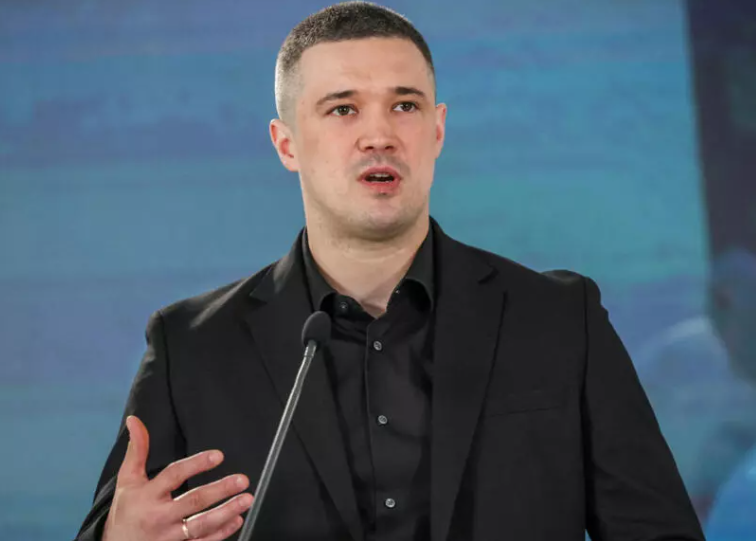
KYIV, Ukraine — The Ukraine’s political and military leadership entered another period of transition on Wednesday after Defence Minister Mykhailo Fedorov announced his resignation as part of a broader cabinet reshuffle initiated by President Volodymyr Zelensky. The move comes at a time when Ukraine remains deeply engaged in defending its territory against Russia’s full-scale invasion, making every leadership change closely watched both at home and abroad. While resignations during wartime often raise questions about stability, Ukrainian officials have presented the reshuffle as part of an effort to strengthen the government and adapt to the evolving demands of the conflict.
In a lengthy message posted on Telegram, Fedorov reflected on his time as defence minister, describing the role as one of the greatest honors of his career. He thanked the Ukrainian people for their trust and highlighted the achievements made during his tenure, emphasizing that the country’s defence capabilities had undergone significant transformation despite the immense pressures of war. Rather than focusing on personal accomplishments, his statement centered on the progress made by the ministry and the resilience shown by Ukraine’s armed forces since Russia launched its full-scale invasion in February 2022.
Fedorov assumed office in January after being entrusted with the responsibility of bringing new momentum to Ukraine’s defence establishment. At just 35 years old, he became the youngest defence minister in the country’s history, symbolizing a new generation of leadership willing to embrace innovation and modern warfare. His appointment reflected Kyiv’s determination to move quickly in adapting to a conflict that has constantly evolved, requiring rapid technological advancements alongside traditional military operations.
Perhaps Fedorov’s most enduring legacy will be his strong advocacy for drone technology. Long before drones became one of the defining features of modern warfare, he recognized their potential to reshape the battlefield. Under his leadership, Ukraine significantly expanded domestic drone production while integrating unmanned aerial systems into military operations on an unprecedented scale. From reconnaissance missions to precision strikes against Russian positions, drones have become one of Ukraine’s most effective tools, allowing its forces to compensate for limitations in manpower and conventional equipment.
READ MORE OTHER ARTICLES:
- Ukraine Defence Minister Mykhailo Fedorov Resigns Amid Zelensky Cabinet Overhaul During Wartime Reforms

- Protests Erupt in Ukraine as Zelenskyy Reshuffles Government During Ongoing War
- Mali, Algeria Restore Diplomatic Relations, Ending Yearlong Airspace and Ambassador Dispute
- Leyte’s Energy Paradox Sparks Public Appeal to Malacañang Over High Power Costs
- INDIA: Deadly Kerala Landslide Leaves Three Dead, Five Missing as Rescue Operations Continue
- Malaysia, Thailand Resolve Fisheries Dispute, Strengthen Trade and Border Cooperation Together


The widespread use of drones has also transformed the nature of the conflict itself. Both Ukraine and Russia now rely heavily on unmanned systems for surveillance, logistics, and combat operations. Analysts have described the war as one of the first large-scale conflicts where drone warfare plays a central strategic role. Fedorov’s policies helped position Ukraine as a leader in developing innovative battlefield technologies under extremely challenging conditions.
Beyond drones, Fedorov also played a key role in broader military reforms aimed at modernizing Ukraine’s armed forces. These efforts included improvements in procurement systems, increased cooperation with Western allies, and measures intended to make defence institutions more transparent and efficient. Such reforms became increasingly important as Ukraine received billions of dollars’ worth of military assistance from international partners, requiring greater accountability and coordination.
Another milestone during his tenure was securing Starlink satellite internet connectivity for Ukrainian forces. Early in the invasion, communications infrastructure became one of Russia’s primary targets. Maintaining reliable communications proved essential for battlefield coordination, intelligence sharing, and emergency response. Fedorov was instrumental in working with Elon Musk’s SpaceX to deploy thousands of Starlink terminals across Ukraine, ensuring military units and critical infrastructure remained connected even when conventional networks were disrupted. The technology quickly became an indispensable part of Ukraine’s defence strategy and demonstrated how partnerships with private technology companies could influence modern warfare.
At the same time, Ukraine also sought to limit Russian access to similar satellite communication capabilities, recognizing that information superiority had become just as important as conventional firepower. The emphasis on technological innovation under Fedorov’s leadership highlighted how twenty-first-century conflicts increasingly depend on digital infrastructure alongside traditional military strength.
His resignation forms part of a broader restructuring within President Zelensky’s administration. Earlier this week, Ukraine’s parliament approved the resignation of Prime Minister Yulia Svyrydenko after only a year in office, signaling that the president intends to refresh key leadership positions as the war enters another difficult phase. Although government officials have not described the reshuffle as a response to any single crisis, the changes suggest a desire to improve efficiency and prepare for future military and political challenges.
Leadership transitions during wartime are rarely simple. Governments must balance continuity with the need for fresh ideas, while ensuring that ongoing military operations remain unaffected. Ukraine continues to face relentless Russian attacks, pressure on multiple front lines, and growing demands from both domestic and international audiences. In such an environment, experienced leadership remains critical to maintaining morale and coordinating national defence.
According to Ukrainian media reports, Interior Minister Igor Klymenko is expected to become the next defence minister. If confirmed, he would inherit one of the most demanding positions in the Ukrainian government. His responsibilities would include overseeing military operations, managing defence procurement, strengthening cooperation with international allies, and sustaining the technological innovations that have become central to Ukraine’s war effort.
Fedorov leaves office having helped redefine how Ukraine wages war in the digital age. His leadership demonstrated that technological innovation, rapid adaptation, and close partnerships with international allies could significantly strengthen a country’s ability to defend itself against a larger military power. While his resignation marks the end of one chapter, many of the policies he championed including expanded drone production, digital modernization, and resilient communications systems are expected to remain central pillars of Ukraine’s defence strategy.
As Ukraine’s leadership evolves, the ultimate measure of success will not simply be who occupies senior government positions, but whether the country can continue adapting to one of the most complex and technologically sophisticated conflicts in modern history. The cabinet reshuffle reflects an acknowledgment that wartime governance demands constant adjustment, and that sustaining resilience requires not only courage on the battlefield but also effective leadership behind the scenes.
Mykhailo Fedorov: The Tech-Driven Young Leader Who Shaped Ukraine’s Digital and Defence Future
Mykhailo Fedorov is a well-known Ukrainian leader who has spent his career using technology to improve public life and strengthen his country, especially through some of its hardest times in recent years. Born on January 21, 1991, in the town of Vasylivka in Ukraine’s Zaporizhzhia region, he grew up to study sociology at Zaporizhzhia National University, and before going into politics he built experience running a digital marketing business and leading his own agency, so he came to public service with a strong understanding of how online tools and modern technology work for people and organizations.
He first entered national politics in 2019, when he was elected to Ukraine’s main parliament as part of the team and political party supporting President Volodymyr Zelensky, and right away he was given the huge task of leading the country’s push to move government services fully into the digital age, a role he held for many years.
It was in this job that he created and launched the Diia app and online platform, which has become one of Ukraine’s most popular and useful tools, letting people do almost everything from showing their ID or passport, signing official documents, applying for benefits, registering a business, or paying taxes right from their phone without waiting in long lines or visiting government offices in person. When Russia launched its full-scale invasion of Ukraine in early 2022, his work took on new urgency and global attention, because he realized how critical reliable connections and modern tools would be to keep the country running, keep people and soldiers in touch, and keep essential services working even when cities were under attack or regular internet lines were destroyed.
He worked closely with SpaceX to bring thousands of Starlink satellite internet terminals into Ukraine, giving troops, emergency workers, and families in frontline or cut-off areas a way to communicate when all other options were gone, and he also pushed hard to develop and build more drones and other new military technology within Ukraine, turning the country into one of the most advanced users of unmanned systems in modern warfare.
In January 2026, he made history when he was appointed Ukraine’s Minister of Defence, making him the youngest person ever to hold that position in the country, and in this new role he kept focusing on what he did best: updating how the military works, making sure new and better equipment gets to those who need it faster, ramping up domestic production of drones and other key gear, and making long-overdue changes to how the military buys supplies to make the process fairer and more efficient.
He announced his resignation from this post in July 2026, as part of a planned update to President Zelensky’s cabinet, and left behind clear progress including big jumps in local drone manufacturing, better standards for military equipment, and more transparent ways of managing defence resources. While he is widely respected around the world for his energy, practical ideas, and ability to turn big technological ideas into real help for ordinary people and soldiers, his time in office has also brought up important questions that many people debate: his close work with SpaceX and Elon Musk made clear how much Ukraine at one point relied on a single private company for critical communications, leading to conversations about how to make sure such vital services stay reliable and fully under Ukrainian control, and as defence minister he faced ongoing pressure to make sure every single purchase of military gear or supplies was fully open to public checks and free of any waste or favoritism, a challenge that every wartime government faces.
There are also wider global discussions about the ethics and future of drone warfare that have grown alongside the work he championed, though these are broad questions about how modern wars are fought rather than criticism of anything he did personally. All in all, Mykhailo Fedorov stands out as one of the most prominent young leaders in Ukraine, someone who has consistently found ways to use technology to solve real problems, help his country stand strong during war, and build a more modern, accessible nation for everyone who lives there.