Residents, workers, consumers, and business owners in Eastern Visayas have appealed to Malacañang to review the country’s energy policies, arguing that despite Leyte’s role as one of the Philippines’ largest geothermal power producers, families and businesses in the region continue to shoulder high electricity costs. The open letter calls for greater transparency, policy reforms, and fairer benefits for energy-hosting communities, reigniting the debate over whether regions that help power the nation should receive more affordable electricity.
MANILA, Philippines — A growing wave of concern over soaring electricity costs in Eastern Visayas has culminated in an open letter addressed to Malacañang, calling on the national government to address what residents describe as a long-standing injustice: despite hosting one of the country’s largest geothermal power complexes, consumers in Leyte and the rest of Region VIII continue to pay some of the highest electricity rates in the country.
The appeal, signed by concerned residents, workers, consumers, and business owners across Eastern Visayas, raises fundamental questions about the country’s energy policies and whether communities that host critical power-generation facilities deserve greater benefits from the resources found within their own region.
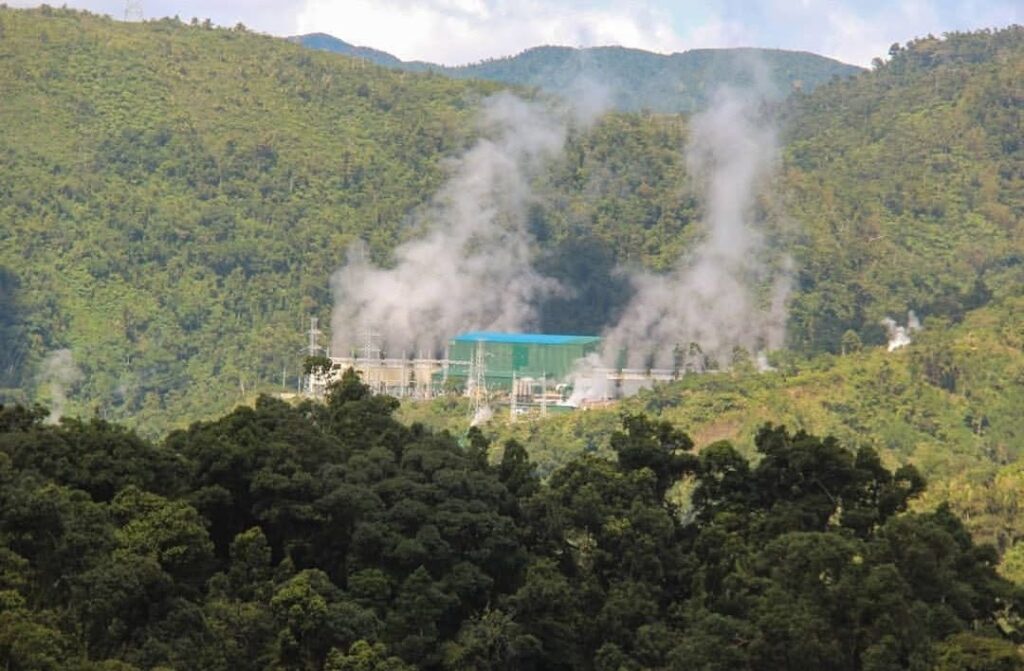
At the heart of the issue is the Tongonan Geothermal Field in Leyte, one of the Philippines’ most significant renewable energy resources and among the largest geothermal developments in the world. For decades, the geothermal complex has supplied substantial amounts of clean and reliable electricity to the national grid, helping strengthen the country’s energy security while reducing dependence on imported fossil fuels.
READ MORE ARTICLES:
- INDIA: Deadly Kerala Landslide Leaves Three Dead, Five Missing as Rescue Operations Continue
- Malaysia, Thailand Resolve Fisheries Dispute, Strengthen Trade and Border Cooperation Together
- Thai Police Bust Birth Registration Syndicate Granting Citizenship Through Fake Fathers
- Kerala Landslide Tragedy Exposes India’s Growing Climate and Infrastructure Crisis
- China Landslide Death Toll Reaches 21 After Deadly Gansu Mountain Collapse
- Retired Indian Judge Leads Landmark UN Probe, Palestinian Children’s Deaths in Gaza
However, despite serving as one of the nation’s energy-producing centers, many households and businesses in Eastern Visayas continue to struggle under mounting electricity bills that residents say have become increasingly difficult to sustain.
The letter argues that the situation appears contradictory. While Leyte contributes significantly to powering homes, industries, and commercial establishments across the Philippines, local consumers themselves receive no direct pricing advantage from the energy generated beneath their own land.
According to the appeal, many residents find it difficult to understand why communities that host major geothermal facilities continue paying high electricity rates while the power produced locally is distributed elsewhere through the country’s interconnected energy market.
The concern stems from the restructuring of the Philippine power industry following the implementation of the Electric Power Industry Reform Act (EPIRA), which privatized much of the country’s electricity sector and introduced competitive electricity trading through supply contracts, bidding mechanisms, and the Wholesale Electricity Spot Market (WESM).
Under the present system, electricity generated in Leyte is no longer automatically allocated to Eastern Visayas. Instead, power producers are allowed to sell electricity to qualified buyers through competitive market mechanisms.
The letter recalls that in 2013, electric cooperatives serving Eastern Visayas reportedly participated in the bidding process for portions of the Unified Leyte Geothermal Power Plant’s electricity output but were unsuccessful. As a result, electricity generated within Leyte was contracted to other buyers, while local electric cooperatives were compelled to secure supply from alternative sources, potentially at higher costs.
For many consumers, that experience symbolized what they view as a structural imbalance within the country’s electricity market.
The signatories clarified that they are not advocating for Eastern Visayas to retain all of the electricity produced within the region. Instead, they argue that regions hosting nationally significant energy resources should receive meaningful consideration through policies that recognize their contribution to the country’s power supply.
They contend that while electricity naturally flows through an interconnected national grid designed to serve the entire country, there should also be mechanisms ensuring that energy-hosting communities receive tangible benefits beyond employment opportunities and limited local development programs.
The letter emphasizes that geothermal resources remain public assets owned by the State. Although private companies may legally operate geothermal facilities and earn reasonable returns on their investments, the authors argue that government policy should continue placing public welfare at the center of energy regulation.
According to the appeal, privatization should not result in situations where host communities bear the environmental, physical, and social impacts associated with energy production while receiving neither priority access to electricity nor reduced power rates.
Residents likewise expressed concern over the growing number of charges reflected in monthly electric bills.
Beyond the basic generation charge, consumers point to transmission fees, line-loss charges, congestion costs, ancillary service fees, and other pass-through expenses that collectively drive electricity prices higher. They argue that these additional charges have become increasingly burdensome for ordinary households, small businesses, and entrepreneurs still recovering from years of economic challenges.
Business owners have likewise warned that persistently high electricity rates weaken the competitiveness of local enterprises, discourage new investments, and increase operating expenses for industries hoping to expand in Eastern Visayas.
To address these concerns, the signatories urged President Ferdinand Marcos Jr. to direct key government agencies including the Department of Energy, the Energy Regulatory Commission, the National Grid Corporation of the Philippines, the Power Sector Assets and Liabilities Management Corporation, and other concerned offices to undertake a comprehensive review of the region’s electricity situation.
Among their principal requests is the public disclosure of where electricity generated from Leyte’s geothermal plants is allocated, contracted, and ultimately sold, allowing consumers to better understand how locally produced power is distributed under the existing market framework.
The group also called for an independent audit of transmission charges, line-loss costs, congestion fees, and other expenses being passed on to consumers in Eastern Visayas, saying greater transparency is necessary to determine whether current charges remain justified.
In addition, the letter seeks a review of EPIRA and existing power-market regulations to determine whether lawful mechanisms could be introduced to provide host-region preferences, first-offer opportunities, dedicated electricity allocations, or preferential pricing for communities that host indigenous energy resources.
The appeal further recommends maximizing benefits available under existing host-community programs, including ER 1-94, and applying those benefits whenever legally permissible to help reduce electricity bills for affected residents.
Finally, the signatories proposed convening a regional energy summit in Eastern Visayas that would bring together national government agencies, power producers, electric cooperatives, local government officials, business leaders, and consumer organizations to openly discuss long-term solutions to the region’s electricity concerns.
The open letter concludes with a message that has resonated across social media and among many residents of Eastern Visayas: while the region proudly contributes to the nation’s energy security, pride alone does not reduce the financial burden carried by families each month.
Rather than seeking special treatment, the signatories emphasized that they are calling for fairness, transparency, and recognition of the role played by energy-hosting communities in sustaining the country’s electricity supply.
Their appeal underscores a broader national debate over whether areas that generate strategic energy resources should receive greater economic benefits from those resources, particularly at a time when electricity affordability remains one of the most pressing concerns for Filipino households and businesses.
As discussions continue, the message from Eastern Visayas remains clear: a region that helps power the nation believes it deserves a fairer share of the benefits generated from the energy beneath its own soil. / aptikons