Philippine authorities have arrested three of the four suspects linked to the killing of renowned American marine biologist Kent Carpenter, marking a major breakthrough in one of the country’s most closely watched criminal investigations. The Philippine National Police (PNP) said evidence now indicates the fatal attack stemmed from a robbery that turned deadly, dispelling earlier speculation that the internationally respected scientist was targeted because of his groundbreaking marine conservation work and environmental advocacy.
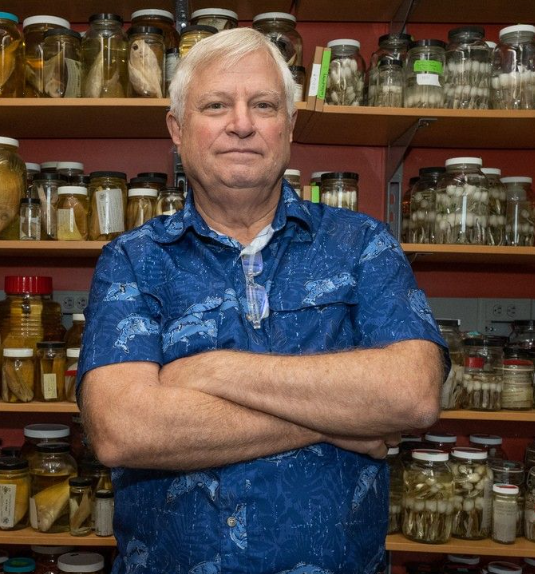
DUMAGUETE CITY, NEGROS ORIENTAL, Philippine — The Philippine National Police (PNP) has announced a major breakthrough in the investigation into the killing of renowned American marine biologist Kent Carpenter, confirming the arrest of three of the four suspects believed to be involved in the brutal attack that shocked both the scientific community and the nation. Authorities now believe the crime was the result of a robbery that turned deadly rather than an assassination connected to Carpenter’s internationally recognized environmental work.
Roles and descriptions:
- Kent Carpenter – Renowned American marine biologist and ichthyologist (fish scientist) who was shot and killed during a robbery at his home in Negros Oriental on July 12, 2026. He was internationally recognized for his research on marine biodiversity and co-authored the landmark study identifying the Verde Island Passage as the world’s center of marine shore fish biodiversity.
- Brigadier General Allen Rae Co – Spokesperson of the Philippine National Police (PNP). He announced the arrest of three suspects, disclosed that investigators believe the killing was a robbery gone wrong, and clarified that the crime was not linked to Carpenter’s scientific work.
- Police Brigadier General Romano Cardiño – Regional Director of the Police Regional Office–Negros Island Region (PRO-NIR). He reported to the PNP chief that three of the four suspects in Carpenter’s killing had been arrested.
- Alias “M.O.” – Alleged gunman and one of the three arrested suspects. Police identified him as the person who allegedly shot and killed Kent Carpenter inside his residence.
- Alias “J.F.” – Arrested suspect accused of sexually assaulting Carpenter’s live-in partner during the home invasion while the robbery was taking place.
- Alias “C.D.” – Alleged lookout in the robbery and murder. He voluntarily surrendered to authorities and reportedly provided investigators with information that corroborated the account of Carpenter’s surviving live-in partner.
- Kent Carpenter’s common-law/live-in partner (name withheld) – Surviving victim of the home invasion. According to investigators, she witnessed the attack and was allegedly sexually assaulted during the incident. Her testimony became a key part of the police investigation.
During a press briefing on Thursday, July 16, PNP spokesperson Brigadier General Allen Rae Co said police operations conducted by the Negros Island Region Police successfully led to the capture of two suspects, while another voluntarily surrendered to authorities. The arrests represent significant progress in a case that has drawn widespread attention because of Carpenter’s global reputation as one of the world’s foremost marine scientists.
READ MORE OTHER ARTICLES:
- Three Suspects Arrested in Killing of American Marine Biologist Kent Carpenter as PNP Says

- Health Secretary Ted Herbosa Reportedly Resigns, Cites Health Condition and Need for Recovery
- CHED Employees File Complaints Against Chairperson Shirley Agrupis, Allege Abuse of Authority and Misuse of Government Resources
- Justin Dave Magboo Rises as Topnotcher in June 2026 PTLE
- Class Suspensions sa Hulyo 13, 2026: Listahan ng mga Lugar na Walang Pasok
- DITO–PLDT Network-Sharing Deal Fuels Speculation Over Deeper Strategic Alliance





According to Co, Police Brigadier General Romano Cardiño, regional director of the Police Regional Office in the Negros Island Region, personally reported the development to the PNP leadership, confirming that three of the four individuals believed responsible for the crime are already in police custody.
Among those arrested is a suspect identified only by the alias “M.O.,” who investigators believe was the gunman responsible for fatally shooting Carpenter. Another suspect, identified as “J.F.,” has been accused of sexually assaulting the victim’s live-in partner during the home invasion. The third suspect, alias “C.D.,” allegedly served as the group’s lookout and later surrendered to authorities, providing investigators with crucial information about how the crime unfolded.
Investigators said the incident occurred around noon on July 12 when several armed men forcibly entered Carpenter’s residence in Negros Oriental. Initial speculation had raised questions about whether the killing was linked to his scientific research, environmental advocacy, or his work involving Philippine marine resources. However, after examining witness accounts and evidence gathered from the suspects, authorities now believe the attack was an ordinary criminal act that spiraled into murder.
Co emphasized that the investigation has uncovered no indication that Carpenter’s profession or advocacy made him a target.
According to police findings, the testimony provided by the surrendered lookout closely matched the account given by Carpenter’s surviving partner. The suspect allegedly admitted that once the group entered the residence at approximately 11:30 a.m., the suspected gunman immediately opened fire on Carpenter. At the same time, another suspect allegedly dragged the victim’s common-law partner into another room, where she was reportedly sexually assaulted while the robbery was taking place.
The revelation marked an important clarification in the investigation. Earlier reports from local authorities had suggested that no sexual assault had occurred, but Co explained that those initial findings were based only on a preliminary medical examination conducted by a municipal health officer shortly after the incident.
He clarified that while the examination was properly performed within the available resources, it did not constitute a comprehensive forensic rape examination. A more detailed assessment later prompted investigators to pursue allegations of sexual assault as part of the criminal case against the suspects.
The PNP is now preparing multiple charges against those arrested, including murder, robbery, and rape, while law enforcement agencies continue efforts to locate the remaining suspect believed to have participated in the attack.
The killing has generated widespread grief among scientists, conservationists, and environmental organizations around the world who regarded Carpenter as one of the most influential marine biologists of his generation. Throughout his distinguished career, Carpenter dedicated decades to studying marine biodiversity in the Philippines and across the Indo-Pacific region, helping shape modern understanding of coral reef ecosystems and fish diversity.
His scientific achievements earned international recognition, particularly after co-authoring the landmark 2005 research that identified the Verde Island Passage as the global center of marine shore fish biodiversity. That groundbreaking discovery elevated the Philippines’ reputation as one of the world’s richest marine ecosystems and reinforced the importance of protecting its coastal waters.
Beyond his academic contributions, Carpenter remained an active advocate for marine conservation until his death. In recent years, he joined efforts calling for the Verde Island Passage to receive UNESCO World Heritage Site recognition, believing the biologically rich marine corridor deserved the highest level of international protection.
His work inspired generations of Filipino and international marine scientists, many of whom credit his research with influencing conservation policies, fisheries management, and biodiversity protection throughout Southeast Asia.
As investigators move closer to completing the case, authorities have assured the public that every individual involved in the crime will be held accountable. The arrests have provided hope that justice will soon be achieved not only for Kent Carpenter and his family but also for the countless colleagues, students, and environmental advocates who continue to honor his lifelong commitment to protecting the world’s oceans.
The tragedy serves as a painful reminder that even individuals devoted to advancing science and environmental stewardship are not immune from violent crime. Yet Carpenter’s extraordinary legacy one built on decades of groundbreaking research and unwavering dedication to preserving marine biodiversity will continue to shape conservation efforts long after his untimely death.