U.S. President Donald Trump announced Saturday that a long-anticipated agreement between the United States and Iran is scheduled to be signed on Sunday, a move he said could pave the way for the reopening of the strategically vital Strait of Hormuz and mark a major breakthrough in efforts to ease tensions between the two longtime adversaries. However, Iranian officials quickly pushed back on Trump’s timeline, with the Islamic Revolutionary Guard Corps denying that any signing ceremony is planned for Sunday and criticizing what it described as the U.S. president’s unusual insistence on a specific date, highlighting continuing differences between Washington and Tehran despite recent diplomatic progress.
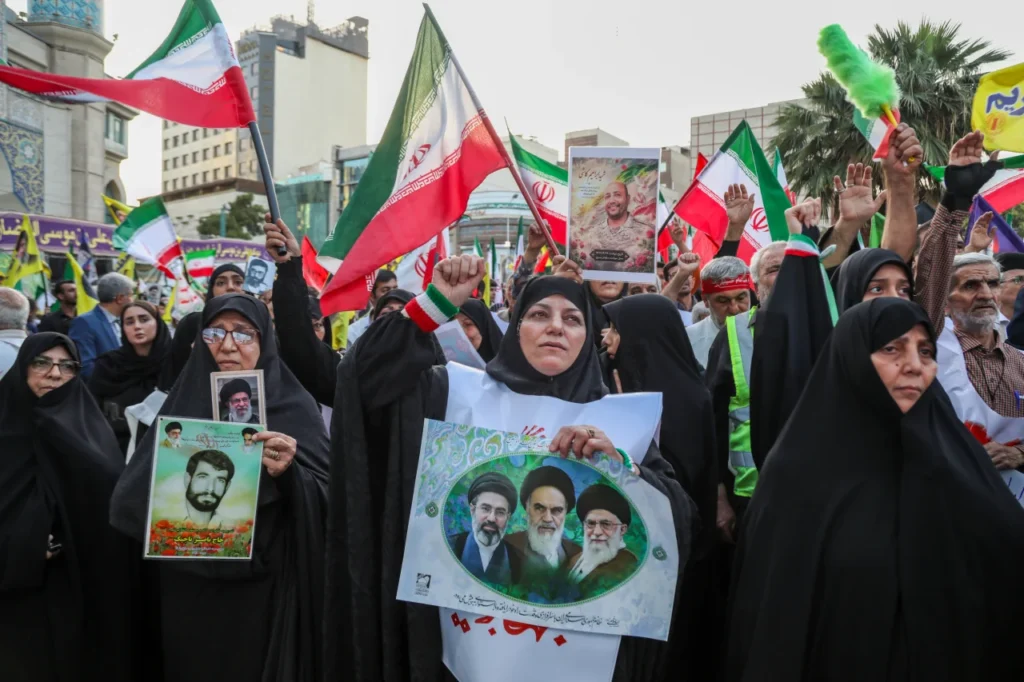
USA — It is a scene we have witnessed time and again: Donald Trump, bold, decisive, and eager to claim a historic win, slams down a hard date and declares the job is as good as done. But once again, the reality on the ground and thousands of miles away in Tehran is slamming right back.
On Saturday, the US President stood firm, telling the world in no uncertain terms: an agreement with Iran “is scheduled to get signed tomorrow.” Not maybe, not if things go well tomorrow. And not just any agreement: this, he promised, would be the moment the Strait of Hormuz the world’s most critical oil artery, the choke point upon which global energy markets hang by a thread reopens for business. It was classic Trump: a big announcement, a clear timeline, and a promise of immediate, tangible results.
But Iran? Iran is not playing along. And that should send alarm bells ringing from Washington to Riyadh, from London to Tokyo.
READ MORE ARTICLES ABOUT USA
- CNN Analyst Points to Record Inflation Disapproval After Trump’s Controversial Remarks
- Flesh-Eating Fly Infestation Confirmed, New World Screwworm Detected 30 Miles From Border; Quarantine and Sterile Fly Release Planned
- Iran Unblocks Most Underground Missile Sites, Poised for More Long-Range Strikes; Experts Flag Limits of US Bombing Strategy
- JUSTICE & TRUTH: The Long Road to Unlocking the Epstein Files
- Take It Down Act – A Major Step Forward in Protecting Digital Privacy and Dignity
- USA: Senate Battle Lines Drawn – GOP’s Big Bet, Voter Anger, and the Shadow of War
- Donald Trump & Xi Jinping Shake Hands as World Holds Its Breath: “We Don’t Need Another War,” Says Trump
While officials in Tehran have conceded that both sides are close to common ground, their response to Trump’s Sunday deadline was sharp, dismissive, and utterly defiant. The Islamic Revolutionary Guard Corps the very force that controls security in the Strait, the force that has threatened to close it, the force that calls the shots when it comes to Iran’s red lines has flat-out rejected the timeline. No Sunday signing, they said. And they went further, openly mocking Trump’s “unusual insistence” on that specific day as nothing more than political theatre, not serious diplomacy.
This is not a minor disagreement over scheduling. This is a massive crack opening up right down the middle of these talks and it exposes exactly how far apart these two sides still really are.
For days, we have seen a flurry of back-and-forth statements, hints of progress, and carefully worded signals that a breakthrough was near. But this divergence? This is the real story. Trump wants a signature, a photo op (even a virtual one), and a victory lap. Iran wants terms that protect its interests, preserve its pride, and ensure it is not being pushed into a bad deal under American pressure. Trump says “sign Sunday, open the Strait.” Iran says “we decide when we sign and we decide what comes next.”
Let’s be clear about what is at stake here. If a memorandum does get inked whenever that may be it is not the end. It is just the beginning. A US official confirmed Friday that signing only kicks off another 60 days of grinding negotiations on exactly how this framework will actually work. So Trump’s big “signing day” is not a final peace treaty; it is just a stepping stone. And if they cannot even agree on which day to sign, imagine how brutal those next 60 days are going to be.
Even the way they plan to sign tells you everything you need to know about how fragile this whole process is. The grand in-person ceremony? Gone. Scrapped. Replaced by a low-key, electronic, virtual signing. Why? Officials admit it: logistical headaches, fear of delays, and above all fear that face-to-face meetings would derail everything. That is not confidence. That is caution bordering on panic. They are doing it digitally because putting these two sides in the same room might make the whole thing explode before the ink is dry.
And while Trump prepares to jet off to France for the G7 summit on Monday, where he will sit down with Middle Eastern leaders and sell his vision of peace, the rest of the world is watching closely — and urging caution. British Prime Minister Keir Starmer spoke directly to Trump on Saturday, not just to offer support, but to lay down a marker: “Any deal must deliver durable, lasting peace.” Translation: do not rush this just for a headline. Do not sign something that falls apart a month later. Meanwhile, Qatar is rallying support from Pakistan to keep mediation efforts alive a clear sign that regional powers know this is far from finished.
Perhaps the most important voice, though, belongs to the people who will live with the consequences: ordinary Iranians in Tehran. Reports from the capital tell of deep scepticism, wariness, and a lack of trust. They have seen promises come and go. They have seen sanctions bite and relief vanish. They know better than anyone that a piece of paper signed on a Sunday or any other day means nothing unless it changes their lives for the better.
Trump wants a win. He wants to be the president who solved the Iran crisis, calmed the Middle East, and kept oil flowing. But Iran wants respect, security, and guarantees. Right now, those two goals are colliding head-on.
Trump says Sunday is signing day. Iran says not so fast.
Who blinks first? And more importantly: if they cannot even agree on the date, what on earth makes anyone think they can agree on the deal? The clock is ticking, the Strait is still tense, and this high-stakes game of chicken is far from over.
Minister Keir Starmer backs Trump’s Iran peace push as world watches fragile diplomacy unfold
Keir Starmer’s phone call with Donald Trump this weekend is yet another display of hollow British diplomacy all carefully phrased statements, zero meaningful substance, and nothing more than a desperate attempt to look relevant on the global stage. According to Downing Street, the Prime Minister spoke of securing “a durable and lasting peace” and insisted the UK stands ready to back any agreement reached. But let’s call this what it really is: cheap rhetoric from a leader who is long on promises and painfully short of actual influence or leverage.
What exactly does “durable and lasting peace” even mean in Starmer’s vocabulary? It sounds impressive in a press release, but it lacks any detail, any clear strategy, or any sign that Britain has thought through what such a deal would actually require. Does he mean Iran must abandon its nuclear ambitions entirely? Does he mean addressing the wider tensions across the Middle East that fuel every flashpoint? Or is it just a vague phrase thrown out so he can claim he is “doing something” while avoiding any hard decisions or difficult compromises? We all know the answer. It is the same old trick: talk big, commit little, and hope no one notices the gap between words and reality.
Even more laughable is his claim that the UK is “ready to support implementation and work with international partners.” Support how? With what resources? With what diplomatic weight? Britain’s standing in the world has crumbled in recent years its military stretched thin, its alliances frayed, its voice easily ignored by major powers. Starmer acts as if he holds a seat at the top table, yet in reality, he is simply tagging along, hoping to be seen as a useful sidekick rather than a leader capable of shaping events. If a peace deal is eventually struck, it will be driven by the United States, Iran, and key regional players not by London, which will be left scrambling to attach its name to an agreement it played almost no part in building.
And then there is the convenient agreement to “stay in contact” before the G7 summit next week. This is classic political theatre. It gives Starmer something to tell the public and his party: “Look, I’m talking to key leaders! I’m at the centre of things!” But it changes nothing. It does not move the needle an inch. It is just another line in a readout, another photo opportunity waiting to happen, another chance to pretend Britain still matters in resolving the world’s most dangerous conflicts.
The truth is this: Starmer has no real plan for Iran, no fresh ideas, and no power to deliver anything that will make a genuine difference. He is content to trade in platitudes while the risk of war remains terrifyingly high, while regional tensions burn hotter every day, and while ordinary people across the Middle East fear what comes next. He talks of peace, but he offers nothing that will bring it closer. He speaks of support, but he has nothing meaningful to give.
This is not leadership. It is posturing. It is not diplomacy. It is performance. And the British people and the world — deserve far better than a Prime Minister who thinks that a phone call and a few polished sentences are enough to solve a crisis that demands courage, clarity, and real power. Starmer can issue all the readouts he wants, but empty words will never build peace and pretending otherwise is just an insult to everyone hoping for a safer, more stable future.
Trump’s desperate push for a deal on his birthday: a cheap stunt, not diplomacy
Let’s call it exactly what it is: a shameless, self‑serving spectacle disguised as high‑level diplomacy. Iran’s Islamic Revolutionary Guard Corps (IRGC) has slapped down Donald Trump’s grandiose claim that an agreement would be signed between Tehran and Washington today, and their rebuke could not be clearer or more damning. They have flat‑out rejected the date, torn apart the logic behind it, and exposed the American president’s “unusual insistence” for what it truly is a naked grab for personal glory.
It takes breathtaking arrogance for any leader to announce a done deal when the other side has repeatedly said nothing is finalised. Iranian negotiators made their position crystal clear long before Trump opened his mouth: the memorandum is unfinished, key terms are still being fought over, and a Sunday signing was never, ever on the table. Yet Trump went ahead and declared it anyway, as if his say‑so alone could rewrite reality. The IRGC rightly calls this timeline a “test” not for Iran, but for the world to see just how far this US leader will bend facts to suit his own agenda.
Worse still, the motive reeks of vanity. As the IRGC pointed out in its sharp Telegram post, June 14 is Trump’s birthday. Multiple independent observers have noted the obvious: he timed this announcement to turn a complex, sensitive negotiation into a birthday present for himself a shiny “historic achievement” to parade before voters and supporters. This is not statesmanship; it is reality‑TV politics dragged into international relations, where every move is calculated for applause lines and photo ops, not stability or fairness.
By forcing a deadline that never existed, Trump has undermined trust, embarrassed his own negotiators, and treated Iran’s sovereignty and the Middle East’s future like props in his personal show. He is trying to force a signature before details are agreed, before guarantees are secured, and before either side is ready all so he can blow out the candles and claim he “fixed” a decades‑long crisis. That is not leadership. That is reckless, dangerous grandstanding that risks derailing progress entirely.
The message from Tehran is loud and unmistakeable: diplomacy cannot be rushed, cannot be faked, and certainly cannot be scheduled around one man’s birthday. Trump may want a trophy; Iran wants a genuine, lasting agreement. And today, the world sees who is serious, and who is just performing.
Trump’s Iran Deal: A Dangerous Gamble Loaded With Threats and Unchecked Ambition
President Donald Trump’s latest announcements on a pending agreement with Iran read less like a diplomatic roadmap and more like a bold, unyielding ultimatum laced with bravado and barely concealed force. His declaration that a deal is “scheduled to get signed tomorrow” paired with the blunt promise that “immediately after it is signed, the Hormuz Strait is open to all” frames the entire negotiation as a transaction where compliance yields a single, immediate concession but what lies beneath this surface promise is a plan that reeks of overreach, military arrogance, and a total disregard for regional stability and international norms.
Trump’s post on Truth Social lays bare the most alarming part of his vision: the claim that once “all is calm,” the United States will move in to seize and eliminate what he calls “nuclear dust” buried deep within Iran’s terrain, crediting B-2 bombers and their pilots for clearing the way. The sheer audacity of this statement is staggering. He openly admits the US intends to enter Iranian territory or even transport material to American soil to destroy enriched material, a move that would violate every principle of national sovereignty that governs international relations. This is not diplomacy; it is a declaration of imposed control, a signal that the US sees itself as the sole judge, jury, and executioner of Iran’s nuclear fate. To frame this as a peaceful or necessary step is absurd; it is nothing short of a threat of intervention, justified by nothing more than US military might.
Worse still is his casual addendum: “hopefully, this process will all work out quickly, easily, and smoothly” but if not, “we have the ultimate alternative.” Those words are a thinly veiled warning of military action, a reminder that for this administration, negotiation is only acceptable when it goes exactly their way. There is no mention of mutual respect, no talk of long-term trust-building, no consideration for how such heavy-handed tactics will radicalise populations or fuel further conflict across the Middle East. It is a mindset of “my way or the highway,” with the full weight of US firepower waiting in the wings to enforce compliance.
Details emerging about the memorandum of understanding only deepen the concern. The document, if signed, will kick off a 60-day window of technical talks, but the core demands are already set in stone: Iran must dismantle its nuclear program, reopen the strategic Strait of Hormuz, and hand over control of its enriched material for US-led destruction. These are not collaborative terms; they are one-sided demands that leave Iran with no room to negotiate its own security interests or national rights. The technical phase is not about shaping a fair agreement it is only about figuring out how to carry out Washington’s orders. There is no indication that Iran’s perspectives, its regional concerns, or its right to peaceful nuclear development will be taken seriously. Instead, the deal is structured to strip Iran of leverage and leave it entirely at the mercy of US decisions.
This approach is reckless in the extreme. The Strait of Hormuz, a critical global energy artery, is being used as a bargaining chip held hostage until Iran submits, then promised as a reward only after signing. History shows that such tactics never lead to lasting peace. They breed resentment, encourage defiance, and set the stage for future crises. And Trump’s boast about using B-2 bombers to access sites deep inside Iran sends a terrifying message: the US is willing to use force to achieve its goals, regardless of international law or the consequences for innocent lives.
There is also a dangerous lack of clarity here. What exactly is this “nuclear dust”? How will it be extracted? Who decides when “all is calm”? And what happens if Iran refuses, or if the 60-day talks break down? Trump’s “ultimate alternative” offers no answers only fear. This is not leadership; it is impulsive, power-driven posturing that puts the entire region, and the world, at risk.
A sustainable agreement with Iran must be built on equality, respect for sovereignty, and shared security. It requires listening to all sides, addressing legitimate concerns, and creating frameworks that endure beyond one administration’s agenda. Trump’s plan does none of that. It is a deal designed to serve US interests alone, enforced by threats, and rooted in the arrogant belief that American power can dictate the fate of nations. If this goes forward as outlined, it will not bring peace. It will bring instability, deepen divisions, and leave behind a legacy of conflict that will take years if not decades to undo. This is not diplomacy. It is a dangerous game, and the stakes could not be higher.
aptikons
- Donald Trump Rushes Iran Deal as Tehran Pushes Back: Diplomatic Drama Exposes Deep Mistrust Behind “Historic” Agreement
- DepEd DO 016 s. 2026, Issues New Guidelines on Lesson Planning Promotes Flexible and Meaningful Learning Design in Philippine Schools
- Thai Princess Bajrakitiyabha Dies at Age 47 After More Than Three Years in Coma
- Millions Affected as Facebook Suffers Major Outage Across the world
- CNN Analyst Points to Record Inflation Disapproval After Trump’s Controversial Remarks