Mary or Mother Mary was a Jewish woman from Nazareth who lived during the first century, known as the wife of Joseph and the mother of Jesus. In Christianity, she holds a deeply revered place and is honored through many titles—such as the Virgin Mary and the Queen of Heaven—many of which appear in the Litany of Loreto. Several Christian traditions, including the Eastern and Oriental Orthodox, Catholic, Evangelical Lutheran, Reformed, Anglican, Methodist, and Baptist churches, affirm that because she is the mother of Jesus, she is also rightly called the Mother of God.
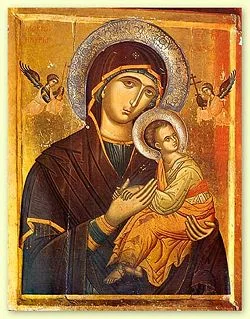
Historically, the Church of the East referred to her as Christotokos, meaning “bearer of Christ,” a title that remains part of the liturgy of the Assyrian Church of the East. Beyond Christianity, Mary is also highly honored in Islam, where she is regarded as the most exalted woman and is mentioned many times in the Quran, including in an entire chapter named after her. She is likewise respected in other faith traditions such as the Baháʼí and Druze religions.
Mother Mary, widely known as the Blessed Virgin Mary, occupies a profoundly significant place within Christianity as the mother of Jesus Christ, who is believed to be the Son of God. She is deeply revered by believers for her humility, unwavering faith, and complete obedience to God’s will, as well as for the belief that she conceived Jesus while remaining a virgin. Within several major Christian traditions—particularly the Catholic, Orthodox, and Anglican Churches—Mary holds an especially honored role, reflected in important doctrines such as the Immaculate Conception, which teaches that she was preserved from original sin, and the belief in her Assumption into heaven at the end of her earthly life.
A key theological title given to Mary is Mother of God, or Theotokos, a doctrine affirmed by the Church to express the belief that Jesus Christ is both fully human and fully divine. Because she gave birth to Jesus, who is recognized as God incarnate, Mary is therefore honored as the one who bore God in human form.
According to Christian tradition, Mary was born to Saints Joachim and Anne and grew up as a devout young woman. She lived in Nazareth and was still a virgin when the angel Gabriel appeared to her, announcing that she had been chosen to become the mother of the Messiah. Demonstrating remarkable faith and trust in God, Mary accepted this divine calling with humility, responding with the words often quoted in Christian tradition: “May it be done to me according to your word.” This moment, commonly known as the Annunciation, marks the beginning of her unique role in the story of salvation.
Mary remained closely connected to many of the defining moments in Jesus’ life. She was present at his birth in Bethlehem and later appeared in the Gospel narrative at the wedding at Cana, where her request led to Jesus performing his first recorded miracle. She also stood near the cross during his crucifixion, sharing in his suffering. According to the Gospel account, Jesus entrusted her to the care of his beloved disciple, symbolically giving her as a spiritual mother to his followers.
Throughout Christian history, Mary has been honored as a model of faith, devotion, and holiness, and she is often regarded as the greatest among the saints. Many believers view her as a compassionate intercessor who brings the prayers of humanity before God. Devotion to Mary has been strengthened by numerous reported apparitions and titles associated with her, including Our Lady of Guadalupe, Our Lady of Lourdes, and Our Lady of Fatima, which have inspired millions of faithful around the world.
In the spiritual lives of many Christians, Mary is seen as a maternal figure who gently guides believers toward a deeper relationship with Jesus. Devotees frequently seek her intercession in prayer, asking for protection, guidance, and divine grace through her motherly care.
Beyond theology and devotion, Mary has also held a powerful influence in culture and the arts. For centuries, she has inspired an immense body of artistic expression—appearing in paintings, sculptures, music, poetry, and literature. Across different cultures and historical periods, she has been portrayed as a symbol of compassion, purity, maternal strength, and enduring faith, making her one of the most recognized and meaningful figures in both religious and cultural history.
The Synoptic Gospels clearly identify Mary as the mother of Jesus. In the accounts recorded in the Gospels of Matthew and Luke, Mary is described as a virgin who was divinely chosen by God to conceive Jesus through the power of the Holy Spirit. According to the biblical narrative, she gave birth to Jesus in the town of Bethlehem. After his birth, Mary and her husband Joseph raised him in Nazareth, a town in the region of Galilee where Jesus spent his early life and upbringing.
The Gospel accounts also place Mary among the witnesses of some of the most pivotal moments in Jesus’ life. She was present in Jerusalem during the time of his crucifixion, sharing in the sorrow of his suffering and death. Following Jesus’ ascension into heaven, she remained with his apostles and early followers, forming part of the earliest Christian community. While the Bible does not provide detailed information about the events of Mary’s later life, various Christian traditions preserve beliefs about her final destiny. Catholic, Eastern Orthodox, and certain Protestant traditions hold that at the end of her earthly life, Mary was taken up into heaven. In Western Christianity this belief is commonly referred to as the Assumption of Mary, while in Eastern Christianity it is known as the Dormition of the Mother of God, emphasizing her peaceful “falling asleep” before being glorified by God.
From the earliest centuries of Christianity, Mary has been honored and venerated by believers, and she is widely regarded as one of the holiest figures within the Christian faith. Many Christians view her as the greatest of the saints because of her unique role in salvation history as the mother of Jesus Christ. Over time, theological reflection on her life and significance—often referred to as Mariology—has developed differently among various Christian traditions, resulting in a diversity of devotional practices and interpretations regarding her role.
Within the Catholic Church and some Oriental Orthodox Churches, particular doctrinal teachings about Mary have been formally defined. Among these are the belief in her Immaculate Conception, which holds that she was preserved from original sin from the moment of her conception, and the teaching that she was assumed bodily into heaven at the end of her earthly life. These Marian doctrines highlight her special place in Christian theology and devotion.
Protestant traditions, however, often approach Mary’s role with a range of perspectives that they believe remain closely aligned with the teachings of Scripture. While many Protestant communities honor Mary as the faithful mother of Jesus and an example of obedience to God, they may differ on certain theological interpretations about her. Notably, the historic confessions of the Lutheran churches affirm key elements of traditional Christian belief about Mary, including the virgin birth of Jesus, the title Theotokos (meaning “God-bearer” or “Mother of God”), and the doctrine of her perpetual virginity, demonstrating that reverence for Mary continues in different ways across the Christian world.
Marian devotion has taken many forms throughout the long history of Christianity, expressing the reverence and spiritual affection that believers hold for Mary. These devotions are manifested in a wide range of religious practices, including the recitation of special prayers and the singing of hymns dedicated to her honor. Within the liturgical life of the Church, numerous feast days commemorating significant events associated with Mary are observed, allowing the faithful to reflect on her role in the story of salvation.
Devotion to Mary is also expressed through the veneration of sacred images, icons, and relics that represent or are connected with her life and legacy. Across the Christian world, countless churches, chapels, and cathedrals have been built in her honor, serving as places where believers gather to pray and seek spiritual guidance. Pilgrimages to Marian shrines have likewise become an important expression of faith, drawing devotees who travel from near and far to sites believed to be associated with her presence or special blessings.
Over the centuries, many believers have reported experiences of Marian apparitions and miracles attributed to her intercession. These accounts, often shared within local communities and later recognized by religious authorities in certain cases, have strengthened the devotion of the faithful and contributed to the growth of Marian spirituality across different regions and cultures.
Mary has also occupied a prominent place in the artistic traditions of Christianity. For generations, she has inspired countless works of art that reflect both theological meaning and cultural expression. From the solemn and symbolic depictions found in Byzantine iconography to the intricate and devotional imagery of the medieval period, and later to the more humanistic and emotionally expressive portrayals of the Renaissance, artists have continually drawn upon her figure as a central theme. Through painting, sculpture, and other forms of artistic creation, Mary’s image has remained one of the most enduring and recognizable subjects in the history of Christian art.
Names and titles of Mary the mother of Jesus Christ
In the earliest manuscripts of the New Testament, Mary’s name reflects its roots in her native cultural and linguistic background. It is derived from the Aramaic name מרים (Miryam), which was the form commonly used in the Jewish communities of the first century. When this name was carried into the texts of the New Testament, it was transliterated into Greek as Maryam or Mariam, preserving the sound and structure of the original Semitic name as closely as possible.
The modern English name Mary ultimately developed from the Greek form Μαρία (Maria), which is considered a shortened or simplified version of Μαριάμ (Mariam). Both of these Greek variations appear throughout the New Testament writings, reflecting how the original Aramaic name was adapted into the Greek language used by early Christian authors and communities. Over time, as Christianity spread across different cultures and languages, these Greek forms evolved into the familiar versions of the name found in many languages today, with Mary becoming the standard English rendering.
In Christianity
Within Christian tradition, Mary is most widely known by the title the Virgin Mary, a designation rooted in the belief that she conceived Jesus through the power of the Holy Spirit in a miraculous manner. According to this belief, the conception of Jesus occurred without any marital relations between Mary and her betrothed, Joseph. The Gospel account indicates that Joseph did not have marital relations with her “until” the birth of her son, Jesus. This particular wording has long been the subject of theological discussion and interpretation, especially concerning whether Joseph and Mary later had other children after Jesus’ birth. Over the centuries, scholars and theologians from different Christian traditions have examined this phrase closely, leading to varying perspectives on the matter.
Mary is also honored through many other names and titles that reflect her spiritual importance and the reverence shown to her across Christian communities. One of the most common titles is the Blessed Virgin Mary, often abbreviated as BVM, which originates from the Latin phrase Beata Maria Virgo. In some traditions she is also referred to as Saint Mary, while in Western Christianity she is frequently called the Mother of God, a title emphasizing the belief that the child she bore, Jesus Christ, is both fully divine and fully human. In Eastern Christian traditions, particularly within the Orthodox Church, she is known as Theotokos, a Greek term meaning “God-bearer” or “the one who gave birth to God.”
Another well-known title is Our Lady, which became widely used in medieval Europe and is closely connected with the Italian word Madonna, meaning “my lady.” Devotional language has also given Mary the title Queen of Heaven (Regina Caeli in Latin), expressing the belief in her exalted status in heaven. Interestingly, the phrase “queen of heaven” had appeared in ancient cultures long before Christianity, serving as an epithet for various goddesses such as Isis in Egyptian tradition and Ishtar in Mesopotamian belief. Within Christianity, however, the title was adopted with a distinct theological meaning connected to Mary’s relationship with Christ.
The titles used for Mary can differ significantly among Christian denominations. Anglicans, Lutherans, other Protestant communities, members of the Latter-day Saint movement, Catholics, Orthodox Christians, and other groups each employ different forms of language and emphasis when referring to her. These variations reflect the diverse theological traditions that have developed throughout Christian history.
In the Eastern Orthodox Church, three titles in particular hold central importance. The first is Theotokos (Θεοτόκος), meaning “God-bearer,” a title that affirms Mary’s role in giving birth to Jesus Christ, who is believed to be God incarnate. The second is Aeiparthenos (ἀειπαρθένος), which translates to “ever-virgin,” a term that emphasizes the long-standing belief in her perpetual virginity—a doctrine formally affirmed by the Second Council of Constantinople in 553. The third is Panagia (Παναγία), meaning “all-holy,” a title expressing the belief that Mary possesses exceptional holiness and purity.
In the Catholic Church, devotion to Mary has given rise to a remarkably rich collection of titles that highlight various aspects of her life, virtues, and spiritual role. These titles have also inspired a vast array of artistic and cultural representations throughout history. Painters, sculptors, and other artists have depicted Mary under different titles and themes, reflecting the deep devotion that generations of believers have expressed through religious art and imagery. As a result, the many names given to Mary are not only theological expressions but also sources of inspiration that have shaped Christian spirituality, culture, and artistic tradition for centuries.
The title Theotokos, a Greek term meaning “God-bearer” or “the one who gives birth to God,” was formally affirmed by the Council of Ephesus in 431. This declaration was an important moment in early Christian theology, as it emphasized the belief that Jesus Christ is both fully divine and fully human. By recognizing Mary as Theotokos, the council affirmed that the child she bore was not merely a human figure but the incarnate Word of God. In the Latin tradition, equivalent expressions for this title include Deipara and Dei Genitrix, though it is more commonly translated and understood as Mater Dei, meaning “Mother of God.” Similar linguistic adaptations appear in many other languages used throughout the Latin Church.
Within the artistic and devotional traditions of Eastern Christianity, the same phrase—“Mother of God”—appears in Greek as Μήτηρ Θεοῦ. In Byzantine iconography, it is often abbreviated as ΜΡ ΘΥ, a symbolic inscription frequently placed beside images of Mary in sacred icons. This abbreviation serves as a visual affirmation of her recognized role within Christian belief. The Council of Ephesus itself emphasized that the early Church Fathers had long acknowledged and spoken of the Virgin Mary as the Mother of God, highlighting that the title reflected an established tradition rather than a newly invented concept.
In addition to Theotokos, a number of Marian titles draw their inspiration directly from biblical themes and interpretations. One example is the title “Queen Mother.” This designation is associated with Mary because she is the mother of Jesus Christ, who in Christian belief is often referred to as the “King of Kings.” The title also reflects Jesus’ lineage from King David, linking the concept to ancient royal traditions found in the Hebrew Scriptures. In the historical culture of Israel’s monarchy, the mother of the reigning king held a respected and influential role known as the Gebirah, a Hebrew term meaning “Great Lady” or “Queen Mother.” This background has led many Christian theologians and scholars to view Mary’s role in a similar symbolic light within the kingdom of Christ.
Beyond titles rooted in Scripture, many other names attributed to Mary have developed through centuries of Christian devotion and tradition. Some have emerged in connection with reported miracles, extraordinary events, or apparitions associated with her. Others arose from particular historical circumstances, cultural expressions of faith, or moments when believers called upon Mary for guidance, protection, or assistance. Over time, these titles have become part of a rich devotional heritage, reflecting the deep reverence and spiritual significance that Mary holds within Christian life and tradition.
In Islam
In Islamic tradition, Mary is known by the name Maryam (Arabic: مريم), and she is recognized as the mother of Isa (عيسى بن مريم, ʿĪsā ibn Maryam), which literally translates to “Jesus, son of Mary.” The Quran frequently refers to Jesus in this way, emphasizing Mary’s honored position and her direct connection to one of the most revered prophets in Islam. Among Muslims, Maryam holds an exceptionally respected and noble status, and she is often addressed with the honorific title “Sayyidatuna,” meaning “Our Lady.” This respectful form of address parallels the title “Sayyiduna,” meaning “Our Lord,” which is commonly used when referring to prophets in Islamic tradition.
Several other titles and expressions of reverence are associated with Mary in Islamic belief, each highlighting particular qualities attributed to her character and spiritual devotion. One such title is “Siddiqah,” a term that describes someone who is completely truthful and sincere in faith. The word conveys the idea of a person who wholeheartedly affirms and believes in divine truth, reflecting Mary’s unwavering trust in God and her steadfast acceptance of His will. Another significant title given to her is “Qānitah,” which refers to a person who is constantly devoted to God through obedience, humility, and continuous prayer. In this sense, Mary is portrayed in Islamic teachings as a model of deep spiritual dedication, someone who lived a life centered on worship, reflection, and submission to God.
Mary is also called “Tahira,” meaning “the purified one.” This title symbolizes her exceptional purity and moral integrity. In Islamic belief, she is regarded as one of only two human beings who were never touched by Satan at any moment of their lives—the other being her son, Jesus. This belief underscores her unique spiritual status and highlights the special favor she is believed to have received from God.
Within the Quranic narrative, Mary is sometimes identified using familial descriptions such as “the daughter of Imran.” Additionally, she is referred to as “the sister of Aaron” and Moses, expressions that echo references to Miriam, the sister of Moses and Aaron in the Hebrew Bible. These phrases have historically prompted discussion among readers and scholars. However, Islamic tradition clarifies that the phrase “sister of Aaron” is not meant to suggest a literal sibling relationship. Instead, it is understood as a metaphorical or honorary expression, a form of speech commonly used in Arabic to indicate spiritual lineage, moral similarity, or belonging to a respected religious tradition.
This interpretation is supported by a Hadith attributed to the Prophet Muhammad, in which he explained that people in earlier times often named their children after revered figures from the past. According to this explanation, Mary’s association with Miriam of the Hebrew tradition reflects this naming practice rather than a direct genealogical connection. Through these descriptions and titles, Islamic teachings present Maryam as a figure of profound faith, purity, and devotion—one of the most honored women in all of Islamic history.
Maryam bint Imran (Arabic: مريم بنت عمران), meaning “Mary, the daughter of Imran,” occupies an exceptionally honored and unique position within Islamic tradition and theology. In the Quran, she is portrayed with remarkable distinction, being mentioned approximately seventy times—an indication of the profound reverence accorded to her. Notably, Maryam is the only woman whose name appears explicitly in the Quran, a distinction that further emphasizes her unparalleled status among women in Islamic scripture. Islamic teachings regard her as the most exalted woman to have ever lived, a figure of extraordinary virtue, purity, and devotion. Her story is recounted across several chapters of the Quran, appearing in three Meccan surahs—Surah 19 (Maryam), Surah 21 (Al-Anbiya), and Surah 23 (Al-Mu’minun)—as well as four Medinan surahs—Surah 3 (Al Imran), Surah 4 (An-Nisa), Surah 5 (Al-Ma’idah), and Surah 66 (At-Tahrim). Significantly, the nineteenth chapter of the Quran is entirely named after her, underscoring the importance of her narrative within Islamic revelation.
According to the Quranic account, Maryam’s birth was preceded by the heartfelt prayers of her parents, who longed for a child and entrusted their hopes to God. Their supplication was eventually answered, and Mary’s mother conceived after a period of waiting. However, before Maryam was born, her father, Imran, had already passed away. Following her birth, she was placed under the guardianship of her maternal uncle, the prophet Zechariah (Zakariya), who served as a priest in the Temple. Under his care, Maryam grew up in a sacred environment dedicated to worship and spiritual devotion.
The Quran narrates that Maryam received divine communication through the archangel Gabriel (Jibril), who conveyed God’s message to her. In one of the most extraordinary events described in Islamic scripture, she was informed that she would conceive a child in a miraculous manner through the intervention of the divine spirit, despite having remained a virgin. This child, chosen and named by God Himself, would be Jesus (Isa), who in Islamic belief is the Messiah (Al-Masih) and one of the greatest prophets sent to humanity. Consequently, the doctrine of the virgin birth of Jesus holds a firm and central place in orthodox Islamic belief.
While classical Islamic scholars generally did not focus extensively on debates regarding Maryam’s perpetual virginity, the traditional understanding within Islam widely maintained that she remained a virgin throughout her life. This interpretation was often derived from Quranic descriptions of Maryam’s exceptional purity and the statement that God had purified her “from the touch of men.” Many influential early Muslim scholars understood this phrase as implying not only her virginity at the time of Jesus’s birth but also her lifelong chastity.
In Islamic thought, Maryam is celebrated as a woman specially chosen and elevated by God above all other women of the worlds. Her piety, humility, and unwavering devotion to God make her a model of faith and righteousness. She is also counted among the four most honored women in paradise, often referred to as the “ladies of heaven.” These four revered figures include Maryam; Fatima, the daughter of the Prophet Muhammad; Asiya, the righteous wife of the Pharaoh who supported the prophet Moses; and Khadija, the first wife of Prophet Muhammad and the earliest supporter of his prophetic mission. Together, these women are remembered in Islamic tradition as exemplary models of faith, strength, and spiritual excellence.
Contemporary academic research frequently approaches the Christian apocryphal narratives surrounding Mary—particularly those preserved in the Gospel of James (also known as the Protoevangelium of James) and in a subsequent adaptation of that work known as the Gospel of Pseudo-Matthew—as significant literary and thematic parallels to the Quranic portrayal of Mary’s life. Scholars often analyze these non-canonical Christian texts as important intertextual sources that may illuminate the broader religious and cultural traditions circulating in the late antique Near East, within which the Quranic narrative emerged.
In this scholarly perspective, the stories found in these apocryphal writings are examined not as direct sources in a simplistic sense, but rather as part of a shared narrative environment that shaped religious storytelling about Mary. The Gospel of James, an early Christian text focusing on the birth, upbringing, and extraordinary purity of Mary, as well as the miraculous circumstances surrounding the birth of Jesus, presents themes and motifs that bear notable resemblance to elements found in the Quran. Likewise, the later Gospel of Pseudo-Matthew, which reworks and expands upon the earlier narrative, contains additional elaborations about Mary’s early life, her dedication to the temple, and the divine signs associated with her motherhood.
Because of these thematic and narrative overlaps, modern scholars frequently interpret such apocryphal traditions as part of the broader intertextual background that helps contextualize the Quran’s account of Maryam. By examining these texts alongside the Quranic narrative, researchers seek to understand how shared motifs—such as Mary’s exceptional purity, her upbringing within a sacred environment, and the miraculous conception of Jesus—circulated across different religious communities and literary traditions during late antiquity. Through this comparative approach, contemporary scholarship highlights the complex web of storytelling and theological reflection that contributed to shaping the revered figure of Mary across multiple faith traditions.
In the Quran, Mary is referred to by the full Arabic name مريم إبنت عمران, romanized as Maryam ibnat ʿImrān, which translates literally to “Mary, daughter of Imran.” This designation, however, should not be conflated with ʿImrān (Amram), the father of Miriam and Moses in biblical tradition, highlighting the distinct identity of Maryam within the Islamic narrative. Additionally, the Quran notes that she was popularly called أخت هـٰرون, romanized as Ukht Hārūn, meaning “Sister of Aaron.” This epithet, too, must be carefully distinguished from Hārūn (Aaron), the well-known brother of Moses and Miriam, as it reflects a cultural or honorific usage rather than a literal genealogical connection.
Maryam’s mother, mentioned in the Quran only in relation to her husband Imran, fervently prayed for the blessing of a child, and her prayers were ultimately answered. According to the renowned historian and exegete al-Ṭabarī, her mother bore the name حنة, romanized Ḥanna—or Anne in the Western tradition. Tragically, her husband passed away before she gave birth, leaving her to navigate both grief and hope. In anticipation of a male child, Anne made a solemn vow to dedicate her offspring to a life of seclusion and service in the Temple, reflecting the pious customs of the time. Yet, contrary to her expectation, she gave birth to a daughter, whom she lovingly named Mary. This narrative, rich with devotion, anticipation, and divine providence, situates Maryam’s birth within a framework of sacred expectation, marking the inception of a life that would be uniquely consecrated to God’s purpose and distinguished above all women in Islamic thought.
According to the Quranic narrative, Maryam was uniquely distinguished by God in a manner unparalleled among all women, being chosen not once but twice for divine favor. The Quran explicitly affirms this exalted status in Surah Al-Imran (3:42), where the angels address her: “O Mary, God has chosen you and purified you, and He has chosen you above the women of the worlds.” The first of these divine selections is connected to the announcement made to her father, Imran, foretelling the blessed conception and the extraordinary role of his child. The second selection refers to the miraculous conception itself, whereby Maryam became pregnant without any physical involvement of a man, underscoring her exceptional spiritual purity and setting her apart from all other women. In this dual recognition, the Quran positions Maryam not merely as virtuous, but as the most exalted woman in creation, her life marked by continual divine favor and sanctification.
The Quran recounts the virgin birth of Jesus (Isa) repeatedly, providing careful and reverent detail about the miraculous nature of this event. In Surah Maryam (19:17–21), the narrative unfolds with the annunciation delivered to Maryam by the angel Gabriel, followed by the miraculous birth of Jesus in accordance with God’s will. Within Islamic theology, Jesus is designated as the Ruhullah, or “Spirit of God,” highlighting that his conception occurred through the divine spirit. Unlike Christian doctrine, however, this designation does not imply his pre-existence or divinity but emphasizes the extraordinary nature of his birth through God’s command. Quranic verses further underscore Maryam’s virginity and purity: in 3:47, God affirms that “no man has touched [her],” and in 66:12, it is stated that Jesus was born when God’s spirit breathed upon her, highlighting both the miraculous nature of the birth and her bodily chastity. These passages collectively affirm Maryam’s spiritual and physical integrity, framing the virgin birth as a supreme sign of divine intervention.
Barbara Regine Freyer Stowasser provides an insightful scholarly perspective on the contextualization of Maryam within the Temple. She notes that Islamic scholars interpreted the Jewish restrictions regarding women’s access to the Temple—principally rooted in prohibitions during menstruation—as a significant point of reference. In the Quranic retelling, Maryam is recast in the Temple not merely as a participant in religious ritual but as a woman of perpetual ritual purity, never having menstruated due to her virginal state. This reinterpretation harmonizes the narrative with her exceptional sanctity, allowing the Islamic account to rationalize her presence in the Temple as consistent with both divine selection and the theological emphasis on her lifelong purity. Thus, Maryam’s story in the Quran is not simply a retelling of miraculous events; it represents a carefully structured portrayal of divine favor, virginity, and spiritual elevation, situating her as the quintessential model of piety, devotion, and sacred purity in Islamic thought.
According to the Quran, the following conversation transpired between the angel Gabriel and Mary when he appeared to her in the form of a man:
19:16 And mention in the Book Mary, when she withdrew from her family to an easterly place,
19:17 Thus did she seclude herself from them, whereupon We sent to her Our Spirit and he became incarnate for her as a perfect human.
19:18 She said, ‘I seek the protection of the All-beneficent from you, should you be Godwary!’
19:19 He said, ‘I am only a messenger of your Lord that I may give you a pure son.’
19:20 She said, ‘How shall I have a child seeing that no human being has ever touched me, nor have I been unchaste?’
19:21 He said, ‘So shall it be. Your Lord says, “It is simple for Me, and so that We may make him a sign for mankind and mercy from Us, and it is a matter [already] decided.”
Life in ancient sources of Mary the Mother of Jesus Christ
New Testament
The most authoritative sources for reconstructing the historical figure of Mary are the canonical Gospels along with the Acts of the Apostles. These texts serve as nearly contemporary accounts, with the synoptic Gospels (Matthew, Mark, and Luke) and Acts generally dated to the period between approximately AD 66 and 90, while the Gospel of John is typically placed somewhat later, around AD 90–110. Despite their foundational role in the New Testament, these writings offer only sparse details about Mary herself, as their central focus is on the ministry, teachings, and actions of Jesus Christ and the experiences of his apostles. Scholars continue to debate the historical accuracy of both the Gospels and Acts of the Apostles, noting that early Christian authors often interwove factual events with legendary or theological embellishments, making it challenging to disentangle history from narrative interpretation.
Interestingly, the earliest New Testament reference to Mary appears not in the Gospels but in the epistle to the Galatians, which predates the Gospels. In this text, she is mentioned indirectly and is not named explicitly; rather, she is described simply as “a woman”: “But when the fullness of time had come, God sent his Son, born of a woman, born under the law” (Galatians 4:4). This brief but significant reference underscores her pivotal role in salvation history while simultaneously highlighting the limited attention given to her personal biography in the earliest Christian writings.
Mary, the mother of Jesus, appears intermittently throughout the canonical Gospels and the Acts of the Apostles, though the frequency and context of her mentions vary significantly across these texts. Among the Gospels, it is the Gospel of Luke that provides the most extensive attention to her, explicitly naming Mary twelve times, all of which occur within the infancy narrative (Luke 1:27–2:34). This portion of Luke highlights her unique role in the divine plan, framing her within the theological and narrative context of Jesus’ miraculous conception and early life.
The Gospel of Matthew, while less detailed, refers to Mary by name on five occasions. Four of these references (Matthew 1:16, 18, 20; 2:11) similarly pertain to the infancy narrative, chronicling key moments surrounding Jesus’ birth. Only a single instance outside this early narrative—Matthew 13:55—acknowledges her in connection with Jesus’ later life, underscoring her ongoing presence in his familial and social environment.
The Gospel of Mark is comparatively sparing in its attention to Mary. She is named directly only once (Mark 6:3), while another passage (Mark 3:31–32) refers to her indirectly as “Jesus’ mother” without specifying her name. In contrast, the Gospel of John adopts a more subtle approach: Mary is mentioned twice, but her name is never explicitly given. She first appears at the wedding in Cana (John 2:1–12), where she plays a pivotal role in prompting Jesus’ first recorded miracle. Her second appearance occurs during the crucifixion scene (John 19:25–26), where she is positioned alongside Mary Magdalene, Mary of Clopas (or Cleophas), and potentially her own sister, together with the “disciple whom Jesus loved.” Notably, John 2:1–12 is unique among the canonical Gospels as the only text in which the adult Jesus engages in a direct conversation with Mary. Strikingly, he addresses her not as “Mother” but as “Woman.” In the Koine Greek of the Gospel, this form of address carries no hint of disrespect; rather, it may convey tenderness and a recognition of her broader spiritual role, and in some translations is rendered as “Dear woman.”
In the Acts of the Apostles, Mary appears within the early Christian community, gathered with the eleven apostles in the upper room following the Ascension of Jesus (Acts 1:14). Here, she is associated not only with her own role as mother but also as part of the familial and communal network of Jesus’ immediate followers, suggesting her continued involvement in the nascent Church.
Finally, within the apocalyptic imagery of the Book of Revelation, a figure described as the “woman clothed with the sun” (Revelation 12:1, 12:5–6) is sometimes interpreted as a symbolic representation of Mary. Though her identification here is more theological and emblematic than biographical, it reflects the enduring and multifaceted presence of Mary within the scriptural imagination, from historical narratives to symbolic visions.
Genealogy
The New Testament offers only scant details regarding the early life and familial background of Mary, mother of Jesus, leaving much of her personal history largely shrouded in mystery. In the Gospel of Matthew, Mary appears primarily in connection with Joseph, identified simply as his wife, within the context of the genealogy of Jesus. This genealogy traces Jesus’ ancestry along Joseph’s paternal line, emphasizing his legal and Davidic descent while providing almost no biographical information about Mary herself.
A further glimpse of her family emerges in John 19:25, where mention is made of a sister of Mary. The passage, however, is linguistically and semantically ambiguous: it remains unclear whether this sister is the same individual as Mary of Clopas, a figure who appears elsewhere in the Gospel narratives, or whether she is an otherwise unnamed sibling. Early Christian scholars and commentators have attempted to clarify this relationship. Notably, Saint Jerome identified Mary of Clopas as the sister of Mary, mother of Jesus, providing one interpretation of the familial network surrounding Jesus. Meanwhile, the early second-century historian Hegesippus proposed that Mary of Clopas was more likely Mary’s sister-in-law, understanding Clopas (or Cleophas) to have been a brother of Joseph. This reading situates Mary of Clopas within the extended family structure by marriage, rather than by direct blood relation, reflecting the complex and often uncertain genealogical reconstructions of the early Christian period.
The Gospel of Luke offers additional, though still limited, information concerning Mary’s lineage, portraying her as a relative of Elizabeth, the wife of Zechariah, a priest belonging to the priestly division of Abijah. Elizabeth herself is described as a member of the Aaronic line and, by extension, of the Tribe of Levi. Some scholars and theological interpreters have posited that the relationship between Mary and Elizabeth may have been on the maternal side, implying that Mary herself—like Joseph—might have belonged to the royal Davidic line of the Tribe of Judah. Within this framework, the genealogy of Jesus as recorded in Luke 3, which descends from Nathan, is interpreted by some to represent Mary’s lineage, while Matthew’s genealogy, tracing descent from Solomon, corresponds to Joseph’s ancestral line. This dual-genealogy approach seeks to reconcile Jesus’ connection to both the Davidic royal line and the priestly heritage of Levi, a possibility further underscored by the fact that Aaron’s wife, Elisheba, was of the tribe of Judah, thereby intertwining the Levitical and Davidic lines in subsequent generations.
Through these textual glimpses and interpretive traditions, Mary emerges as a figure situated at the intersection of priestly, Levitical, and royal Davidic ancestry, whose familial connections are both historically intriguing and theologically significant, even if the details of her early life remain largely veiled in the narrative gaps of the New Testament.
Annunciation to the Blessed Virgin Mary
The Annunciation, a term derived from the Latin annuntiatio and also referred to in Christian tradition as the Annunciation to the Blessed Virgin Mary, the Annunciation of Our Lady, or the Annunciation of the Lord (Ancient Greek: Ο Ευαγγελισμός της Θεοτόκου), occupies a central place in the narrative of the New Testament and in the devotional life of Christians. According to the account recorded in the Gospel of Luke, this momentous event involved the archangel Gabriel delivering a divine message to Mary, announcing that she would miraculously conceive and bear a child through a virgin birth. This child, Jesus Christ, was revealed to be both the Messiah and the Son of God, and the occasion marks the theological and historical inception of the Incarnation—the profound mystery by which the divine assumed human form.
Luke’s Gospel situates the Annunciation in the sixth month of Elizabeth’s pregnancy with John the Baptist (Luke 1:26), thereby connecting Mary’s personal encounter with God’s plan to the broader unfolding of salvation history. Over the centuries, the Church has commemorated this pivotal moment annually with the Feast of the Annunciation, observed on March 25. This date was chosen to approximate the northern vernal equinox, and it falls exactly nine months prior to Christmas, the traditional celebration of Jesus’ birth, thereby symbolically linking the conception and nativity of Christ.
Beyond its theological significance, the Annunciation has held an enduring and prominent place in the realm of Christian art. From early illuminated manuscripts to grand canvases of the Middle Ages and Renaissance, artists have repeatedly sought to capture the awe, humility, and divine mystery embodied in Mary’s encounter with the angel. In the context of Marian art within the Catholic tradition, depictions of the Annunciation became a recurring motif, often emphasizing Mary’s role as the obedient and faithful recipient of God’s will. Indeed, in both devotional and artistic practice, a work portraying this sacred event is frequently referred to simply as an “Annunciation,” underscoring the singular importance of this moment in both religious imagination and visual culture.
Mary is described as residing in “her own house” in the town of Nazareth, situated in the region of Galilee, where she may have lived with her parents during the period of her betrothal, which constituted the initial stage of a traditional Jewish marriage. In first-century Jewish society, girls were typically considered eligible for marriage around the age of twelve and a half, though the precise age could vary depending on familial and social circumstances. The process of marriage itself was carefully structured: the betrothal established a legally binding commitment between bride and groom, formally placing the bride under the authority of her intended husband, yet she would continue to live in her family home for approximately another year until the official marriage ceremony was performed.
It was during this time of betrothal that Mary received the extraordinary announcement from the angel Gabriel, who conveyed God’s message that she had been chosen to conceive and bear the promised Messiah through the power of the Holy Spirit. Initially struck with awe and perplexity at the angel’s revelation, Mary ultimately expressed her humble and willing submission, proclaiming, “I am the handmaid of the Lord. Let it be done unto me according to your word.” Her acceptance exemplifies the profound combination of faith, obedience, and courage that defines her role in salvation history.
Joseph, initially unaware of the divine nature of Mary’s conception, planned to quietly dissolve their engagement to spare her public disgrace. However, an angel of the Lord appeared to him in a dream, assuring him that Mary’s child was conceived by the Holy Spirit and instructing him to take her as his wife without hesitation. Joseph obediently followed this divine guidance, thereby formalizing their union and completing the necessary wedding rites according to Jewish custom.
Following the angelic annunciation, Mary undertook a journey to visit her relative Elizabeth, who, despite previously being barren, had miraculously conceived a child—John the Baptist—through God’s intervention. Elizabeth resided with her husband Zechariah in the hill country, in a city of Judea. Upon Mary’s arrival, Elizabeth greeted her with profound recognition, addressing her as “the mother of my Lord,” acknowledging the sacred and unprecedented nature of Mary’s role. In response, Mary articulated words of praise and exaltation that would later be preserved in Christian tradition as the Magnificat, beginning with her initial utterance in the Latin translation. After remaining with Elizabeth for approximately three months, Mary returned to her own home, bringing with her the transformative experience of divine encounter and the anticipation of the extraordinary events yet to unfold in her life and in the life of the world.
Birth of Jesus
According to the account preserved in the Gospel of Luke, the birth of Jesus occurred against the backdrop of a sweeping political and administrative edict issued by the Roman Emperor Augustus, which mandated that all individuals return to their ancestral towns to register for a census. In compliance with this decree, Joseph journeyed with Mary to his ancestral home of Bethlehem. It was during this sojourn that Mary gave birth to Jesus. Traditional narratives recount that, finding no room available in the local inn, Mary laid the newborn child in a manger, transforming this humble feeding trough into a cradle and setting the stage for one of the most iconic images of the Nativity.
The precise age of Mary at the time of Jesus’ birth is not explicitly stated in the Gospel accounts, leaving scholars and historians to reconstruct her likely age based on social norms and customary practices for Jewish women of the period. Some scholars, such as Mary Joan Winn Leith, argue that Jewish girls typically entered into marriage shortly after the onset of puberty, reflecting the early onset of marital responsibilities in first-century Palestine. In contrast, Amram Tropper emphasizes that Jewish women generally married at a somewhat later age in Palestine and within Western Diaspora communities than was customary in Babylonia, suggesting a broader range of marital ages. Other researchers have proposed that Jewish girls generally married during their mid-to-late teenage years, while still others contend that marriages sometimes occurred in the late teens or early twenties, reflecting variations in social, familial, and regional practices.
Following the birth, and in accordance with Jewish law and tradition, the child Jesus was circumcised on the eighth day of his life. At this occasion, he was formally given the name “Jesus” (ישוע, Yeshu’a), a name imbued with profound theological significance, as it translates to “Yahweh is salvation.” This act of circumcision and naming not only fulfilled ritual and legal obligations within the Jewish faith but also underscored the divine purpose and salvific mission that the child would come to embody, linking the historical and spiritual dimensions of Jesus’ entry into the world.
After the birth of Jesus, Mary observed the prescribed period of ritual purification as mandated by Jewish law. According to the account in Luke 2:22, she continued in what is described as “the blood of her purifying” for an additional thirty-three days, completing the total forty-day period required for postnatal purification. At the conclusion of this period, Mary and Joseph presented themselves at the Temple in Jerusalem, bringing with them a burnt offering and a sin offering, which the priest accepted to perform the ritual atonement on Mary’s behalf. In accordance with the Mosaic Law, they also formally presented the infant Jesus, fulfilling the commandment that “every male that openeth the womb shall be called holy to the Lord” (Luke 2:23; cf. Exodus 13:2; 23:12–15; 22:29; 34:19–20; Numbers 3:13; 18:15). During this visit, the elderly Simeon and the prophetess Anna recognized the child’s extraordinary destiny, delivering prophetic affirmations of his significance (Luke 2:25–38). After completing these sacred rites and receiving divine confirmation of Jesus’ messianic role, the family returned to their home in Galilee, settling once more in the city of Nazareth.
The Gospel of Matthew presents additional episodes surrounding the early life of Jesus. Wise men, or magi, traveling from regions east of Judea, arrived in Bethlehem to pay homage to the newborn King, offering gifts and worshiping him in recognition of his unique status. Soon thereafter, Joseph was divinely warned in a dream that King Herod intended to kill the infant Jesus. Acting promptly, Joseph led Mary and the child to flee by night into Egypt, where they remained for an unspecified period. Following the death of Herod in 4 BC, the family returned to Galilee, but rather than returning to Bethlehem, they settled in Nazareth. This decision was influenced by the political reality that Herod’s son, Archelaus, had assumed the rule over Judea, making Bethlehem potentially unsafe for the family.
Mary is also intimately connected to the only episode of Jesus’ adolescence recorded in the New Testament. At the age of twelve, during the family’s return journey from the annual Passover celebration in Jerusalem, Jesus became separated from Mary and Joseph. After three days of anxious searching, they found him in the Temple, engaging in dialogue with the religious teachers, listening, and asking questions. This event not only highlights Mary’s continued maternal concern and devotion but also marks a rare glimpse into Jesus’ early development, illustrating both his precocious understanding of Scripture and the profound awareness of his divine mission, even at a young age.
Ministry of Jesus
Mary continues to appear at pivotal moments throughout the ministry of Jesus, most notably in the account of the wedding at Cana. According to the Gospel narrative, it was at Mary’s suggestion that Jesus performed his first recorded miracle, transforming water into wine, thereby inaugurating his public ministry and revealing his divine authority in a tangible and socially significant act. This event underscores not only Mary’s perceptive awareness of the needs of those around her but also her role as an intercessor and participant in the unfolding work of her son.
Subsequent passages in the Gospels occasionally mention Mary alongside the so-called “brothers of Jesus.” The precise nature of this relationship has been a subject of longstanding theological debate. Early Christian writers such as Epiphanius, Origen, and Eusebius contended that these “brothers” were likely the sons of Joseph from a previous marriage—a view that remains the official position of the Eastern Orthodox Churches. In contrast, following the interpretation of Jerome, the Roman Catholic tradition holds that these individuals were in fact Jesus’ cousins, the children of Mary’s sister, thereby preserving the doctrine of Mary’s perpetual virginity. A third perspective, advanced by Helvidius and most commonly associated with Protestant interpretations, suggests that these were the biological children of Mary and Joseph, born after Jesus, making them his full siblings. Each of these interpretations reflects differing theological, doctrinal, and historical considerations regarding Mary’s life and family structure.
The Gospels also present moments in which Jesus’ relationship with his earthly family is portrayed in complex and sometimes challenging ways. One notable instance involves an encounter in which Mary and Jesus’ brothers arrive seeking him, only to be told by Jesus that familial bonds are defined not merely by biological relation but by spiritual alignment and obedience to God: “These are my mother and my brothers. Whoever does the will of God is my brother, and sister, and mother.” This passage illustrates the tension between Jesus’ divine mission and conventional familial expectations, while also highlighting Mary’s continued presence at moments of profound theological significance.
Mary’s role extends to the final hours of Jesus’ earthly life. She is depicted among the group of women who remain at the foot of the cross, standing near the disciple whom Jesus loved, together with Mary of Clopas and Mary Magdalene. The Gospel of Matthew (27:56) further expands this group to include “the mother of the sons of Zebedee,” presumably the Salome identified in Mark 15:40. Mary’s presence at the crucifixion underscores her enduring devotion, unwavering faith, and intimate participation in both the personal and salvific dimensions of her son’s mission, linking the narrative of the Nativity to its ultimate culmination in the Passion and highlighting her central role within the Holy Family and the early Christian community.
After the Ascension of Jesus
In the narrative of Acts 1:12–26, and most notably in verse 14, Mary emerges as a singular figure of profound significance, being the only individual explicitly named apart from the eleven apostles who remained steadfast in the upper room following their return from Mount Olivet. While the biblical text does not explicitly recount her presence during the momentous event of Pentecost, centuries of Christian tradition have consistently affirmed that she was indeed among those who awaited the promised outpouring of the Holy Spirit, sharing in the apostles’ prayerful vigil and communal devotion.
Beyond these early chapters of the Acts of the Apostles, Mary vanishes from the scriptural narrative, yet her presence and spiritual influence continue to resonate within Christian thought. Catholic interpretation, in particular, sees her as the archetypal heavenly woman described in the Book of Revelation, a symbolic figure whose role transcends her earthly life and embodies the ongoing spiritual reality of the Church.
The circumstances of Mary’s death remain absent from the canonical scriptures. According to Orthodox tradition, which enjoys a respectful acknowledgment within Catholic teaching, Mary experienced a natural death, a sacred event commemorated liturgically as the Dormition of the Theotokos. Following her repose, it is held that her body was miraculously taken up into Heaven, a belief that underscores her unique participation in the divine plan. This doctrine of the Assumption of Mary, affirming the corporeal elevation of her body into Heaven, is formally defined as dogma within the Catholic Church, encompassing both its Latin and Eastern rites. Moreover, this conviction is shared by the Eastern Orthodox Church, the Oriental Orthodox Churches, and certain communities within the Anglican Communion and the Continuing Anglican movement, reflecting a broad and enduring veneration of Mary as the Mother of God and a model of faithful discipleship.