Israeli Prime Minister Benjamin Netanyahu strongly defended Israel’s military campaigns in Iran, Gaza and across the Middle East during his address to the UN General Assembly, declaring that Israel would continue fighting and “win.”
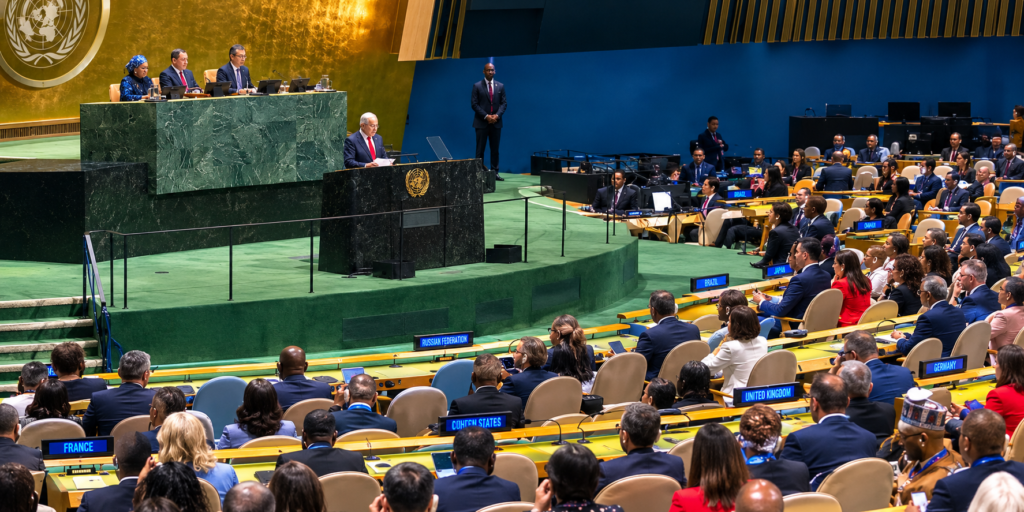
His speech came after dozens of delegates walked out in protest. Netanyahu rejected allegations that Israel is committing genocide in Gaza and criticized international leaders who have condemned Israel’s actions.
Palestinian President Mahmoud Abbas, speaking by video, accused Israel of killing, destruction, starvation and displacement in Gaza, while warning that settlement expansion in the occupied West Bank threatens the two-state solution.
Netanyahu also sharply criticized Turkish President Recep Tayyip Erdoğan and New York City Mayor Zohran Mamdani, while thanking U.S. President Donald Trump for what he called “bold leadership” in confronting Iran.
Benjamin Netanyahu’s recent address at the United Nations General Assembly (UNGA) took place amid considerable tension and dissent. The event, traditionally intended as a platform for world leaders to present their visions for global peace and cooperation, was marked this year by protests and vocal opposition from various delegates. As countries continue to grapple with divisive issues, Netanyahu stood firm, reiterating Israel’s position and highlighting the challenges facing the country.\
READ OTHER ARTICLES:
- Donald Trump Administration Prepares Sweeping Sanctions Against ICC
- Donald Trump Expands Drug Pricing Deal, Projecting $27.6 Billion 50 State Savings
- North Korea nuclear tests may have triggered earthquakes near Mount Mantap
- DOJ Reaches Agreements With NYU, UPMC Over Transgender Care for Minors
- Catriona Gray Still Reigns as the Gold Standard of Beauty Queens
The backdrop of Netanyahu’s speech was particularly significant, reflecting divisions within the global community over key geopolitical issues. Protests by some member states highlighted a growing rift over Israel’s policies, particularly those concerning the Palestinian territories and recent escalations in regional conflicts. By taking the podium during such a polarized moment, Netanyahu sought to assert Israel’s narrative and respond to criticism directed at his government.
During his speech, Netanyahu presented a case for Israel’s security needs, repeatedly emphasizing what he described as threats posed by hostile actors in the region. His insistence on Israel’s right to defend itself echoed throughout his remarks, providing the framework for his arguments for international support. As he addressed pressing global challenges, his rhetoric often sought to draw parallels between Israel’s struggles and broader themes of freedom and democracy.
As the UNGA progresses, reactions to Netanyahu’s remarks are likely to influence discussions among member states. Governments must navigate their own domestic and international pressures, which may be further complicated by their positions on Israel. The dynamics within the General Assembly reflect deep divisions among member states and underscore the enduring complexities shaping international relations today.
Netanyahu’s Defense of Military Actions
Israeli Prime Minister Benjamin Netanyahu has consistently articulated a strong defense of Israel’s military operations, particularly in relation to Iran and Gaza. During his address to the UN General Assembly, he outlined the rationale behind these actions, asserting that they are essential to protecting the security and survival of the Israeli state. Regarding Iran, Netanyahu emphasized what he described as the ongoing threat posed by its nuclear ambitions, arguing that the pursuit of nuclear weapons represents an existential danger not only to Israel but also to global peace and security.
Netanyahu’s position on military engagements is rooted in his assertion that Israel has the right to defend itself against aggression. This position is particularly evident in the context of ongoing tensions involving Gaza, where he has justified Israeli military campaigns as necessary responses to attacks against Israeli civilians. He described these military actions as efforts to dismantle militant infrastructure and prevent future attacks, framing them within the broader context of national security.
The Prime Minister’s address also highlighted his conviction that Israel’s defensive measures should not be criticized without considering the threats that, in his view, have prompted such actions. He argued that the moral responsibility of any nation is to protect its citizens and that Israel is no exception. In doing so, Netanyahu presented Israel’s military campaigns as both defensive measures and, from his perspective, a moral imperative in the face of aggression from militant groups.
In sum, Netanyahu’s defense of military actions involving Iran and Gaza reflects a broader narrative centered on national security and self-defense. His assertions at the UN serve to reinforce his government’s position that military operations are necessary to counter threats and protect the Israeli population.
The Controversy Over Genocide Accusations
At the United Nations General Assembly, Israeli Prime Minister Benjamin Netanyahu characterized allegations of genocide in Gaza as unfounded and politically motivated. His assertion sought to present Israel as the target of what he described as misinformation and efforts to delegitimize the country. Netanyahu argued that allegations concerning his government’s conduct toward Palestinians form part of a broader campaign against Israel. His dismissal of the accusations has sparked significant international debate, reflecting divergent views on the Israel-Palestine conflict.
Following Netanyahu’s assertions, reactions have remained polarized across the international political landscape. Critics, including governments and humanitarian organizations, have raised concerns about alleged violations of international law and stressed the importance of transparency and accountability when civilians are harmed. Others argue that allegations of genocide, particularly in light of the reported civilian casualties in Gaza, warrant continued international scrutiny of Israel’s military conduct. These contrasting perspectives illustrate the complexities surrounding allegations of genocide within the highly volatile context of Middle Eastern politics.
The implications of this controversy are significant for Israel’s standing within the international community. Netanyahu’s categorical rejection of the allegations has intensified an already contentious debate and raised further questions among critics about Israel’s adherence to international humanitarian norms. As accusations of genocide persist and activists pressure governments to adopt firmer positions, Israel’s diplomatic relationships may face additional challenges. The backlash surrounding Netanyahu’s remarks at the General Assembly reflects a continuing divide between Israel’s government and some of its international critics. The debate over allegations of genocide also demonstrates how disputes over international law and military conduct can affect a country’s diplomatic relations and global reputation.
Mahmoud Abbas’s Response: A Call for Palestinian Rights
During his recent address to the United Nations General Assembly, Palestinian President Mahmoud Abbas delivered a message highlighting what he described as the various threats facing the Palestinian people. In his recorded remarks, Abbas focused on the challenges posed by ongoing Israeli settlement policies, which he said undermine prospects for peace and the viability of a two-state solution.
Abbas expressed deep concern that the continued expansion of Israeli settlements in the West Bank not only encroaches on Palestinian land but also contributes to tensions and violence among local communities. By drawing attention to these settlement activities, Abbas emphasized what he described as their harmful effects on Palestinian communities and their aspirations for statehood. He argued that these actions involve more than territorial disputes and pose serious challenges to the future of Palestinians.
Throughout his remarks, Abbas highlighted the impact that these policies have had on the daily lives of Palestinians. Displacement linked to settlement expansion, restrictions on movement, and the erosion of Palestinian social and political structures were among the issues he raised. He urged the international community to recognize what he described as a growing threat to the prospects of an independent and sovereign Palestinian state.
Furthermore, Abbas’s remarks served as a call for renewed dialogue and international action to address these issues. His appeal sought to raise awareness and strengthen international support for Palestinian rights and a response to settlement expansion. By emphasizing the need for a two-state solution based on equality and justice, Abbas sought to draw attention to the continuing challenges facing Palestinians.
Diplomatic Tensions with Turkey
The recent exchange at the United Nations General Assembly between Israeli Prime Minister Benjamin Netanyahu and Turkish President Recep Tayyip Erdoğan reflects continuing tensions in Israeli-Turkish relations. The confrontation was marked by accusations from both leaders, highlighting the diplomatic disagreements that have characterized their relationship in recent years.
In his address, Netanyahu criticized Turkey’s leadership, accusing it of supporting terrorist groups and undermining regional stability. This reflects Israel’s stated concerns about Turkey’s foreign policy and its implications for Israeli national security. Erdoğan, meanwhile, criticized Israel’s actions toward the Palestinian territories, accusing the Israeli government of aggression and human rights violations. The exchange highlighted the widening divide between the two countries, whose relations have deteriorated over several contentious geopolitical issues.
The implications of these tensions for Israeli-Turkish relations are significant. A deterioration in diplomatic dialogue could contribute to a more confrontational relationship, with potential effects on trade, tourism, and military cooperation between the two countries. As Israel continues to engage with various actors on the international stage, tensions with Turkey present challenges for bilateral relations and broader regional diplomacy.
Furthermore, the exchange highlights the interconnected nature of international diplomacy, in which statements made at high-profile events such as the UN General Assembly can resonate far beyond the immediate audience. Both leaders’ remarks also serve political and diplomatic purposes, reinforcing their respective positions while highlighting the tensions between their governments. The incident demonstrates how rhetoric at international forums can influence perceptions and contribute to the complexities of Middle Eastern diplomacy.
Criticism from Global Leaders
Following Israeli Prime Minister Benjamin Netanyahu’s address at the UN General Assembly, his remarks drew responses from political leaders and diplomats representing different countries and institutions. Netanyahu’s statements, particularly those directed at governments and organizations critical of Israeli policies, became part of a broader diplomatic debate over Israel, the Palestinian territories, and the ongoing regional conflict.
Some European leaders have expressed concern about rhetoric surrounding the conflict and have emphasized the importance of dialogue and diplomacy. In particular, the debate has included disagreements over how criticism of Israeli policies should be characterized and the distinction between criticism of government actions and antisemitism.
Leaders from Arab and Muslim-majority countries have also criticized aspects of Netanyahu’s position. Many have emphasized Palestinian rights and called for a political resolution to the Israeli-Palestinian conflict. Turkish officials, in particular, have continued to criticize Israel’s conduct toward Palestinians and have called for a resolution to the conflict based on Palestinian rights.
Criticism has also come from diplomats representing international organizations. During UN discussions, representatives have emphasized the importance of international law and continued support for a two-state solution. Their comments reflect broader disagreements among member states over Israel’s military actions, settlement policies, Palestinian statehood, and the prospects for a negotiated peace.
The varied responses from international leaders illustrate the complexity of the diplomatic environment surrounding the Israeli-Palestinian conflict. They also demonstrate the continuing role of the United Nations as a forum where governments present competing positions on issues involving international law, security, human rights, and Palestinian statehood.
Local Reactions: The Impact on Jewish Communities in New York
The recent speech by Israeli Prime Minister Benjamin Netanyahu at the UN General Assembly has taken place against a broader backdrop of debate within New York City, which is home to a large Jewish population. Responses within the community may vary, with some people expressing support for Israel’s security concerns while others raising concerns about the consequences of the government’s policies and rhetoric.
Mayor Zohran Mamdani is the current mayor of New York City. His administration has emphasized public safety, government preparedness, and engagement with New Yorkers, although any specific claims about his response to Netanyahu’s UN address should be supported by a direct statement or official record.
Within New York’s Jewish community, reactions to Netanyahu’s remarks can differ significantly. Some individuals may view his defense of Israel as important, while others may express concerns about how the conflict and political rhetoric could affect community safety and social relations. Discussions surrounding the conflict can therefore involve both support for Israel and concerns about rising tensions.
Community forums and public discussions can provide spaces for residents to express their views and concerns about safety, antisemitism, the Israeli-Palestinian conflict, and U.S. foreign policy. Such discussions also reflect the diversity of views within New York’s Jewish population rather than a single community-wide position.
As debate surrounding Netanyahu’s speech continues, maintaining opportunities for communication and peaceful discussion remains important. Reactions within New York’s Jewish communities illustrate how international political developments can have consequences for local communities, particularly when questions of security, identity, and political disagreement intersect.
US-Israel Relations Under Scrutiny
Prime Minister Benjamin Netanyahu’s address at the UN General Assembly also highlighted the longstanding relationship between Israel and the United States. Netanyahu has frequently emphasized U.S. support for Israel under successive administrations, including the administration of Donald Trump. The relationship has played a significant role in Israel’s diplomatic and security policies.
During Trump’s first presidency, the U.S.-Israel relationship underwent several significant developments, including the U.S. recognition of Jerusalem as Israel’s capital and the relocation of the U.S. Embassy from Tel Aviv to Jerusalem. These decisions generated different reactions internationally and within Israel and became important elements of the broader U.S.-Israel relationship.
Netanyahu has also emphasized the importance of U.S. support for Israel’s defense and diplomatic efforts. U.S. military assistance and defense cooperation have remained important components of the bilateral relationship. These ties have featured prominently in discussions about Israel’s security requirements and its response to regional threats.
The relationship also has broader regional implications. Strong U.S.-Israel ties can affect Israel’s diplomatic and security calculations as it manages relations with neighboring countries and other regional actors. At the same time, U.S. policy toward Israel is influenced by wider American diplomatic, security, and political considerations.
Overall, U.S.-Israel relations remain an important element of Israel’s foreign and security policy. Netanyahu’s references to past American support underscore the continuing significance of the bilateral relationship as Israel confronts regional security challenges and diplomatic pressures.
The Path Ahead for Israel and Palestine
In reviewing the implications of Netanyahu’s address at the UN General Assembly, it is evident that the future of Israel-Palestine relations remains fraught with challenges. Netanyahu’s unwavering stance, centered on themes of security and existential threats, resonates strongly within Israeli politics and society, reflecting persistent concerns about vulnerability amid regional instability. His remarks not only highlight his government’s commitment to its security-focused approach but may also signal continued difficulties in the peace process, which has historically been marked by conflict and mutual distrust.
The complex geopolitical landscape continues to shape interactions between Israel and Palestine, as well as the role of international actors in promoting dialogue. Numerous peace initiatives have been proposed over the years, yet the gap between competing narratives has remained wide. With Palestinians increasingly expressing concerns about marginalization, prospects for constructive dialogue depend in part on addressing their grievances while also recognizing Israel’s security concerns. Netanyahu’s emphasis on security raises important questions about how to build bridges toward mutual understanding, particularly amid disagreements over the direction of future peace negotiations.
Furthermore, divisions among global leaders in response to Netanyahu’s speech underscore the difficulty of reaching an international consensus on how to advance peace in the region. Responses ranging from support for Israel’s right to defend itself to calls for negotiations and Palestinian statehood highlight the differing approaches to conflict resolution. As local and international stakeholders grapple with these complexities, any sustainable path forward will require careful consideration of competing perspectives, meaningful dialogue, and a willingness to compromise.
The prospects for Israel-Palestine relations remain uncertain, with Netanyahu’s remarks at the UN reflecting broader tensions surrounding the conflict. Continued dialogue, grounded in respect and mutual recognition of rights, remains an important element in efforts to pursue lasting peace and stability in the region.
Netanyahu’s Diplomatic Balancing Act: Challenges and Responses
The political climate surrounding Israeli Prime Minister Benjamin Netanyahu has become increasingly complex in recent months, particularly in light of his recent speech addressing both domestic and international audiences. This moment is significant not only for Netanyahu’s leadership but also for the broader political landscape as Israel prepares for its upcoming elections, scheduled for October 27, 2026. The speech delivered by Netanyahu provides a point of reference for understanding his government’s efforts to navigate a challenging geopolitical environment.
As the elections approach, Netanyahu faces scrutiny and pressure from various sectors of Israeli society. His previous policies and decisions are under review as his opponents seek to highlight what they regard as shortcomings. The backdrop of rising regional tensions, coupled with a diverse and often divided electorate, presents significant challenges for Netanyahu. His ability to communicate effectively with both Israeli voters and American audiences is important not only in the context of the election campaign but also for maintaining the strategic relationship between Israel and the United States.
Netanyahu’s diplomatic balancing act must address the concerns of Israeli citizens, who remain focused on national security and socioeconomic issues, while also engaging American policymakers, who play an important role in Israel’s international and security relationships. The interplay between domestic priorities and international expectations adds layers of complexity to Netanyahu’s speech and broader political strategy. Furthermore, his government’s responses to established security challenges, as well as emerging issues such as Iran’s nuclear program and changing dynamics among Palestinian groups, are likely to remain subjects of scrutiny.
This introduction sets the stage for a deeper examination of Netanyahu’s diplomatic strategies and the ways they are perceived by Israeli and American audiences, providing a basis for discussing the broader implications of his actions ahead of the elections.
Netanyahu’s Image in Israeli Politics
Benjamin Netanyahu, sometimes referred to as “Mr. Security,” has long been associated with an emphasis on national security and defense. However, events surrounding the October 7, 2023, attacks have affected public debate over his leadership. Critics have argued that his government failed to adequately prepare for or respond to the attacks, raising questions about the government’s handling of national security.
The criticism of Netanyahu comes not only from political opponents but also from members of the Israeli public who have expressed dissatisfaction with the government’s handling of security threats. This erosion of trust presents a challenge as he campaigns for another term. Opponents have used the issue to question his longstanding argument that his experience is essential to maintaining Israel’s security.
Netanyahu’s critics have pointed to alleged failures in intelligence and preparedness, raising questions about the government’s security policies and decision-making. These criticisms present a political challenge because they directly concern one of the central issues associated with Netanyahu’s leadership.
Furthermore, the political implications are significant. Political opponents may use these criticisms to appeal to voters who have concerns about national security under Netanyahu’s leadership. As Israel heads toward the elections, these competing narratives may shape the political debate and influence how voters assess the government’s record.
The debate surrounding Netanyahu’s reputation raises questions about his future role in Israeli politics. Continued scrutiny of his government’s record and differing public assessments of its handling of security issues are likely to remain important features of the election campaign.
The Audience for Netanyahu’s Speech
During his recent address, Israeli Prime Minister Benjamin Netanyahu addressed two important audiences: the Israeli public amid an ongoing election campaign and the American political establishment, where views on Israel continue to vary. Each audience presents distinct considerations and requires attention to different political and diplomatic concerns.
For the Israeli public, Netanyahu’s message was delivered against a complex political backdrop. With elections approaching, he emphasized issues such as national security, resilience, economic stability, and national unity. These themes are central to the political debate as voters assess the government’s record and its approach to regional security.
At the same time, Netanyahu directed significant attention toward the United States and its political leadership. The U.S. remains an important partner for Israel, particularly in matters involving security, diplomacy, and regional policy. By emphasizing shared principles such as democracy and security, Netanyahu sought to reinforce the longstanding relationship between the two countries.
His message also addressed the complexities faced by American policymakers, who must navigate differing views among lawmakers and constituents regarding U.S. policy toward Israel and the wider Middle East. This creates a diplomatic challenge for Netanyahu as he seeks to emphasize Israel’s security concerns while also presenting his government’s position on negotiations and regional diplomacy.
Through this dual-audience approach, Netanyahu’s speech reflected the intersection between Israeli domestic politics and international diplomacy. His remarks addressed the concerns of Israeli voters while also seeking to communicate Israel’s position to American and international audiences. The speech therefore illustrates how domestic political considerations and foreign-policy objectives can overlap during an election period.
Responses to the UN Speech
Israeli Prime Minister Benjamin Netanyahu’s recent address at the United Nations General Assembly garnered significant attention, particularly because of his remarks describing departing delegates as “moral cowards.” The phrase drew controversy both domestically and internationally, with critics arguing that such language could further strain diplomatic relations and deepen existing divisions.
During the speech, Netanyahu presented his perspective on Israel’s security challenges and its position on the global stage, emphasizing what he described as threats from Iran, Hamas, and other regional actors. His characterization of the departing delegates as “moral cowards” was a particularly confrontational element of his address. While the political impact of the language is subject to interpretation, the remarks clearly underscored his willingness to challenge critics publicly.
The mass walkout by dozens of delegates as Netanyahu began speaking was a visible expression of opposition to Israel’s policies and military actions. The incident highlighted the deep diplomatic divisions surrounding Israel and the Gaza conflict. Netanyahu responded directly to those who left, arguing that Israel’s actions were aimed at defending itself and, in his view, also protecting other countries from regional threats.
As the situation develops, the international response to Netanyahu’s rhetoric will remain an important part of the broader diplomatic debate. His decision to use confrontational language reflects the highly polarized environment surrounding the conflict. The reactions to his speech may also affect discussions about Israel’s diplomatic relationships and its position in international forums.
Concerns over Israeli Military Actions in Gaza
The Israeli military campaign in Gaza, which began following the October 7, 2023, Hamas attack on Israel, has generated extensive international concern over its humanitarian consequences. According to recent UN reporting, Gaza continues to face severe humanitarian conditions, including damaged housing, shortages of essential supplies, and risks to civilians living in unsafe structures.
The scale of casualties has remained a major focus of international debate. Recent reports citing Gaza health authorities put the Palestinian death toll since the beginning of the conflict at more than 73,000, although casualty figures do not necessarily distinguish between civilians and combatants.
Israel has consistently maintained that its military operations are intended to address security threats and target Hamas and other militant groups. Israeli officials have rejected allegations that the campaign constitutes genocide. At the same time, critics and human rights organizations have raised concerns about civilian casualties and whether military operations comply with international humanitarian law.
The Israeli leadership therefore faces competing security and humanitarian considerations. International responses remain divided, with some governments emphasizing Israel’s right to defend itself while others have criticized aspects of its military conduct and called for greater accountability. The continuing humanitarian situation in Gaza remains central to the international debate over the conflict.
Shifting U.S. Views on Israel
The diplomatic relationship between the United States and Israel has historically enjoyed substantial bipartisan support. However, recent polling indicates significant partisan differences in Americans’ views of Israel and the Israeli government. A Pew Research Center survey conducted in May 2026 found that 51% of Republicans and Republican-leaning independents had a favorable view of the Israeli government, compared with 16% of Democrats and Democratic-leaning independents.
The same survey also found differences in views of the Israeli people. Sixty-five percent of Republicans and Republican-leaning adults expressed a favorable view of Israeli people, compared with 43% of Democrats and Democratic-leaning adults. These figures illustrate a substantial partisan divide, although views of Israel and views of the Israeli government are not identical.
Several factors may contribute to changing public attitudes, including the continuing Israeli-Palestinian conflict, civilian casualties, U.S. foreign policy, and the political debate surrounding Israel’s military actions. Social media and political commentary have also expanded the range of perspectives available to American audiences.
It is therefore more accurate to describe the current situation as a changing and increasingly partisan debate over Israel and U.S. policy rather than simply as a general decline in U.S. support for Israel. The Pew findings show that attitudes vary considerably by political affiliation and by whether respondents are evaluating the Israeli government or the Israeli people.
For Netanyahu’s government, these divisions create a complicated diplomatic environment. The United States remains a major partner for Israel, while American public and political attitudes toward Israel continue to vary across partisan and demographic groups. The future direction of U.S.-Israel relations will therefore remain closely connected to developments in the region and to political debates within both countries.
Protests Against Netanyahu’s Visit
During Benjamin Netanyahu’s recent visit to the United States, a series of protests took place in various cities, reflecting opposition to his government’s policies, particularly those concerning the Israeli-Palestinian conflict and judicial reforms. Demonstrators gathered in significant numbers, expressing opposition not only to Netanyahu’s political decisions but also to what they described as the broader implications of these policies for peace and democracy in the region.
Protests were particularly visible in Washington, D.C., where supporters of human rights organizations and local activists gathered near venues where Netanyahu was scheduled to meet with officials. Protesters carried signs and chanted slogans calling for justice for Palestinians and an end to policies they viewed as harmful to Palestinian rights. The demonstrations drew participants from various communities, reflecting a range of concerns about Netanyahu’s government.
Reports from the demonstrations indicated that several prominent figures within the protest movement were arrested. The arrests added to tensions between law enforcement and demonstrators, while some protesters and their supporters criticized the authorities’ response. Any claims that the arrests were part of a broader effort to suppress dissent should be attributed to the individuals or organizations making those claims.
The atmosphere during the protests was highly charged, with participants expressing concerns about the direction of Netanyahu’s policies and their potential consequences. Some protesters focused on concerns about democratic institutions in Israel, while others highlighted the continuing violence and humanitarian situation in the region. The participation of various civil rights and advocacy groups also demonstrated the range of issues involved in the protests.
As the demonstrations unfolded, they received media attention and generated discussions across social media platforms, amplifying the protesters’ views. The public opposition during Netanyahu’s visit highlighted the divisions surrounding his government’s policies and demonstrated how Israeli domestic politics and the broader Israeli-Palestinian conflict continue to generate debate in the United States.
Diplomatic Strategies Regarding Iran
Israeli Prime Minister Benjamin Netanyahu’s approach to Iran has been characterized by a strong security-focused posture, particularly amid tensions over Tehran’s nuclear program. Netanyahu has repeatedly voiced concerns about Iran’s nuclear activities, arguing that a nuclear-armed Iran would pose a serious threat to Israel and regional security. His government has also raised concerns about Iran’s nuclear development and its stated civilian purposes.
As part of its strategy, Netanyahu’s government has sought to strengthen coordination with the United States. Military cooperation, intelligence sharing, and other forms of security coordination have been important elements of the relationship. Joint military activities and operations involving the two countries have also underscored their security cooperation amid tensions with Iran.
The implications of these policies extend beyond military coordination. By maintaining close ties with Washington, Israel seeks to strengthen deterrence against Iran and counter Iranian influence in countries such as Syria and Lebanon, where Iran has supported armed groups, including Hezbollah. Netanyahu has also advocated stronger international pressure on Iran, including sanctions and diplomatic measures aimed at addressing its nuclear activities.
However, this approach carries diplomatic and security challenges. Military action can increase tensions and create risks of further escalation in an already volatile region. Critics of Netanyahu’s approach argue that an emphasis on military pressure could make diplomatic solutions more difficult. Supporters, meanwhile, maintain that sustained pressure is necessary to address what they regard as serious security threats.
Benjamin Netanyahu’s diplomatic approach has involved navigating a complex combination of domestic politics, regional security concerns, and international diplomacy. Throughout his political career, he has faced opposition from rival political groups as well as criticism over various aspects of his government’s policies. His political longevity has also demonstrated his ability to maintain support among important segments of the Israeli electorate while responding to changing political circumstances.
In the area of Israeli-American relations, Netanyahu’s policies have had important implications for the longstanding relationship between the two countries. Although the United States remains a major partner in Israel’s security and diplomacy, disagreements have emerged over issues including military operations, peace negotiations, and policies toward the Palestinians. These differences illustrate the challenges involved in maintaining close strategic cooperation while managing disagreements over policy.
Israel’s domestic political pressures, particularly those involving security, governance, and social policy, are closely connected to its foreign relations. Decisions made by the Israeli government can have consequences for its relationships with international partners, while diplomatic developments can in turn influence domestic political debates.
Ultimately, Netanyahu’s political and diplomatic strategy remains closely connected to broader developments in Israeli politics and the Middle East. The evolution of Israeli-American relations, regional security concerns, and the Israeli-Palestinian conflict will continue to shape the diplomatic environment in which Israel operates. Both Israeli and American leaders will face the challenge of managing these competing interests while seeking to address security concerns and maintain diplomatic cooperation.
- AITSA Cabuyao Violations

- The Timeless Bond and Contemporary Crossroads of Philippines–China Relations
- Macalintal Eyes Supreme Court Challenge Over BSKE Postponement
- Italy’s Fideuram Bank Loses €95 Million in AI Voice Scam
- GMA News Binatikos sa Panayam kay Gracioso sa ₱2-Bilyong Alegasyon sa mga Duterte
- Sara Duterte Itinangging Tumanggap ng Pera Mula sa Nagpakilalang Bagman ni Velasco