A few days before President Ferdinand Marcos Jr. delivers his second-to-last State of the Nation Address (SONA), a Pulse Asia survey revealed that many Filipinos expect him to clearly discuss the government’s efforts to combat corruption. The survey also showed that the public wants the President to present concrete plans to address rising prices of basic commodities, create more employment opportunities, and provide effective solutions to the country’s other pressing challenges.
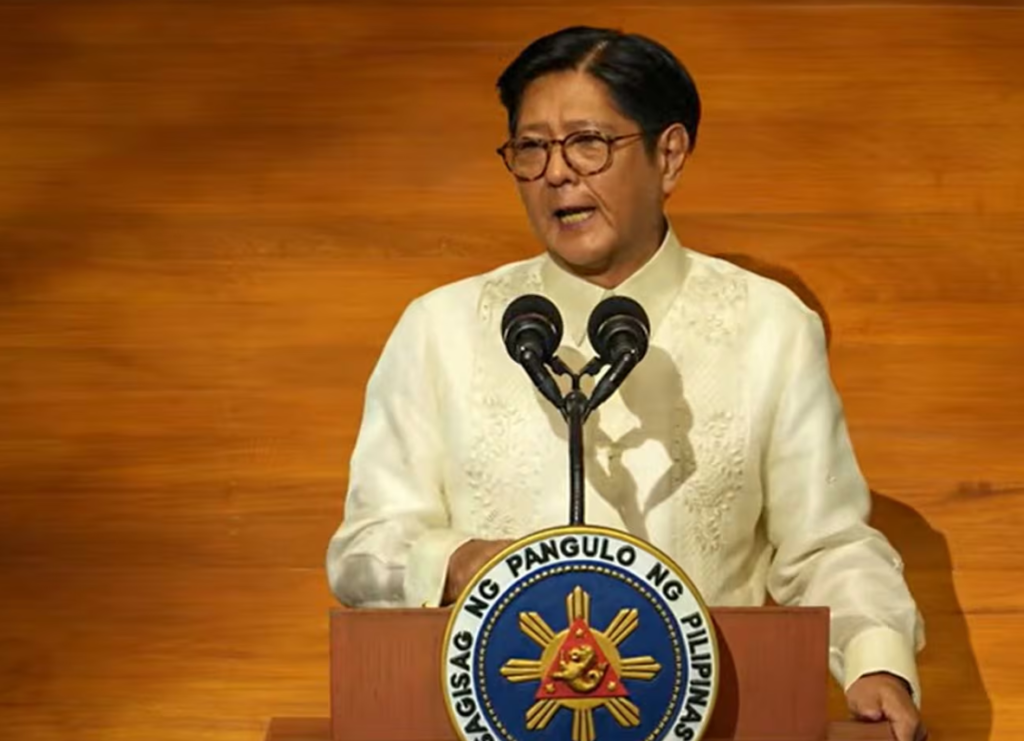
MANILA, Philippines — According to the latest Pulse Asia survey released on Friday, the fight against corruption is the top issue that many Filipinos want President Ferdinand Marcos Jr. to address in his second-to-last State of the Nation Address (SONA).
The survey, conducted among 2,400 adult respondents nationwide, found that 29.8 percent of participants want the President to prioritize the government’s anti-corruption campaign. The results indicate that for many Filipinos, combating corruption remains one of the country’s most pressing concerns and a key issue they expect the administration to address.
READ MORE OTHER ARTICLES:
- Ombudsman Files Fourteen Graft Cases Against Congressman Over Contract Links Today

- Cebu Authorities Seize Unregistered Korean Luncheon Meat Worth ₱700,000 From Grocery Store
- Filipinos Expect President Marcos to Address Corruption and Rising Living Costs
- MANILA: Dapat Unahin Gobyerno Pagtatayo Ng Silid-Aralan Para Sa Mga Estudyante Ngayon
- CEBU: Sinuspinde LTO Lisensya ng Alkalde Matapos Viral Aksidente sa Kalsada
- DAVAO: Iniimbestigahan Kamatayan Ng Grade 3 Estudyante Matapos Umano’y Pambubugbog Paaralan



Among the specific issues that Filipinos want the President to address is the investigation of alleged irregularities in flood control projects and the prosecution of those found responsible. According to the survey, 18.9% of respondents said they expect the President to provide a clear explanation on the issue, especially since billions of pesos in public funds have been allocated to flood mitigation projects across the country.
The survey also showed that many Filipinos are hoping for concrete measures to strengthen transparency and accountability in the use of government funds. Respondents emphasized the importance of ensuring that every public project serves its intended purpose and that officials involved in corruption are held accountable. For many, taking decisive action against corruption is essential to restoring public trust in the government.
Closely following corruption as a top concern is the rising cost of essential goods, which was cited by 18.7% of respondents as one of the key topics they want discussed during the State of the Nation Address (SONA). Filipino families continue to struggle with increasing prices of food, electricity, transportation, and other basic necessities.
Despite the government’s ongoing efforts to curb inflation, many households say their incomes remain insufficient to meet their daily expenses. As a result, the public is looking to the President to announce new policies and programs aimed at easing the financial burden on ordinary citizens.
Survey findings also reveal broad support for anti-corruption efforts across different regions and socioeconomic groups. In Metro Manila, 35% of respondents identified corruption as the issue they most wanted the President to discuss. The figure reached 32.7% in the rest of Luzon and 29.7% in Mindanao.
In the Visayas, however, the cost of living emerged as the leading concern, with 22.7% of respondents prioritizing lower prices for essential commodities. Corruption ranked second in the region at 19.3%, suggesting that while integrity in government remains important, residents are more immediately concerned about the rising cost of daily necessities.
Support for stronger anti-corruption measures was highest among respondents from Class ABC, where 42.1% identified it as their top concern. Among those in Class D, which represents the country’s largest socioeconomic group, 29.6% also expressed a desire to hear the President discuss corruption during his SONA.
Meanwhile, respondents in Class E placed greater emphasis on economic concerns. Affordable basic goods topped their priorities at 23.8%, followed by poverty at 15.9%, while corruption ranked third with 13.8%. These results indicate that for the country’s poorest sector, the most pressing issues remain the high cost of living and the need for sustainable livelihoods.
Beyond corruption and inflation, respondents identified several other important issues they hope the President will address. These include broader anti-corruption initiatives, which received 10.9%, job creation and livelihood opportunities at 6.6%, and poverty reduction at 6.2%.
Other priorities cited in the survey include the campaign against illegal drugs at 5.5%, low wages at 5.1%, rising fuel prices at 4.9%, and concerns affecting the agriculture sector at 4%.
Some respondents also expressed interest in hearing the government’s plans to combat criminality (2.8%), improve the country’s education system (2%), and fulfill campaign promises made by President Marcos (1.6%).
A smaller percentage of respondents wanted the President to discuss the impeachment case against Vice President Sara Duterte (1.2%), juvenile justice (1%), leadership issues in the Senate (1%), and programs for senior citizens (1%).
Overall, the survey underscores that while Filipinos face a wide range of national concerns, many continue to regard clean and accountable governance as a top priority. For the public, the fight against corruption goes beyond punishing wrongdoers—it also means ensuring that taxpayers’ money is spent wisely to improve government services and benefit the people.
As President Ferdinand Marcos Jr.’s SONA approaches, many Filipinos are expecting more than promises. They hope to hear a comprehensive report on the administration’s accomplishments, along with concrete plans to combat corruption, reduce the cost of living, generate more jobs, strengthen the economy, and improve the overall quality of life. The Pulse Asia survey provides a clear snapshot of the issues that matter most to the public and highlights the priorities they want the government to focus on in the months ahead. / aptikons