Australia’s relentless defensive pressure exposed Gilas Pilipinas’ weaknesses, forcing 19 costly turnovers that turned into 30 points as the Boomers rolled to a commanding 92-49 victory in the FIBA World Cup Asian Qualifiers, with Dwight Ramos admitting the Filipinos simply couldn’t withstand the intensity.
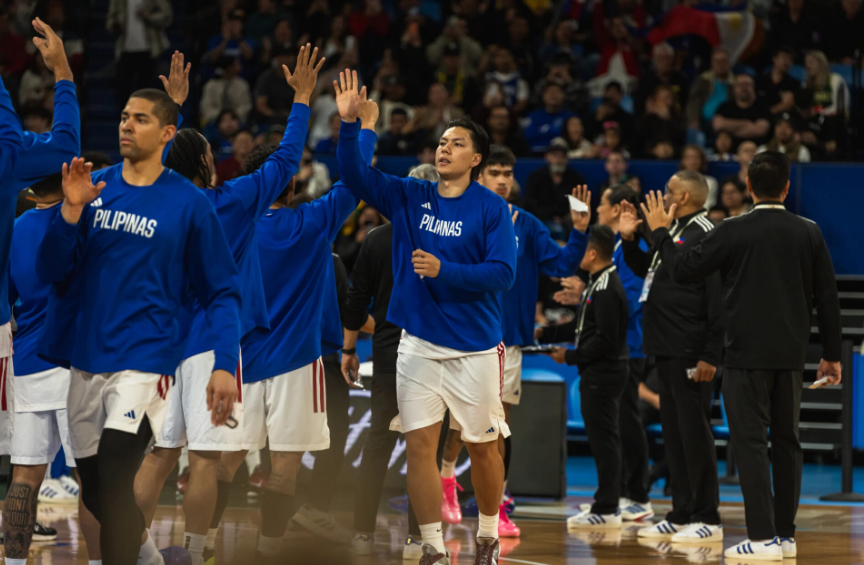
PERTH, Australia — Gilas Pilipinas suffered one of its toughest defeats in the FIBA World Cup Asian Qualifiers after Australia unleashed a suffocating defensive performance that dismantled the Filipinos, 92-49, on Monday in Perth. The lopsided loss closed Gilas’ first-round campaign with a 2-4 record and exposed the enormous gap between one of Asia’s emerging basketball nations and the region’s perennial powerhouse.
For Gilas forward Dwight Ramos, there was no need for excuses. The Boomers’ relentless pressure, disciplined execution, and physical defense dictated the entire contest from start to finish, leaving the Philippine squad struggling to establish any offensive rhythm.
Australia’s game plan was simple yet devastatingly effective: force mistakes, capitalize immediately, and never allow Gilas to recover.
READ MORE ARTICLES:
- Alex Eala’s Historic Wimbledon Run Ends, Inspires Nation Despite Heartbreaking Loss
- Filipina Alexsandra Diaz Shatters Two Youth World Records in Colombia Championship
- Spain Breaks Portugal Hearts as Ronaldo Bids Farewell to World Cup
- Australia Demolishes Shorthanded Gilas, Completes Dominant World Cup Qualifiers First-Round Sweep
The numbers told the story.
Gilas Pilipinas committed 19 turnovers throughout the contest, and Australia converted those costly miscues into an astonishing 30 points. Nearly every Filipino mistake became an Australian fast break, an open three-pointer, or an easy basket inside, creating an avalanche that Gilas simply could not stop.
Instead of allowing the Philippines to settle into its offense, the Boomers continuously pressured the ball, disrupted passing lanes, and denied clean looks. Every possession became a battle, with Australia’s defensive rotations arriving quickly and their physicality forcing hurried decisions from the Filipino ball handlers.
The pressure eventually snowballed into frustration.
What initially began as isolated turnovers evolved into rushed possessions, broken offensive sets, and missed opportunities. Australia sensed the momentum early and never eased off the accelerator, widening the gap quarter after quarter until the final buzzer.
Ramos acknowledged after the game that Australia’s intensity proved overwhelming.
Facing one of the deepest basketball programs in the world, Gilas found itself constantly reacting rather than attacking. Australia’s players displayed the kind of chemistry, discipline, and defensive communication that have made the Boomers a consistent contender on the international stage.
Beyond the turnovers, Australia dominated virtually every aspect of the contest. Their transition offense flourished, their half-court execution remained crisp, and their defense suffocated every attempt by Gilas to build momentum.
The 43-point defeat serves as a painful reminder of the level required to consistently compete against elite basketball nations. While Gilas has shown flashes of promise throughout recent international competitions, Monday’s performance illustrated that talent alone is insufficient against teams built on years of continuity, structured development, and world-class execution.
Despite the heavy defeat, the experience offers valuable lessons for the Philippine national team.
International basketball is increasingly defined by disciplined defense, efficient decision-making, and minimizing mistakes. Against elite opponents like Australia, every turnover carries a severe penalty, and every lapse in concentration can quickly transform into points at the other end.
The loss also highlights areas that Gilas must continue to improve moving forward—ball security, composure under defensive pressure, offensive spacing, and the ability to adapt when facing aggressive full-court and half-court defensive schemes.
With the first round now complete, Gilas Pilipinas will look to regroup before the next phase of the qualifiers. The team’s 2-4 record leaves little room for error, making every remaining game increasingly significant as the Philippines continues its pursuit of another FIBA World Cup appearance.
For Australia, meanwhile, the dominant victory reaffirmed why the Boomers remain among the strongest basketball programs not only in Asia but across the world. Their balanced attack, relentless defense, and championship-level discipline demonstrated exactly why they continue to set the standard in the region.
The scoreboard reflected more than just a loss—it reflected the difference between a team still building toward international consistency and one that has mastered the demands of world-class basketball.
Commentary: Defeats Like This Should Strengthen Gilas, Not Define It
Every basketball nation that has reached the highest level has endured nights like this. Blowout losses are painful, but they also provide the clearest mirror of a team’s weaknesses.
Australia did not simply outscore Gilas Pilipinas they exposed every small mistake and transformed it into a lesson. Nineteen turnovers resulting in 30 points is not merely a statistic; it is evidence that against elite competition, every possession matters.
For Philippine basketball, the solution is not to panic after a single defeat or immediately call for sweeping changes. Instead, the focus should remain on long-term development. The country’s talent has never been in question. What separates programs like Australia is the consistency of player development, defensive discipline, basketball IQ, and continuity from youth levels to the senior national team.
Dwight Ramos’ willingness to admit that Australia’s pressure was overwhelming reflects accountability rather than defeatism. Recognizing the gap is the first step toward closing it.
Filipino basketball has repeatedly demonstrated resilience. Every disappointing loss has eventually produced stronger teams, wiser players, and more determined programs. The challenge now is ensuring that this defeat becomes another building block instead of merely another painful memory.
If Gilas learns to protect the basketball, embrace defensive intensity, and develop greater composure under pressure, games like this may someday become the foundation of future victories rather than reminders of the distance still left to travel.
APTIKONS