Belgium delivered a ruthless 4-1 victory over the United States in the FIFA World Cup Round of 16, exposing costly defensive mistakes and ending America’s inspiring tournament run despite its historic progress to the knockout stage.
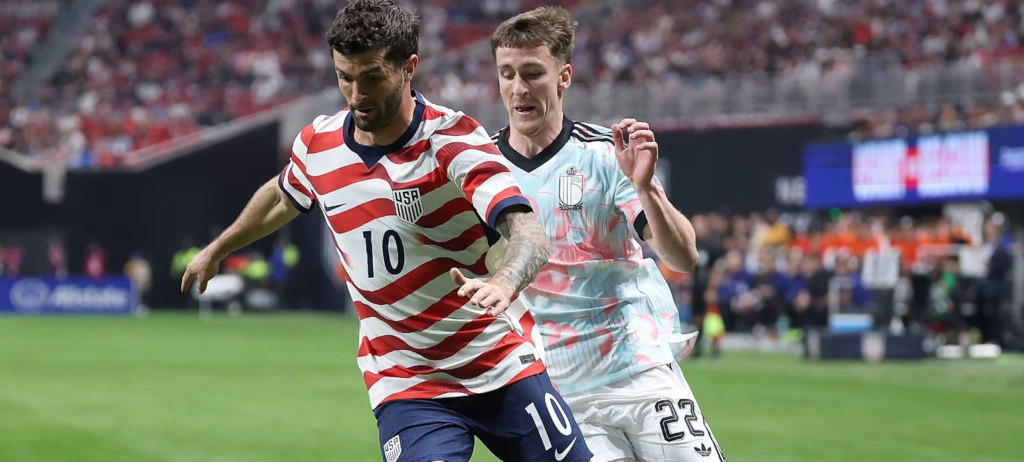
SEATTLE — What had been shaping up as a defining chapter in American soccer history came to an abrupt and painful end as Belgium dismantled the United States 4-1 in the FIFA World Cup Round of 16, ending a campaign that had inspired millions and raised hopes of a long-awaited breakthrough on football’s biggest stage.
Entering the knockout clash with momentum, confidence, and the backing of a nation energized by the team’s remarkable run, the Americans appeared poised to reach the World Cup quarterfinals for the first time in 24 years. Instead, they were overwhelmed by a disciplined and clinical Belgian side that punished nearly every defensive lapse, exposing the gulf that still separates the United States from the world’s elite football nations.
The atmosphere inside a sold-out Lumen Field quickly shifted from anticipation to disbelief as Belgium dictated the pace from the opening whistle. The Americans struggled to cope with the visitors’ composure in possession, while repeated defensive breakdowns allowed Belgium to capitalize with ruthless efficiency. Although the United States briefly found hope after Malik Tillman helped level the match through another dangerous set-piece opportunity, Belgium responded almost immediately, reclaiming the lead just two minutes later before taking complete control of the contest.
READ MORE ARTICLES:
- Argentina Stuns Egypt with Epic Comeback to Reach World Cup Quarterfinals
- Ramos: Boomers’ Pressure Buried Gilas in Crushing Qualifier Defeat
- Alex Eala’s Historic Wimbledon Run Ends, Inspires Nation Despite Heartbreaking Loss
- Filipina Alexsandra Diaz Shatters Two Youth World Records in Colombia Championship
The defeat echoed painful memories of the Americans’ Round of 16 exit against the Netherlands four years earlier, once again highlighting the challenge of matching Europe’s established football powers when the stakes are highest. Despite Belgium no longer being considered at the peak of its celebrated “golden generation,” the Red Devils showcased the experience, tactical awareness, and individual quality expected from one of Europe’s traditional football giants.
Midfielder Tyler Adams admitted the disappointment was difficult to accept after the final whistle, saying the team had been presented with a rare opportunity to achieve something historic but ultimately failed to seize the moment. His words reflected the emotions of an American squad that had entered the tournament believing it was ready to compete among the world’s best.
The performance fell short across nearly every area of the pitch. Christian Pulisic, the face of U.S. soccer, endured one of his most difficult outings of the tournament before leaving the match early in the second half with a leg injury. Striker Folarin Balogun, who had attracted attention in the days leading up to the match following controversy surrounding his eligibility, struggled to influence the attack against Belgium’s organized defense.
Head coach Mauricio Pochettino also faced difficult decisions as Sergiño Dest was substituted at halftime following an ineffective first-half display, while veteran captain Tim Ream found himself repeatedly exposed by Belgium’s relentless movement and pace. Perhaps the defining moment came when goalkeeper Matt Freese committed a costly error that effectively ended any realistic hopes of an American comeback, allowing Belgium to tighten its grip on the match.
Belgium entered the tournament carrying questions of its own after several disappointing performances in recent major competitions. However, with stars such as Thibaut Courtois, Youri Tielemans, Leandro Trossard, Kevin De Bruyne, Romelu Lukaku, Jeremy Doku, and Charles De Ketelaere providing depth and experience, the Red Devils reminded the football world that they remain capable of producing elite performances when it matters most. Their reward is a highly anticipated quarterfinal showdown against Spain as they continue their pursuit of World Cup glory.
For the United States, the tournament will ultimately be remembered as both a success and a missed opportunity. The Americans exceeded expectations by winning their group and claiming their first World Cup knockout victory since 2002, achievements that demonstrated the continued growth of soccer in the country. Yet the heavy defeat also served as a sobering reminder that progress alone is not enough to compete consistently with football’s established powers.
While the disappointment will linger, the campaign has also shown the potential of a new generation of American talent capable of capturing the imagination of the nation. The challenge now falls to Pochettino and his players to transform this painful lesson into motivation as preparations begin for the next chapter. The dream of becoming a true World Cup contender remains alive, but after Seattle, it is clear that the road toward joining the sport’s elite is still longer than many had hoped.
Starting Lineups
United States (USMNT) 🇺🇸
Manager: Mauricio Pochettino (AI Mode / Tactical Setup)
Goalkeeper
- Matt Freese
Defenders
- Alexander Freeman
- Chris Richards
- Tim Ream
- Antonee “Jedi” Robinson
Midfielders
- Weston McKennie
- Tyler Adams
- Malik Tillman
Forwards
- Sergiño Dest
- Folarin Balogun
- Christian Pulisic
Belgium 🇧🇪
Manager: Domenico Tedesco
Goalkeeper
- Thibaut Courtois
Defenders
- Timothy Castagne
- Nathan Ngoy
- Brandon Mechele
- Maxim De Cuyper
Midfielders
- Youri Tielemans
- Amadou Onana
- Nicolas Raskin
Forwards
- Dodi Lukébakio
- Charles De Ketelaere
- Leandro Trossard
Belgium’s Tactical Gamble Pays Off with Commanding 4-1 Victory
Belgium delivered one of the most convincing performances of the tournament after a bold tactical decision by the coaching staff resulted in a dominant 4-1 victory over the host nation. Rather than relying on established superstars Kevin De Bruyne and Romelu Lukaku, Belgium opted to preserve its veteran leaders while placing faith in a younger, energetic lineup that responded with a dazzling display of attacking football.
The tactical gamble proved to be a masterstroke from the opening whistle. Belgium lined up in an aggressive 4-2-3-1 formation, allowing the midfield to dictate possession while creating constant pressure in the final third. Charles De Ketelaere was deployed as the lone striker, but his movement across the attacking line continually disrupted the host nation’s defensive structure. Instead of remaining fixed in the penalty area, De Ketelaere drifted into wide spaces and dropped deep to link play, creating openings that Belgium’s attacking midfielders exploited throughout the match.
The hosts struggled to adapt to Belgium’s fluid movement and relentless pace. Every time they attempted to close down the ball, another Belgian attacker found space behind the defensive line. The quick passing combinations and intelligent positioning stretched the defense repeatedly, leaving the home side unable to maintain its shape as Belgium created scoring opportunities from nearly every dangerous attack.
Belgium’s midfield also played a crucial role in controlling the rhythm of the contest. The double-pivot provided defensive stability while quickly transitioning possession into attack, preventing the hosts from establishing any sustained momentum. Their disciplined pressing forced turnovers high up the pitch, allowing Belgium to capitalize before the opposition could reorganize defensively.
Although the host nation managed to score once, it did little to halt Belgium’s dominance. The visitors continued attacking with confidence, displaying remarkable chemistry despite the absence of several marquee players. Each goal reflected Belgium’s tactical discipline, clinical finishing, and willingness to attack with numbers whenever opportunities emerged.
The impressive victory also highlighted Belgium’s growing squad depth. Resting experienced stars such as De Bruyne and Lukaku could have weakened the team, but instead it showcased the country’s next generation of talent. The younger players embraced the responsibility, proving they are capable of delivering under pressure against quality opposition.
Charles De Ketelaere emerged as one of the standout performers, leading the attack with intelligence, creativity, and tireless movement. While his influence extended beyond goals, his ability to pull defenders out of position became the foundation of Belgium’s attacking success throughout the match.
The commanding 4-1 triumph sends a strong message to the rest of the competition that Belgium possesses far more than individual brilliance. Their tactical flexibility, depth of talent, and collective teamwork make them a formidable contender moving forward. With key stars remaining fresh and younger players gaining valuable confidence, Belgium appears well-positioned for the tougher challenges that lie ahead.
APTIKONS