When the government seeks to block the certification of an election result over alleged voter confusion, the public deserves answers—not political slogans about election integrity.
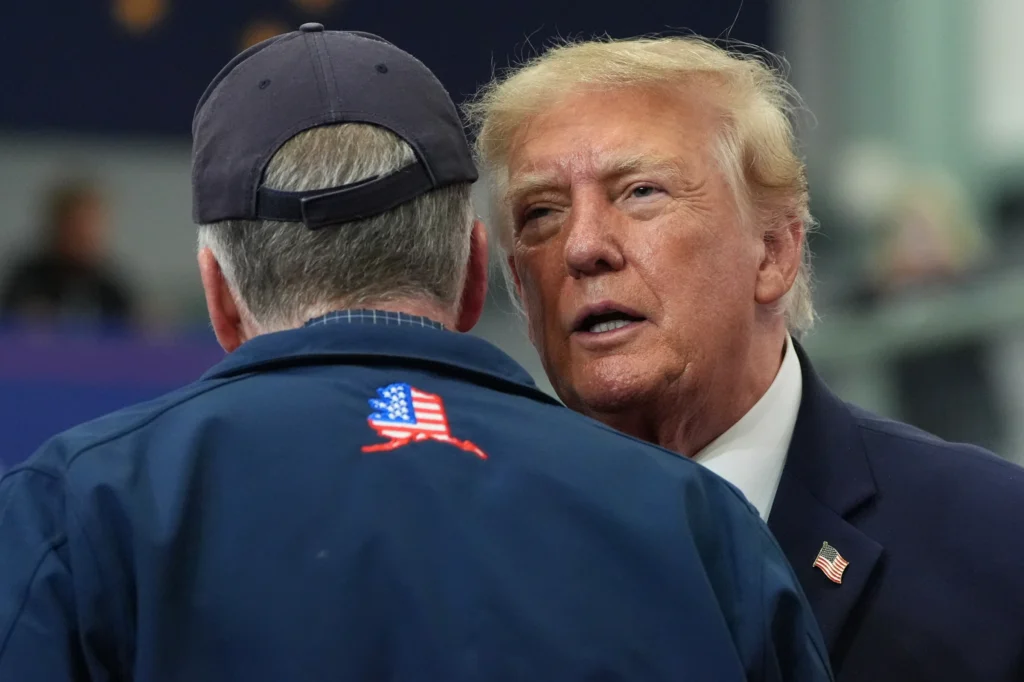
Democracy is tested not when political leaders are confident of victory, but when the possibility of defeat forces them to confront the limits of their power. The Trump administration’s lawsuit over Alaska’s upcoming U.S. Senate election raises precisely that question: How far should a government go when it believes the ballot could threaten its preferred political outcome?
The Department of Justice has sued Alaska, seeking to block the certification of an election result that may have been affected by voter confusion involving Republican Sen. Dan Sullivan and another candidate, Daniel J. Sullivan. The administration argues that the second candidate’s presence on the ballot could mislead voters and undermine the fairness of the contest. President Donald Trump has confirmed that he directed the lawsuit.
But a government invoking election integrity must answer a fundamental question: How can it protect the democratic process without creating another threat to public confidence in that same process?
This is not a trivial dispute over two similar names. The case touches on the boundaries between federal authority and state election administration, the rights of candidates to appear on the ballot, and the ability of voters to choose their representatives without improper interference.
The timing makes the controversy especially consequential. Alaska’s Senate race is closely contested, and its outcome could affect control of the chamber. In such circumstances, extraordinary legal intervention deserves extraordinary scrutiny. As an election approaches, it becomes increasingly important for officials to demonstrate that their actions are grounded in established law rather than partisan advantage.
The administration’s argument should not be dismissed without examination. Similar names can create genuine confusion, and election authorities have a responsibility to protect voters from deception. The Justice Department also alleges that Daniel J. Sullivan’s candidacy was intended to benefit Democratic nominee Mary Peltola by drawing votes away from the incumbent. Those allegations, however, must be evaluated through evidence and lawful proceedings—not simply accepted because government officials assert them.
There is a serious practical problem with the requested remedy. The lawsuit seeks to prevent the certification of results that may have been affected by confusion while an investigation determines whether votes cast for Daniel J. Sullivan were actually intended for Sen. Dan Sullivan. Yet ballots are secret. Once a voter casts a ballot, determining that person’s unexpressed intention may be impossible.
That raises a difficult question: If officials cannot reliably establish what individual voters intended, how can a post-election investigation distinguish genuine confusion from a lawful choice?
A voter may support a candidate for reasons that outsiders do not understand. A candidate’s name, political history, party registration, or perceived strategic purpose may raise questions, but none automatically proves how every voter interpreted the ballot. Any legal remedy must account for the rights of voters whose choices may differ from what political campaigns expect.
The controversy also places the administration’s public statements under scrutiny. Before the lawsuit was filed, Attorney General Todd Blanche said the Justice Department had no plans to improperly interfere with elections or the certification process. Trump subsequently acknowledged that he had instructed officials to proceed with the lawsuit. These statements do not, by themselves, establish unlawful interference, but they make transparency about the administration’s legal rationale all the more important.
The distinction between protecting an election and influencing its administration must remain clear. If officials believe a ballot violates the law, they should identify the violation, present evidence, and seek a remedy proportionate to the demonstrated problem. They should not expect the public to accept an extraordinary intervention merely because it is described as a defense of democracy.
There is also a broader institutional danger. When election disputes become extensions of partisan conflict, public trust can suffer regardless of the eventual court ruling. Supporters of one party may view the lawsuit as necessary enforcement, while supporters of another may see it as an attempt to restrict their political voice. Courts cannot eliminate every disagreement, but they can insist that legal claims be supported by evidence and that remedies respect voters’ rights.
The Alaska Supreme Court previously allowed Daniel J. Sullivan onto the general-election ballot after he challenged an earlier decision to exclude him. That history matters. It means the candidacy has already undergone state judicial review, although the current federal lawsuit raises separate questions that still require legal examination.
The incumbent’s campaign says it will allow the Justice Department’s complaint to proceed. Peltola’s campaign, meanwhile, has characterized the lawsuit as a political threat to Alaska voters. Those competing claims reflect the dispute’s partisan stakes, but neither statement substitutes for a judicial determination of the legal issues.
Ultimately, the question is not whether a particular candidate deserves to win or whether one party should retain control of the Senate. The question is whether the rules governing elections will be applied fairly, consistently, and transparently even when the result could have major political consequences.
Election integrity cannot be reduced to protecting one candidate from the possibility of losing votes. Nor should legitimate concerns about voter confusion be ignored. The challenge is to address such concerns without undermining ballot secrecy, voter choice, or the established process for determining an election’s outcome.
Alaska’s voters must not become an afterthought in a legal battle dominated by national political interests. Their rights deserve the same protection whether they support the incumbent, his challengers, or another candidate on the ballot.
The courts must examine the evidence, determine the scope of the government’s authority, and decide whether the requested remedy is justified. Meanwhile, public officials must explain their actions clearly and accept that scrutiny is an essential part of democratic accountability.
The ultimate test of election integrity is not whether the government can prevent a disputed result from being certified. It is whether the government can demonstrate, under the law, why such an extraordinary step is necessary—and whether the rights of every voter remain protected in the process.
- Over 230,000 Fake Recruitment Posts Removed by Meta, TikTok Since 2022

- Has the “Godfather of AI” Geoffrey Hinton Come to Regret Creating Artificial Intelligence?
- Every 40 Seconds, a Life Lost: The Quiet Crisis Behind the Philippines’ Suicide Numbers
- Lorna Kapunan | Education, Professional Career & Issue
- Susan Saint James, ‘McMillan & Wife’ and ‘Kate & Allie’ Star, Dies at 80
- NBI, Iniimbestigahan ang 60 Indibidwal sa Pamamaril sa San Jose NHS