Paraguay has plunged into a major political and financial crisis after President Santiago Peña was impeached and removed from office on November 6, 2026, following the collapse of Ueno Bank, which reportedly disrupted access to deposits belonging to approximately 2.9 million customers, triggered nationwide protests, and sparked investigations into alleged conflicts of interest and the handling of public funds. Vice President Pedro Alliana has since assumed the presidency, facing mounting pressure to restore public confidence, protect affected depositors, and stabilize the country’s financial system.
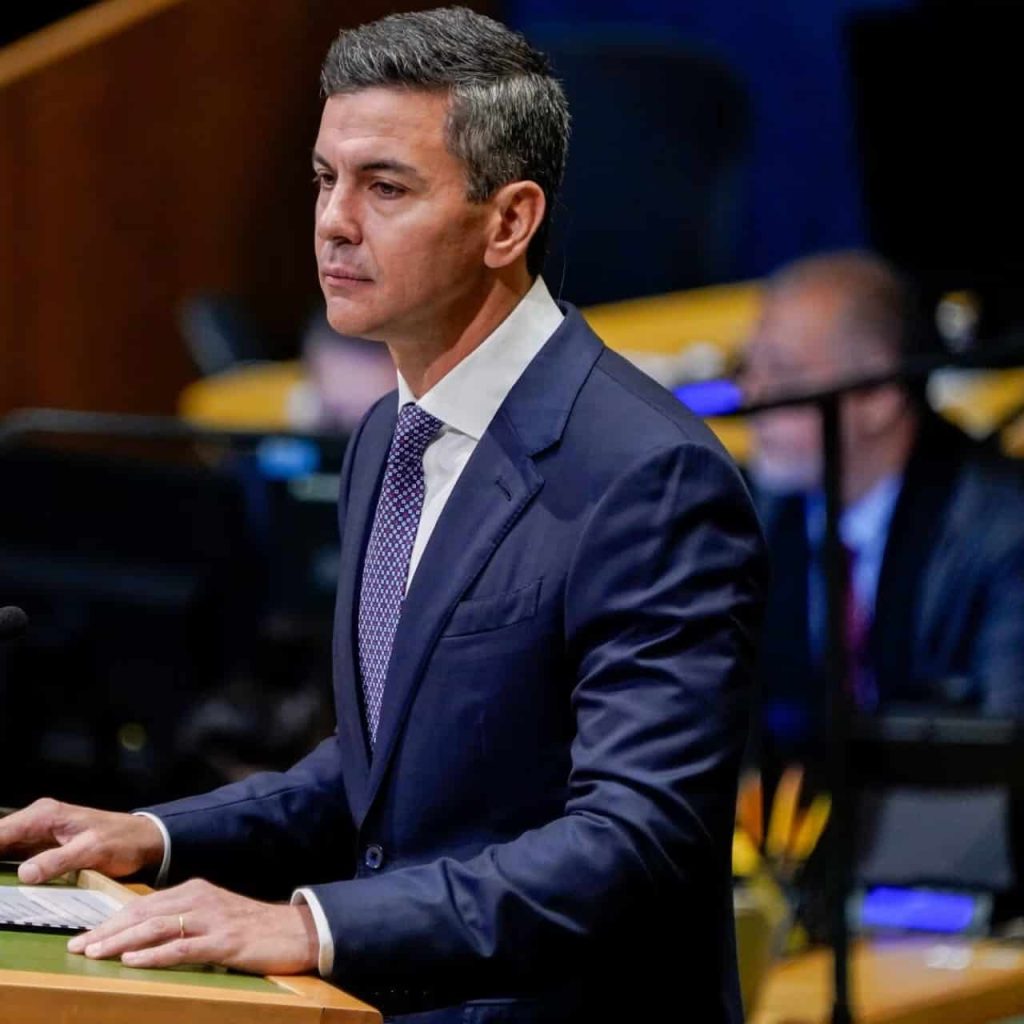
Paraguay has plunged into one of the most serious political and financial crises in its recent history after President Santiago Peña was impeached and removed from office on November 6, 2026, following the collapse of Ueno Bank, a major digital lender whose financial troubles left millions of customers unable to access their money.
The dramatic political development came after days of public outrage, nationwide protests, and growing accusations of government interference in the banking sector. Vice President Pedro Alliana was subsequently sworn in as the country’s new president, assuming responsibility for restoring public confidence and stabilizing the country’s troubled financial system.
The impeachment followed Peña’s announcement on November 5 that he was willing to resign to prevent further political instability and protect the country’s democratic institutions. However, lawmakers rejected his proposed resignation and proceeded with impeachment proceedings, ultimately removing him from office.
According to international reports, 44 of the Senate’s 45 members voted to convict Peña, while one senator was absent. The decision stripped the former president of the legal protections associated with his office and paved the way for criminal investigations into allegations involving conflicts of interest, government oversight, and the handling of public funds.
The political crisis was triggered by the sudden financial collapse of Ueno Bank, one of Paraguay’s rapidly expanding digital financial institutions. The Central Bank of Paraguay initiated the bank’s resolution process on November 2 after discovering that its capital adequacy had fallen below half of the legally required minimum following financial adjustments.
The bank’s collapse disrupted access to deposits belonging to approximately 2.9 million customers, representing a substantial portion of Paraguay’s adult population. The affected funds included personal savings, business transactions, pension payments, and money belonging to government institutions.
The situation immediately created financial difficulties for ordinary citizens, retirees, workers, and businesses that depended on Ueno Bank for their daily transactions. Many customers were unable to withdraw their savings or access funds needed to cover basic household expenses.
The banking scandal also raised serious questions about the relationship between Peña’s administration and the financial institution.
READ MORE GLOBAL NEWS:
- Emirates Flight 521: How a Failed Go-Around Caused Dubai Crash
- Philippines to Host 49th ASEAN Summit in Manila From November 15 to 18
- vnadexpress.com Faces Scam Allegations Over Online
- Paraguay’s President Santiago Peña Impeached and Removed After Ueno Bank Collapse
- Suspected North Korean Hackers Steal $6.36 Billion in Binance Heist
- Foxiz Fails to Issue Refund as Customer Support Concerns Grow
Before becoming president, Peña had financial connections to Grupo Vázquez, the business group associated with Ueno Bank. He reportedly held shares in the company’s parent group until April 2025, raising concerns about potential conflicts of interest and the government’s handling of the bank’s regulatory oversight.
Investigators are also examining the placement of approximately $800 million in public funds with the financial institution, including money associated with government agencies and pension-related resources.
Another major concern involves former Central Bank Governor Carlos Carvallo, who previously held a leadership position in a financial business connected to Ueno’s predecessor before being appointed head of the country’s monetary authority. His appointment and subsequent regulatory decisions involving the bank have become important subjects of the investigation.
Peña has denied any wrongdoing, while prosecutors are examining possible violations involving breach of trust, influence peddling, and the alleged misappropriation of public funds.
Following his removal from office, authorities placed the former president under house arrest as prosecutors continued their investigation. The former Central Bank chief and several executives associated with Ueno Bank have also faced legal action. Authorities have detained eight former bank executives as investigations into the institution’s financial activities continue.
Meanwhile, Paraguay’s political leadership has shifted to Vice President Pedro Alliana, who immediately assumed the presidency following the Senate’s decision.
Alliana is expected to serve the remainder of the presidential term through August 2028. His administration now faces the difficult responsibility of addressing the banking crisis, protecting depositors, and restoring confidence in public institutions.
One of the government’s immediate priorities is returning money to affected customers. The Central Bank has begun processing deposit guarantee payments, initially prioritizing customers with deposits of up to 10 million guaraníes, provided they have no outstanding debts with Ueno Bank and maintain an eligible account with another financial institution.
The initial payment is equivalent to approximately $1,565, although the amount and eligibility depend on the applicable deposit guarantee rules. Paraguay’s deposit protection system provides coverage of up to 75 monthly minimum wages per depositor per financial institution.
Alliana has also promised that the government will not abandon affected customers and that efforts to protect their deposits will continue.
Despite these assurances, the crisis has raised concerns about the broader consequences for Paraguay’s economy. Businesses have experienced disruptions, pensioners have struggled to access their payments, and public confidence in the country’s banking institutions has suffered a significant setback.
The political fallout has also exposed divisions within the ruling Colorado Party, which has maintained a dominant position in Paraguayan politics for decades. The loss of support for Peña among influential political figures further weakened his position as public anger intensified.
Thousands of demonstrators gathered in Asunción and other areas to demand accountability, the recovery of their money, and criminal investigations into those responsible for the banking collapse. Police were deployed to maintain security as protests intensified around government institutions and financial establishments.
The crisis has become a major test for Paraguay’s democratic institutions, particularly regarding the independence of financial regulators, transparency in government transactions, and the accountability of political leaders.
For international investors, the developments have also raised questions about the country’s reputation as a relatively stable destination for business and investment in South America. Although the Central Bank has maintained that Ueno Bank’s failure is an isolated case rather than evidence of a wider banking system collapse, restoring confidence will require effective financial supervision and transparent investigations.
With Peña removed from office, Alliana now faces pressure to demonstrate that his administration can protect ordinary citizens, recover public resources, and ensure that similar financial failures do not happen again.
The collapse of Ueno Bank has therefore become more than just a banking problem. It has developed into a national political crisis that has cost a president his position, disrupted millions of financial accounts, and placed Paraguay’s economic credibility under intense scrutiny.
- Alphabet Loses $500 Billion as AI Fears Shake Google Search
- GLP-1 Drug Costs Force Users to Choose Between Medication, Retirement
- Democrats Threaten Subpoenas for AI CEOs, Igniting Silicon Valley Backlash
- Meta Faces $25 Billion Penalty in Historic Facebook Privacy Case
- Parents Sue OpenAI Claiming ChatGPT Advice Caused Daughter’s Epilepsy Death
The country’s recovery will ultimately depend on whether the new administration can return depositors’ money, establish accountability, and rebuild public trust in the institutions that millions of Paraguayans depend on.
Former Paraguay President Santiago Peña Transferred to Military Camp After Arrest
Former Paraguayan President Santiago Peña has been transferred to a military camp in Asunción following his arrest and removal from office, marking another dramatic development in the country’s growing political and financial crisis triggered by the collapse of Ueno Bank.
Peña was initially placed under house arrest shortly after Paraguay’s Senate voted to remove him from the presidency on Friday, November 6, 2026. The decision followed mounting public anger over the banking scandal, which reportedly disrupted access to deposits belonging to millions of customers.
According to the reported developments, 44 senators voted in favor of his removal, while no senator opposed the decision. The impeachment also stripped Peña of the presidential immunity associated with his office, allowing authorities to proceed with legal action against the former head of state.
However, his detention at his private residence did not last long. Authorities reportedly decided to transfer him to a military camp in Asunción after angry demonstrators gathered outside his home, demanding accountability for the financial collapse and the recovery of their money.
The transfer was reportedly carried out to ensure Peña’s safety and prevent possible confrontations as public anger continued to intensify. The presence of protesters near his residence raised security concerns, prompting authorities to move the former president to a more secure location.
Peña was also summoned to appear before the public prosecutor’s office in Asunción on Saturday morning, November 7, 2026, to provide a statement as part of the ongoing investigation into the banking scandal.
The former president is facing allegations involving breach of trust, influence peddling, and the alleged misuse of public office for personal benefit. If convicted under the applicable criminal laws, the charges could expose him to a prison sentence of up to 10 years.
Peña, however, has denied committing any wrongdoing and rejected allegations that he improperly used his presidential position or participated in activities connected to the financial collapse.
The investigation centers on the controversial relationship between his administration and Ueno Bank, a major digital financial institution whose sudden collapse triggered widespread financial difficulties across Paraguay.
Investigators are examining possible conflicts of interest, regulatory failures, and the handling of public funds connected to the bank and its associated business interests. The controversy has also raised questions about whether government officials properly supervised the financial institution before its collapse.
The banking crisis reportedly affected approximately 2.9 million customers, leaving many depositors struggling to access their savings and funds needed for everyday expenses. The situation sparked nationwide outrage and protests demanding answers from government officials and financial regulators.
The controversy eventually escalated into a major political crisis, culminating in Peña’s removal from office and the transfer of presidential responsibilities to Vice President Pedro Alliana.
Alliana now faces the difficult task of restoring confidence in the government, addressing the financial crisis, and ensuring that affected depositors receive the money they are entitled to recover.
Meanwhile, Peña’s transfer to a military facility has become another significant development in a political scandal that continues to attract attention across South America.
The former president’s legal situation could become one of the most consequential investigations in Paraguay’s recent political history, particularly if prosecutors establish evidence of wrongdoing involving government officials and the country’s financial institutions.
As investigations continue, Paraguay faces growing pressure to establish accountability, protect ordinary depositors, and rebuild public confidence in institutions shaken by the collapse of Ueno Bank.
ADS