An NBI digital forensic expert admitted before the impeachment court that he had no personal knowledge of the alleged hitman supposedly linked to Vice President Sara Duterte, saying his investigation was based solely on her recorded public statements and directives from the Department of Justice.
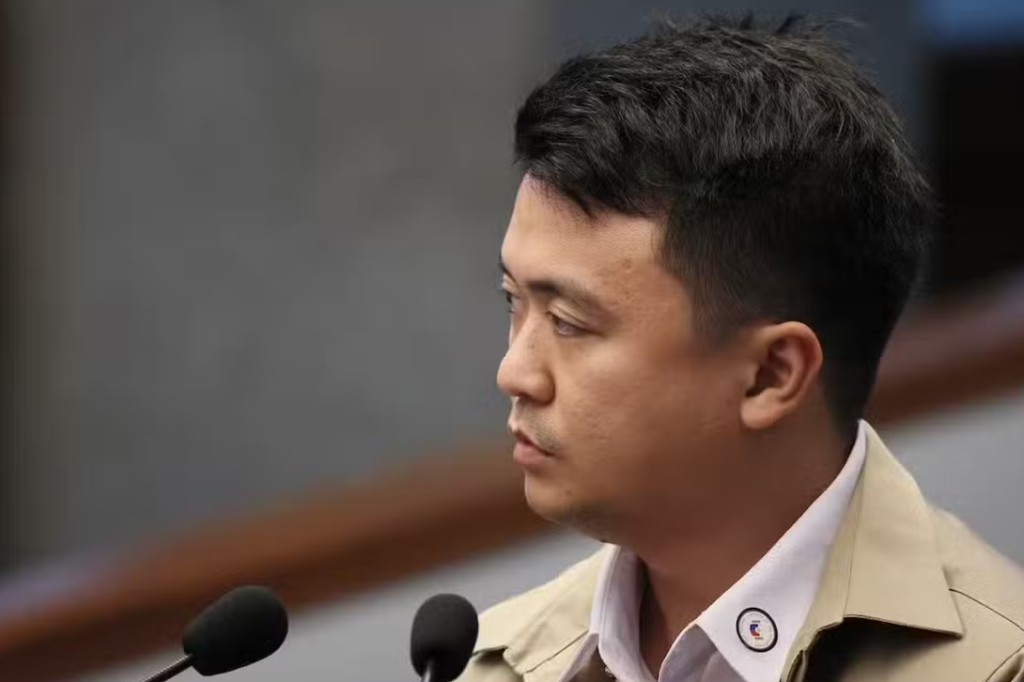
MANILA, Philippines — Proceedings before the impeachment court took a significant turn after a senior National Bureau of Investigation (NBI) agent acknowledged that he had no personal knowledge regarding the alleged hitman that Vice President Sara Duterte was accused of hiring to assassinate President Ferdinand Marcos Jr. and other individuals.
During Wednesday’s cross-examination, Senior NBI Agent John Mark Calilung, a digital forensic expert assigned to the NBI Cybercrime Division, admitted that his knowledge of the alleged assassination plot came only after he watched Vice President Duterte’s online media briefing on Nov. 23, 2024, where she made controversial remarks that later became the subject of a government investigation.
READ MORE ARTICLES:
- Retired Indian Judge Leads Landmark UN Probe, Palestinian Children’s Deaths in Gaza
- Nigeria Celebrates Terrorist Surrenders While Victims Continue Seeking Justice and Recovery
- Türkiye Eyes F-35 Deal as NATO Leaders Gather for High-Stakes Defense Summit
- Millions Mourn Supreme Leader Ali Khamenei as Middle East Violence
Defense lawyer Carlo Joaquin Narvasa questioned the witness about the basis of his testimony, asking whether he only became aware of the issue after beginning the investigation. Calilung confirmed that he had no prior personal knowledge and that his involvement started only after the DOJ directed the NBI to examine the publicly available video.
Narvasa further asked whether the witness had any firsthand knowledge of the alleged assassin supposedly hired by the vice president. Calilung answered that he did not.
The exchange became one of the day’s most closely watched moments because it underscored that the witness was testifying strictly on his forensic examination of the video evidence and not on any direct knowledge of an alleged assassination plot.
Senator-judge Bam Aquino later sought clarification, asking why the witness lacked personal knowledge of the alleged hitman. Calilung explained that his assignment was limited to the digital forensic investigation of Duterte’s recorded statements and did not include identifying or investigating any alleged assassin.
Aquino then asked the prosecution whether it intended to present additional witnesses specifically to testify about the alleged hitman. Private prosecutor Amando Virgil Ligutan confirmed that the prosecution plans to present other witnesses who would address that issue.
Calilung also testified that the NBI Cybercrime Division initiated its investigation “motu proprio” following instructions from the Department of Justice.
The meaning of that term became another point of contention during cross-examination. Narvasa questioned whether the investigation was truly initiated independently or whether it was ordered by higher authorities. Calilung explained that “motu proprio” referred to conducting an investigation without a formal complaint but acknowledged that the NBI acted following instructions from the DOJ.
When pressed about his earlier statement that the directive came from “above,” Calilung initially said it could have been from the DOJ “or higher.” However, after further questioning, he clarified that the instruction specifically came from the Department of Justice.
Narvasa attempted to pursue the issue further, suggesting there was inconsistency in the witness’s statements. Ligutan repeatedly objected, arguing that the questioning had become argumentative rather than fact-finding.
Impeachment Court Presiding Officer Francis Escudero sustained the prosecution’s objection, explaining that he understood the witness’s earlier reference to “above” as a general expression and that Calilung had already clarified the DOJ was the government agency that directed the investigation.
The hearing highlighted the differing strategies of both sides. The defense focused on emphasizing the limits of the witness’s firsthand knowledge, while the prosecution maintained that Calilung’s testimony was intended to establish the authenticity and forensic examination of Vice President Duterte’s recorded statements rather than prove the existence of any alleged hitman.
With the prosecution confirming that additional witnesses are expected to testify on the alleged assassination plot, the impeachment court is anticipated to hear further evidence as the proceedings continue. The latest testimony illustrated the distinction between digital forensic evidence and direct eyewitness testimony, a difference that could become increasingly important as both sides seek to establish the credibility and weight of the evidence presented before the Senate impeachment court./ CDN JSA Aptikons
APTIKONS