Pope Leo XIV has issued an urgent call for peace and nuclear disarmament as President Donald Trump vowed to intensify the United States’ military campaign against Iran, warning that Washington was “not finished” and could soon target additional sites linked to Tehran’s nuclear ambitions amid fears that the escalating conflict could trigger a wider regional war.
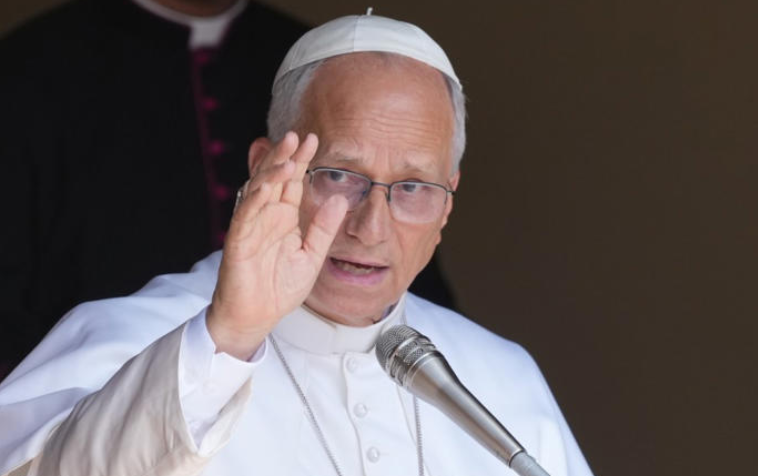
Pope Leo XIV has renewed his urgent appeal for peace and nuclear disarmament as tensions between the United States and Iran continued to intensify, with President Donald Trump signaling that Washington was prepared to expand its military campaign against Tehran despite indications that Iran may be seeking a ceasefire.
Speaking at the White House on Tuesday, Trump said Iran was “desperately” seeking negotiations to halt the fighting after more than a week of direct exchanges between U.S. and Iranian forces. However, the president made clear that he did not believe the conflict had reached its conclusion, warning that the United States would continue its military operations and would not withdraw while threats connected to Iran’s nuclear ambitions remained.
“We’re not finished,” Trump told reporters. “We’re not leaving.”
His remarks came as the United States launched its 11th consecutive night of strikes against Iran, according to the U.S. military’s Central Command, which reported the latest wave of operations at about 7 p.m. Eastern Time on Tuesday. The continued attacks marked a further escalation in a conflict that has rapidly raised fears of a wider regional war, with the possibility of additional countries and armed groups becoming involved.
READ MORE OTHER ARTICLES:
- Pope Leo XIV Urges Peace as Trump Vows to Intensify U.S. Strikes Against Iran

- The Pope’s Simple Life Contrasts With the Vatican’s Complex Financial Traditions
- Pope Leo XIV’s Call for Peace in Lebanon and the Middle East
- Pope Leo XIV Warns, Prayers of Those Who Wage War Will Not Be Heard
Trump again insisted that Iran would never be permitted to acquire a nuclear weapon, reiterating his administration’s determination to target facilities believed to be connected to Tehran’s nuclear program. The president said U.S. forces could strike “any site where they’re even thinking about nuclear,” a warning that appeared to broaden the scope of potential targets beyond facilities already publicly identified as part of Iran’s nuclear infrastructure.
When asked about Pickaxe Mountain, a heavily fortified underground complex believed to be linked to Iran’s nuclear program, Trump indicated that the site could soon face a major attack.
“We’ll be hitting that area very, probably pretty soon and very heavily,” he said.
Trump also claimed that U.S. military operations had inflicted extensive damage on Iranian capabilities, saying the destruction could take Tehran “20, 25 years to recover from.” The statement underscored the administration’s belief that its campaign has significantly weakened Iran’s military and strategic infrastructure, even as the continuation of strikes suggests that Washington believes further operations are necessary to achieve its objectives.
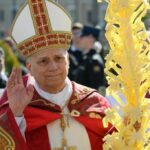
The president’s remarks came shortly before Pope Leo XIV delivered one of his strongest appeals yet for an immediate end to the violence, warning that the continued escalation was placing innocent lives at increasing risk.
“I am asking all people of goodwill to search always for peace and not violence, to reject war,” the pontiff said. “Especially an unjust war, which is continuing to escalate. Let’s remember the innocent people who have already become or will become victims of this continued warfare.”
The pope’s intervention reflected growing concern within the Vatican over the humanitarian consequences of the conflict and the mounting possibility that the violence could expand beyond the immediate confrontation between Washington and Tehran. The war, which began on February 28, has already generated deep international alarm as military operations continue and the risk of civilian casualties increases.
Pope Leo’s call for peace and nuclear disarmament came at a moment when diplomatic efforts appeared increasingly fragile. While Trump said Iran was eager to negotiate a ceasefire, his administration continued to intensify military pressure, creating a sharp contrast between the possibility of renewed diplomacy and the reality of ongoing attacks.
The competing signals have fueled uncertainty over whether the conflict is approaching a turning point or entering a more dangerous phase. Any negotiations would have to address the central dispute over Iran’s nuclear ambitions, the future of its military capabilities and the terms under which U.S. forces might halt their operations. At the same time, the continued exchange of attacks has made the possibility of miscalculation increasingly dangerous, particularly if strikes hit sensitive nuclear-related facilities or cause large numbers of civilian casualties.
For the Vatican, the growing conflict has revived longstanding concerns over the devastating consequences of war and the dangers posed by nuclear weapons. Pope Leo’s appeal placed the protection of civilians and the rejection of violence at the center of the international debate, urging governments and the wider global community to pursue diplomacy rather than allowing the confrontation to spiral further.
The pope’s warning also highlighted the human cost of the conflict at a time when military statements and political declarations have increasingly dominated public attention. Behind the claims of destroyed infrastructure, strategic gains and military superiority are civilians facing the consequences of sustained bombardment and the uncertainty of a war with no clear end in sight.
As the United States prepares for further military action and Iran faces continued pressure, the possibility of a ceasefire remains uncertain. Trump’s declaration that “we’re not finished” suggests that Washington is prepared to continue its campaign, while his comments about Iran’s desire to negotiate leave open the possibility of diplomatic talks.
For now, however, the conflict continues to move in the opposite direction from the peace sought by Pope Leo XIV. With U.S. strikes entering their 11th consecutive night and Washington warning that additional targets could be attacked, international fears are growing that the confrontation could become a prolonged conflict with consequences far beyond the borders of the United States and Iran.
The pope’s appeal therefore carries a significance that extends beyond a call for an immediate halt to hostilities. It is also a warning about the dangers of allowing military escalation, nuclear tensions and political confrontation to overwhelm diplomacy. As the United States and Iran remain locked in a dangerous standoff, the central question facing the world is whether the next step will lead toward negotiations and de-escalation or toward an even wider and more destructive war.
Pope Leo Calls for Peace Rooted in Truth as Military Pressure Dominates Global Diplomacy
Pope Leo has called for a vision of peace founded on truth, justice, and the recognition of the human desire to live without war, offering a message that stands in sharp contrast to the growing reliance on military pressure in international affairs.
The pope’s appeal was reinforced in a newly published book in which he argues that genuine peace cannot be achieved through force, political rhetoric, or the temporary silencing of conflict alone. Instead, he maintains that lasting peace must be built on truth and a sincere commitment to justice.
“Peace is built with truth,” Pope Leo writes in the book. The pope warns that even governments and leaders who wage war often attempt to justify their actions in the language of peace. According to him, political and military powers rarely openly claim that they seek war simply for the sake of destruction. Instead, they frequently present military action as a necessary means to achieve security, justice, stability, or a greater peace.
“No one has the audacity to declare that they want war for the sake of war,” the pope writes. “Even the powerful of the Earth know that every person aspires to justice and wishes to live in peace.”
His remarks place the moral question of war at the center of an increasingly tense international environment, where military strength and strategic pressure are once again being presented by some governments as essential tools for preventing greater threats.
The message from the Vatican comes as the administration of United States President Donald Trump has adopted an increasingly forceful position toward Iran, arguing that sustained military pressure is necessary to eliminate the country’s nuclear capabilities and push Tehran toward negotiations.
The Trump administration has maintained that pressure, including the credible threat of military action, is necessary to prevent Iran from advancing its nuclear program and to force its leaders to make concessions at the negotiating table. Supporters of the approach argue that diplomacy is more likely to succeed when backed by overwhelming military power.
The Vatican’s message presents a fundamentally different understanding of how peace is achieved.
For Pope Leo, peace is not simply the absence of open fighting or the result of one side being forced to surrender to the demands of another. Peace, in his view, must be connected to truth and justice. Without those foundations, a temporary pause in violence can leave the deeper causes of conflict unresolved.
The pope’s position also reflects the broader moral tradition of the Catholic Church, which has repeatedly warned that military power alone cannot create a just and lasting peace. While the Church has recognized the responsibility of governments to protect their populations, it has also emphasized the devastating human consequences of war and the need to exhaust genuine diplomatic efforts whenever possible.
The debate over Iran has placed those questions under renewed scrutiny. The United States and Iran have remained locked in a long-running confrontation over Tehran’s nuclear ambitions, regional influence, and military activities. Washington has argued that Iran must not be allowed to develop nuclear weapons, while Iranian officials have repeatedly insisted that their nuclear program is intended for peaceful purposes.
The dispute has continued to fuel tensions across the Middle East, where any escalation between the two countries could have consequences far beyond their borders. A direct military confrontation could affect regional security, energy markets, global diplomacy, and the safety of millions of civilians.
Against this backdrop, Pope Leo’s words carry significance beyond the religious sphere.
His argument raises a central question facing world leaders: Can peace be secured through the threat or use of greater force, or must lasting peace be built through truth, justice, and negotiations that address the underlying causes of conflict?
The pope’s answer is clear. Military power may impose silence, but it cannot by itself create reconciliation. Political declarations may promise peace, but they cannot replace honesty about the grievances, fears, and injustices that drive nations toward confrontation.
His call for truth also challenges leaders to examine the language used to justify war.
Throughout history, governments have frequently described military campaigns as necessary for security or peace. Nations have launched wars while claiming to defend freedom, prevent greater violence, protect their people, or restore justice. Yet the consequences of such conflicts have often included civilian deaths, displacement, destruction, and new cycles of resentment.
By emphasizing that even those who wage war claim to act in the name of peace, Pope Leo appears to be urging the world to look beyond political slogans and examine the real consequences of decisions made by powerful governments.
The pope’s message does not ignore the existence of threats. Instead, it challenges the belief that military strength should automatically be the primary answer to those threats.
For the Vatican, the pursuit of peace requires more than strategic calculations. It requires moral responsibility. That responsibility includes recognizing the dignity of ordinary people who often bear the greatest burden of geopolitical conflicts. Civilians, families, children, and communities are frequently the first to suffer when diplomatic disputes become military confrontations.
The pope’s appeal therefore places human life at the center of the debate. As tensions between major powers continue to shape international politics, Pope Leo is urging leaders to remember that peace cannot be reduced to a political objective or a military outcome. It must also be a moral commitment grounded in truth and justice. His words offer a direct challenge to the growing belief that pressure and force are the most effective tools for resolving international disputes.
While the Trump administration argues that military pressure can compel Iran to negotiate and prevent the development of nuclear weapons, Pope Leo is warning that peace achieved through fear or coercion may remain fragile if the deeper issues behind conflict are never honestly confronted.
The contrast reflects a broader divide in the international debate over security. One side emphasizes deterrence, military strength, and the ability to impose consequences. The other stresses dialogue, truth, justice, and the need to address the roots of conflict before violence becomes inevitable.
The challenge for the world is whether these approaches can ever be reconciled.
For Pope Leo, the foundation of peace remains clear. Nations must not simply claim to seek peace. They must pursue it through truth, justice, and a genuine respect for the lives of those who will ultimately bear the consequences of war.
At a time when military threats are once again becoming a central feature of global diplomacy, the pope’s message serves as a reminder that the language of peace must be measured not only by the promises made by governments, but also by the realities experienced by the people caught in the path of conflict.
Trump Vows Continued Pressure on Iran as U.S. Demands End to Nuclear Ambitions
President Donald Trump said the United States would continue applying intense military and economic pressure on Iran despite his claim that Iranian officials were seeking negotiations, warning that Tehran would not be allowed to develop a nuclear weapon.
Speaking to reporters, Trump said the United States remained determined to prevent Iran from acquiring nuclear weapons, signaling that any diplomatic overtures from Iranian officials would not immediately lead to a reduction in American pressure.
“They cannot have a nuclear weapon and they won’t have… no chance of having a nuclear weapon,” Trump said.
His remarks came as tensions between Washington and Tehran continued to escalate following a deadly attack in the Middle East that killed three U.S. service members over the weekend. Trump confirmed that he would travel to Dover Air Force Base for the dignified transfer of the remains of the fallen troops, a solemn military ceremony attended by senior officials and the families of service members killed overseas.
The president also appeared to place blame on what he described as a failure to properly protect American forces in Jordan, where the deadly attack reportedly involved Iranian ballistic missiles and drones.
“They did slip something through in Jordan,” Trump told reporters, apparently referring to the attack. “If we had other operators, you know, it would have not happened, unfortunately.”
Trump said the United States had succeeded in intercepting or stopping most of the incoming threats but suggested that responsibility for protecting American personnel had, in some cases, been delegated to other operators.
“We’ve stopped almost everything, but when you let other people do your job with the United States, we let other people do the job, and sometimes it doesn’t work out so well,” he said.
The president did not provide further details about who he believed was responsible for the defense of U.S. forces in Jordan. It was also not immediately clear which specific operators or entities he was referring to. The White House did not immediately offer additional clarification regarding the president’s comments.
Trump’s remarks added another layer of uncertainty to the administration’s response to the attack, as officials sought to balance military retaliation, the protection of American forces and the possibility of negotiations with Iran.
While Trump maintained that Iranian officials were interested in talks, he made clear that any diplomatic engagement would take place while the United States continued to exert significant pressure on Tehran. The president’s comments suggested that Washington would not ease its demands simply because Iranian officials were reportedly exploring negotiations.
The administration has continued to insist that Iran must abandon actions viewed by Washington as threatening to U.S. interests and regional security. At the center of the confrontation is the longstanding American demand that Iran not acquire a nuclear weapon.
Trump also described the U.S. military blockade of Iranian ports as a “steel wall,” using the phrase to emphasize the scale of the pressure being placed on Tehran.
“Nobody gets through,” the president said.
The description underscored the administration’s broader strategy of combining military force with economic and strategic pressure. By portraying the blockade as impenetrable, Trump sought to convey that the United States was prepared to restrict Iran’s ability to move supplies, equipment and other resources through its ports.
Defense Secretary Pete Hegseth reinforced the administration’s position, saying that Iran had been given multiple opportunities to negotiate but had failed to take the necessary steps to change course.
“If they want to talk, they can talk,” Hegseth said. “Otherwise they can deal with the War Department. And we’re prepared.”
His comments reflected the administration’s increasingly direct warning that diplomacy remained available, but only alongside the threat of continued military action. Hegseth said U.S. forces were prepared to continue striking military targets if Tehran did not alter its behavior.
The latest developments have placed the region at a critical juncture. The deaths of three American service members have intensified pressure on the Trump administration to respond forcefully, while the president’s assertion that Iranian officials may be seeking talks has raised questions about whether a diplomatic channel could emerge amid the escalating confrontation.
For Washington, the challenge is to deter further attacks on American personnel without allowing the conflict to expand into a wider regional war. At the same time, the administration is attempting to maintain its demand that Iran be prevented from developing a nuclear weapon.
Trump’s comments indicate that the United States does not view the possibility of negotiations as a reason to suspend its pressure campaign. Instead, the administration appears to be pursuing a strategy in which military action and diplomacy operate simultaneously, with Iran being offered the possibility of talks while facing the threat of additional strikes.
The president’s planned visit to Dover Air Force Base is expected to bring renewed attention to the human cost of the escalating conflict. The dignified transfer of the service members’ remains will serve as a solemn reminder of the risks faced by American troops deployed in the region.
As the United States continues to strengthen its military posture and maintain pressure on Iran, the central question remains whether the confrontation will lead to negotiations or further escalation.
Trump has made his position clear: Iran will not be permitted to obtain a nuclear weapon, and the United States is prepared to continue applying pressure until Washington believes Tehran has changed course.
Pope Leo’s Calls for Peace Draw Sharper Contrast With Trump’s Hard-Line Rhetoric on Iran
Pope Leo’s increasingly forceful appeals for peace and his repeated rejection of war have emerged as a growing point of contrast with President Donald Trump’s increasingly confrontational rhetoric over Iran, deepening an apparent divide between the Vatican’s diplomatic approach and the Trump administration’s emphasis on military pressure.
Although Pope Leo has not directly mentioned Trump by name in his public calls for an end to hostilities, his repeated warnings about the human cost of war and his appeals for dialogue have increasingly stood in opposition to the president’s hard-line position on Iran and his willingness to consider military action as a means of addressing threats linked to Tehran’s nuclear ambitions.
The widening contrast has drawn renewed attention to the relationship between the pope and the American president, particularly after Trump publicly criticized the pontiff in April following what appeared to be a rebuke of the administration’s approach to international security and military intervention.
Trump accused Pope Leo of being “WEAK on crime” and “terrible for Foreign Policy,” while also questioning the pontiff’s leadership and political judgment.
“I don’t think he’s doing a very good job. He likes crime, I guess,” Trump said, adding bluntly, “I am not a fan of Pope Leo.”
The president’s remarks came as Pope Leo increasingly emphasized the need to avoid escalation and warned against the normalization of war as a tool of international policy. While the pope did not directly identify Trump in his criticism, his broader message was widely viewed as standing in sharp contrast to the administration’s more aggressive posture toward Iran and other geopolitical adversaries.
Pope Leo later responded by saying that he had “no fear of the Trump administration,” while making clear that he had no interest in engaging the president in a personal political confrontation.
“I don’t want to get into a debate with him,” the pope said.
At the same time, the pontiff appeared to criticize what he described as the misuse of religious language and values in political arguments.
“I don’t think that the message of the Gospel is meant to be abused in the way that some people are doing,” he said.
The exchange highlighted a broader debate over the role of religious leadership in times of international crisis. While governments often frame military action as necessary to protect national security and prevent catastrophic threats, religious leaders have increasingly warned that war itself can produce consequences that extend far beyond the original conflict.
Pope Leo’s latest appeal has once again placed the issue of Iran at the center of that debate. The pontiff’s message reflects the position of religious leaders who argue that the immediate priority should be ending hostilities, protecting civilians and creating space for diplomacy before military confrontation expands into a broader regional war.
Trump and his allies, however, have continued to argue that military pressure may be necessary to prevent Iran from obtaining nuclear weapons and to deter what they describe as threats to the United States and its allies. From this perspective, diplomatic efforts without the credible threat of force risk allowing Iran to strengthen its military capabilities and advance its nuclear program.
The disagreement reflects one of the most enduring disputes in international politics: whether peace is best secured through negotiation and restraint or through overwhelming pressure and the threat of military action.
For Pope Leo, the answer has increasingly centered on the moral and humanitarian consequences of armed conflict. His appeals have emphasized the destruction caused by war and the need for world leaders to resist escalation, even when political and security pressures make confrontation appear inevitable.
Trump, by contrast, has built much of his foreign policy rhetoric around strength, deterrence and the willingness to use force when he believes American interests are threatened. His approach has frequently placed him at odds with international leaders who favor restraint and with religious figures who warn that military action can rapidly spiral beyond the control of those who initiate it.
The tension between the two approaches has become particularly significant as the debate over Iran grows more intense. Any military confrontation involving Iran could have consequences far beyond the immediate conflict, potentially affecting energy markets, regional stability and the security of U.S. allies across the Middle East.
It could also deepen existing divisions within the United States, where questions surrounding Iran have long generated fierce disagreement between those who support a policy of maximum pressure and those who fear that military action could trigger a prolonged and unpredictable war.
Pope Leo’s interventions therefore carry significance beyond the Vatican. His statements represent a broader appeal from religious and humanitarian leaders who believe that the international community must prioritize de-escalation at a moment when military threats are increasingly becoming part of political rhetoric.
The pope’s refusal to directly engage Trump in a personal dispute also appears deliberate. Rather than turning the disagreement into a political confrontation, Pope Leo has sought to frame the issue around broader principles: the protection of human life, the pursuit of peace and the moral responsibilities of leaders who possess the power to send nations into war.
That approach, however, has not eliminated the political tension between the Vatican and the Trump administration. As Washington continues to debate how far it should go in confronting Iran, Pope Leo’s repeated calls for peace are likely to remain an implicit challenge to policies that place military force at the center of the response.
The divide is becoming increasingly clear. Religious leaders are calling for an immediate end to hostilities and warning of the consequences of escalation, while political leaders argue that force may be unavoidable to prevent nuclear proliferation and protect national security.
At the heart of the disagreement is a fundamental question with consequences that extend far beyond Trump and Pope Leo: Can lasting peace be achieved through military strength, or does the pursuit of security ultimately require the restraint to avoid war?
As tensions over Iran continue to intensify, that question is likely to remain at the center of one of the world’s most consequential geopolitical debates.