As the Senate impeachment trial of Vice President Sara Duterte unfolds under intense national scrutiny, Atty. Carlo Joaquin “CJ” T. Narvasa has emerged as one of the most prominent members of her private defense panel. A senior associate at Fortun, Narvasa & Salazar Law Office and grandson of the late Chief Justice Andres R. Narvasa, the 37-year-old lawyer has drawn public attention for his assertive courtroom advocacy, distinguished legal background, and growing role in one of the Philippines’ most consequential constitutional proceedings.
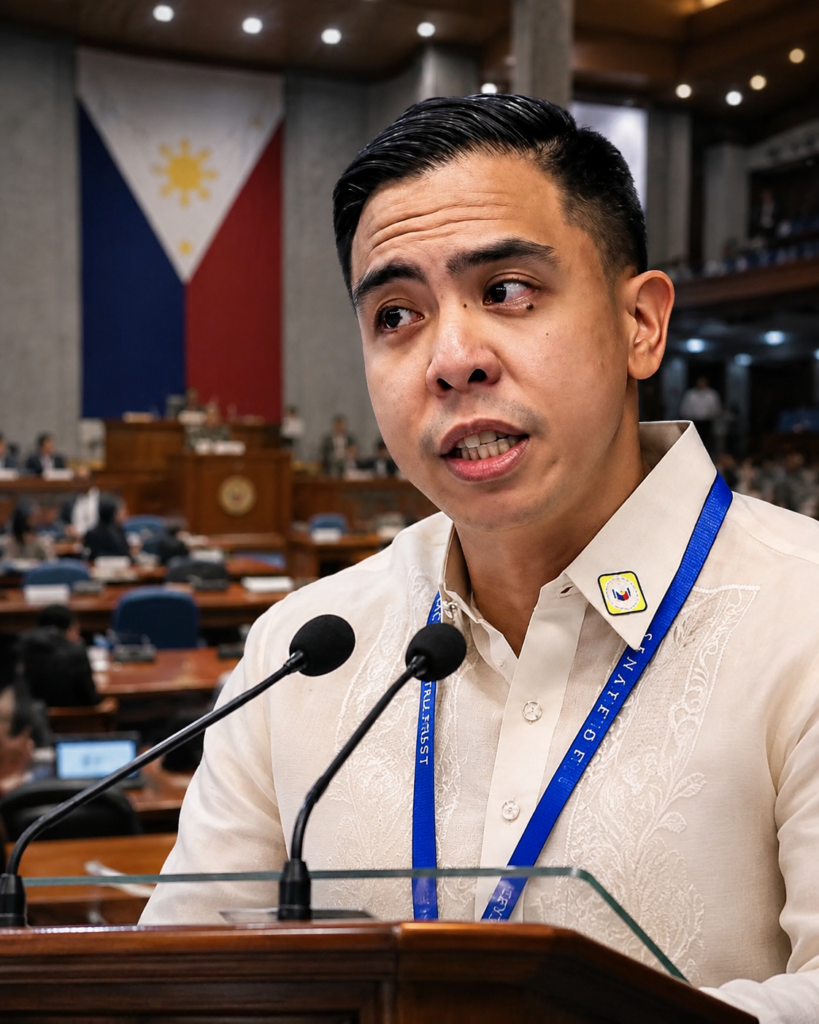
MANILA, Philippines — As the Senate impeachment trial of Vice President Sara Duterte continues to command national attention, one of the legal professionals who has emerged into the public spotlight is Atty. Carlo Joaquin “CJ” T. Narvasa. Although long recognized within legal circles for his work in commercial litigation and dispute resolution, Narvasa has become widely known for serving as one of the key members of the private defense panel representing the Vice President before the Senate. His participation has drawn interest not only because of his courtroom performance but also because of his legal pedigree, academic background, and growing reputation as one of the younger litigators handling one of the country’s most closely watched constitutional proceedings.
A senior associate at the Fortun, Narvasa & Salazar Law Office, Atty. Narvasa represents a new generation of Filipino lawyers who combine traditional legal training with experience in modern corporate and commercial practice. Born in 1989, he belongs to a family that has long been associated with the Philippine legal profession. He is the grandson of the late Chief Justice Andres R. Narvasa, one of the most respected figures in Philippine jurisprudence, whose leadership of the Supreme Court left a lasting imprint on the country’s judicial system. His father, Atty. Gregorio Narvasa II, is likewise a practicing lawyer and has also been involved in the legal team defending Vice President Duterte. Outside the legal profession, the family is also known through his uncle, former Philippine Basketball Association Commissioner Chito Narvasa.
READ MORE ARTICLES:
- Class Suspensions sa Hulyo 13, 2026: Listahan ng mga Lugar na Walang Pasok
- DITO–PLDT Network-Sharing Deal Fuels Speculation Over Deeper Strategic Alliance
- Atty. Carlo Joaquin “CJ” T. Narvasa: Young Lawyer, Center of Vice President Sara Duterte’s Senate Impeachment Defense
- President Marcos Records -27% Net Trust Rating; VP Sara Duterte Maintains Higher Approval and Trust
- Suspected ACDD Advertising LTD Scam Leaves Filipino Investors Reporting Massive Financial Losses
- PLDT Global Accelerates Revenue Growth, New Hyperscaler Contracts Across Asia
- Justice Remembered: Camp Crame’s Memorial Must Be More Than a Marker
Despite coming from a prominent legal family, Atty. CJ Narvasa built his own academic credentials through years of education at Ateneo de Manila University, where he completed his studies from grade school through law school. He first earned a Bachelor of Arts degree in English Literature before pursuing a Juris Doctor degree at the Ateneo Law School. His educational background in literature has often been cited as helping develop his analytical thinking, communication skills, and command of legal argumentation qualities considered essential in courtroom advocacy. He was admitted to the Philippine Bar in 2016, officially beginning his legal career after successfully passing one of the country’s most demanding professional examinations.
Narvasa began practicing law as a Junior Associate at the Paredes, Garcia & Golez Law Office immediately after his admission to the Bar. The following year, he joined Fortun, Narvasa & Salazar Law Office, where he eventually rose to the position of Senior Associate. Throughout his years in private practice, he developed expertise in several highly specialized legal fields, including litigation and dispute resolution, commercial arbitration, corporate rehabilitation, project development, and mining and natural resources law. These practice areas often involve complex legal questions requiring extensive research, careful strategic planning, and persuasive courtroom advocacy, making them among the more technically demanding fields within Philippine legal practice.
While much of his professional work had previously remained within corporate and commercial circles, his role in the impeachment proceedings against Vice President Sara Duterte has significantly raised his national profile. As a member of the private defense panel, Narvasa has been entrusted with helping formulate legal strategies and presenting arguments before the Senate impeachment court. Reports indicate that he has played a particularly active role in defending against Article IV of the impeachment complaint, which concerns allegations involving grave threats. His participation has placed him in one of the most visible legal proceedings in recent Philippine political history, where every argument and objection is closely followed by lawmakers, legal experts, the media, and the public.
Observers have noted Narvasa’s assertive courtroom style during the Senate proceedings. He has become known for delivering forceful legal arguments and raising frequent procedural objections whenever he believes the rights of his client require protection. His approach has generated differing public opinions. Supporters argue that his aggressive advocacy reflects a lawyer’s duty to provide the strongest possible defense within the bounds of the law, particularly in a constitutional proceeding where the outcome carries significant political and legal consequences. Others have viewed his style as unusually confrontational for Senate proceedings. Regardless of differing perspectives, his courtroom presence has undeniably made him one of the more recognizable members of the Vice President’s legal team.
Beyond the courtroom, those who knew Narvasa during his academic years describe a personality that differs from his litigation style. Former classmates and professors have recalled him as approachable, humble, and intellectually capable. Friends from his younger years have described him as someone who enjoyed staying current with technology and trends, while maintaining strong academic performance. He has also openly described himself as a “beach guy,” emphasizing the importance of setting aside weekends to rest and recharge despite the demanding nature of legal practice. Such glimpses into his personal life provide a contrast to the intense and highly disciplined image displayed during major court proceedings.
The impeachment trial itself represents one of the most consequential constitutional processes in the Philippines, requiring defense lawyers to navigate not only legal doctrine but also constitutional interpretation, procedural rules, and intense public scrutiny. Every appearance before the Senate is carefully analyzed by legal commentators and political observers, making the role of each defense lawyer especially significant. For relatively younger practitioners like Narvasa, participation in such a high-profile proceeding demonstrates the level of trust placed in their legal abilities by both senior colleagues and their client.
His growing prominence also reflects a broader reality within the Philippine legal profession, where younger lawyers increasingly assume central roles in nationally significant litigation. Success in these proceedings depends not only on legal knowledge but also on strategic thinking, careful preparation, and the ability to communicate complex constitutional arguments clearly under intense public attention. These qualities have become especially important in impeachment cases, where legal issues often intersect with political accountability and constitutional governance.
As the Senate impeachment trial continues, Atty. Carlo Joaquin “CJ” T. Narvasa remains one of the most closely watched members of the defense panel. Whether viewed through the lens of his distinguished family background, his Ateneo education, his specialized legal practice, or his increasingly visible courtroom advocacy, his participation has established him as an emerging figure in Philippine litigation. The outcome of the impeachment proceedings will ultimately be determined by the Senate acting as an impeachment court, but the case has already highlighted the important role played by legal professionals like Narvasa in ensuring that constitutional processes unfold through rigorous legal argument, procedural fairness, and adherence to the rule of law.
Atty. Carlo Joaquin “CJ” T. Narvasa Takes Center Stage in Defending Vice President Sara Duterte on Article IV of the Impeachment Trial
As the Senate impeachment trial of Vice President Sara Duterte continues to unfold before the nation, one of the lawyers drawing considerable public attention is Atty. Carlo Joaquin “CJ” T. Narvasa, who has assumed a leading role in defending the Vice President against Article IV of the Articles of Impeachment. The particular article centers on allegations involving “grave threats,” arising from Vice President Duterte’s controversial public remarks that referenced the possible targeting of President Ferdinand Marcos Jr., First Lady Liza Araneta-Marcos, and former House Speaker Martin Romualdez should harm allegedly come to her.
The proceedings have placed Narvasa in one of the most visible positions within the defense panel, requiring him to challenge the prosecution’s evidence, cross-examine witnesses, and argue procedural issues before the Senate sitting as an impeachment court. Every exchange has been closely followed by lawmakers, legal practitioners, political observers, and millions of Filipinos watching the constitutional proceedings.
Throughout the hearings, Narvasa has become one of the defense team’s most active courtroom advocates. His approach has been characterized by frequent procedural objections and vigorous participation during witness examinations. During one hearing, reports indicated that he raised more than two dozen objections while House Prosecutor Atty. Amando Ligutan was presenting evidence and questioning witnesses. The repeated objections frequently interrupted the prosecution’s presentation and required Senate President Francis “Chiz” Escudero, acting as the presiding officer, to rule on numerous procedural disputes before testimony could continue.
In courtroom litigation, objections serve as an essential legal mechanism rather than merely a tactical interruption. Defense lawyers are expected to object whenever they believe questions, testimony, or documentary evidence violate established rules governing admissibility and fairness. Narvasa consistently invoked these procedural safeguards, arguing that certain statements presented by the prosecution constituted narratives or arguments rather than properly introduced evidence. By insisting that the proceedings strictly follow evidentiary rules, the defense sought to ensure that every piece of evidence admitted into the impeachment record complied with legal standards.
One of Narvasa’s most closely watched appearances involved his cross-examination of National Bureau of Investigation Senior Agent John Mark Calilung, who testified regarding the authentication and investigation of the video recording containing the Vice President’s controversial statements. Rather than focusing solely on the contents of the recording, Narvasa directed much of his questioning toward the investigative process itself. His questions explored the extent of the NBI’s examination, the methods employed during the investigation, and the foundation supporting the agency’s conclusions. Such cross-examination reflected a common litigation strategy of testing the credibility, reliability, and completeness of the evidence presented before the court.
Beyond questioning witnesses, the defense’s broader legal strategy has emphasized the importance of context in interpreting the Vice President’s statements. Defense lawyers have argued that the remarks cited in Article IV should not automatically be construed as constituting an impeachable offense. Instead, they have maintained that the statements must be viewed within the broader circumstances under which they were made, asserting that they reflected emotional reactions arising from what the defense describes as intense political pressure rather than deliberate criminal threats. The prosecution, however, has maintained that the statements should be evaluated according to their language, surrounding circumstances, and legal implications. Ultimately, determining which interpretation prevails remains the responsibility of the Senate impeachment court.
Several exchanges during the hearings quickly circulated across traditional and social media because of their intensity. During his questioning of Agent Calilung, Narvasa repeatedly pressed the witness regarding the scope of the investigation, at one point asking, “Did you really investigate this case?!” The pointed question underscored the defense’s effort to challenge the thoroughness of the government’s investigation and became one of the more discussed moments of the hearing.
Another memorable exchange occurred when Narvasa withdrew a question after objections were raised regarding its form. Responding to the ruling of the presiding officer, he stated repeatedly, “I withdraw, Your Honor. I withdraw. I withdraw, Your Honor. I withdraw.” The moment illustrated the fast-moving nature of courtroom advocacy, where lawyers often modify or withdraw questions to comply with procedural rules while preserving the overall direction of their examination.
Narvasa also drew attention during arguments over procedural matters when he objected to part of the prosecution’s presentation by asking, “Your Honor, may I object? Is this a speech or an offer?” The remark prompted an immediate response from House Prosecutor Atty. Amando Ligutan, who replied, “Please hold your horses,” arguing that there was not yet a sufficient legal basis for the objection. The exchange reflected the adversarial nature of impeachment proceedings, where opposing counsel frequently contest both substance and procedure before the Senate.
Not every objection raised by the defense was sustained. Senate President Escudero overruled several of Narvasa’s procedural challenges, while sustaining others as the hearings progressed. Such outcomes are common in courtroom litigation, where presiding judges or officers exercise discretion in determining whether objections are legally justified under applicable procedural rules. The pattern of sustained and overruled objections forms part of the ordinary process through which evidence is tested before reaching a final decision.
Despite mixed rulings on individual objections, members of the defense team expressed confidence in Narvasa’s performance. Defense spokesperson Atty. Michael Poa publicly praised his work, saying he deserved a “10 out of 10” rating for his handling of Article IV. According to Poa, Narvasa successfully slowed the prosecution’s presentation at critical moments while ensuring that the defense was able to assert every available procedural protection afforded under the impeachment rules.
The hearings have also highlighted the demanding role played by trial lawyers during nationally significant constitutional proceedings. Unlike ordinary litigation, impeachment trials combine legal argument with constitutional interpretation, procedural rules, and heightened public scrutiny. Every question, objection, and ruling becomes part of the public record and is subject to immediate analysis by legal experts, political observers, and the media. Lawyers appearing before the Senate therefore face the dual responsibility of advancing their client’s legal position while operating under constant national attention.
For Atty. Carlo Joaquin “CJ” T. Narvasa, the Article IV proceedings have become one of the defining moments of his legal career. His active participation has transformed him from a respected corporate and litigation lawyer into one of the most recognizable faces of the Vice President’s defense team. Whether through his persistent objections, detailed cross-examinations, or vigorous advocacy before the impeachment court, his performance has become an integral part of one of the Philippines’ most consequential constitutional proceedings. As the Senate continues hearing evidence and arguments, Narvasa is expected to remain at the forefront of the defense’s efforts to contest the allegations under Article IV, with the final determination resting solely in the hands of the Senate acting as the impeachment court.
Atty. Carlo Joaquin “CJ” T. Narvasa Draws Mixed Reviews as Impeachment Trial Showcases His Litigation Style
As the Senate impeachment trial of Vice President Sara Duterte continues to dominate national attention, one member of the defense panel has emerged as both a standout advocate and a lightning rod for public debate. Atty. Carlo Joaquin “CJ” T. Narvasa, the lawyer leading the defense on Article IV of the impeachment complaint, has become one of the most recognizable figures inside the Senate impeachment court. His courtroom performances have sparked widespread discussion among lawyers, lawmakers, political observers, and ordinary Filipinos, with opinions varying sharply depending on one’s perspective of the proceedings.
The question of whether Narvasa is an exceptional trial lawyer has no single, objective answer. Rather, assessments of his performance often reflect differing views about what constitutes effective courtroom advocacy. Supporters of the defense see his approach as a disciplined and strategic effort to protect his client by rigorously testing the prosecution’s evidence and insisting on strict compliance with procedural rules. Critics, meanwhile, argue that many of his objections have been unsuccessful and that some of his courtroom tactics have placed greater emphasis on procedural confrontation than persuasive legal argument. Legal observers generally note that trial advocacy involves a range of strategies, and that a lawyer’s effectiveness is ultimately judged by how well those strategies advance the client’s case before the tribunal.
Among supporters of Vice President Duterte and members of the defense team, Narvasa has earned praise for his active participation throughout the impeachment proceedings. They point to his detailed cross-examinations and frequent procedural objections as evidence of a lawyer committed to ensuring that every allegation is subjected to careful legal scrutiny. Rather than allowing the prosecution’s presentation to proceed without challenge, he has consistently questioned the admissibility, reliability, and weight of testimonial and documentary evidence introduced before the Senate.
One of the defense’s most discussed moments came during Narvasa’s cross-examination of National Bureau of Investigation Senior Agent John Mark Calilung. During the exchange, Narvasa questioned aspects of the witness’s qualifications and the investigative process, including issues related to the training and background associated with the forensic software used during the investigation. The defense argued that these matters were relevant to evaluating the strength and reliability of the evidence presented against the Vice President. Supporters viewed the questioning as an example of careful cross-examination designed to test the credibility and foundation of the prosecution’s case.
Defense spokesperson Atty. Michael Poa publicly expressed confidence in Narvasa’s performance, saying he deserved a “10 out of 10” rating for his handling of Article IV. According to Poa, the repeated objections raised by Narvasa were not random interruptions but part of a deliberate litigation strategy intended to ensure that every piece of evidence introduced by the prosecution complied with procedural requirements. From the defense’s perspective, each objection represented an effort to safeguard due process and prevent testimony or arguments that they believed fell outside the applicable rules governing impeachment proceedings.
Supporters further argue that an effective defense lawyer is not measured solely by how many objections are sustained. Instead, they contend that the role of defense counsel includes preserving issues for the record, forcing the opposing side to clarify its arguments, and ensuring that every legal avenue available to the client is fully utilized. In this view, Narvasa’s willingness to challenge the prosecution at nearly every significant stage demonstrates diligence rather than obstruction.
Critics, however, have reached a different conclusion. They note that several of Narvasa’s objections have been overruled by Senate President Francis “Chiz” Escudero in his capacity as presiding officer of the impeachment court. For these observers, the frequency with which objections were denied suggests that not all of the procedural challenges met the legal standards required under the rules governing the proceedings. They argue that successful courtroom advocacy depends not only on raising objections but also on persuading the tribunal that those objections are legally well-founded.
Some critics have also pointed to exchanges in which Narvasa withdrew questions after objections from the prosecution or guidance from the presiding officer. During one notable hearing, he repeatedly stated, “I withdraw, Your Honor,” after issues were raised concerning the form of a question posed during cross-examination. For critics, such moments reflected the dynamic and demanding nature of trial advocacy, where lawyers must quickly adjust their approach in response to procedural rulings. Others interpreted these exchanges as routine courtroom practice rather than evidence of ineffective advocacy, noting that experienced litigators regularly reformulate or withdraw questions to comply with evidentiary rules.
The prosecution has likewise defended its own presentation by maintaining that its witnesses and evidence satisfy the legal standards required in the impeachment trial. From its perspective, many of the defense’s procedural challenges have not altered the substance of the allegations and have instead reflected the adversarial nature of the proceedings. Such disagreements are common in complex litigation, where opposing counsel frequently contest both factual assertions and procedural issues before the tribunal.
Legal analysts who have adopted a more neutral perspective generally describe Narvasa as a capable and promising young litigator whose performance should be evaluated within the broader context of the impeachment process. They note that he has demonstrated thorough preparation, familiarity with technical documents, and the ability to identify issues that may affect the evidentiary weight of the prosecution’s case. At the same time, they observe that impeachment trials present unique challenges, combining constitutional law, evidentiary rules, and intense public scrutiny in a setting unlike ordinary judicial proceedings.
Comparisons have inevitably been drawn between the current impeachment trial and previous nationally significant proceedings involving former President Joseph Estrada and former Chief Justice Renato Corona. While some observers believe Narvasa has yet to accumulate the courtroom experience of lawyers who participated in those historic cases, they also acknowledge that his involvement in the present proceedings marks an important stage in the development of his legal career. Appearing before the Senate in a constitutional trial requires not only legal knowledge but also composure, strategic judgment, and the ability to adapt to rapidly evolving arguments.
Ultimately, opinions regarding Narvasa’s courtroom performance remain closely tied to broader views about the impeachment case itself. Supporters regard him as an effective defender who has succeeded in challenging the prosecution’s evidence and protecting his client’s procedural rights. Critics believe his approach has not consistently persuaded the presiding officer and that many of his objections have had limited legal impact. Neutral legal observers generally emphasize that isolated courtroom exchanges rarely determine the outcome of an impeachment trial and that the effectiveness of any advocate is best assessed by the totality of the evidence, arguments, and rulings presented over the course of the proceedings.
As the Senate impeachment trial moves into later phases involving additional witnesses, documentary evidence, and more extensive legal arguments, Narvasa’s advocacy will continue to receive close public attention. Whether his litigation strategy ultimately proves decisive will depend not on public perception but on how the Senate, sitting as the impeachment court, evaluates the evidence and legal arguments presented by both the prosecution and the defense before rendering its final judgment.
Mind, Courage, and Principle: The Remarkable Rise and Enduring Legacy of Atty. Carlo Joaquin T. Narvasa
In every generation, the legal profession produces individuals whose influence extends beyond the courtroom and into the broader national conversation about justice, democracy, and the rule of law. Some inherit celebrated names, while others build their reputations entirely from the ground up. The rarest among them are those who inherit a distinguished legacy yet consciously choose to prove themselves through their own ability, discipline, and character. Atty. Carlo Joaquin “CJ” T. Narvasa belongs to this exceptional category. Although widely recognized as the grandson of former Chief Justice Andres R. Narvasa, one of the most respected figures in Philippine legal history, his growing reputation is increasingly defined not by family heritage alone but by the strength of his own legal intellect, unwavering professionalism, and steadfast commitment to constitutional principles. His career represents the meeting point of history and the future, where an honored family legacy becomes not a privilege to depend upon but a standard to surpass.
Born in 1989, Atty. Narvasa pursued an academic journey that distinguished him from many of his contemporaries. Rather than following a conventional pre-law path, he first completed a Bachelor of Arts in English Literature at Ateneo de Manila University. While literature and law may appear to belong to different worlds, the disciplines share a common foundation: the careful reading of language, the interpretation of meaning, the appreciation of context, and the ability to persuade through reasoned argument. Literature teaches empathy, precision, and critical thinking, while law demands analytical discipline and intellectual rigor. The combination of these fields equipped him with an uncommon ability to communicate complex legal concepts in a manner that is both logical and compelling. It also refined his appreciation for the power of words—not merely as instruments of persuasion but as essential tools in the pursuit of justice.
He continued his legal education at the Ateneo Law School, one of the country’s most respected institutions for legal scholarship. There, he immersed himself in the demanding study of constitutional law, civil law, criminal law, procedural rules, and jurisprudence, preparing himself for the responsibilities that accompany admission to the Philippine Bar. When he successfully passed the Bar Examinations in 2016, he officially joined the ranks of the nation’s legal professionals, embarking on a career that would soon expose him to some of the country’s most complex and challenging legal disputes.
Like many accomplished lawyers, Atty. Narvasa’s professional journey began through diligent work rather than immediate prominence. He first served as a junior associate at Paredes Garcia & Golez Law Office, where he gained valuable experience in legal research, drafting pleadings, preparing litigation strategies, and supporting senior practitioners in demanding cases. These formative years provided him with practical exposure to the realities of litigation, teaching him that effective advocacy requires meticulous preparation, patience, and mastery of both facts and law. Rather than seeking immediate recognition, he focused on developing the discipline necessary to become an effective trial lawyer.
His career later advanced when he joined Fortun Narvasa & Salazar, eventually rising to the position of Senior Associate. The law firm itself carries historical significance, having been co-founded by his grandfather, former Chief Justice Andres R. Narvasa, who served as the 19th Chief Justice of the Supreme Court of the Philippines from 1991 to 1998. Throughout his judicial career, Chief Justice Narvasa earned widespread respect for his deep understanding of constitutional law, unwavering independence, and commitment to strengthening democratic institutions. Serving within a firm associated with such an enduring legacy naturally invites public attention and heightened expectations. Yet colleagues and observers have frequently remarked that Atty. Carlo Narvasa has chosen not to rely upon inherited prestige. Instead, he has steadily earned professional respect through competence, preparation, and consistent performance in the practice of law.
Within the legal profession, Atty. Narvasa has become known for handling complex litigation, commercial disputes, corporate controversies, rehabilitation proceedings, arbitration matters, mining law, natural resources regulation, and government compliance issues. These fields often involve intricate legal questions, substantial financial interests, and complicated factual records requiring exceptional analytical skill. His work reflects an understanding that effective advocacy extends beyond eloquent courtroom presentations. It requires painstaking research, strategic planning, careful examination of evidence, and the ability to anticipate legal challenges long before they arise. Such qualities have contributed to his growing reputation among fellow practitioners as a lawyer capable of navigating difficult legal terrain with composure and intellectual discipline.
His colleagues have often described him as someone particularly suited for high-pressure litigation. The firm’s own characterization portrays him as a lawyer capable of confronting formidable legal challenges with unwavering resolve, standing firm amid fierce opposition while safeguarding the rights and interests of those he represents. Such descriptions underscore a professional philosophy centered on preparation, resilience, and principled advocacy rather than theatrics or public attention. In an era when legal disputes often unfold under intense public scrutiny, maintaining calm judgment and adherence to legal principles becomes as important as mastering courtroom procedure.
National attention toward Atty. Narvasa expanded significantly in July 2026 when he emerged as one of the members of Vice President Sara Duterte’s legal defense team during the Senate impeachment proceedings. The impeachment trial quickly became one of the country’s most closely watched constitutional events, drawing widespread interest from legal experts, political observers, media organizations, and the general public. Within this highly charged environment, Atty. Narvasa distinguished himself through measured argumentation and a disciplined commitment to constitutional process. Rather than relying on emotional rhetoric, he consistently emphasized procedural fairness, due process, and adherence to established constitutional safeguards. His legal arguments highlighted the principle that every respondent in any judicial or quasi-judicial proceeding deserves the full protection of the law, regardless of political circumstances or public opinion.
His courtroom exchanges during the proceedings attracted considerable attention across television broadcasts, online news coverage, and social media platforms. Many viewers commented on his composed demeanor, analytical reasoning, and ability to articulate constitutional principles under intense national scrutiny. Legal observers noted his insistence that allegations alone should never substitute for evidence, and that procedural safeguards exist not to obstruct accountability but to preserve the integrity of democratic institutions. Such arguments reflect one of the most enduring principles of constitutional governance: that justice is achieved not merely by pursuing outcomes but by faithfully observing the legal processes designed to protect every citizen equally.
Public commentary has frequently drawn comparisons between Atty. Carlo Narvasa and his grandfather, recognizing similarities in their measured legal reasoning and commitment to constitutionalism. Yet many observers also emphasize that the younger Narvasa is steadily building a distinct professional identity of his own. Rather than attempting to imitate the accomplishments of a previous generation, he appears focused on applying timeless legal principles to the challenges of contemporary Philippine society. His career illustrates how inherited legacy can serve as inspiration without becoming limitation, encouraging excellence while allowing personal merit to define one’s achievements.
Outside the courtroom, accounts from colleagues and acquaintances often describe Atty. Narvasa as someone who values balance, reflection, and personal discipline. His appreciation for nature and the sea has been cited as evidence of a personality that recognizes the importance of perspective beyond professional demands. Such interests suggest that resilience in legal practice is sustained not only by intellectual capability but also by personal grounding and emotional balance. In a profession frequently characterized by relentless pressure and adversarial conflict, maintaining clarity of thought and inner composure remains essential to sound judgment.
Perhaps the most meaningful aspect of Atty. Narvasa’s emerging legacy lies not in individual courtroom victories but in the values his career continues to represent. His professional journey reinforces the principle that the law is ultimately a public trust requiring competence, integrity, fairness, and respect for constitutional institutions. His work reminds aspiring lawyers that genuine credibility cannot be inherited but must be earned through sustained effort, ethical conduct, and unwavering dedication to the responsibilities of legal practice. While family heritage may open doors, only personal excellence can sustain public confidence over time.
The story of Atty. Carlo Joaquin T. Narvasa is therefore more than the biography of a rising lawyer. It is a reflection on how legal institutions remain strong when guided by individuals who place principle above popularity, constitutional fidelity above political expediency, and professional integrity above personal ambition. As Philippine society continues to confront increasingly complex legal and constitutional questions, the importance of lawyers who approach their profession with intellectual discipline and ethical conviction becomes ever more apparent.
Whether remembered for his work in complex litigation, his advocacy during nationally significant legal proceedings, or his continuing contribution to the development of Philippine jurisprudence, Atty. Carlo Joaquin T. Narvasa represents an emerging generation of legal professionals committed to preserving the ideals upon which democratic governance depends. His career demonstrates that true legal excellence is measured not by inherited reputation but by consistent devotion to justice, respect for due process, and the courage to uphold the Constitution even in the most challenging of circumstances. Guided by mind, strengthened by courage, and anchored in principle, he continues to build a legacy that honors the past while helping shape the future of the Philippine legal profession./ aptikons
- Hustisya ang Panawagan ng Pamilya ng Grade 4 Student sa Cavite na Pumanaw Matapos ang School Deworming
- Class Suspensions sa Hulyo 13, 2026: Listahan ng mga Lugar na Walang Pasok
- 16-anyos na Estudyante, Nahulihan ng Glock 17 at 32 Bala Bago Pumasok sa Paaralan sa South Cotabato
- Jaz Valdez Natagpuang Patay sa Basey, Samar; Hinihinalang Nasawi sa Aksidente sa Motorsiklo
- Inaasahang Lilikha ng Daan-Daang Libong Trabaho sa Pamamagitan ng AI Industrial Hub sa Ilalim ng Pax Silica Initiative