Many argue that Bongbong Marcos should not bear all the blame for the country’s situation. They believe that the millions of Filipinos who voted for him must also take responsibility for the leader they elected and the consequences of their electoral decision.
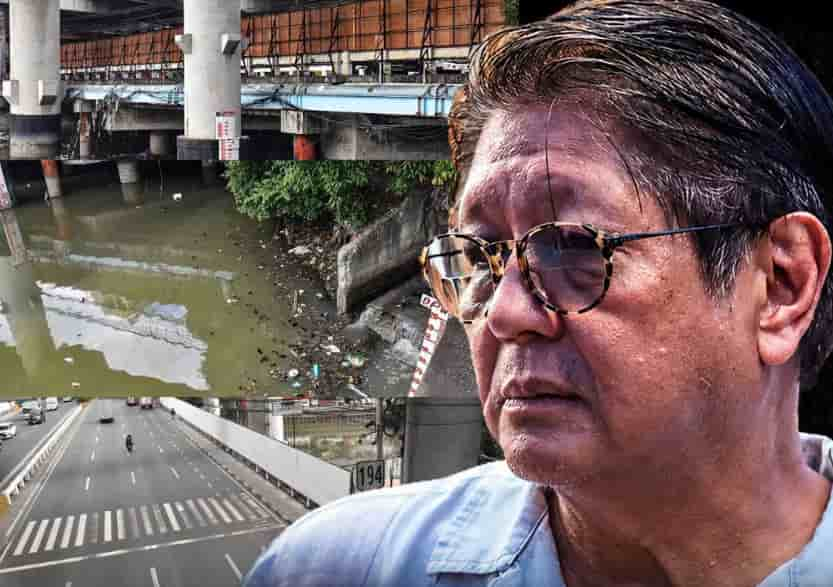
Why does life continue to become increasingly difficult for many Filipinos despite the government’s promises to improve the country? Why are so many families struggling to afford food, electricity, water, transportation, and other basic necessities? Instead of experiencing the benefits of economic progress, millions of ordinary citizens continue to fight just to make ends meet.
It is difficult not to question where the government’s promises of change have gone. Under the administration of President Ferdinand “Bongbong” Marcos Jr., poverty, rising commodity prices, insufficient wages, and limited economic opportunities remain major concerns for ordinary Filipinos. While economic development continues to be promised, many citizens are still waiting to experience meaningful improvements in their daily lives.
One of the biggest issues undermining public trust in the government is corruption. For decades, the misuse of public funds, questionable transactions, and allegedly irregular government projects have repeatedly raised concerns about how taxpayers’ money is being spent. Under the current administration, allegations and investigations involving government projects, including infrastructure and flood control programs, have further strengthened calls for transparency and accountability.
READ MORE ARTICLES:
- Why Do Filipinos Continue to Suffer Under the PBBM Administration? Corruption and Poor Governance Must Be Held Accountable
- Terry Ridon vs. Sara Duterte May Personal na Hidwaan?
- Has the “Godfather of AI” Geoffrey Hinton Come to Regret Creating Artificial Intelligence?
- [OPINYON] “DON’T PANIC,” Sabi ng PBBM – Pero paano ang Mamamayang Pilipinong Araw-araw nanag Naghihirap?
- [OPINION] Iran and Britain: How Another Cycle of Confrontation Leaves Ordinary People Paying the Price
The money lost or potentially wasted through corruption represents resources that could have been used to build schools, hospitals, roads, bridges, and other essential public facilities. Public funds are supposed to serve the people, not the personal interests of those entrusted with government positions. Any official proven to have stolen public money or abused their authority must be held accountable, regardless of their position, political influence, or family name.
However, corruption is not the only reason many Filipinos continue to struggle financially. The rising cost of basic necessities, combined with insufficient wages, has placed enormous pressure on ordinary households. For families living on limited monthly incomes, purchasing rice, meat, vegetables, and other food products has become a daily challenge. Transportation, rent, school expenses, and healthcare costs add even more pressure. Having a job does not necessarily mean a person earns enough to live a decent and comfortable life.
The situation of Filipino workers also deserves serious attention. Many employees work long hours but remain financially struggling because their salaries do not keep pace with the actual cost of living. It is not enough for the government to point to employment figures as evidence of economic progress. The more important question is whether available jobs provide decent wages and sufficient income for workers to support their families.
Farmers and fishermen should not be overlooked either. They belong to the most important sectors responsible for maintaining the country’s food supply, yet many continue to face high production costs, inadequate equipment, poor infrastructure, and limited government assistance. Without stronger support for local agriculture and fisheries, the Philippines will continue to struggle to establish a stable and affordable domestic food supply.
Beyond these economic challenges, another deeply rooted problem is the country’s political system, which critics argue continues to provide opportunities for the abuse of power. In many elections, a candidate’s popularity, family name, wealth, and political connections can carry more influence than competence, qualifications, and integrity. Political dynasties, patronage politics, and vote-buying also weaken democratic institutions and prevent meaningful political change.
Voters also have a responsibility when choosing the country’s leaders. Electoral decisions should not be based solely on popularity, family background, political promises, or money distributed during campaign periods. A vote is more than a piece of paper placed inside a ballot box; it is a powerful decision that can shape the future of millions of Filipinos. If voters continue to give authority to candidates without carefully examining their qualifications, records, and principles, changing a deeply rooted political system will remain difficult.
At the same time, poor Filipinos should not simply be blamed for accepting money during elections. It is important to understand the difficult circumstances that push some people to accept such offers. When a family is hungry and has no reliable source of income, refusing money that could provide food for the day can be extremely difficult. Nevertheless, this practice must be addressed because short-term financial relief can contribute to a political cycle that harms the entire nation in the long run.
The culture of political forgiveness is another issue worth examining. Giving public officials a second chance is not necessarily wrong, but forgiveness should never mean forgetting mistakes or abandoning accountability. Genuine reform requires acknowledging wrongdoing, correcting failures, and taking concrete action. Apologies alone are meaningless if there is no accountability and the same violations continue to happen.
the Marcos administration maintains that it is pursuing infrastructure development, attracting foreign investors, and providing assistance to sectors affected by rising fuel and commodity prices. These initiatives may contribute to economic development, but the success of an administration should not be measured merely by the number of announced projects, programs, or promises. What matters most is whether these efforts produce real improvements in the lives of ordinary citizens.
The poverty, corruption, and the absence of accountability should never become accepted realities in the Philippines. Filipinos should not be expected to endlessly endure expensive necessities while questions about the possible misuse of their tax money remain unresolved. The government does not belong to any particular family, politician, or administration. It is a public institution whose primary responsibility is to serve the people.
If President Marcos Jr.’s administration genuinely wants to demonstrate its commitment to change, it must show results through transparent governance, responsible management of public funds, more decent employment opportunities, fair wages, and effective solutions to poverty.
At the end of the day, most Filipinos are not asking for a luxurious lifestyle. They simply want enough food on the table, decent housing, quality education for their children, affordable healthcare, and stable employment that provides sufficient income to support their families.
The true measure of good governance is not how wealthy those in power become, but how much better the lives of the people they are elected to serve become.
- Babae mula Naval, Biliran, nasawi sa aksidente sa motorsiklo
- Elon Musk Developing Two Philippine Islands
- PRC: CHELE RESULTS November 2026 Chemical Engineer Licensure Exam Passers
- Mga Bahagi ng Katawan ng Tao, Natagpuan sa Tubuhan sa Ormoc City
- DepEd kinondena ang pagpatay sa school principal sa Maguindanao del Sur
Poverty and Corruption Remain Major Challenges as Philippines Hosts 49th ASEAN Summit
The Philippines continues to face a pressing question that deserves serious attention: Why do millions of Filipinos remain trapped in poverty, struggling with rising prices, insufficient wages, and limited employment opportunities despite repeated government promises of economic progress?
As the country hosts the 49th Association of Southeast Asian Nations (ASEAN) Summit from November 15 to 17, 2026, the struggles of ordinary Filipinos have once again taken center stage. While government officials welcome foreign dignitaries and highlight the country’s diplomatic and economic opportunities, various organizations and concerned citizens are taking to the streets to demand solutions to problems they believe have been neglected for too long.
The situation presents a striking contrast. The Philippines is hosting a major international gathering attended by leaders from across Southeast Asia, yet countless Filipino families continue to struggle to afford food, pay electricity bills, purchase fuel, and meet their daily needs. For workers, farmers, drivers, and low-income households, development has little meaning if its benefits cannot be experienced in their everyday lives.
Poverty should not be accepted as an unavoidable reality. Although global economic uncertainty, international conflicts, and rising oil prices can influence the country’s economy, these circumstances should not excuse the government from fulfilling its responsibility to protect the welfare of its citizens. Leaders must work toward strengthening local industries, generating decent employment, and ensuring that public resources are used for the benefit of the nation.
One of the biggest issues undermining public confidence is corruption. Money lost through questionable transactions, irregular government contracts, and allegedly anomalous infrastructure projects represents resources that could otherwise support hospitals, schools, roads, agricultural development, and essential public services.
The controversies involving flood control projects have further intensified calls for transparency and accountability. Whenever questions arise regarding the cost, quality, or completion of government infrastructure, taxpayers deserve honest explanations and impartial investigations. Officials and private contractors found responsible for wrongdoing must be held accountable under the law, regardless of their political influence or government positions.
Public funds are intended to improve people’s lives, not provide opportunities for personal enrichment. Filipino taxpayers should not be left carrying the burden of corruption while those responsible avoid the consequences.
Economic policies are another source of public concern. Various labor organizations and progressive groups have questioned an economic direction they believe gives greater advantages to large corporations and foreign investors than to local workers, farmers, and small businesses. They maintain that attracting investments should not undermine fair wages, employment security, domestic industries, and environmental protection.
Foreign investments can help generate economic activity, but their value should not be measured simply by the number of companies entering the country or the amount of capital being announced. What truly matters is whether these investments produce decent jobs, improve working conditions, strengthen Filipino enterprises, and create lasting benefits for local communities.
Economic development cannot be considered inclusive when workers receive inadequate compensation while the prices of basic necessities continue to rise. Employees who work hard every day should earn enough to provide for their families. Farmers deserve fair prices for their harvests, and small business owners should have opportunities to develop their enterprises without being overwhelmed by economic difficulties.
These issues have also become part of the public demonstrations surrounding the ASEAN Summit. In a November 15 report, Al Jazeera highlighted protests over the increasing cost of basic commodities and opposition to the US-led Pax Silica initiative.
Labor groups, student organizations, transport associations, and progressive coalitions have likewise raised concerns about wages, workers’ rights, transportation policies, and economic inequality. In Cebu, organizations have arranged a People’s Alternative Forum at the University of the Philippines Cebu to discuss issues affecting workers, commuters, communities, and the environment.
The planned transport strike involving PISTON and the demands of other labor organizations should not be viewed merely as an inconvenience to commuters. These actions also demonstrate the frustration of sectors seeking recognition of their economic difficulties and demanding that government officials take their concerns seriously.
Another issue requiring public scrutiny is the proposed Pax Silica initiative in New Clark City, Tarlac. The project has prompted questions from environmental advocates and Indigenous communities regarding land use, water resources, natural assets, and the potential consequences of large-scale industrial development. Although the government has clarified that the project will not accommodate artificial intelligence data centers, its possible environmental and social implications remain matters of public interest.
Agreements involving foreign investments and strategic national resources must be handled with transparency. Communities that could be affected must receive proper consultation, and the rights of Indigenous peoples and local residents must be respected. Development should never be used to justify the destruction of livelihoods, ancestral lands, or the environment.
The government must also respect the constitutional rights of citizens to express their opinions and participate in peaceful demonstrations. According to a November 15 report by GMA News, police prevented protesters from marching toward the ASEAN Summit venue. Reports from labor and teachers’ organizations indicated that nine individuals were arrested and several others were injured. Authorities, meanwhile, maintained that security measures were necessary to protect the international gathering.
Ensuring the safety of visiting leaders and the public is certainly important. However, security measures should not become a reason to suppress legitimate criticism. Filipinos have the democratic right to question government decisions, demand accountability, and peacefully express their dissatisfaction. Law enforcement authorities must exercise restraint and ensure that every arrest or restriction is supported by lawful grounds.
The ASEAN Summit should not become an event focused entirely on international appearances while the problems affecting ordinary Filipinos remain unresolved. Hosting regional leaders provides an opportunity to promote the country’s diplomatic standing and economic potential, but it should also remind public officials that their foremost responsibility is to serve the people.
President Ferdinand Marcos Jr.’s administration must therefore be evaluated not only through its public statements, promises, and international engagements but also through the actual living conditions of Filipino families. Economic growth statistics and investment announcements may indicate progress, but they cannot fully represent the country’s situation when millions continue to experience poverty, low wages, expensive commodities, and insufficient opportunities.
Global economic pressures may contribute to the country’s difficulties, but effective leadership requires practical solutions to problems affecting the population. The government must strengthen the agricultural sector, reduce unnecessary dependence on imported food, support Filipino-owned businesses, expand decent employment opportunities, improve public transportation, and make essential social services more accessible.
Public officials must demonstrate accountability in managing taxpayers’ money. Investigations involving allegations of corruption must proceed without political interference or favoritism. Anyone proven guilty must face the appropriate legal consequences. Transparency should be a fundamental obligation of government, not something officials provide only when controversies attract public attention.
Filipinos are not demanding unrealistic promises. They want a government that listens to their concerns, respects their rights, and makes decisions based on the public interest. They deserve affordable food, sufficient wages, dependable public services, responsible leadership, and an economy where hard work offers a genuine opportunity for a decent life.
The 49th ASEAN Summit may bring international attention to the Philippines, but the voices of struggling Filipinos deserve equal recognition. Their concerns should not be forgotten once the international gathering concludes and visiting leaders return to their respective countries.
Ultimately, the performance of any administration should not be determined by the grandeur of its international events, the number of investment announcements, or the promises made by its officials. Its real success must be reflected in the quality of life of ordinary citizens and the opportunities available to every Filipino.
The Philippines has millions of hardworking people who continue to contribute to the country’s economy despite the challenges they face. What they need is leadership that demonstrates the same commitment to improving their lives. Poverty must never be treated as a normal condition of Filipino society, and corruption must never become an accepted part of public service.
Those entrusted with government authority must remember that their power comes with a responsibility to serve the people. Public office is not a privilege for personal gain but a commitment to the nation. When that trust is betrayed, accountability must follow.